
The August 18 edition of the Federal Register carries one of the most consequential financial rulemakings of the year: the Treasury Department’s proposed regulations implementing the GENIUS Act’s core restrictions on who may issue, offer, and sell payment stablecoins in the United States. The same issue formally establishes a new National Fraud Enforcement Division at the Justice Department, opens the government’s annual review of China’s WTO compliance, and advances a contested Buy America waiver for foreign-built transit minibuses. Below, The Investigative Journal walks through eight entries with the broadest policy and economic significance.
A note on sourcing: this digest is based on the official documents filed for public inspection at the Office of the Federal Register and scheduled for publication in the August 18, 2026 issue. All descriptions reflect the agencies’ own filings, linked throughout; readers should consult the published documents for controlling text.
Treasury proposes GENIUS Act rules on stablecoin issuance — comments due mid-October
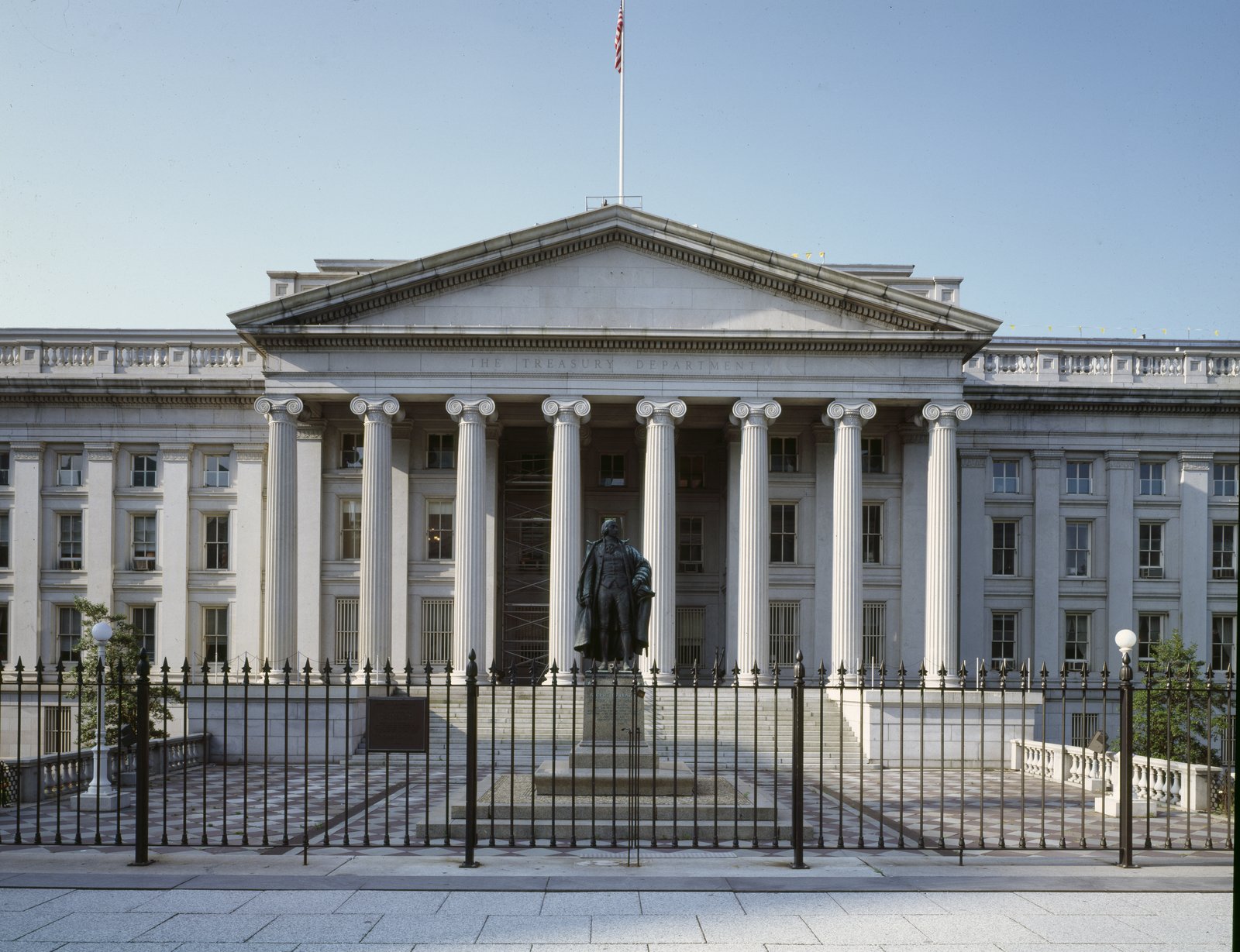
Treasury’s notice of proposed rulemaking (Docket TREAS-DO-2026-0496, RIN 1505-AC95) would implement section 3 of the Guiding and Establishing National Innovation for U.S. Stablecoins (GENIUS) Act, the July 2025 law that created a federal framework for payment stablecoins. The 77-page proposal would add a new part 1523 to title 12 of the Code of Federal Regulations, defining key terms such as “issue” and “located in the United States” and codifying the statute’s prohibition on stablecoin issuance by anyone other than a permitted issuer. According to the filing, knowing participation in an unlawful issuance is punishable under the Act by a fine of up to $1 million per violation, up to five years’ imprisonment, or both — and the proposal lists examples of conduct that may qualify as participation, including acting as a market maker for newly issued stablecoins.
The proposal is explicitly extraterritorial where conduct involves offers or sales to persons located in the United States. It would codify the Act’s two-track restrictions on digital asset service providers: a prohibition, effective July 18, 2028, on offering or selling stablecoins not issued by a permitted issuer, and separate conditions for stablecoins from foreign issuers, which must be subject to a regime Treasury deems comparable and register with the Office of the Comptroller of the Currency. Proposed section 1523.4 would establish safe harbors, including for de minimis transaction volumes, and Treasury requests comment on whether additional safe harbors are warranted. The preamble states that Treasury drew on comments to its September 2025 advance notice and deliberately declined to import securities-law frameworks such as Regulation S wholesale, reasoning that stablecoins are payment instruments rather than investment products.
For dollar-stablecoin issuers, exchanges, custodians, and foreign platforms serving U.S. users, this rule will define the perimeter of lawful activity before the Act’s key prohibitions bite. Comments are due 60 days after publication — on or about October 17, 2026 — via regulations.gov.
Justice Department stands up the National Fraud Enforcement Division
A final rule signed by Todd Blanche — styled in the document as Acting Attorney General; the Senate confirmed Blanche as Attorney General on August 8 — amends the Justice Department’s organizational regulations to establish the National Fraud Enforcement Division and delegate its authorities, effective August 24, 2026. The rule follows an April 7, 2026 memorandum creating the division, and formally moves several dockets out of the Criminal Division: the new division takes all criminal tax proceedings, criminal frauds generally, fraud involving federal funds and health plans, health care fraud and controlled-substance diversion schemes, and — notably — “trade fraud matters,” including cases involving importation, customs duties, and tariffs.
The filing states that the division’s mission is to investigate and prosecute fraud against taxpayer dollars and taxpayer-funded programs using “advanced, data-driven investigative techniques” and coordination with the agencies that administer those programs. The division’s leadership also receives authority to certify special grand juries under 18 U.S.C. 3331. Because the department classified the change as a rule of internal organization, it was issued without notice and comment and takes effect six days after publication; DOJ’s analysis states it is not a significant regulatory action and is not subject to Congressional Review Act reporting.
The consolidation is worth watching from an accountability perspective: trade-fraud jurisdiction in a dedicated division signals continued emphasis on tariff-evasion and customs enforcement, an area where records suggest caseloads have been growing alongside expanded tariff programs. How the division coordinates with inspectors general and qui tam relators will shape fraud recoveries for years.
USTR opens annual review of China’s WTO compliance — comments due September 17
The U.S. Trade Representative requests public comments and testimony (Docket USTR-2026-0496) for its statutorily required annual report to Congress on China’s compliance with its World Trade Organization accession commitments. Written comments, requests to testify, and written testimony are due by 11:59 p.m. EDT on September 17, 2026, with a public hearing before the Trade Policy Staff Committee scheduled for September 30 at USTR’s offices in Washington.
The notice asks commenters to address subsidies, import and export regulation, intellectual property enforcement, services, government procurement, and rule-of-law issues, and specifically requests that interested parties identify “unresolved compliance issues that warrant review.” For companies with documented experience of forced technology transfer, subsidized competition, or market-access barriers in China, this docket is the primary annual channel into the official record — and the resulting report is a key evidence base for future trade actions.
FTA floats broader Buy America waiver for foreign-built minibuses
The Federal Transit Administration published a supplemental notice (Docket FTA-2024-0018) revisiting its December 2024 proposed waiver of Buy America requirements for certain battery-electric minibuses — a waiver originally sought on behalf of 16 transit operators to purchase the E-Jest minibus made by Turkish manufacturer Karsan and sold in the U.S. by Damera Corporation. FTA now proposes to drop the battery-electric requirement entirely, allowing transit agencies to buy small unibody minibuses of any propulsion type under the waiver.
Under the statute, federally funded rolling stock must be more than 70 percent domestic by component cost and assembled in the United States; FTA may waive those requirements only where compliant vehicles are not reasonably available. According to the notice, 67 comments were filed on the original proposal, with opposition concentrated among manufacturers already doing business in the U.S. — though FTA states none claimed to offer a fully responsive vehicle. The revised waiver would still require U.S. final assembly for contracts awarded more than two years after the waiver takes effect and would expire after three years. Comments are due 15 days after publication, on or about September 2, 2026 — an unusually short window for a procurement policy change that affects domestic manufacturers’ order books.
Treasury adds private corporate-registry database to the Do Not Pay system
In a notice of designation, Treasury added the U.S. legal-entity dataset of OpenCorporates Limited — an aggregation of publicly available business-registration records from state and territorial registries — to the Do Not Pay Working System, the government-wide screening service agencies use to prevent improper payments. Treasury states the designation, made under authority delegated by OMB pursuant to 31 U.S.C. 3354(b)(2), is effective immediately; a June 25 proposal drew no public comments.
The move gives payment-integrity screeners a structured view of corporate registrations when vetting payees — relevant to shell-company fraud in federal programs, a recurring theme in pandemic-era improper-payment findings. It also illustrates the government’s growing reliance on commercial data vendors inside payment systems, an arrangement whose accuracy and audit trails merit continued oversight.
Interior advances Pacific seabed minerals lease sale off the Northern Marianas
The Bureau of Ocean Energy Management announced the availability of the Proposed Leasing Notice for the Commonwealth of the Northern Mariana Islands Outer Continental Shelf Pacific Mineral Lease Sale 2 (PACM-2), with the sale proposed for December 16, 2026. The notice, issued under the Outer Continental Shelf Lands Act’s minerals-leasing provisions, describes the sale’s size, timing, and location along with proposed lease terms including minimum bids, royalty rates, and rental rates; the CNMI governor has 60 days from publication to review and comment, and BOEM will publish a final leasing notice at least 30 days before the sale.
PACM-2 is part of the administration’s broader push to develop domestic sources of seabed critical minerals. The pace of that program — this is the second CNMI sale in the sequence — will draw scrutiny from both environmental reviewers and the mining industry as terms firm up in the final notice.
FDA refreshes the roadmap for choosing a generic-drug pathway
The Food and Drug Administration announced a draft guidance (Docket FDA-2017-D-5974) revising its foundational 2019 guidance on whether a drug application belongs in the abbreviated new drug application (ANDA) pathway or the 505(b)(2) hybrid pathway. According to the notice, the revision adds detail on duplicate products and eligibility for approval under section 505(j), along with other clarifications to FDA’s recommendations to industry.
Pathway choice determines the studies a sponsor must run, the user fees it pays, and the exclusivities it can earn or face, so even incremental clarifications move real money in the generics and specialty-pharma markets. Comments are due 60 days after publication — on or about October 17, 2026 — to ensure consideration before FDA finalizes.
DOT seeks input on leasing highway and rail rights-of-way for utility corridors
The Department of Transportation’s Build America Bureau issued a request for information (Docket DOT-OST-2026-3269) on “America’s Great Corridors of Commerce,” an initiative to colocate electric transmission, fiber, and other linear utilities in highway and rail rights-of-way through public-private partnerships. Under the model described in the RFI, a private “Corridor Manager” would design, build, finance, and operate utility channels — potentially underground tunnels — under concessions typically running 30 to 50 years, leasing capacity to utilities and sharing revenue with the right-of-way owner. DOT says it intends to designate up to five corridors per year for expedited federal permitting help, and cites the national energy emergency declared in Executive Order 14156 regarding the U.S. power grid.
The filing frames the program as a way to serve data centers and manufacturing with “plug and play” connectivity while generating revenue for transportation upgrades, and indicates most projects would be reviewed under NEPA categorical exclusions. Half-century concessions on public rights-of-way, streamlined environmental review, and revenue-sharing terms negotiated corridor-by-corridor are precisely the kinds of arrangements that reward early public scrutiny. Comments are due September 12, 2026.
On TIJ’s accountability radar
Several threads in today’s issue connect to beats this publication follows closely. The new DOJ division’s explicit trade-fraud mandate lands the same day USTR opens its China WTO compliance docket and the International Trade Commission publishes notices in proceedings involving hand trucks from China and van-type trailers from Canada, China, and Mexico — a reminder that customs and tariff enforcement is becoming a coordinated, multi-agency enterprise. We will be tracking who files in the USTR docket by the September 17 deadline.
On the spending-integrity front, Treasury’s quiet addition of a private corporate-registry dataset to the Do Not Pay system is a small notice with large implications for how federal payees are screened — and for the data vendors embedded in that process. And the comment clocks now running — September 2 for the Buy America waiver, September 12 for the corridors RFI, September 17 for the China review, and mid-October for the stablecoin and FDA proposals — will determine whose voices shape these rules. Records of what agencies heard, and what they did with it, are where accountability reporting begins.
Sources: Official Federal Register public-inspection filings linked above; agency dockets at regulations.gov. Comment deadlines calculated from scheduled publication dates are approximate (“on or about”) pending the printed edition.