

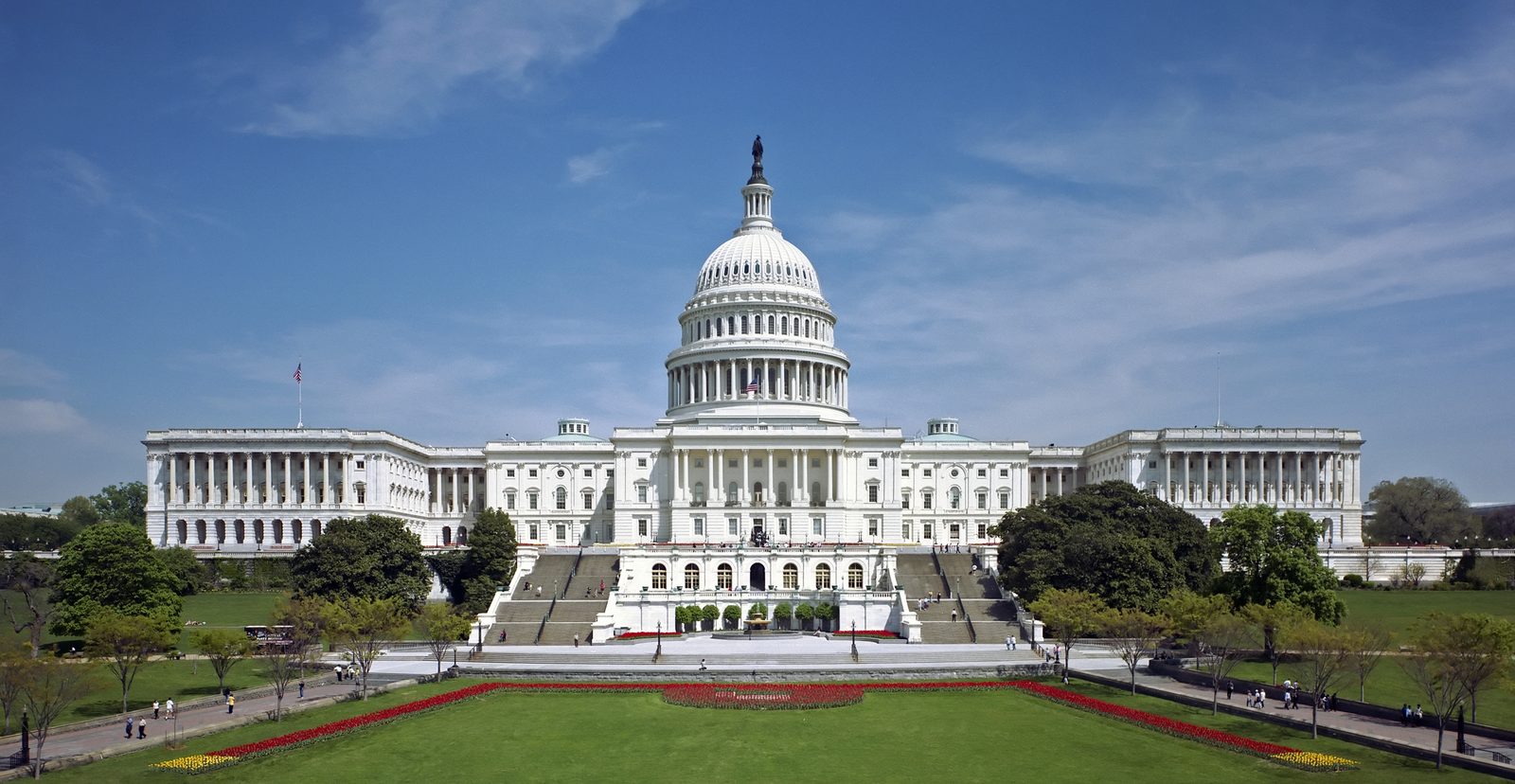
WASHINGTON — Both chambers of Congress remained in their August work periods Monday, holding only brief pro forma sessions — the House gaveled in and out shortly after 9:00 a.m., and the Senate convened for minutes in the afternoon, according to the House Press Gallery’s floor log and the Senate floor schedule. But the quiet on the floor is deceptive. The public record assembled over the past ten days shows a September pileup forming: rival stopgap funding bills that must be reconciled within weeks, a defense authorization stalled in the Senate, a string of Congressional Budget Office analyses flagging fiscal pressure, and a new House oversight demand aimed at one of the world’s most influential consulting firms.
Dueling stopgaps put Congress on a September collision course
The dominant unresolved question awaiting lawmakers is government funding. Fiscal year 2027 begins October 1, and according to the National Association of Counties’ legislative analysis, Congress has not yet passed a single FY2027 appropriations bill through both chambers. Each chamber has instead passed its own continuing resolution — and the two measures do not match.
The House acted first, passing H.R. 9770, the Continuing Appropriations Act, 2027 — a “clean” extension of current FY2026 spending levels through December 4 — on a near party-line vote of 220-205 in July, according to the National Association of Student Financial Aid Administrators’ appropriations tracker. The Senate followed on August 8, voting 90-6 for its own version, released by the Senate Appropriations Committee, which runs one week longer — through December 11 — and carries considerably more freight. Records compiled by NACo indicate the Senate bill would delay the Office of Management and Budget’s pending rewrite of the Uniform Guidance rule governing federal grant administration, extend the National Flood Insurance Program and Livestock Mandatory Reporting through December 11, hold the Defense Department to FY2026 spending levels while requiring congressional approval for new multi-year weapons contracts, and authorize roughly $2.61 billion for Navy shipbuilding and $2.85 billion for national security procurement. It would also rescind unspent highway infrastructure and FAA research allocations.
The result is a classic conference problem with almost no runway. The House returns to votes on August 31, per the House Press Gallery, while the Senate’s tentative 2026 schedule shows its state work period running through September 11 — leaving little floor time before the September 30 deadline. Filings indicate the chambers must land on identical text to avert a lapse, and the OMB grant-rule delay, absent from the House bill, is the most conspicuous difference to be negotiated.
Defense authorization passed the House — and stalled in the Senate
The other must-pass measure, the National Defense Authorization Act for Fiscal Year 2027 (H.R. 8800), cleared the House narrowly in late July — 216-212, authorizing roughly $1.15 trillion for national security programs, according to trade press accounts. The Senate Armed Services Committee completed its own markup in June, but the bill has not reached passage on the Senate floor; Breaking Defense reported the measure stalled after a failed cloture vote, with informal negotiations between the chambers reportedly underway during the recess. The Congressional Research Service is tracking the bill’s status in a running legislative summary, and CBO has published its cost estimate for the House-passed bill.
The House-passed package also carries policy riders that widen the negotiating field — among them election-administration provisions from the SAVE America Act, which NACo reports the House attached to the NDAA in July. Whether those riders survive an eventual conference will be one of the clearest early signals of how much appetite exists for a pre-election defense deal versus a lame-duck one.
Oversight opens a document demand on McKinsey’s DEI research
The House Oversight Committee’s Task Force on Defending Constitutional Rights and Exposing Institutional Abuses generated Monday’s most notable new oversight action. Task Force Chairman Brandon Gill (R-Texas) announced August 17 that he has sent a letter to McKinsey & Company Global Managing Partner Robert Sternfels requesting all documents, communications, and underlying datasets behind four McKinsey diversity studies published between 2015 and 2023 — Why Diversity Matters, Delivering Through Diversity, Diversity Wins, and Diversity Matters Even More.
The committee’s release alleges that outside researchers have been unable to replicate the reports’ central finding linking workforce diversity to financial outperformance, and asserts that the studies influenced hiring, promotion, and proxy-voting policies across corporate America — citing, as one example, the California Public Employees’ Retirement System’s reliance on two of the reports in voting against board members at a trucking firm. The release further claims the practices the reports encouraged cost the U.S. economy roughly $94 billion in 2023 alone; that figure is the committee’s characterization and has not been independently verified by this publication.
It should be noted that these are allegations in an opening-stage inquiry, not findings. The committee’s own release acknowledges that McKinsey stands by its research, and it quotes a McKinsey partner’s public defense of the studies as reflecting a genuine “business imperative.” The firm has not, in the materials reviewed for this digest, published a response to the August 17 letter itself.
The Epstein records fight grinds on through recess
The committee’s long-running investigation into the federal handling of the Jeffrey Epstein and Ghislaine Maxwell cases remains the most consequential oversight dispute on the calendar — and the public record shows the two parties describing the state of compliance very differently. Chairman James Comer (R-Ky.) has maintained that the Justice Department is producing records under the committee’s subpoena, attributing the slow pace in part to redactions protecting victims’ personal information. Committee Democrats, in a February letter to Attorney General Pam Bondi, asserted that the Department had released roughly 3 million of an estimated 6 million documents and argued that the withholdings exceed what the Epstein Files Transparency Act permits.
Separately, the full committee advanced contempt reports in January recommending the House hold former President Bill Clinton and former Secretary of State Hillary Clinton in contempt for declining to sit for subpoenaed depositions in the inquiry. The committee’s record reflects the Clintons’ position as well: through counsel, they submitted written statements under penalty of perjury and argued they were treated differently from other former officials who were permitted to respond in writing. A contempt recommendation is not a finding of wrongdoing, and any enforcement would require action by the full House and, ultimately, the courts.
CBO kept scoring through the recess — and flagged a $275 billion battleship bill
Congress’s nonpartisan scorekeeper did not take August off. The CBO’s most closely read release of the month, an August 5 report on the Navy’s new nuclear-powered battleship program, estimates it would cost about $275 billion in 2026 dollars to build 15 of the ships through 2056 — roughly $23 billion for the lead ship and an average exceeding $18 billion for each that follows. The agency warns that the Navy’s 2027 shipbuilding plan would push average annual surface-combatant funding from about $11 billion to $19 billion and, by 2035, more than double the large-combatant tonnage shipbuilders must produce — a load CBO suggests could strain the industrial base. Those figures land directly in the middle of the NDAA and appropriations negotiations described above.
CBO’s Monthly Budget Review released August 10 supplies the fiscal backdrop: the federal deficit reached an estimated $1.8 trillion over the first ten months of FY2026 — $169 billion more than the same period a year earlier — with revenues up 3 percent and outlays up 5 percent.
Even Monday brought fresh output. On August 17, CBO posted cost estimates for five tribal-lands measures with House and Senate companions, including the Shingle Springs Band of Miwok Indians Land Transfer Act (H.R. 2302), the Lower Elwha Klallam Tribe Project Lands Restoration Act (H.R. 2388) and its Senate counterpart (S. 1513), and twin bills — H.R. 681 and S. 236 — authorizing 99-year leases on Mashpee Wampanoag and Wampanoag Tribe of Gay Head (Aquinnah) trust lands. They are modest measures, but the scores clear the way for floor action when members return.
Before the lights dimmed: early-August committee work
The Congress.gov committee schedule for the first week of August — the last with recorded meetings before the recess deepened — shows the Senate Foreign Relations Committee examining ambassadorial nominations for Montenegro, Sierra Leone, and Colombia, and a Senate Commerce, Science, and Transportation business meeting taking up measures on children’s online safety and artificial-intelligence chatbots. Committee calendars for the weeks since show no scheduled meetings.
The road back
The arithmetic of the fall is unforgiving. The House resumes votes August 31; the Senate’s tentative schedule brings it back in mid-September; and both chambers face the October 1 start of the fiscal year with the CR conference, the NDAA impasse, and all twelve regular appropriations bills unresolved. The Senate calendar then shows an extended October state work period ahead of the midterm elections — meaning most of the year’s remaining legislating is compressed into roughly three working weeks in September.
On TIJ’s accountability radar
Several threads from this digest feed directly into The Investigative Journal’s standing beats. The Senate CR’s pause of OMB’s Uniform Guidance overhaul goes to the heart of how federal grant dollars are policed, and the rescissions tucked into the same bill — unspent highway and FAA research money — merit line-item scrutiny as conference negotiations proceed. The Epstein records production dispute remains, at bottom, a documents story: what has been produced, what has been withheld, and under what legal theory. And the McKinsey inquiry will turn on whether the firm’s underlying datasets are ever produced for independent review. We will follow the paper in each case.
Editor’s note: This digest is compiled from official public records — Congress.gov, chamber and committee publications, and the Congressional Budget Office — supplemented by cited trade and association reporting. Claims drawn from committee releases are allegations of the issuing office unless otherwise noted, and the documented responses of named parties are included where available in the public record. Entities named in open inquiries are invited to reach the editor at tij.news for right of reply.