

WASHINGTON — Both chambers of Congress remain in their August district work period today, with the Senate scheduled to gavel in for a brief pro forma session at 11:30 a.m. and the House set for a pro forma meeting of its own, according to the Senate Daily Press Gallery and the House floor schedule on Congress.gov. No legislative business is expected on the floor. But the record left behind before lawmakers scattered — two competing stopgap funding bills, a stalled Senate appropriations process, a blocked defense authorization, and fresh deficit figures from the Congressional Budget Office — has already framed a compressed and consequential September. The federal fiscal year ends September 30, and the Senate is not scheduled to cast its next roll call vote until 5:30 p.m. on Monday, September 14.
Dueling Stopgaps: A December 4 Bill Meets a December 11 Bill
The central unresolved question heading into the fall is which continuing resolution — or what compromise between them — will keep the government open past September 30. Records tracked by the Committee for a Responsible Federal Budget show the House passed its stopgap, H.R. 9770, the Continuing Appropriations Act, 2027, on July 21 by a 220-205 vote, funding the government through December 4. The Senate answered on August 8, amending H.R. 6500 into its own continuing resolution running through December 11 and passing it by a bipartisan 90-6 vote in a morning session before leaving town.
The 90-6 Senate margin suggests broad appetite in that chamber to avoid another lapse in funding; the Afterschool Alliance’s appropriations tracking notes the Senate measure now moves to the House for consideration. The one-week difference in end dates is not trivial: it determines when the next funding cliff lands in the post-election lame-duck session, and with it, which chamber’s leadership controls the December sequencing. The stakes are elevated by recent history. According to CRFB’s tracking, fiscal year 2026 saw three separate funding lapses — a shutdown from October 1 through November 12, a brief partial lapse January 31 to February 3, and a Department of Homeland Security shutdown that ran from February 14 through April 30 before an agreement was reached.
Appropriations Scoreboard: House 3-for-12 on the Floor, Senate Yet to Mark Up
Beneath the stopgap fight, the regular fiscal 2027 appropriations process remains lopsided. The House Appropriations Committee has approved all 12 annual bills, per the Congressional Research Service appropriations status table on Congress.gov, and three have passed the full House: Military Construction-VA by a 400-15 vote on May 15, Agriculture by a 213-210 vote on June 4, and National Security-State by a 217-209 vote on July 15.
The Senate Appropriations Committee, by contrast, has not reported a single fiscal 2027 bill. The National Low Income Housing Coalition reports the committee has yet to reach agreement on topline spending levels, leaving all 12 Senate bills unwritten with roughly two working weeks between the chamber’s September 14 return and the funding deadline. One structural detail worth watching, flagged in CRFB’s analysis: the final fiscal 2026 DHS funding law excluded Immigration and Customs Enforcement and Border Security Operations funding, which Congress is now attempting to provide through the separate reconciliation process — a channel with far less line-by-line public scrutiny than annual appropriations.
Pro Forma Watch: Eleven Sessions, No Business, No Recess Appointments
Today’s 11:30 a.m. Senate pro forma session is the fourth of 11 the chamber scheduled through September 10, following sessions on August 10, August 13, and August 17, according to the Senate Daily Press Gallery archive. Records of those sessions show no business was conducted; Senator Boozman presided on August 10 and Senator Justice on August 17. Under the schedule announced before the break, further sessions are set for August 24, August 27, and August 31 before September meetings carry the chamber to its return.
The practical effect, as Bloomberg Government and Roll Call have reported on the 2026 calendar, is that the Senate remains technically in session throughout the 37-day break — foreclosing recess appointments to federal vacancies. Keeping the chamber formally open through pro forma sessions is a practice both parties have employed over the past two decades, and the Supreme Court’s 2014 NLRB v. Noel Canning decision gave it constitutional teeth. The House, which held its own pro forma session August 17, is expected back for votes on Monday, August 31, according to the House Press Gallery calendar — two weeks ahead of the Senate.
A Bipartisan Sanctions Bill Lands Mid-Recess
Recess has not stopped bill introductions. House Foreign Affairs Committee Chairman Emeritus Michael McCaul (R-Texas) and Rep. Steny Hoyer (D-Md.), joined by 16 colleagues, introduced the Lindsey O. Graham Sanctioning Russia and Iran Act of 2026, honoring the late senator who, according to the sponsors’ statements, worked on the measure for more than a year. Per Hoyer’s office, the bill targets major purchasers of Russian oil and gas, Russia’s shadow fleet and financial institutions, and extends sanctions restricting funding for Iran’s energy and weapons sectors.
The sponsors state the Senate previously passed the legislation in bipartisan fashion and that the White House’s support had been secured — claims TIJ has not independently verified against a Senate roll call at press time. Senate Foreign Relations Committee Ranking Member Jeanne Shaheen (D-N.H.) publicly welcomed the House introduction. A cross-party sanctions vehicle with leadership-adjacent sponsors in both parties is the kind of measure that can move quickly when floor time opens in September — or become a bargaining chip in the funding fight.
Defense Authorization Still Parked at the Senate Floor
The fiscal 2027 National Defense Authorization Act remains stalled. The House passed its version, H.R. 8800, on July 22 by a largely party-line 216-212 vote, authorizing roughly $1.15 trillion, as Breaking Defense reported. The Senate Armed Services Committee completed its markup in June on an 18-9 vote, but the bill has not reached the Senate floor; Breaking Defense reports Democratic opposition tied to the conflict with Iran and to the size of the defense topline. The Congressional Research Service tracks the bill’s status in IN12704.
The calendar math is unforgiving: a September 14 Senate return, a September 30 funding deadline, and a defense bill Congress has enacted annually for more than six decades all now compete for the same floor weeks — with a midterm election looming behind them.
CBO: Deficit Hits $1.8 Trillion Through July, Full-Year Projection Rises to $2.1 Trillion
The Congressional Budget Office’s Monthly Budget Review for August 2026 estimates the federal deficit reached $1.8 trillion over the first 10 months of fiscal 2026 — $169 billion more than the same period a year earlier. The Hill reports CBO now projects a $2.1 trillion deficit for the full fiscal year, up from the $1.9 trillion the agency projected in February.
Two related data points sharpen the picture. CBO published an estimate that the Navy’s newly proposed nuclear-powered battleship class would cost $275 billion over 30 years, according to a CRFB analysis of the estimate — a figure likely to feature in NDAA floor debate. And CRFB separately noted that a $25 billion 30-year Treasury auction last week ended with yields at 5.216 percent, the highest since 2001, a signal of rising federal borrowing costs as appropriators write next year’s bills.
Oversight During Recess: Subpoena Power Sharpened, Document Fights Continue
Congressional subpoena authority enters the fall stronger than it left the spring. On July 21, the D.C. Circuit issued its opinion in United States v. Navarro, affirming the criminal contempt-of-Congress conviction of former White House adviser Peter Navarro, according to an August analysis by Holland & Knight. The ruling reinforces that defying a duly issued congressional subpoena carries criminal exposure — a precedent committees on both sides of the Capitol will be able to invoke.
One active document fight to watch: the House Judiciary Committee has threatened contempt proceedings against the Southern Poverty Law Center over records subpoenaed May 19 concerning the group’s use of paid “field sources” and its communications with federal agencies during the prior administration. A June 25 committee letter set a final production deadline of July 9. The SPLC’s attorneys have said the organization took steps to gather responsive documents, according to committee correspondence; the dispute remains an allegation-stage oversight matter, and no contempt vote has been noticed.
Bipartisan Note: Kids’ Online Safety Package Cleared Committee Before the Break
On August 5, the Senate Commerce Committee advanced four children’s online safety bills with bipartisan support, K-12 Dive reported, including the Kids Online Safety Act — which carries 76 Senate cosponsors — along with the Youth AI Privacy Act, the Children’s Health, Advancement, Trust, Boundaries, and Oversight in Technology Act, and the Children’s Artificial Intelligence Toy Safety Act. Committee records are posted on the Senate Commerce Committee’s hearings page. With that cosponsor count, KOSA is positioned for floor consideration whenever leadership schedules it after September 14.
The Week Ahead
Senate pro forma sessions are scheduled for August 24, August 27, and August 31, with the next roll call vote set for 5:30 p.m. on September 14, per the Senate Daily Press Gallery. The House is expected to return for votes August 31, according to the House Press Gallery calendar, where the Senate-amended continuing resolution awaits action. The binding deadline behind it all: current-year funding expires September 30.
On TIJ’s Radar
Three threads from today’s digest connect to this publication’s ongoing accountability beats. First, the migration of ICE and Border Security Operations funding out of annual appropriations and into reconciliation reduces public line-item visibility, and TIJ will track how those figures are scored and disclosed. Second, the Navarro affirmance raises the cost of defying committee subpoenas just as several document disputes — including the Judiciary-SPLC matter — approach decision points. Third, an unresolved request from May remains open: Rep. Chris Pappas (D-N.H.) formally asked House Oversight Chairman James Comer to subpoena internal records from online prediction markets over trades that, according to the letter, anticipated unannounced military operations. Whether the committee acts on that request when Congress returns is a question TIJ will continue to press.
All figures and characterizations above are drawn from the linked public records, official schedules, committee documents, and cited reporting. Entities named in oversight matters are described at the allegation stage unless otherwise noted; none of the referenced disputes has produced adjudicated findings. Organizations mentioned may submit responses or corrections to the editor.
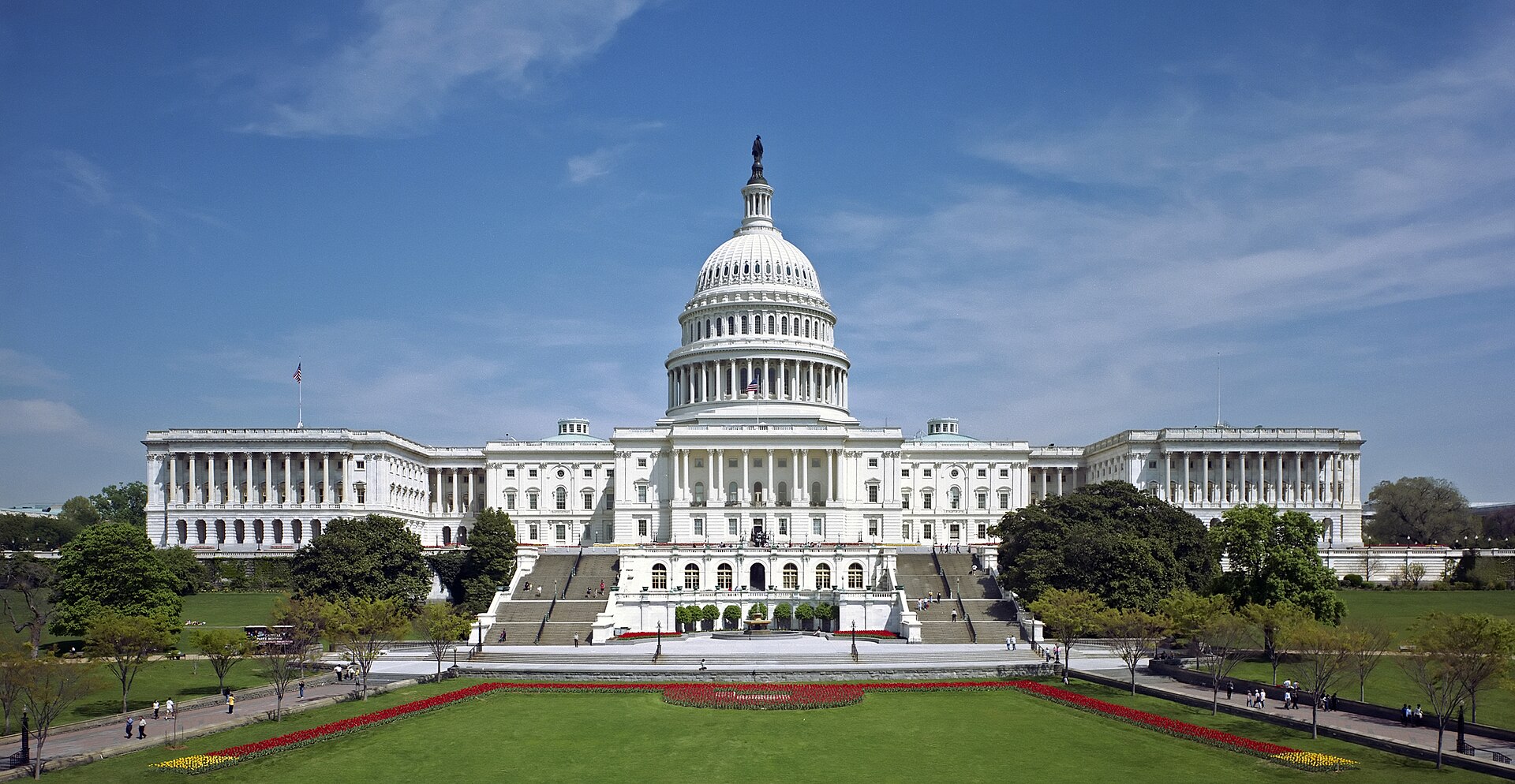
Featured image: The United States Capitol, west front. Public domain via Wikimedia Commons.