

Belt & Road Watch is The Investigative Journal’s monthly tracker of China’s overseas infrastructure program and the influence operations that travel with it. Every claim below is linked to public records, datasets, or original reporting.
August’s picture is one of contrasts. New data show Belt and Road Initiative engagement running at record levels — roughly $126 billion in deals in the first half of 2026 alone — even as two of the program’s flagship corridors, in Pakistan and Kenya, quietly restructure away from Chinese lending. Meanwhile, the month’s most consequential developments were not groundbreakings but security decisions: a NATO logistics port in Poland weighing bids from Chinese-linked operators, and a Pentagon order forcing 30 American universities to audit their China ties.
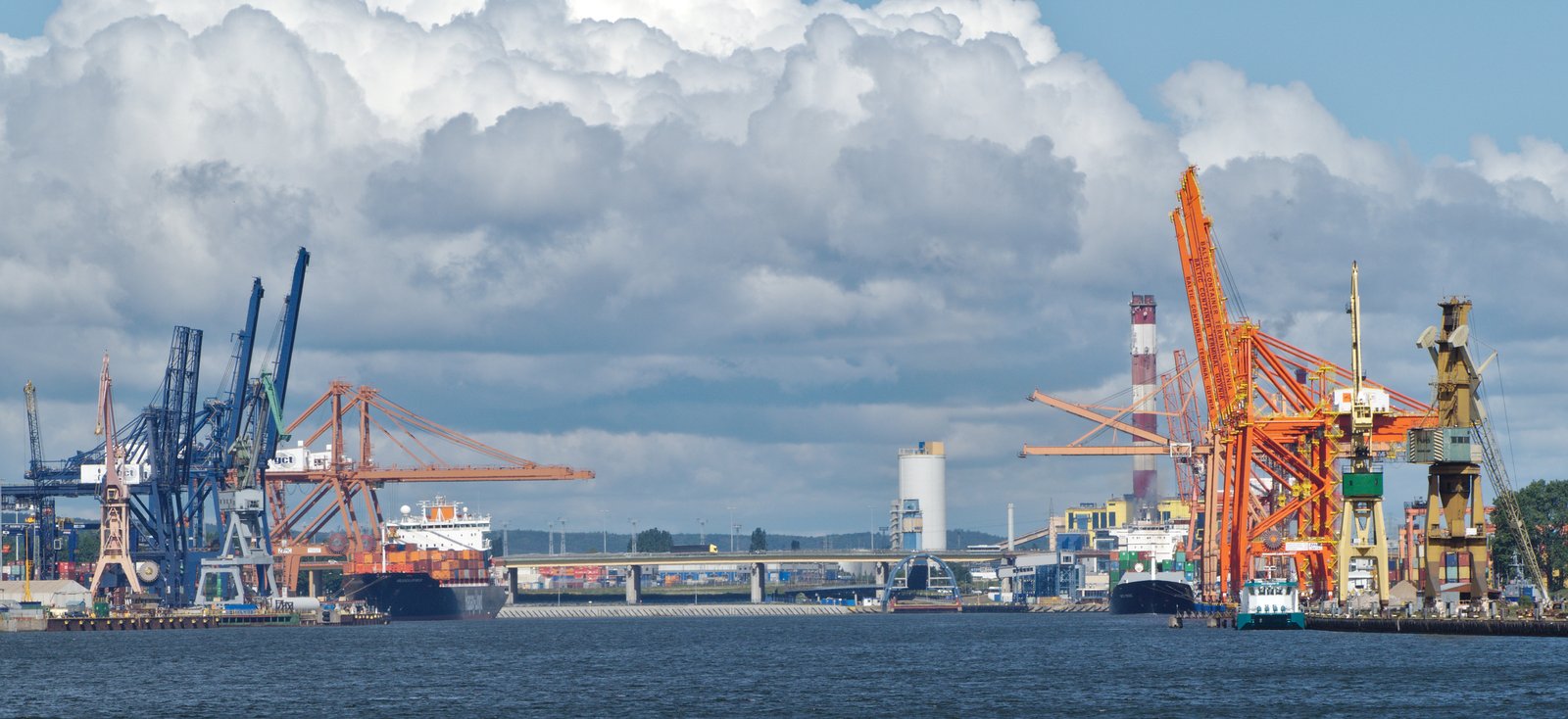
Chinese-linked bidders close in on NATO’s dual-use port in Gdynia
Poland’s Port of Gdynia Authority extended its deadline on July 14 for four shortlisted consortia to submit binding bids for the public-private development of the Outer Port container terminal, with submissions now due September 30, according to Janes. Gdynia is not an ordinary commercial harbor: it is one of a handful of European ports designated to receive U.S. forces and materiel for the defense of NATO’s eastern flank, and the Outer Port is being designed as dual-use infrastructure to support NATO and EU rapid-mobility operations.
Janes reports that two of the four shortlisted bidders have Chinese ownership or ties: Hutchison Ports Poland, a subsidiary of Hong Kong-based CK Hutchison, bidding in consortium with the Port of Felixstowe; and Mota-Engil Central Europe, whose Portuguese parent counts state-owned China Communications Construction Company (CCCC) as a major shareholder. CCCC subsidiaries were added to the U.S. Commerce Department’s Entity List in 2020 over South China Sea dredging work.
A joint investigation by The Investigative Desk, OKO.press and FRONTSTORY.PL documented the security stakes: Hutchison already operates a Gdynia container terminal under a lease running to 2104, and researchers Isaac Kardon and Wendy Leutert found that China’s 2017 national defense transportation law obliges Chinese transport firms and their overseas subsidiaries to support People’s Liberation Army operations if called upon. Janes further reported that in August 2023 Hutchison’s Gdynia terminal denied a docking request from a diverted U.S. Army-chartered vessel carrying military equipment. Precedents cut both ways: Lithuania halted a Chinese-built terminal at Klaipeda in 2021 on national-security grounds, and Berlin initially moved to block a COSCO stake in a Hamburg terminal in 2022. Hutchison and the Chinese embassy in Warsaw did not respond to the VSquare consortium’s questions; a Gdynia Container Terminal representative declined to comment on questions about Chinese state influence. TIJ will treat the September 30 bid deadline as a priority watch item.
Pentagon orders 30 universities to audit China ties — “rebranded Confucius Institutes” in scope
On August 17 the Defense Department ordered research-security audits at 30 academic institutions, instructing them to review partnerships with 130 foreign institutions — 88 of them in mainland China, per the department’s Section 1286 list — and to terminate “problematic” ties within two weeks or risk losing federal research funding eligibility. Harvard, MIT and Johns Hopkins are among the recipients, a U.S. official told the Associated Press. Notably for this tracker, the order also directs universities to audit collaborations with organizations tied to “rebranded Confucius Institutes,” TIME reported. A 2023 Government Accountability Office survey found that 43 of 74 former Confucius Institute host universities maintained ties to their former Chinese partner institutions, and nine reported continued funding or support.
Days earlier, the House Select Committee on the CCP and the House Education and Workforce Committee released a report stating investigators identified more than 140 publications co-authored by Harvard-affiliated researchers and scholars at Chinese defense-linked universities. Harvard disputed what it called the report’s “mischaracterizations” and said it follows federal national-security standards. For the record: the Chinese embassy in Washington said it opposes “the overstretching of the concept of national security and the politicisation… of normal scientific, educational and academic exchanges.”
The money: record first half for BRI engagement
Griffith University’s Green Finance & Development Center reports that January–June 2026 was the strongest first half for BRI engagement since the initiative launched in 2013: $76.5 billion in construction contracts (up $12.2 billion year-on-year) plus $49.8 billion in investment. Energy engagement hit a record $36.3 billion, 56 percent of it green — also a record — while metals and mining reached $21.8 billion, higher than any full year since 2013 except 2025. Average deal size for transactions above $100 million grew to a record $958 million. The Middle East topped construction engagement at $36.5 billion, led by Dubai high-speed rail work involving CCCC and China State Construction worth about $8 billion; in Vietnam, China Railway Engineering signed a $2 billion deal for Ho Chi Minh City’s second metro line. One data point stands out for what is absent: the dataset records no new Chinese engagement in Pakistan or Russia in H1 2026. A University of Queensland summary of the same data calls it a sustained surge concentrated in energy, mining and technology.
Pakistan drops ML-1 — the $7.5 billion flagship exits CPEC
That zero-Pakistan figure now has an explanation. Pakistan’s government informed lawmakers in July that the Main Line-1 railway — the Karachi–Peshawar modernization long billed as the flagship of the China-Pakistan Economic Corridor — has been removed from the CPEC framework, with Islamabad now seeking roughly $7.5 billion from the Asian Development Bank, AIIB and Islamic Development Bank instead, per local reporting. As recently as 2025, Pakistan and China had agreed in principle on a $7 billion financing consortium, Dawn reported; filings and statements since indicate that arrangement never materialized. A decade after CPEC was announced at $46 billion, its largest single project will now be financed by multilateral lenders — a milestone in what researchers describe as Beijing’s de-risking of big-ticket corridor lending.
Kenya’s new SGR model: Chinese contractors, no Chinese loans
President William Ruto broke ground in March on the long-stalled Naivasha–Kisumu–Malaba extension of the Standard Gauge Railway, with CCCC as lead contractor, according to the China-Global South Project. Cost estimates in Kenyan reporting range from KSh 549 billion to roughly KSh 700 billion (about $4.2–5.4 billion) for the 475-kilometer line. The financing is the story: after Beijing signaled reluctance to extend new loans, Kenyan business press reports the government plans a securitized bond of about KSh 390 billion backed by the Railway Development Levy, alongside public-private partnership structures — Chinese state contractors building, Kenyan taxpayers and markets financing. Whether the securitization’s terms are more favorable than Exim Bank debt is a question TIJ intends to examine when prospectus documents surface.
TAZARA: CCECC’s $1.4 billion, 30-year bet on the Copperbelt
Rehabilitation work under the $1.4 billion TAZARA concession agreement — signed by Tanzania, Zambia and China Civil Engineering Construction Corporation, with works slated from mid-2026 — anchored the railway’s 50th-anniversary events in Dar es Salaam in July. TanzaniaInvest details roughly $1 billion for track rehabilitation and $400 million for 32 locomotives and 762 wagons under a 30-year concession. The South China Morning Post notes the deal positions Beijing in direct competition with the U.S.-backed Lobito Corridor for evacuation routes serving Zambian and Congolese copper and cobalt — minerals central to both countries’ industrial strategies.
Chancay consolidates — under Peruvian oversight
COSCO Shipping launched a new weekly CHX3 service in mid-August linking Paita, Chancay and Caldera, Costa Rica, per Peruvian trade outlet DataPortuaria, as the megaport’s first-year throughput passed 500,000 TEU, Seatrade Maritime reported. A Peruvian court ruling this year preserved state regulatory oversight over the Chinese-built port in what Maritime Executive described as a geopolitical battle over the facility, in which COSCO holds a 60 percent stake. Chancay remains the clearest test of whether Latin American states can capture the trade benefits of Chinese port capital while retaining sovereign control of the asset.
Debt tracker: Laos still the starkest case
AidData’s May 2026 country profile for Laos and Lowy Institute research show public and publicly guaranteed debt peaked at 115.7 percent of GDP in 2022 and stood near 94 percent at end-2024, with China holding roughly half of external debt. Researchers estimate repeated ad hoc Chinese deferrals — including an assumed 50 percent principal deferral in 2026 — have kept Vientiane out of formal default while pushing repayment into 2027–2040; the Lowy authors warn of a lost decade absent real relief. The structural picture is broader: AidData’s Belt and Road Reboot estimates 80 percent of China’s Global South lending portfolio now supports countries in financial distress; the Center for Global Development’s risk analysis flags eight countries — Djibouti, Kyrgyzstan, Laos, the Maldives, Mongolia, Montenegro, Pakistan and Tajikistan — at high risk; and a Boston University Global Development Policy Center April 2026 working paper models BRI debt sustainability country by country. CSIS analysis of China-IMF interaction documents how Beijing’s bailout lending complicates restructurings.
On TIJ’s radar
Developments this desk will pursue in the months ahead: the identity and vetting of the winning Gdynia consortium after September 30; which university partnerships are actually terminated under the Pentagon’s two-week deadline, and what happens to institutions that refuse; the prospectus terms of Kenya’s railway-levy securitization versus the Exim Bank loans it replaces; the unpublished concession terms of the TAZARA deal, including any traffic or revenue guarantees; and the outcomes of Beijing’s own anti-corruption drive on BRI projects — China’s Central Commission for Discipline Inspection made BRI graft a stated priority in 2024, and CSIS has documented how corruption travels the corridors, but Beijing publishes few case outcomes. Where investigations named above remain pending, no findings of wrongdoing should be inferred.
Methodology and right of reply: this tracker distinguishes documented activities from allegations, and links every claim to a public record. Responses from named organizations are included where they have publicly commented; organizations named here are invited to contact The Investigative Journal with responses.
Featured image: Container terminals in Gdynia, Poland. Photo by Iwankgb via Wikimedia Commons, CC BY-SA 4.0.
