

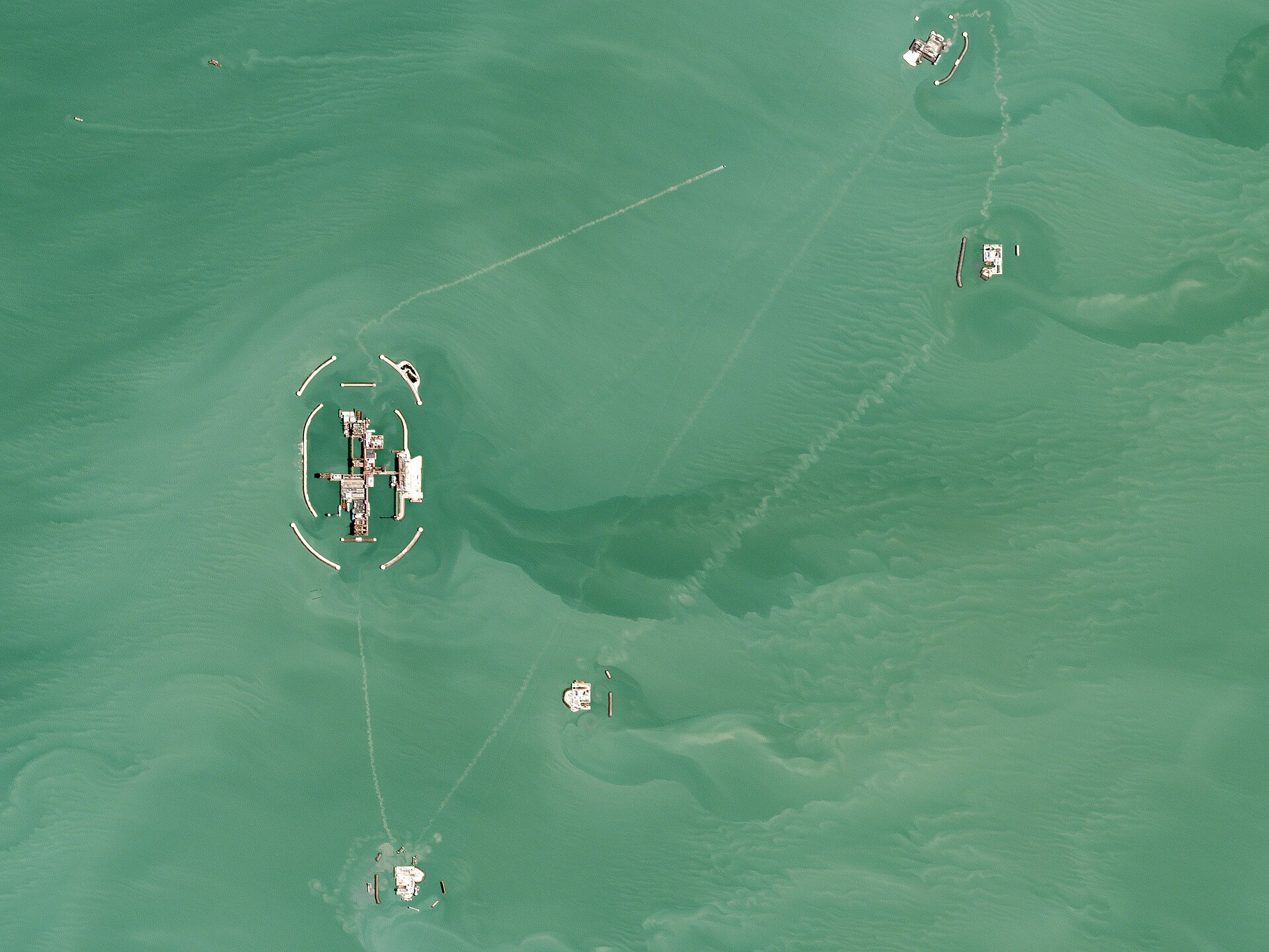
The middle of August delivered a reminder that grand corruption rarely stays local. In The Hague, Kazakhstan is pressing what sources describe as the most serious corruption allegation yet in the largest arbitration claim ever filed, accusing an international oil consortium of awarding $10.7 billion in tainted contracts at the Kashagan mega-field. In Dublin, the alleged head of a global drug-trafficking and money-laundering organization stood before a three-judge court after years beyond reach in Dubai. And in Washington, the Treasury Department finalized the removal of beneficial ownership reporting duties for American companies — a move the administration frames as small-business relief and transparency advocates warn will complicate financial-crime investigations. Here is what mattered this week, and where the threads lead.
Kazakhstan Alleges $10.7 Billion in Tainted Kashagan Contracts
The Kazakh government is claiming in a confidential arbitration that international oil companies awarded $10.7 billion in contracts at the Kashagan oil field that were compromised by self-dealing or unjustified cost increases, or were won through bribery, according to an August 14 report by the International Consortium of Investigative Journalists, citing multiple sources familiar with the proceedings. The allegations center on roughly a dozen contracts issued during the 2000s by the North Caspian Operating Consortium — whose members are Shell, ExxonMobil, Eni, TotalEnergies, China National Petroleum Company and Japan’s Inpex — to engineering and construction firms that built key parts of the Caspian mega-field.
The corruption claim sits inside a $160 billion arbitration registered at the Permanent Court of Arbitration in The Hague and heard at London’s International Dispute Resolution Centre — believed to be the largest international arbitration claim ever filed, exceeding the $114 billion Yukos case against Russia. Kazakhstan contends that corruption-related mismanagement helped delay full production at Kashagan until 2016, postponing the profit-sharing phase most lucrative for the state even as the companies recovered development costs estimated at roughly $60 billion. The tribunal has made no ruling on the corruption claims, and the allegations remain unproven.
The consortium disputes the claims. NCOC told ICIJ its members “consider that they have acted in accordance with the relevant contracts, [Kazakh] laws and applicable standards and best practices,” declining further comment on confidential proceedings. Sources told ICIJ the consortium also cites evidentiary flaws and statutes of limitation, and argues that evidence stemming from Italian bribery investigations points toward Kazakh public officials rather than the companies. The stakes extend beyond this case: Reuters reported that a separate Karachaganak arbitration decided earlier this year in Kazakhstan’s favor noted the government had admitted tolerating “corruption and kleptocracy” until 2022 — a rare official acknowledgment of state capture from inside a petrostate. On July 21, Kazakh authorities froze NCOC assets in-country over a disputed $5 billion environmental fine, now itself in arbitration. A final decision is not expected before 2028 absent a settlement.
Alleged Kinahan Cartel Boss Charged in Dublin After Dubai Extradition
Daniel Kinahan, the boxing promoter U.S. authorities have described as the head of a transnational drug-trafficking organization, was charged in Ireland with directing the activities of a criminal organization following his extradition from the United Arab Emirates, ICIJ reported on August 10. Kinahan, 49, was flown to an aerodrome west of Dublin by the Irish Air Corps, taken under armed escort to the Special Criminal Court, and ordered held at the high-security Portlaoise Prison. He was unrepresented at the hearing and is due back in court October 5; the charges are allegations, and he has not been convicted.
The case is a milestone for a sanctions and rewards campaign that began in April 2022, when the U.S. State Department offered up to $5 million for information leading to Kinahan’s arrest and the Treasury Department sanctioned the network. According to the State Department, the organization expanded from distributing heroin and cocaine in Ireland into the U.K. and Europe, engaging in money laundering, firearms trafficking and murder. A European Union investigation found the group used dozens of front companies to move drugs, and ICIJ’s review of Emirati corporate records showed Kinahan and his brother established several Dubai companies. ICIJ reported in 2024 that Kinahan’s wife assembled a multimillion-dollar Dubai property portfolio, portions of which were reportedly sold after U.S. sanctions hit.
The extradition — the second of a Kinahan cartel figure from Dubai after Sean McGovern, who was convicted and jailed for 24 years in June — suggests the UAE’s long-standing reputation as a refuge for sanctioned crime figures is under real pressure. But the network’s alleged founder, Christopher Kinahan Sr., and Christopher Jr. remain in Dubai, as do two other alleged leaders subject to rewards offers, according to ICIJ. Whether Emirati authorities continue handing over targets — and what happens to the family’s remaining Gulf assets — is the next test of the pressure campaign.
Treasury Permanently Ends Beneficial Ownership Reporting for U.S. Companies
The Treasury Department announced that the Financial Crimes Enforcement Network has permanently eliminated beneficial ownership reporting requirements for U.S. companies and U.S. persons under the Corporate Transparency Act, formalizing an exemption in place since early 2025. Under the final rule, foreign companies registered to do business in the United States must still report their foreign beneficial owners, but are exempt from reporting U.S.-person owners. FinCEN also said it will delete previously collected information on U.S. business owners from its database, according to OCCRP’s August 12 report.
Treasury frames the action as relief for millions of small-business owners from a burdensome filing mandate. Transparency advocates read it differently: Transparency International U.S. argues the rule exempts more than 99 percent of U.S. companies from disclosure and says it will frustrate federal, state and local investigators tracing cartel and corruption-linked finances through anonymous entities. The 2020 law was enacted with bipartisan support after years of reporting — much of it by ICIJ and OCCRP — documented how anonymous shells laundered foreign officials’ wealth through U.S. real estate and banking.
The practical question for enforcement is what replaces the registry function. Banks retain customer due-diligence obligations, and prosecutors can still subpoena formation agents, but records suggest both are slower and more fragmented than a centralized database. How the Financial Action Task Force treats the change in its next U.S. evaluation — beneficial ownership transparency is a core FATF recommendation — is worth watching, as is whether states step in with their own registries.
Fugitive in Alleged $165 Million Crypto Ponzi Scheme Returned From Fiji, Indicted
Federal prosecutors in the Northern District of Georgia unsealed a 25-count indictment against Edward Zimbardi, 59, days after authorities in Fiji handed him over to FBI agents, OCCRP reported August 18. The indictment charges 12 counts of wire fraud, 12 counts of money laundering and one count of money laundering conspiracy over “The Crypto Program,” which prosecutors allege took in $165 million from thousands of investors between June 2022 and August 2023 on promises of guaranteed 25 percent monthly returns.
According to the U.S. Attorney’s Office, Zimbardi directed investors to move cryptocurrency into wallets he secretly controlled, put more than $34 million into risky foreign-currency bets, paid earlier investors with later investors’ money, and spent at least $10 million on personal expenses including a house for his son and luxury vehicles. Prosecutors say he fled to Fiji in July 2025 after learning of the FBI’s investigation and remained there over a year before his apprehension. The charges are allegations; Zimbardi did not respond to OCCRP’s earlier request for comment and is presumed innocent pending trial.
The case is a clean illustration of how crypto-fraud proceeds become money-laundering prosecutions — and of expanding U.S. reach into Pacific jurisdictions that have historically seen little extradition traffic. Filings indicate Zimbardi directed at least two businesses in Fiji while abroad, though OCCRP noted no evidence those businesses were involved in the alleged scheme.
Iraq’s Anti-Graft Campaign Reaches the Electricity Ministry
Iraq’s Federal Commission of Integrity arrested Khalid Ghazay Atiya, undersecretary of the Ministry of Electricity, on August 14 on corruption and illicit-enrichment charges, seizing $5.8 million in U.S. currency, 1.175 billion Iraqi dinars (roughly $900,000) and seven gold bars from his properties, according to commission statements cited in OCCRP’s August 17 report. Atiya, a ministry veteran since 2001 who ran transmission and distribution for the northern region, is the first senior electricity official swept up in Prime Minister Ali al-Zaidi’s anti-corruption drive, which began in late June with a focus on the oil sector.
The campaign’s asset-recovery tallies are becoming substantial: OCCRP reported in July that investigators recovered $47 million in commercial assets, plus caches of cash and gold, tied to former deputy oil minister Adnan al-Jumaili. The head of parliament’s Integrity Committee told OCCRP on August 10 that probes should extend across public institutions — naming the electricity ministry specifically — reaching back to 2003. The commission has not detailed the transactions underlying the case against Atiya, no court has ruled, and OCCRP said he could not be reached for comment.
The open question is durability. Iraq has seen anti-corruption waves before that faded with political cycles. The scale of physical cash recoveries — storm drains, home safes, gold bars — points to systemic off-books flows in the power and oil sectors that would reward sustained forensic accounting, not just headline raids.
OFAC Designates BVI Shell Under Venezuela Sanctions
The Office of Foreign Assets Control’s August 18 action added Bluwaves Properties Limited — a British Virgin Islands company formed in March 2021 — to the Specially Designated Nationals list under Executive Order 13850, the Venezuela sanctions authority targeting networks that have looted state revenue. The designation record identifies the entity only by its BVI registration; the property-holding name and offshore domicile are consistent with the vehicles Venezuela-linked networks have long used to hold real assets abroad, though the notice itself does not detail the entity’s role. The same notice included two International Criminal Court-related designations and a wind-down general license, which are unrelated to the corruption docket.
The action is a signal that Venezuela-related financial enforcement continues to work through the corporate layers around sanctioned networks. For asset-recovery practitioners, each shell designation is a potential map fragment: BVI registry data, correspondent banking records and property registries in the jurisdictions where such entities hold assets tend to reward follow-up.
Leads That Warrant Deeper Investigation
Several threads from this week merit TIJ follow-up. First, Ireland’s government probe into whether the country’s alumina exports ended up feeding Russian aluminum production — launched after reporting by OCCRP and partners, per an August 13 OCCRP explainer — raises supply-chain sanctions questions with U.S. enforcement implications. Second, Albanian prosecutors are investigating the government agency that built the country’s much-publicized “AI minister” in a case involving alleged procurement corruption, OCCRP reported August 11 — a reminder that digital-government showcases can sit atop old-fashioned contracting graft. Third, sources told ICIJ that settlement talks over Kashagan include a possible cancellation of the original production-sharing agreement; any restructuring of a $60 billion cost-recovery arrangement deserves scrutiny for who absorbs the losses. Finally, FinCEN’s proposed anti-money-laundering rules for stablecoin issuers under the GENIUS Act are open for public comment — the compliance architecture that emerges will shape whether dollar-pegged tokens become the next preferred rail for the networks this column tracks.
The Investigative Journal will continue tracking these cases. All charges referenced are allegations unless a court has entered findings; parties’ responses are noted where sought by the cited outlets, and TIJ welcomes right-of-reply correspondence at editorial@tij.news.