

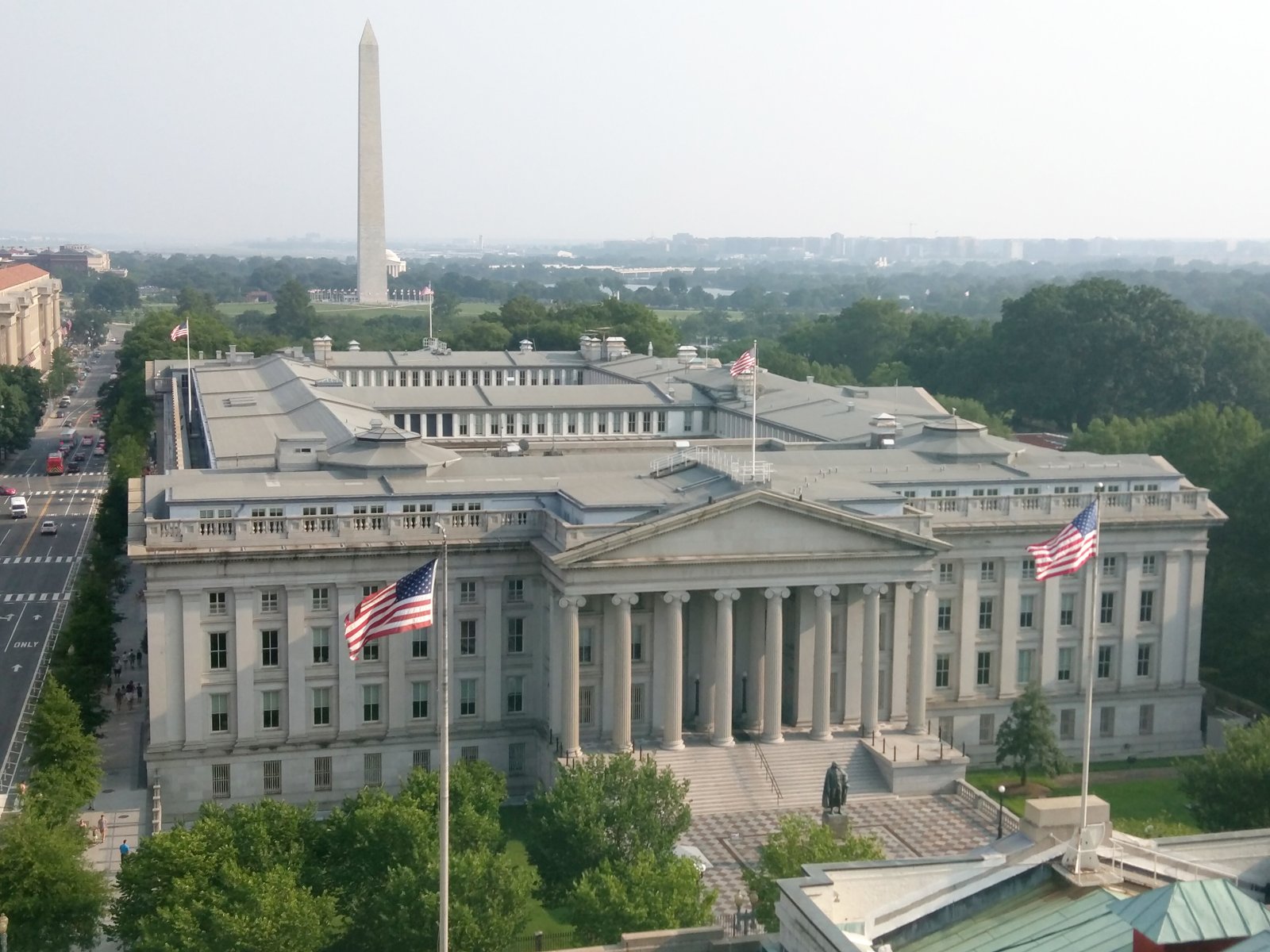
The first week of August delivered one of the most consequential stretches of financial-crime enforcement this year. The U.S. Treasury’s Financial Crimes Enforcement Network imposed the largest anti-money laundering penalty ever assessed against a U.S. broker-dealer, the Office of Foreign Assets Control widened its campaign against an Iran-linked crypto network with tentacles in Dubai, London, and Istanbul, and the Justice Department’s first Foreign Corrupt Practices Act resolution of 2026 exposed how routine customs payments on the U.S.–Mexico border fed cartel-associated intermediaries. Here is what mattered — and where the threads lead.
FinCEN Hits UBS With Record $125 Million Penalty for “Willful” AML Failures
The Financial Crimes Enforcement Network on Monday assessed a $125 million civil penalty against UBS Financial Services Inc. for what the agency described as willful violations of the Bank Secrecy Act — the largest penalty FinCEN has ever imposed on a U.S. broker-dealer, according to reporting by the Organized Crime and Corruption Reporting Project. FinCEN’s announcement states that the firm failed to monitor more than $10 billion in foreign currency wires and ignored red flags on high-risk clients, including customers with ties to Russia and Latin America.
Records indicate this is not the firm’s first encounter with the regulator: FinCEN cited monitoring weaknesses at UBS in a 2018 enforcement assessment, making this week’s action the second against the firm for similar deficiencies. According to FinCEN, warning signs were missed even after an internal affiliate raised concerns — a detail that will interest compliance officers and plaintiffs’ lawyers alike.
As part of the resolution, UBS admitted to the violations and agreed to retain an independent reviewer to evaluate its compliance program, with specific attention to illicit-finance risks involving cartels, Russia, Iran, and Venezuela. The admission is notable: regulators have increasingly demanded acknowledgment of wrongdoing rather than the no-admit settlements that characterized earlier eras of AML enforcement.
Treasury Widens the Net Around Babak Zanjani’s Alleged IRGC Crypto Network
The Office of Foreign Assets Control designated four individuals and nine entities tied to Iranian financier Babak Morteza Zanjani, targeting what Treasury describes as a global network used to evade sanctions and move funds for Iran’s Islamic Revolutionary Guard Corps. Among those sanctioned, per the Treasury statement: Zanjani’s sister, Bahareh Morteza Zanjani, a UAE resident accused of running Dubai-based diamond dealer BZ Diamond FZCO in support of his U.K.-registered crypto platform, and Solmaz Bani, a Dutch national in Dubai whom officials describe as his “significant other.” Inside Iran, OFAC blacklisted Zanjani’s Tehran-based Dot One conglomerate — including a rail subsidiary that filings indicate secured an $800 million contract with Iranian state railways in 2025 — along with a Turkish fintech provider and a Dubai wallet operator that allegedly supplied payment infrastructure to his exchanges.
OCCRP’s reporting adds texture the sanctions notices omit. The outlet’s earlier investigation found that Zanjani’s Zedxion exchange presented a fictitious CEO — “Elizabeth Newman,” portrayed with stock footage of a hired model — while U.K. filings showed the platforms claimed dormancy to British authorities even as they advertised billions of dollars in daily digital-asset volume. Blockchain analytics firm TRM Labs reported that the exchanges transferred more than $10 million to a senior financial official of Yemen’s Houthi militia. Following the revelations, Britain’s Companies House initiated steps to dissolve Zedxion Exchange Ltd., citing “misleading, false, or deceptive” incorporation records.
Zanjani — sentenced to death in Iran in 2016 for embezzling state oil funds before his sentence was commuted in 2024 — denied the allegations in a post on X, saying the sanctioned companies and individuals “have no commercial relationship with me, nor have they ever had one.” The designations freeze U.S.-based property of those named and expose foreign counterparties to secondary-sanctions risk. The pattern worth watching: nearly every offshore node in this network — the diamond dealer, the wallet operator, the residences of both newly designated individuals — sits in Dubai.
DOJ’s First FCPA Resolution of 2026: Scoular’s $10.2 Million Border-Bribery Settlement
The Justice Department entered a three-year deferred prosecution agreement with the Scoular Company, a century-old agricultural supply-chain firm, resolving a charge of conspiracy to violate the FCPA’s anti-bribery provisions, according to analyses of the resolution. Filings indicate Scoular directed customs brokers who paid more than $400,000 in bribes to Mexican customs officials between 2013 and 2019 to speed agricultural shipments across the border. The total financial resolution — a $9.77 million criminal penalty plus $414,351 in forfeiture — comes to $10.18 million.
Two features stand out. First, the DOJ emphasized that a portion of the payments ultimately benefited individuals associated with a Mexican cartel — though prosecutors reportedly did not allege the company knew of that connection, per Davis Polk’s client review. That framing aligns FCPA enforcement with the administration’s stated priority of severing corporate money flows that touch cartel networks. Second, commentators note the company received cooperation credit but no voluntary-disclosure credit, and no compliance monitor was imposed — Scoular will self-report for the DPA’s term. For companies moving goods through high-risk customs corridors, the message is that “facilitation” payments routed through third-party brokers remain squarely within prosecutors’ sights.
OCCRP: Convicted Iranian Pyramid-Scheme Figure Built a New Life in Texas
An OCCRP investigation published July 31 reports that Mazyar Mahan, convicted in absentia in Iran in connection with a $25 million pyramid scheme that defrauded hundreds of people, obtained U.S. citizenship and went on to teach film at a Texas university. The investigation traces how Mahan rebuilt his public profile in the United States while, records suggest, his victims in Iran remained uncompensated.
The case raises uncomfortable vetting questions without easy answers. Convictions rendered in absentia by Iranian courts warrant skepticism — Iran’s judiciary is not independent, and this digest treats its verdicts as claims rather than findings. But the underlying fraud allegations were documented by victims and contemporaneous reporting, according to OCCRP. How immigration screening weighs foreign financial-crime records from adversarial jurisdictions is a policy gap that deserves closer examination.
Ukraine: National Guard Embezzlement Case Advances as Anti-Corruption Bodies Fight on Two Fronts
Ukraine’s National Anti-Corruption Bureau and the Specialized Anti-Corruption Prosecutor’s Office notified eight individuals of suspicion in July over the alleged misappropriation of more than 150 million hryvnia from the National Guard. Notices of suspicion are allegations, not findings; the cases now move toward Ukraine’s High Anti-Corruption Court.
The bureau is simultaneously managing internal turbulence. Its head of detectives, Ruslan Mahamedrasulov, was detained for 60 days in late July on suspicion of links to Russia, and NABU’s leadership has faced what the Kyiv Independent describes as sustained pressure from other branches of government — even as the bureau’s Energoatom investigation, which reporting by bne IntelliNews indicates has implicated figures close to the president’s inner circle, continues to generate fallout. For Western donors financing Ukraine’s defense, the health of these institutions is not an abstraction: it is the control environment for tens of billions in aid.
Sanctions-Evasion Accountability, With an Asterisk: Zarrab Avoids Prison
A federal judge in New York spared Reza Zarrab, the Turkish-Iranian gold trader at the center of one of the largest Iran sanctions-evasion schemes ever prosecuted, from a prison sentence after what the court credited as extensive cooperation with U.S. prosecutors, OCCRP reported. Zarrab’s testimony previously helped convict a senior Turkish banker.
The outcome illustrates the trade at the heart of complex financial-crime enforcement: insiders who can map billion-dollar evasion architectures are often the only witnesses who can, and the price of their testimony is leniency. Whether that bargain deters the next Zarrab — or merely prices in the exit — is a question worth revisiting as the Zanjani designations generate their own potential cooperators.
Institutional Watch: FATF’s UAE Test, Transparency International’s Year, and the Sanctions Tempo
Transparency International’s 2025 Annual Report, released in mid-July, highlights the adoption of new European Union anti-corruption legislation that allows civil-society organizations to represent communities harmed by corruption in legal proceedings — a structural change that could reshape who gets standing to pursue kleptocrats in European courts. The Financial Action Task Force, meanwhile, faces a credibility test of its own: the UAE undergoes its FATF mutual evaluation in 2026, after the watchdog pledged to consider the findings of the “Dubai Unlocked” investigation into criminal and sanctioned property owners in Dubai. Given how many nodes in this week’s stories run through the Emirates, that evaluation deserves close scrutiny.
The enforcement tempo elsewhere remained steady. OFAC’s recent-actions docket shows Iran-related designations on July 29 — formally published in the Federal Register this week — followed by counter-terrorism designations on July 30 and an amended Venezuela-related general license on August 3.
Leads Worth Pulling
Five threads from this week warrant deeper TIJ investigation. First, the U.K. shell-company playbook: Zedxion told Companies House it was dormant while claiming billions in daily volume — how many other U.K.-registered exchanges show the same filing pattern? Second, Dubai as the recurring nexus: BZ Diamond, Zedx DMCC, and the residences of two newly designated individuals all sit in the UAE on the eve of its FATF evaluation; the gap between Emirati enforcement rhetoric and designated persons operating openly is measurable. Third, the customs-broker channel: Scoular’s brokers moved $400,000 to Mexican officials over six years — the same broker networks serve dozens of U.S. agricultural exporters, and the cartel-adjacency the DOJ flagged suggests a systemic exposure, not a one-off. Fourth, immigration vetting of foreign financial-crime records, per the Mahan case. And fifth, the scope of UBS’s independent review: FinCEN’s specific mention of cartels, Russia, Iran, and Venezuela indicates the agency believes it knows where the bodies are buried. Records requests are underway.
Featured image: U.S. Treasury Building, Washington, D.C. Via Wikimedia Commons (CC BY 4.0). This digest is based on public records, government notices, and credited investigative reporting; allegations are noted as such, and pending cases remain unproven. Individuals and entities named in connection with pending matters are presumed innocent unless and until proven otherwise.