

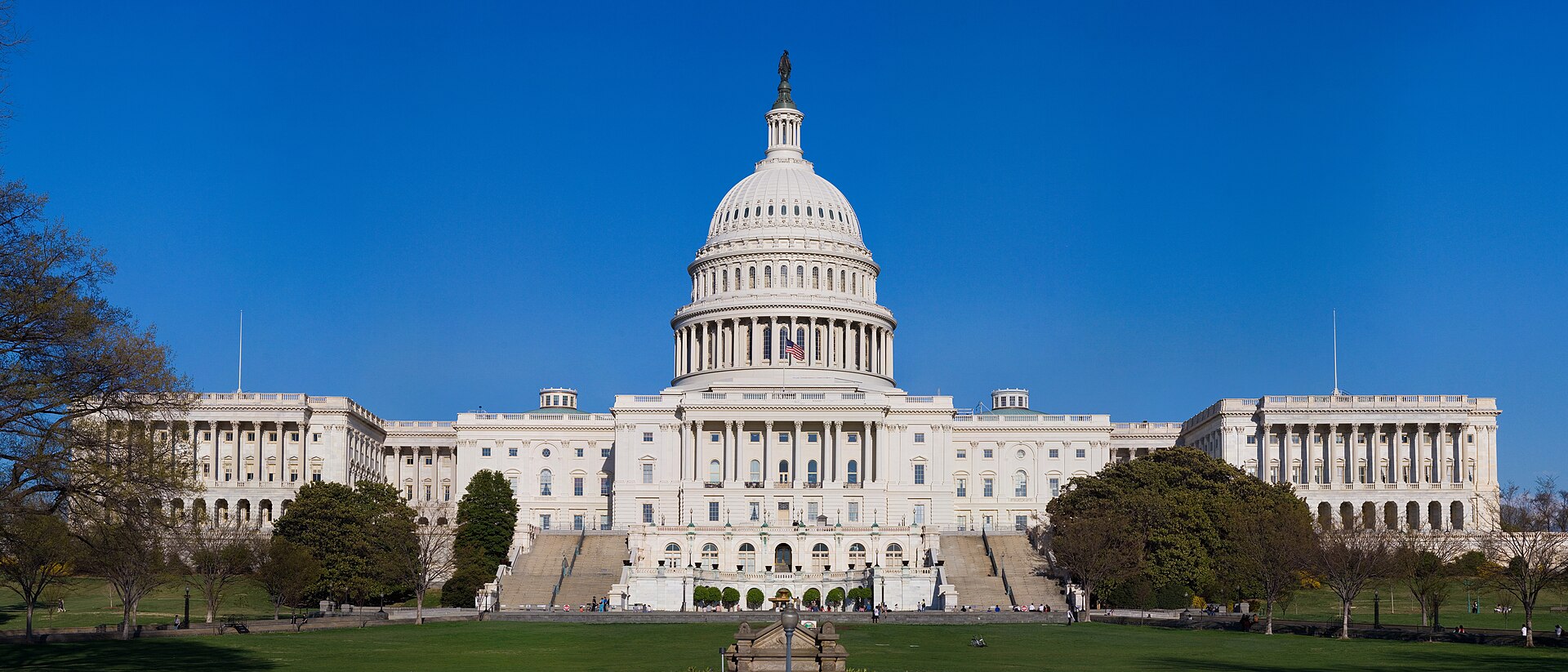
The Senate returns to Washington this afternoon after a week away, convening at 3:00 p.m. with an unfinished college sports bill as its pending business, a fast-closing appropriations calendar, and a committee week that puts the private surveillance industry, the federal judiciary, and the Pentagon’s classified budget on the same three-day schedule. The House remains in a district work period through Friday, according to the chamber’s published calendar, leaving the Senate as the only chamber transacting legislative business this week.
1. Senate Reconvenes With College Sports Bill as Pending Business
Senate floor proceedings records show the chamber convenes at 3:00 p.m. today, its first working session since Sept. 17. Its last meeting was a pro forma session on Sept. 18.
Waiting on the floor is S. 4668, the Protect College Sports Act of 2026. The Senate agreed to the motion to proceed 77-22 on Sept. 17, after invoking cloture on that motion 74-24 two days earlier. Those margins are unusually wide for this Congress. Congress.gov records list Sen. Ted Cruz (R-Texas) as sponsor, with Sens. Maria Cantwell (D-Wash.), Eric Schmitt (R-Mo.) and Christopher Coons (D-Del.) as cosponsors — a bipartisan quartet that helps explain the tally.
The opposition was bipartisan too, and that is the more revealing number. The roll call shows the 22 nays included three Republicans — Sens. Ashley Moody (R-Fla.), Rand Paul (R-Ky.) and Rick Scott (R-Fla.) — alongside 18 Democrats and Sen. Bernie Sanders (I-Vt.). Sen. Jerry Moran (R-Kan.) did not vote. A motion to proceed is a low bar; the coalition that forms around amendments and final passage will be a different one.
The Congressional Budget Office cost estimate, published July 31 and prepared on the version reported by the Commerce Committee on June 24, is where the bill’s real scale becomes visible. Direct federal spending is negligible — CBO estimates roughly $7 million over the life of a new Congressional Commission on the Future of College Athletics. The mandates are another matter. CBO found the bill’s intergovernmental and private-sector mandate costs would both exceed the Unfunded Mandates Reform Act thresholds ($107 million and $214 million in 2026, respectively). Among the specific estimates: capping agent fees at 5 percent would cost agents roughly $35 million annually in forgone revenue; a required NCAA medical fund would cost at least $60 million; and antitrust exemptions for collectively sold media rights could foreclose claims worth “hundreds of millions of dollars in a year,” in CBO’s phrasing. CBO also flagged that several mandates — including provisions letting athletes void noncompliant existing NIL agreements — could not be quantified at all.
2. Hawley Calls Four Surveillance CEOs to Testify Wednesday
The most consequential oversight event of the week is scheduled for Wednesday at 2:30 p.m. in Dirksen 562. The Senate Judiciary Subcommittee on Crime and Counterterrorism will hold a hearing titled “Always Watching: Flock’s Nationwide AI Surveillance Network.”
Chairman Josh Hawley (R-Mo.) announced on Sept. 18 that he had invited four chief executives to testify: Garrett Langley of Flock Safety, Rick Smith of Axon Enterprise, Greg Brown of Motorola Solutions, and Filip Kaliszan of Verkada. Hawley’s office states that Flock operates roughly 120,000 AI-powered cameras across the United States, and that his concerns center on the company’s collection of citizens’ data and personal information. The release characterizes those practices as posing privacy threats and “potentially” violating existing laws — an allegation under investigation, not a finding. No enforcement action has been announced, and the companies have not been charged with any violation.
The hearing is the latest step in an investigation Hawley launched in August and subsequently expanded to additional firms. It follows an Aug. 4 subcommittee hearing on AI surveillance pricing and a separate inquiry his office opened into OpenAI in September. Whether the four CEOs appear is itself the story to watch: an invitation is not a subpoena, and declined invitations from this subcommittee have historically been followed by compulsory process.
3. Crypto Market Structure Stalls: The Verified CLARITY Act Tally
Before the recess, the Senate rejected cloture on the motion to proceed to H.R. 3633 by 49-50 on Sept. 15 — eleven votes short of the 60 required. The Digital Asset Market Clarity Act would divide digital-commodity oversight between the SEC and the CFTC and bar Federal Reserve banks from offering certain retail products.
Several secondary accounts reported three Republican defections. The official roll call shows four: Sens. Susan Collins (R-Maine), Josh Hawley (R-Mo.), Jerry Moran (R-Kan.) and Thom Tillis (R-N.C.) voted nay alongside every voting Democrat and independent. Sen. Coons did not vote. The distinction matters for anyone counting toward a future 60: with the entire Democratic conference opposed and four Republicans against, the bill’s path requires not incremental persuasion but a renegotiated text.
Because the motion to proceed was never agreed to, the measure remains on the Senate calendar rather than on the floor. Leadership retains the option to file cloture again, but no such motion appears on the current schedule.
4. The December 11 Cliff and an Empty Senate Appropriations Docket
The Continuing Appropriations and Extensions Act, 2027 (H.R. 6500) became law on Sept. 2, funding federal agencies through the earlier of Dec. 11, 2026, or enactment of the applicable full-year bills. The Senate cleared it 90-6 on Aug. 8.
That leaves roughly eleven session weeks, minus the election recess, to move twelve annual bills. Independent appropriations trackers report that as of early September the Senate had not reported a single FY2027 appropriations measure out of committee, while the House had completed committee action on all twelve and passed three on the floor. If those figures hold, the arithmetic points toward either an omnibus, a second continuing resolution, or a full-year CR — the three outcomes that fiscal-process reformers in both parties have spent a decade arguing against.
That argument got a venue on Monday. The House Budget Committee held a field hearing at Old Parkland in Dallas titled “America’s Fiscal Future: Examining the Need for a Fiscal Commission,” presided over by Chairman Jodey Arrington (R-Texas). The committee is accepting written statements for the record through the close of business Friday, Sept. 25. Holding a hearing on structural fiscal reform in Dallas during a recess week, while the Senate’s own appropriations committee has reported nothing, is a fair summary of where budget process reform stands.
5. Judicial Confirmations Grind Forward
The Senate’s last act before recess was confirming Kasdin Miller Mitchell to the U.S. District Court for the Northern District of Texas, 49-45 on Sept. 17, following cloture 49-47. Matthew R. Byrne was confirmed to the Southern District of Ohio 52-45 on Sept. 15.
The pipeline refills Thursday. The Senate Judiciary Committee’s executive business meeting at 10:15 a.m. in Hart 216 is noticed to consider Anna St. John for the Fifth Circuit, Gregory Carl Cook for the Northern District of Alabama, and a four-member slate for the U.S. Sentencing Commission: John Peter Cronan, Jason Manion, Claire McCusker Murray and Luis Felipe Restrepo. Also on the agenda are D. Adam Candeub to be an Assistant Attorney General, two U.S. Attorney nominations, and four U.S. Marshal nominations.
The Sentencing Commission slate deserves attention beyond the usual markup coverage. The commission sets the guidelines federal judges consult at sentencing; a four-seat confirmation moves it from a body that has repeatedly lacked a quorum in recent years toward operational capacity.
6. Health Nominees Face the Senate This Week
The Senate HELP Committee has scheduled a dense Thursday. A 10:00 a.m. business meeting in Dirksen 430 will consider Nicole Saphier to be Surgeon General and Medical Director in the Regular Corps of the Public Health Service, Timothy Westlake to be Assistant Secretary for Mental Health and Substance Use, and Mary Lazare to be Assistant Secretary for Aging, along with two National Mediation Board nominees and S. 4428, a bill requiring identity-fraud detection in FAFSA review.
Thirty minutes later, the same committee opens a hearing on the nomination of Heidi Overton to be Commissioner of Food and Drugs. Separately, the Special Committee on Aging meets Wednesday at 3:30 p.m. to examine “restoring America’s edge in generic drug manufacturing” — a supply-chain question with direct national security implications that has drawn interest from members in both parties.
7. Defense and Intelligence Business Moves Behind Closed Doors
Four of this week’s national security proceedings are closed. The Senate Armed Services Committee receives a closed briefing Wednesday at 9:30 a.m. on the U.S. Central Command area of operations, and another Thursday at 9:30 a.m. on the Department of Defense budget. Its Cybersecurity Subcommittee meets Wednesday afternoon for a closed briefing on cyber operations and readiness for the second and third quarters of FY2026 — and, notably, an update on election security. The Senate Intelligence Committee receives a closed briefing Wednesday at 3:00 p.m.
The Foreign Relations Committee holds a closed hearing Wednesday on combating and deterring wrongful detentions, and an open hearing Thursday on pending nominations. Looking ahead, the Armed Services Subcommittee on Strategic Forces has noticed a Sept. 29 hearing on “an update on Golden Dome,” the homeland missile defense architecture — one of the few opportunities this fall for public testimony on a program of that cost and scope.
Elsewhere Wednesday: Environment and Public Works examines updating America’s nuclear waste management policy at 10:00 a.m.; the Indian Affairs Committee marks up S. 5354 reauthorizing the Native American Housing Assistance and Self-Determination Act before turning to four land and recognition bills; and the full Judiciary Committee holds a 10:15 a.m. hearing on opportunity, fairness and safety for female athletes — thematically adjacent to the NIL bill now on the floor.
What This Means for TIJ’s Beats
Three threads bear directly on this publication’s continuing coverage. First, the Flock hearing is the first sustained congressional examination of the commercial license-plate-reader and AI camera industry, and the documents it produces — witness statements, subcommittee correspondence, any subpoenaed material — will become primary sources for reporting on domestic surveillance infrastructure and its procurement by local police departments.
Second, the closed SASC cybersecurity briefing on election security arrives weeks before a midterm election, and the absence of a public record on that subject is itself newsworthy. Members who attend classified briefings frequently issue post-briefing statements; those statements are the only contemporaneous public trace and warrant tracking.
Third, the appropriations gap is the accountability story that will define the rest of the calendar year. Full-year continuing resolutions freeze agency spending at prior-year levels without the line-item scrutiny that regular appropriations require, and they suppress the report language through which Congress directs and constrains executive branch spending. Every week the Senate Appropriations Committee does not report a bill raises the probability of that outcome.
All claims in this digest are sourced to public congressional records, official committee notices, and CBO documents linked above. Hearing schedules are subject to change; committee notices should be verified against committee websites before relying on times and locations. TIJ extends the right of reply to any person or entity named here.