
WASHINGTON — Capitol Hill is quiet on the floor but not in the committee rooms. Both chambers are in their pre-election recess, and the most consequential recent congressional activity is happening through oversight letters, contempt proceedings and Congressional Budget Office (CBO) scores. This digest summarizes what public records show as of Friday, October 23, 2026.
1. Both chambers are in pro forma mode
No roll call votes are scheduled today. According to the House Republican Cloakroom, the House held a pro forma session on Thursday, October 22, and is not in session today. Further pro forma sessions are listed for Monday, October 26, and Thursday, October 29, with no legislative business noted for those dates. The Senate floor activity page shows a pro forma session on October 22 and another set for 5:30 p.m. on Monday, October 26.
Pro forma sessions generally keep a chamber technically open without conducting votes. The practical result is that no new floor action, and no new recorded votes, should be expected before the November election. Readers tracking the lame-duck period should check the Congressional Record and the House majority leader’s calendar for the return date, which the sources reviewed for this digest did not state clearly.
2. Oversight Committee opens a probe into D.C. jury-nullification trainings
On October 13, House Oversight and Government Reform Committee Chairman James Comer (R-Ky.) sent letters to Keya Chatterjee, executive director of Free DC, and Qiana Johnson, a board member of Harriet’s Wildest Dreams. According to the committee’s press release, the letters allege the groups held training sessions in the District intended to help attendees influence criminal jury outcomes and navigate juror screening.
The committee is requesting documents and communications about the sessions, coordination with outside partners, and funding. These are the committee’s allegations; the release does not include a response from either recipient, and it does not state a response deadline. TIJ has not independently reviewed the underlying letters. Jury nullification, in which jurors acquit despite evidence of a violation, is a long-debated feature of American jury trials, and the committee’s letters frame the trainings as an effort to subvert impartiality. Free DC and Harriet’s Wildest Dreams have not, in the records reviewed, publicly answered the committee. Both are invited to respond.
3. Prediction-market insider-trading inquiry widens
On September 29, Comer sent letters to the chief executives of Hyperliquid Labs, Crypto.com and Aristotle Exchange, Inc., according to the committee. The letters ask how each company verifies account owners’ identities and users’ locations, and how it detects and prevents insider trading and suspicious activity.
The committee says the inquiry began in May 2026 and that it has received nearly 1,000 documents and five briefings from representatives of Polymarket and Kalshi. Comer said some bad actors had exploited the platforms by betting on nonpublic information; the release does not identify specific individuals, and no findings of wrongdoing have been announced. No response deadline was stated.
The issue also has a budget angle. On October 19, CBO published its cost estimate for H.R. 9367, the Stop Lawmakers From Predicting Act, as ordered reported by the House Committee on House Administration on June 24, 2026. The bill would bar Members of Congress, their spouses and dependent children from trading on prediction markets tied to government policy, government action or political outcomes, and would create civil penalties. CBO estimates no direct spending, administrative costs under $500,000 over 2027–2031 subject to appropriation, and penalty collections under $500,000 over 2027–2036. CBO treats the restriction on spouses and dependents as a private-sector mandate but estimates its cost falls below the statutory threshold of $214 million. The bill’s page is on Congress.gov.
4. Leon Black held in contempt of Congress
On September 16, the House approved by unanimous consent a resolution holding financier Leon Black in contempt for failing to comply with two subpoenas, according to Comer’s statement. The Oversight Committee had unanimously advanced the contempt report the day before. The release reports approval by unanimous consent, not a recorded tally.
The committee’s account is that Comer wrote to Black on March 3 seeking a transcribed interview, then issued subpoenas for nondisclosure agreements and a July 16 deposition. The release states the deposition was delayed at Black’s request, and that on September 3 he did not appear, withheld the agreements and sued Comer and the committee. The committee says it is examining the federal handling of the Epstein and Maxwell cases, and states that Black paid Jeffrey Epstein at least $158 million after Epstein became a registered sex offender. Those figures are the committee’s claims. Black’s lawsuit is pending, and TIJ has not reviewed his side of the dispute. Contempt of Congress is a referral mechanism; whether any prosecution follows is a decision for the Justice Department, and nothing in the release indicates one has been announced.
5. Comer introduces the Survivor’s Voice Protection Act
Also on September 16, Comer introduced H.R. 10389, the Survivor’s Voice Protection Act, with Reps. Nancy Mace, Virginia Foxx, Lauren Boebert and Anna Paulina Luna as original cosponsors. As described by the committee, the bill would void nondisclosure clauses that bar anyone from disclosing information about sexual abuse, including agreements signed before enactment; require fiduciaries to report witnessed grooming of a minor to law enforcement when they have reasonable cause to believe it is meant to lead to criminal abuse; and create a federal definition of grooming.
The committee says the bill follows its Epstein-related review, which it reports includes 19 depositions and transcribed interviews and about 65,000 pages of documents. The bill’s text is available via Congress.gov. Because the House is out of session, no markup or floor action is expected soon. Provisions that retroactively void private contracts typically draw constitutional and contract-law scrutiny, a point likely to surface if the bill advances.
6. Hearing examines federally funded homelessness programs
The Oversight Subcommittee on Delivering on Government Efficiency, chaired by Rep. Tim Burchett (R-Tenn.), held a mid-September hearing titled “Fixing Fraud and Failure in Federally Funded Homelessness Services,” per the committee’s wrap-up. Witnesses were Jonathan Choe of the Discovery Institute, Paul Webster of the Cicero Institute and Samantha Batko of the Urban Institute.
The release attributes several figures to witnesses and members that TIJ has not independently verified. Webster cited roughly 70,000 homeless people in Los Angeles in the latest point-in-time count, about $2 billion in federal funds since 2005 and about $4 billion in city and county budgets since 2022, and recommended tying funding to measurable outcomes and annual HUD performance monitoring. Rep. Pat Fallon (R-Texas) cited about $51 billion in federal homelessness spending since 2007. The release notes a discrepancy between Webster’s written figure for 2024 Los Angeles Continuum of Care awards ($220 million) and a figure he gave in questioning ($240 million). Batko was questioned, but the release does not summarize her testimony, and the Urban Institute’s position should be consulted directly. The hearing record illustrates a live accountability question: how federal homelessness dollars are measured against outcomes.
7. Committee presses HHS over alcohol-study data release
On September 24, Comer wrote to Health and Human Services Secretary Robert F. Kennedy Jr., according to the committee, alleging that Synergy Enterprises, Inc., prime contractor on an alcohol intake and health study, and members of its scientific review panel published government-owned study data without authorization. The letter says the material appeared in outside journals in November 2025 and June 2026, and that the administration had declined to finalize the underlying study.
Comer asked for a staff briefing and for HHS to review the contractor’s conduct and consider remedial or contractual action, including possible debarment. These are allegations in a committee letter; the contractor and panel members’ responses were not included in the release, and no deadline was stated. The matter touches on contract compliance and the ownership of federally funded research data.
8. CBO scores: public-safety benefits and preventive-health estimates
CBO’s October 22 estimate of S. 3897, the Officer John Barnes and Chief Michael Ansbro Public Safety Officers’ Benefit Program Expansion Act of 2026, covers the bill as passed by the Senate on August 7. CBO estimates it would add about $7 million in direct spending over 2027–2036, with a further roughly $11 million over 2027–2031 subject to appropriation. The bill would set deadlines for the Justice Department to decide benefit claims, require interim payments when it misses them, and direct GAO to audit claims pending more than a year. CBO flags significant uncertainty about claim volumes and timing. See the bill on Congress.gov.
On October 20, CBO published its estimate of H.R. 4464, the Preventive Health Savings Act, ordered reported by the House Budget Committee on September 16. It would let CBO produce 30-year estimates of preventive-health legislation on request, for informational use only and not for budget enforcement. CBO estimates no effect on direct spending, revenues or the deficit and implementation costs under $500,000 over 2027–2031. The bill is on Congress.gov.
What to watch
Pro forma sessions continue on October 26 and 29, with no votes expected. Recipients of the Oversight Committee’s recent letters have not publicly disclosed response dates. A fuller schedule of upcoming hearings and votes will depend on when each chamber returns after the election; check House.gov and the Senate Daily Press for notices.
Items relevant to TIJ’s investigative beats
Three threads merit follow-up: contract and data-ownership compliance in the HHS alcohol-study letter, the federal-funding-to-outcomes record raised in the homelessness hearing, and the prediction-market inquiry, where platforms’ identity and location verification practices are the stated focus. In each case the committee’s claims are allegations or witness assertions, not findings, and TIJ will seek responses from the named parties. Right of reply is open to everyone named in this digest; contact the newsroom with any response or correction.
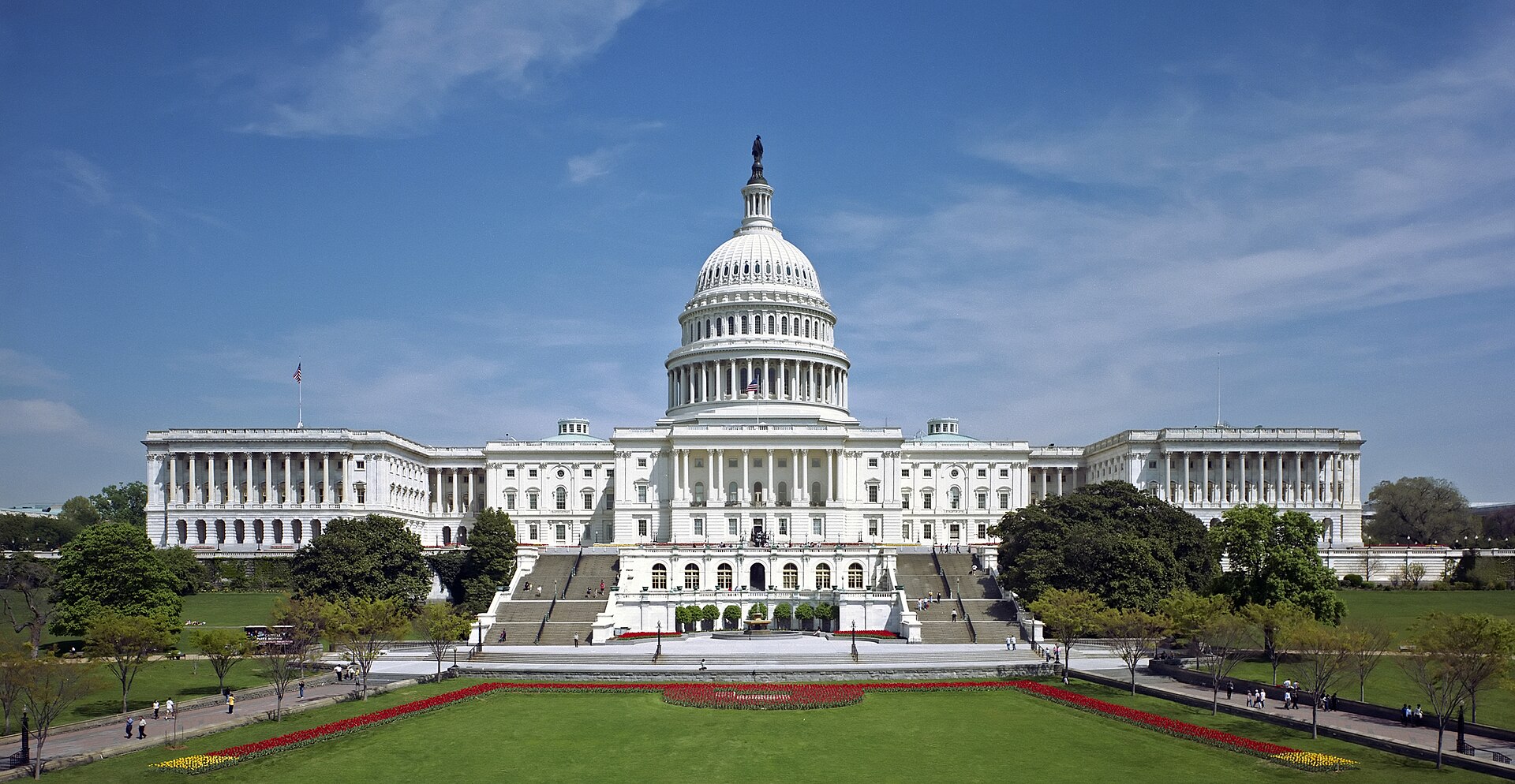
Sources: House Oversight Committee press releases (linked above), CBO cost estimates, Congress.gov, House Republican Cloakroom, U.S. Senate floor activity page. Featured image: U.S. Capitol west front, Architect of the Capitol, public domain via Wikimedia Commons.