

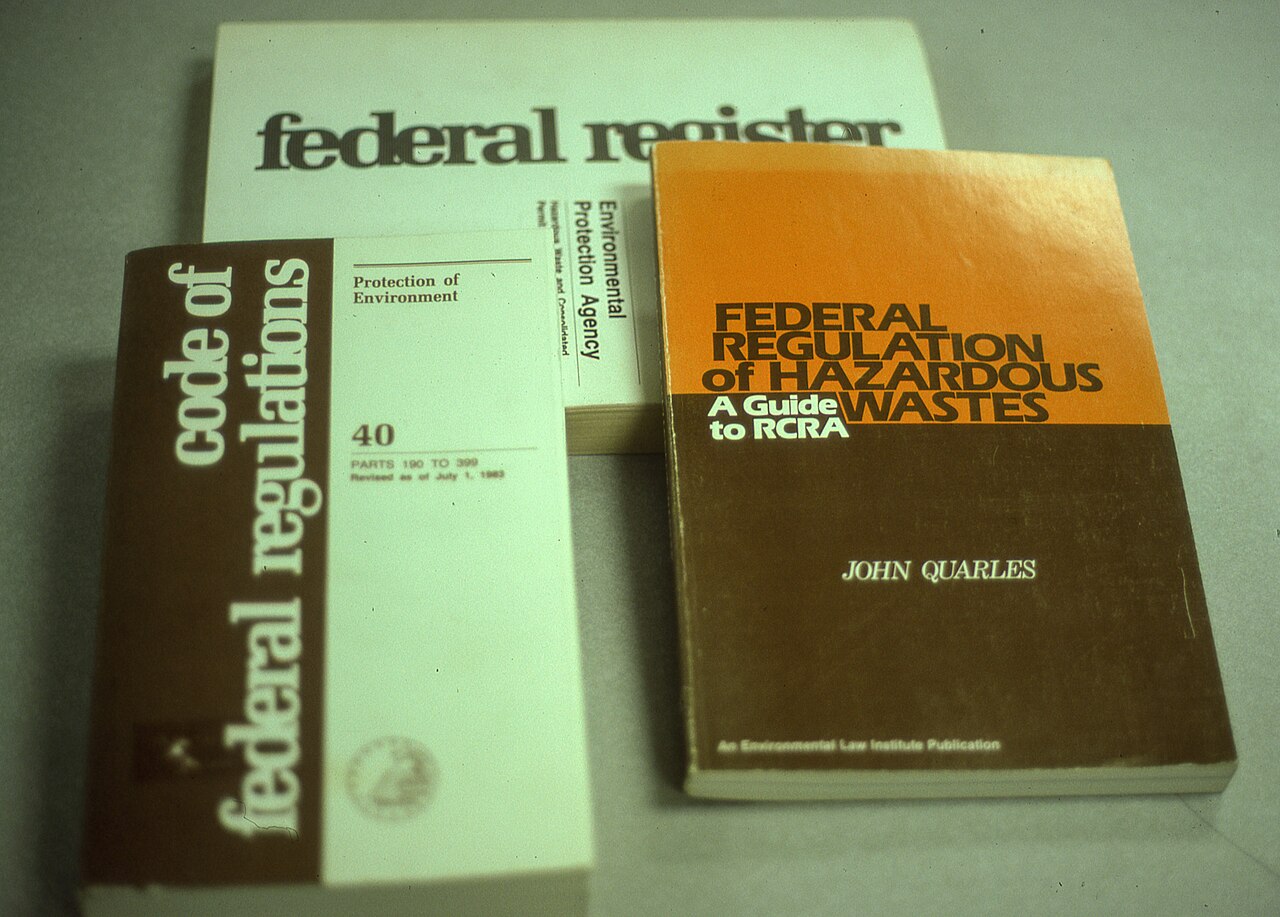
Based on documents filed for public inspection and scheduled for publication in the Federal Register on October 27, 2026. Public inspection versions are unofficial; the official edition carries legal notice. Comment deadlines below are calculated from the scheduled publication date and should be confirmed against the published notices.
The Department of Health and Human Services leads today’s Federal Register with a 203-page proposed rule that would change when Affordable Care Act exchange enrollees can receive federal premium subsidies. Alongside it, the Department of Homeland Security is suspending a visa-free travel program for Chinese nationals in the Northern Mariana Islands, the Centers for Disease Control and Prevention is formalizing an airline passenger attestation order tied to an Ebola-family outbreak, and the Commerce Department is renewing an export-denial order against an Iranian airline and its network. Here are the entries worth a closer look.
1. HHS Proposes Pre-Eligibility Verification for ACA Subsidies
The Centers for Medicare & Medicaid Services (CMS) has proposed a rule, “Patient Protection and Affordable Care Act, Exchange Pre-Eligibility Verification” (CMS-9873-P; RIN 0938-AW03), that would implement section 71303 of Public Law 119-21. According to the document, the rule would require exchanges to verify specified eligibility information before advance payments of the premium tax credit (APTC) and cost-sharing reductions (CSRs) can be paid, beginning with plan year 2028.
The proposal would create a pre-open-enrollment verification period starting each August 1, with the first beginning August 1, 2027. Under the text, an exchange could not redetermine an existing enrollee for the next plan year unless the enrollee provides or confirms household income, family size, citizenship or eligible immigration status, other minimum essential coverage, and residence. Exchanges generally could not pay APTC or CSRs while a data-matching issue on those criteria remains unresolved, with exceptions for certain family-size special enrollment periods. Consumers could “pend” a plan selection so it reaches the insurer only after subsidy eligibility is determined, and subsidies could be applied retroactively to the first month all criteria were verified, though not into a prior coverage year.
Trade press coverage of the proposal, including Becker’s Payer Issues, reports that CMS projects about 332,500 fewer exchange enrollees each year and a 0.4 percent premium increase. Those figures come from that report; the portion of the rule containing the regulatory impact analysis was not reviewed in full. CMS also asks for comment on stronger residency and family-size verification methods, including federated identity checks and state-federal data sharing, and on whether Medicaid or CHIP applicants during the pre-enrollment period should qualify for a special enrollment period. Insurers have been asked specifically to weigh in on the operational difficulty of applying subsidies retroactively.
Comment deadline: 30 days after publication, or on or about November 26, 2026, at regulations.gov (docket CMS-2026-3367), referencing file code CMS-9873-P.
2. DHS Suspends the CNMI Visa-Free Program for Chinese Nationals
The Department of Homeland Security is suspending the Commonwealth of the Northern Mariana Islands Economic Vitality and Security Travel Authorization Program (EVS-TAP), which since February 20, 2025 has allowed vetted People’s Republic of China nationals to visit the CNMI without a visa for stays generally capped at 14 days. The notice says the suspension takes effect three days after publication, which would be about October 30, 2026; the notice leaves the exact date as a placeholder in the public inspection copy.
DHS says the Secretary found good cause because the volume of visa-exempt entries creates “unacceptable security and law enforcement risks.” According to the notice, more than 3,000 PRC nationals entered under the program in fiscal year 2025. DHS cites concerns about espionage near defense sites including the Tinian Air Base and Guam installations, documented prosecutions involving smuggling from the CNMI to Guam, birth tourism, and past money laundering and labor violations tied to a CNMI casino project. Current authorizations are revoked, travelers already admitted may remain for their authorized stay, and future visitors will need a nonimmigrant visa.
The economic stakes are real for the islands. Radio Free Asia reported in May that Chinese arrivals fell from 185,526 in 2019 to 10,764 in fiscal 2025, and that local business groups argued ending visa-free access would deepen the territory’s economic strain. DHS says it weighed reliance interests and concluded national security considerations outweigh them.
3. CDC Order Requires Passenger Attestations on Congo Travel
The CDC has published a notice, “Requirement for Attestation”, covering all airline passengers arriving in the United States from any foreign country. Starting at 11:59 p.m. EST on November 3, 2026, passengers must attest that they have not been in the Democratic Republic of the Congo in the prior 21 days, and airlines must confirm attestations before boarding and keep copies for at least 42 days. Carriers that fail to do so would not receive “controlled free pratique,” the permission to land and disembark passengers. The signed order is dated October 22 and runs until December 18, 2026 unless rescinded or modified; the document contains a one-day discrepancy between December 17 and December 18 in different sections.
The order concerns Bundibugyo virus disease, a severe form of Ebola. As of October 18, 2026, the DRC had reported 9,455 confirmed cases and 4,561 deaths across 66 health zones, and Kenya had reported eight cases as of October 19, according to the order. CDC states that roughly 80 percent of new cases in Ituri Province are not linked to known contacts. The agency says the order is not an Administrative Procedure Act rule and, alternatively, cites good cause to skip notice and comment. Knowingly false statements may be prosecuted under 18 U.S.C. 1001.
4. Commerce Renews Export Denial Against Mahan Airways Network
The Bureau of Industry and Security is renewing a Temporary Denial Order against Iran’s Mahan Airways and eleven related parties, signed October 22, 2026. The order, first issued in March 2008, has now been renewed roughly 37 times. This renewal runs one year, which BIS says is permitted because of a pattern of repeated and continuous apparent violations. No opposition was received.
The record BIS cites includes mid-2026 efforts to obtain five Boeing 777-212ER aircraft through intermediaries and re-registrations, with storage in China and Cambodia; BIS says three now carry Iranian tail numbers and fly routes to Moscow, Beijing and Muscat. BIS also references July and September 2026 Treasury sanctions designations of Mahan-linked parties. These are the agency’s findings of apparent violations in an administrative export-control proceeding, not judicial determinations, and respondents may appeal at any time.
5. EPA Releases MOVES6 Emissions Model
The Environmental Protection Agency has released MOVES6, its updated motor vehicle emissions model, for state implementation plans and transportation conformity analyses outside California. It takes effect on publication, with a two-year conformity grace period ending October 27, 2028; after that, MOVES6 is required for new regional and hot-spot analyses. A separate MOVES5 grace period runs to December 11, 2026.
The notice says MOVES6 lowers electric vehicle fractions, reflecting repeal of greenhouse gas vehicle standards, reduced EV incentives and the disapproval of California’s Advanced Clean Trucks waiver. It also updates energy consumption rates, vehicle miles traveled and population data, and corrects emission-rate errors in MOVES5. Emission estimates may differ by area and inputs, which matters for metropolitan planning organizations and state air agencies managing conformity.
6. Coast Guard Adds Somalia to Port Security Advisory
The Coast Guard is imposing conditions of entry on vessels arriving from Somali ports (docket USCG-2026-0110), effective on publication. The notice states that Somalia is “not maintaining effective antiterrorism measures” in its ports under 46 U.S.C. 70110. It lists Somalia among 24 countries so assessed, though the notice, as reviewed, does not specify the conditions or cite specific incidents.
7. FDA Draft Guidance on U.S.-Origin Seafood Claims
The FDA is seeking comment on draft guidance on “U.S.-Origin Statements on Seafood” (docket FDA-2026-D-6729). It would offer examples of origin claims on single-ingredient seafood and seafood components the agency would consider truthful and not misleading. The guidance is non-binding, and companies using such claims should be able to substantiate them. Comments are due 60 days after publication, on or about December 26, 2026.
8. FERC: Florida Gas Phase IX Scoping and NERC Enforcement Review
The Federal Energy Regulatory Commission opened scoping on the Florida Gas Transmission Phase IX Project (docket CP26-578-000): 94.6 miles of mainline looping across Mississippi, Alabama and Florida, modifications to 13 compressor stations, two new Florida compressor stations, and about 508 million cubic feet per day of added capacity, disturbing about 2,245 acres during construction. Scoping comments are due by 5:00 p.m. Eastern on November 23, 2026.
Separately, FERC staff’s annual review of NERC’s enforcement programs sampled 29 of 206 “find, fix, track and report” items and 34 of 1,619 compliance exceptions from October 2024 to September 2025. Staff concluded the programs meet expectations, noting one incomplete description and two inaccurate date entries among the 63 sampled items.
What It Means for TIJ’s Beats
For readers following China and national security, the CNMI suspension and the Mahan Airways renewal are the items to watch. The DHS notice shows the administration acting on concerns raised by members of Congress earlier this year, while BIS’s record points to aircraft staging in China and Cambodia. For government accountability, the CMS rule and the CDC order show how agencies are using rulemaking and public-health authorities, one through notice and comment, the other citing good cause to bypass it. For regulatory watchers, the EPA’s MOVES6 assumptions will shape transportation planning in nonattainment areas for years.
Open comment windows: Florida Gas Phase IX scoping (November 23), CMS pre-eligibility verification (about November 26), and FDA seafood guidance (about December 26). Agencies and parties named in this digest may respond; TIJ will update this report with any statements received. Federal Register documents are official public records; this summary draws on the public inspection versions and linked sources.