
Congress is in its pre-election recess. Neither chamber held a recorded vote this week, so this edition of Capitol Watch covers recess-period developments and the lame-duck calendar that lawmakers will face when they return.
The House held only a pro forma session on Monday, October 26, and has another set for Thursday, October 29, with no legislative business scheduled on the remaining days, according to the House Republican Cloakroom. The Senate convened for a pro forma session Monday and has another on Thursday, according to the Senate floor schedule. The midterm elections are November 3. Below are the six developments most relevant to readers as the recess ends.
1. Massie Says He Will Force a Vote on Impeaching Defense Secretary Hegseth
Rep. Thomas Massie (R-Ky.) said Monday he will force a House floor vote the week of November 9 on a resolution to impeach Defense Secretary Pete Hegseth, Roll Call reported. Massie, who lost his GOP primary to a rival backed by President Trump and is leaving Congress, called it a “week one” priority for the lame-duck session and estimated better-than-even odds of passage.
According to Roll Call, the draft resolution contains eight articles. They allege violations of the 1973 War Powers Resolution in the conduct of the Iran war, unlawful military campaigns in several theaters, disregard for civilian protection, and suppression of a U.S. senator’s speech. These are allegations in a draft resolution by one member, not findings by any court or committee. Mr. Hegseth has not been found to have committed any violation, and TIJ has not yet reviewed a response from the Pentagon to the draft articles; the department’s right of reply remains open.
Procedurally, Massie plans to offer the measure as a question of the privileges of the House, which would require the Speaker to schedule action within two legislative days once the parliamentarian confirms it qualifies. The House could then vote on the resolution or a motion to table it. Roll Call noted that the outcome would hinge on Republican defections and absences, and that the Senate’s role in any trial is a separate question. The only prior Cabinet impeachments were Secretary of War William Belknap in 1876 and Homeland Security Secretary Alejandro Mayorkas in 2024, the latter by a 214-213 vote that the Senate later dismissed without a trial.
2. The December 11 Funding Cliff Anchors the Lame Duck
The most consequential item awaiting lawmakers is the expiration of the current continuing resolution on December 11, according to Holland & Knight’s year-end analysis. The same date marks the expiration of surface transportation programs, National Flood Insurance Program authorization and borrowing authority, and TSCA fee authority, and the end of USDA operating funding under the current stopgap, per that analysis. A further group of health authorities lapses December 31, including the Community Health Center Fund and a temporary 2.5% Medicare physician payment increase.
The WilmerHale lame-duck outlook frames the core choice as whether Congress sets fiscal 2027 spending now or extends funding into the next Congress, which convenes January 3, 2027. It also lists the Export-Import Bank’s authorization, which expires December 31, among the must-pass items. Both firms describe the election outcome as the key variable: a Republican hold of both chambers would reduce urgency, while a change in House control would compress the remaining weeks of unified Republican government. These are law-firm assessments, not official projections.
3. The FY2027 NDAA Remains Stalled in the Senate
According to Holland & Knight, the House passed its fiscal 2027 National Defense Authorization Act in July, but the Senate has not reached the floor after a failed cloture vote. The NDAA has been enacted for 65 consecutive years. WilmerHale reports that oversight of the Iran war and policy riders are complicating negotiations, and that the bill could become a vehicle for surveillance authorities. Any attempt to attach war-powers language to the bill will likely intersect with the Hegseth debate described above.
4. CBO: Higher Interest Rates Could Add $1.9 Trillion to $6 Trillion in Deficits
In an October 8 report, the Congressional Budget Office analyzed two scenarios in which interest rates run above its baseline. If all rates were 150 basis points higher, CBO estimates deficits from 2026 to 2036 would be $6.0 trillion larger than baseline, and debt held by the public would reach 133.1% of GDP in 2036, versus 120.2% in the baseline. In a 50-basis-point scenario, added deficits would be $1.9 trillion and debt would reach 124.4% of GDP. CBO noted that about five-sixths of the added deficit comes from higher rates on existing debt, and that the estimates hold other economic variables constant, so they omit effects such as slower growth. The report notes the 10-year Treasury note closed at 5.2% on October 1.
CBO’s Monthly Budget Review for September 2026 separately puts the fiscal year 2026 deficit at $2.0 trillion, $218 billion more than in fiscal 2025. Revenues rose $169 billion, or 3%, while outlays rose an estimated $386 billion, or 6%, with net interest, major benefit programs, defense and education among the drivers. The Holland & Knight and WilmerHale pieces both point to a possible debt-limit increase as a stretch item for Republicans in the lame duck, which would place these figures in the foreground.
5. A Recess-Period Banking Committee Hearing Draws Objections
Hours after the Senate left for recess, the Senate Banking Committee held a nominations hearing on October 1 for four Trump administration nominees, including two Export-Import Bank officials, Roll Call reported. Ranking member Elizabeth Warren (D-Mass.) objected to the timing, saying recess nomination hearings are rare and limit some senators’ ability to question nominees. Chairman Tim Scott (R-S.C.) responded that the hearing was announced more than a week in advance and that Senate rules permit it.
At the hearing, Warren raised the Federal Housing Finance Agency’s reported decision to cut its inspector general’s budget by about 60 percent, and asked Export-Import Bank nominee David Slade about reports of a possible loan to a Kazakh mining operation in which the President’s sons are investors. Per Roll Call, Slade said there is “no loan” and “no promise of financing,” only a letter of interest, and that he would apply the “highest ethics standards.” The reports Warren cited are unverified by TIJ; the nominee’s account is on the record as stated.
6. Bills Signed Into Law and the Bipartisan Permitting Push
The VoteSee weekly tracker shows three bills signed on October 15: S. 240, the Crow Tribe Water Rights Settlement Amendments Act; S. 2403, the Retire through Ownership Act; and S. 283, the Illegal Red Snapper and Tuna Enforcement Act. The tracker also counted 56 bills and resolutions introduced that week, including S. 5685, the Epstein Wall Street Records Act of 2026, whose text and sponsors readers should verify on Congress.gov.
Looking ahead, WilmerHale describes the Bipartisan American Affordability and Jobs Act (S. 5653), released September 30, as a permitting-reform measure that would speed environmental reviews and transmission development and require data centers to cover related transmission costs. The firm says the White House supports it and sponsors want an early post-election Senate vote. Holland & Knight adds that Senate leaders said it will not get a vote before the election. The farm bill (House-passed 224-200 on April 30) and the Water Resources Development Act (House-passed 415-9 on September 16) also await bicameral resolution, according to Holland & Knight.
What to Watch
Pro forma sessions are scheduled in both chambers on Thursday, October 29. The House returns the week of November 9, when Massie says he will force the Hegseth vote. The December 11 funding deadline is the next hard stop.
Relevant to TIJ Investigative Beats
Oversight of prediction markets and insider-trading concerns remains a live thread. In a May 13 release, Rep. Chris Pappas (D-N.H.) asked the House Oversight Committee to investigate trading around military events; the claims in that release come from his office and were not independently verified. Chairman James Comer (R-Ky.) said the committee would request information and that “a subpoena will follow” if it encountered difficulty. TIJ has not confirmed any subsequent subpoenas. Separately, the Oversight Committee’s November 2025 subpoenas to J.P. Morgan and Deutsche Bank for Jeffrey Epstein-related financial records, and the S. 5685 introduction, show continued legislative interest in that subject. Members’ stock-trade disclosures, which VoteSee tracks, also bear on congressional accountability; seven members filed 16 trades that week, all within the 45-day window.
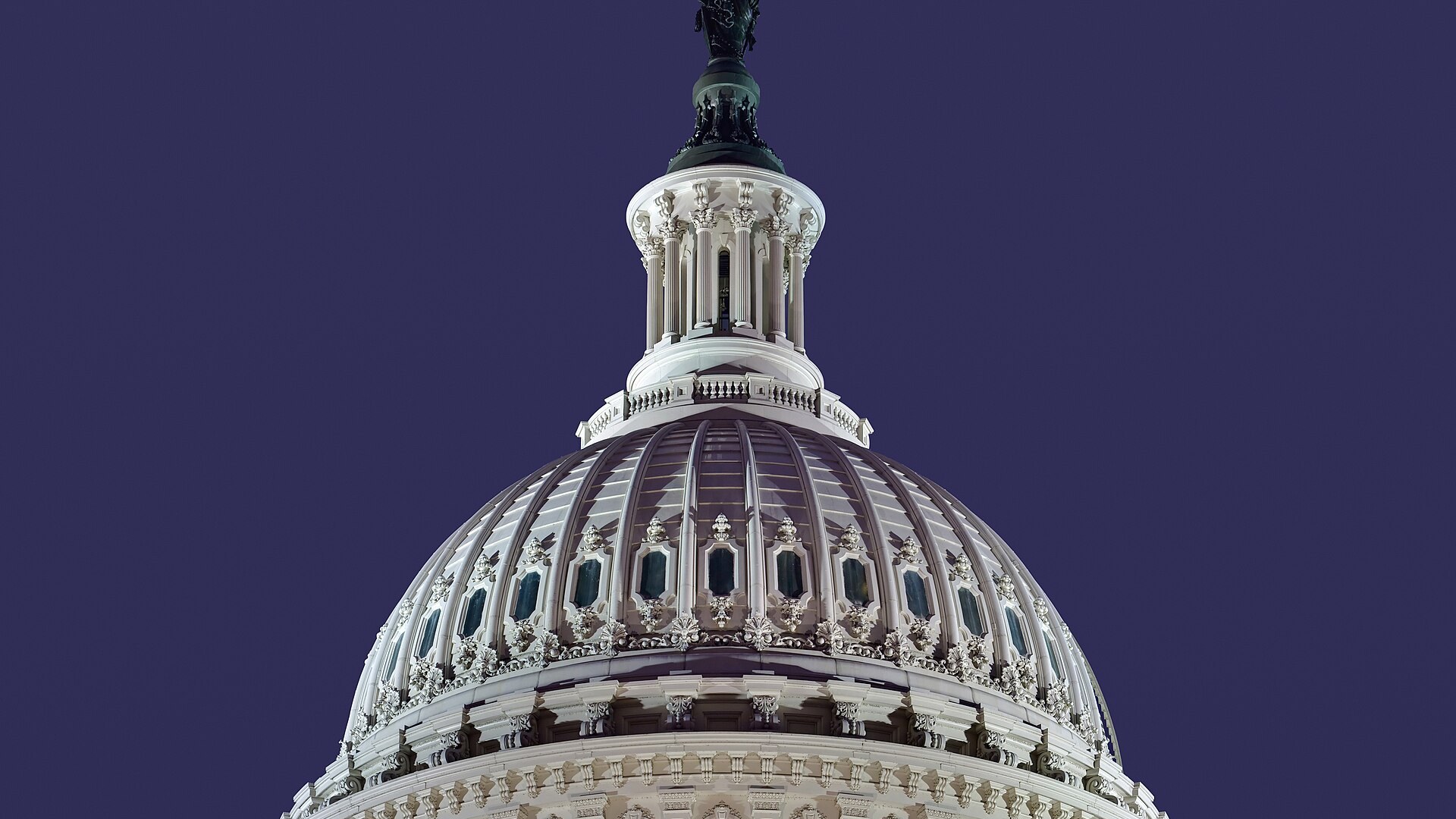
Image: U.S. Capitol dome, photograph by Diliff via Wikimedia Commons, licensed CC BY 2.5. Sources are linked inline. Subjects named in this digest may contact the newsroom with responses.