

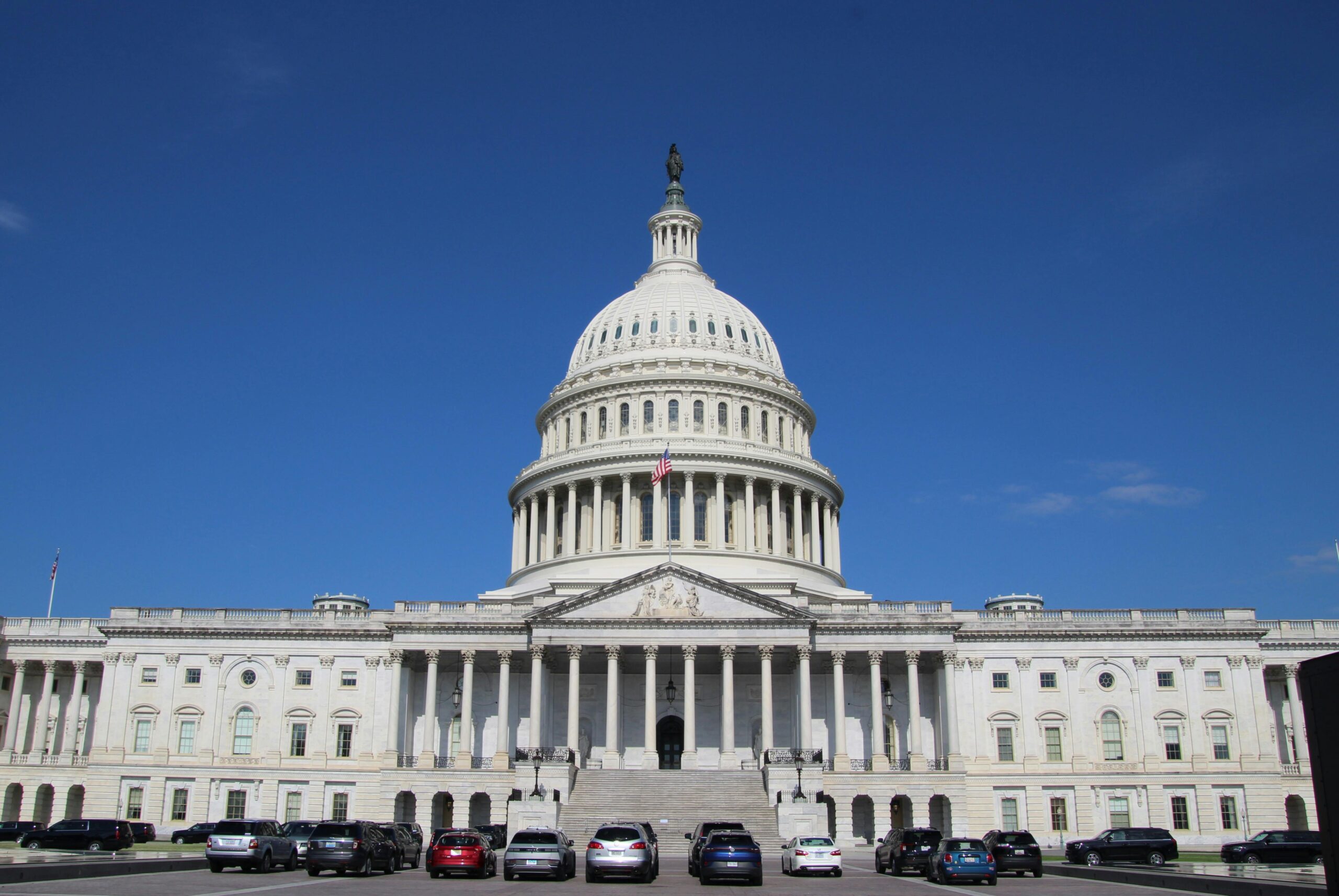
Capitol Watch is The Investigative Journal’s daily digest of legislative, oversight and budget activity on Capitol Hill, drawn from Congress.gov, committee filings and on-the-record statements.
Senate clears reconciliation runway with FY2026 budget resolution; House readies its move
The most consequential procedural action of the past week ran through the Senate, where members on April 23 passed the chamber’s fiscal 2026 budget resolution, sending the framework to the House and putting reconciliation directives on the table for the rest of the spring. The resolution sets the spending and revenue contours that authorizing committees will use to assemble a reconciliation package — the maneuver that allowed the One Big Beautiful Bill Act to clear the Senate on a simple-majority vote in 2025, and the same vehicle Republican leadership has signaled it intends to use again this year. Public summaries of the resolution indicate it includes new funding lines for Immigration and Customs Enforcement and the Department of Defense, two priorities that have anchored the GOP’s fiscal pitch since January.
The Senate vote does not, by itself, change appropriations. As the nonpartisan Committee for a Responsible Federal Budget noted in its review, the resolution is a blueprint that lets reconciliation bills clear the Senate on 51 votes by waiving the 60-vote cloture threshold. Records on Congress.gov show the resolution now sits with the House, which can accept the Senate text, amend it and send it back, or vote it down. Speaker Mike Johnson’s leadership team has not publicly committed to a floor schedule, but House Budget Committee staff briefed members earlier this month that any reconciliation instructions would be calibrated against the Congressional Budget Office’s February baseline projecting a $1.9 trillion FY2026 deficit and gross federal debt at $63.7 trillion by 2036.
The fiscal backdrop is unusually pressured. The CBO’s most recent monthly budget review, released earlier this year, indicated the United States borrowed $696 billion in the first four months of FY2026, including $94 billion in January alone — a pace that, if sustained, would push the annual deficit above $1.8 trillion. The CBO’s post-enactment scoring of the 2025 reconciliation act now places its 10-year deficit impact at $3.4 trillion, roughly $1 trillion higher than preliminary estimates. Senators citing the resolution as a “return to discipline” will face that math when reconciliation language begins moving through the Finance and Budget committees. Sources: Ballotpedia News; House Budget Committee CBO Baseline (PDF); CRFB.
House passes H.R. 227, the “Clergy Act,” under suspension of the rules
On April 27, the House cleared H.R. 227, the Clergy Act, on Roll Call 139. The vote was taken under suspension of the rules, the procedure reserved for non-controversial measures and requiring a two-thirds majority. According to GovTrack’s tally, the bill passed with broad bipartisan support, drawing only a handful of nay votes. The legislation, supported by faith-based retirement administrators including GuideStone Financial Resources and the Southern Baptist Convention’s Ethics & Religious Liberty Commission, addresses tax-treatment ambiguities affecting clergy participating in church retirement plans.
The procedural posture matters: suspension calendar measures are typically pre-negotiated, and a successful suspension vote signals that committee staff have resolved drafting and scoring questions in advance of floor consideration. The bill now moves to the Senate, where companion language is pending. Faith-policy groups indicate they expect the Senate to take it up before the Memorial Day recess.
For TIJ readers tracking how Congress handles narrow, technical fixes, the Clergy Act is a useful counterpoint to the higher-profile fights consuming committee calendars. It moved cleanly because no member chose to object, and because the bill’s scope was confined to retirement-plan parity rather than expanded benefits. Sources: GovTrack — H.R. 227 Roll Call 139; Clerk of the House recent votes.
Senate Banking sets April 29 vote on Kevin Warsh as Federal Reserve chair
The Senate Banking Committee has scheduled a markup for 10 a.m. Wednesday, April 29, to vote on the nomination of Kevin Warsh to chair the Federal Reserve, according to a notice circulated by Chairman Tim Scott’s office and confirmed by multiple outlets. The vote was contingent on the position of Senator Thom Tillis, R-N.C., who had vowed to block Fed nominees while the Department of Justice pursued a criminal investigation into outgoing Chair Jerome Powell related to cost overruns on the Federal Reserve’s Eccles Building renovation. After the DOJ moved on Friday to drop the probe and refer the matter to the Fed’s Office of Inspector General, Tillis told NBC’s Meet the Press on April 27 that he was “prepared to move on” with the confirmation.
Warsh testified before the committee on April 21 and faced sharp questioning from Senator Elizabeth Warren, D-Mass., on the Fed’s independence and the legitimacy of the 2020 election. Warsh told senators he had “never promised the White House” to cut interest rates, even as President Trump publicly renewed calls for the central bank to do so. Banking Committee Republicans aim to confirm Warsh on the floor before Powell’s term expires May 15.
The path from Wednesday’s committee vote to a final floor vote will compress quickly. Records suggest leadership has already begun whip operations on the assumption that Warsh advances out of committee on a party-line or near-party-line tally. If confirmed, Warsh would become only the second former Fed governor to return as chair, taking the helm during a tariff-driven inflation cycle that the CBO projects will see headline CPI ease modestly to 2.8% this fiscal year. Sources: Washington Post; ABA Banking Journal; PBS NewsHour.
Oversight standoff: DOJ inspector general to audit Epstein Files Transparency Act compliance
The Department of Justice’s Office of the Inspector General confirmed last week that it will audit the department’s compliance with the Epstein Files Transparency Act, the law signed by President Trump in November 2025 that mandates the release of investigative files related to the late convicted sex offender, with carve-outs for victim identifications, child-sexual-abuse material, ongoing investigations and national-security records. The audit responds to bipartisan complaints that the department’s rolling productions to Congress have been narrower than statute requires.
The House Committee on Oversight and Government Reform, chaired by Rep. James Comer, R-Ky., subpoenaed former Attorney General Pam Bondi in March 2026 over the same compliance question. After Bondi was removed from her post in early April, the committee was informed by DOJ that she would not appear for the scheduled deposition. Ranking Democrats, led by Rep. Robert Garcia, D-Calif., have argued that the subpoena remains legally binding regardless of Bondi’s employment status, and Rep. James Walkinshaw, D-Va., publicly accused Comer on April 21 of “abandoning oversight” by allowing the Epstein deposition track to lapse.
Separately, several Oversight members from both parties pushed back this week on suggestions that Ghislaine Maxwell, convicted in 2021 of sex-trafficking conspiracy, should receive a pardon in exchange for testimony. Comer told Politico that “a lot of people” on the panel were open to clemency; multiple committee members on record opposed the idea. Allegations and accountability claims surrounding the Epstein file remain pending; the inspector general’s audit is the first internal mechanism designed to evaluate, on the record, whether DOJ has followed the statute. Sources: The Guardian; Rep. Walkinshaw statement; H.R. 4405 (Epstein Files Transparency Act).
Commerce Secretary Lutnick faces Senate appropriators on FY2027 request
Commerce Secretary Howard Lutnick testified before the Senate Appropriations Subcommittee on Commerce, Justice, Science, and Related Agencies on April 22, defending the administration’s $9.2 billion discretionary request for the Department of Commerce in FY2027. The request is approximately $1.3 billion below the FY2026 enacted level, with reductions concentrated in climate-research grants and programs the administration characterized as “wasteful.” Lutnick also testified the next day before the House Energy and Commerce Committee on international trade and economic growth.
The hearings unfolded against the backdrop of the Supreme Court’s February ruling striking down the bulk of the administration’s emergency tariffs imposed under the International Emergency Economic Powers Act. Subcommittee Chair Sen. Jerry Moran, R-Kan., pressed Lutnick on how the department would adjust its trade-enforcement operations and how a tariff-refund portal launched earlier this month would handle pending claims. Lutnick was also questioned by Democrats on his prior personal contacts with the late Jeffrey Epstein, including a previously reported visit to Epstein’s Caribbean property.
The appropriations posture is not a vote, but the committee’s line of questioning previews how the chamber will handle the FY2027 Commerce-Justice-Science bill once subcommittee markups begin. Filings indicate Republican members are likely to support most of the budget cuts; Democrats are expected to file amendments restoring climate-research and minority-business-development line items. Sources: Senate Appropriations Committee hearing notice; The Hill; C-SPAN coverage.
Bipartisan vote on Haiti TPS sets up Senate confrontation
On April 16, the House passed H.R. 1689, designating Haiti for Temporary Protected Status through 2029, by a 224-204 vote. According to summaries from the National Immigration Forum, the bill drew a bipartisan majority including a number of Republican members representing districts with significant Haitian-American populations. The legislation would extend protections to roughly 350,000 Haitian nationals living in the United States.
The bill is now stalled at the Senate’s door. Records suggest no Senate companion has reached cloture, and Republican leadership has not committed floor time. The political calculation is straightforward: TPS extensions traditionally split the GOP conference, and any Senate movement would require negotiated concessions on enforcement provisions tied to the broader immigration agenda funded through the Senate budget resolution.
For accountability watchers, the Haiti vote is notable because it cleared the House at all. The 224-204 tally indicates a small but durable cross-aisle bloc willing to back protected-status legislation when paired with security and verification provisions. Whether that bloc holds when Senate amendments come back to the House is the open question. Sources: Clinch Law / Clinch News; C-SPAN House vote tracker; Congress.gov — H.R. 1689.
Today on the Hill: appropriations subcommittee continues FY2027 review
The Senate convened at 10 a.m. Tuesday for morning business, according to the chamber’s daily schedule and the Democratic Caucus notice. The marquee committee event of the day was the Senate Appropriations Subcommittee on Departments of Labor, Health and Human Services, and Education hearing on the Department of Education’s FY2027 budget request, held in Dirksen Senate Office Building 124. The House remained in session under the procedural calendar published on Congress.gov; no major roll-call votes had been noticed at the time of publication.
Looking ahead: the Senate Banking Committee’s 10 a.m. Wednesday vote on Warsh is the most consequential calendar item of the week, with potential floor action on the nomination expected before May 15. The House could take up the Senate budget resolution at any point once the Rules Committee reports a structured rule. Hearing notices for the balance of the week list additional Appropriations subcommittee reviews and a Judiciary oversight session on federal-prosecution policies. Sources: U.S. Senate floor activity; Senate Democratic Caucus schedule; Congress.gov committee schedule; Senate hearings & meetings.
Items relevant to TIJ’s investigative beats
Three threads warrant continued tracking by The Investigative Journal’s readers. First, the DOJ inspector general’s Epstein audit will produce, when complete, the first independent assessment of whether DOJ has met the statutory disclosure obligations Congress passed in 2025; that timeline is the next benchmark for accountability journalists working the file. Second, the Senate budget resolution’s reconciliation directives will reveal whether the administration’s ICE and Defense funding lines survive intact when the Senate Finance and Armed Services committees translate framework numbers into bill text — the moment when CBO scoring will discipline ambition. Third, the Warsh confirmation will determine the Federal Reserve’s posture during a tariff-driven economic transition, with implications for monetary independence that have been litigated publicly between the White House and Senate Banking for the past four months.
This digest will continue tomorrow with new floor action, hearing testimony and committee votes. As always, every claim above is sourced to a public record — congressional filings, committee notices, or on-the-record statements — and pending allegations are flagged as such.