

By Eduardo Bacci, The Investigative Journal
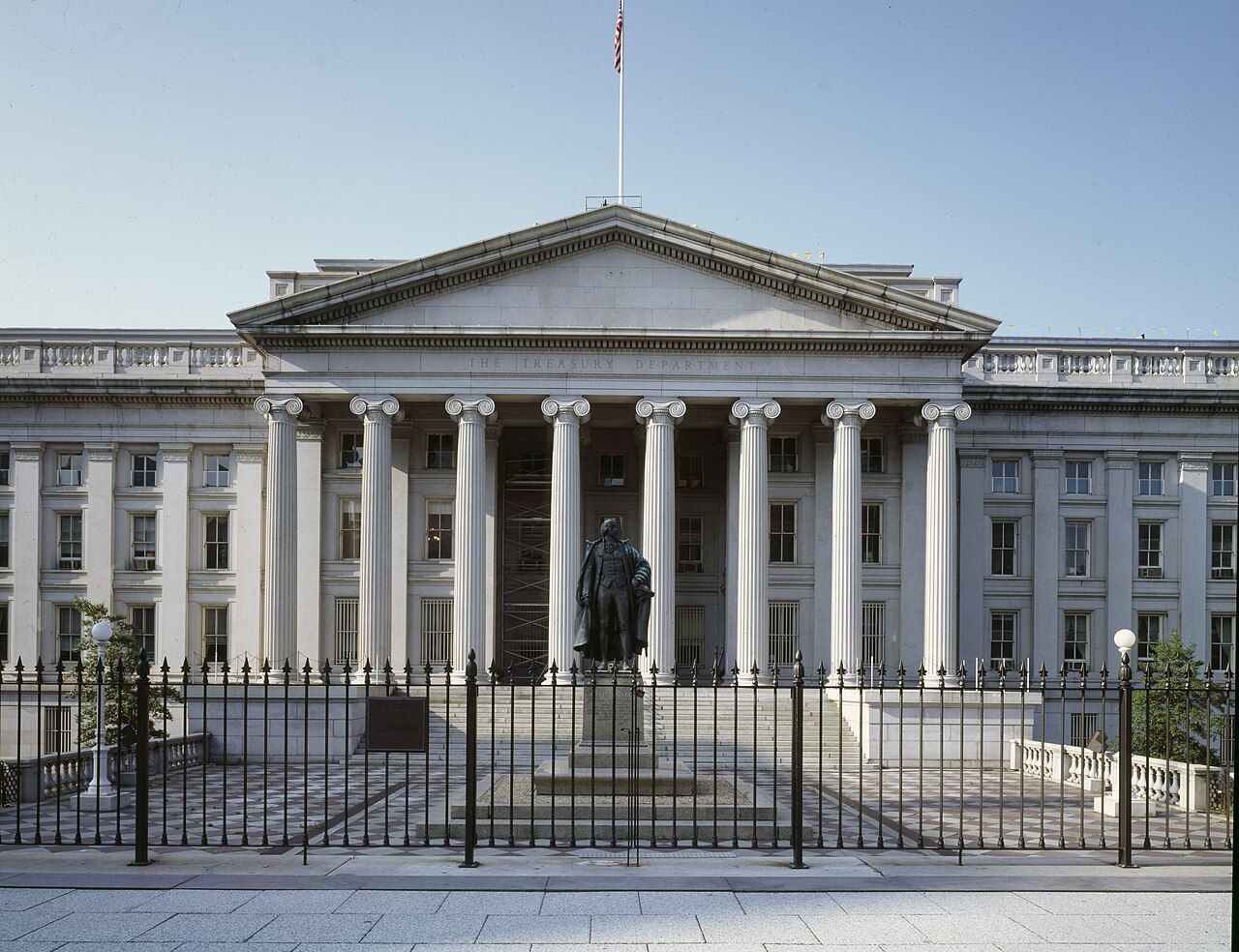
The U.S. Treasury and Commerce Departments closed April with one of the most consequential sanctions weeks of the year, designating a sitting Cambodian senator, a Chinese petrochemical refinery, and dozens of Iranian-linked shipping and weapons procurement entities. The actions arrive as the Department of Justice’s nine-month-old Trade Fraud Task Force builds its prosecution pipeline, U.S. Customs and Border Protection rolls out a new tariff-refund portal, and Treasury weighs a “fast-track” review process for friendly foreign investors. Filings indicate the cumulative effect is the most aggressive multi-front trade enforcement posture since the early days of the second Trump administration.
1. Treasury Sanctions Cambodian Senator Kok An, Citing Pig-Butchering Scam Empire
On April 23, 2026, OFAC designated Ly Yong Phat associate Kok An, a sitting Cambodian senator and chairman of Crown Resorts, alongside 28 affiliated individuals and entities the agency alleges operate scam compounds across Poipet, Sihanoukville, and Bavet. According to the Treasury press release, Kok An’s properties have been converted into forced-labor sites where trafficked workers run “pig butchering” cryptocurrency romance scams targeting Americans, with stolen funds laundered through casino networks and digital asset mixers.
The action was coordinated with a Department of Justice operation that, according to law enforcement statements, has restrained more than $700 million in cryptocurrency tied to the scam centers — among the largest digital-asset seizures publicly tied to a single criminal ecosystem. The State Department issued a parallel designation announcement framing the move as part of a broader Southeast Asia strike force.
The implications are significant for cryptocurrency exchanges, hospitality operators, and correspondent banks with exposure to Cambodian gaming and resort holdings. Compliance teams must now screen against the expanded SDN List for Crown Resorts subsidiaries and the senator’s personal real-estate holdings — an unusually deep penetration of OFAC sanctions into a foreign legislature. Kok An has not publicly responded to the designation; under U.S. sanctions practice, designated parties retain the right to seek delisting through OFAC’s reconsideration process.
2. OFAC Targets Iranian Oil “Shadow Fleet” and Chinese Refinery Hengli Petrochemical
One day later, on April 24, OFAC published a sweeping Iran action adding 19 entities and 19 vessels to the SDN List under Executive Order 13902. The designations, summarized in Federal Register notice 2026-07994, target shipping companies registered in Hong Kong, Panama, the Marshall Islands, Liberia, and Vietnam, alongside crude tankers, LPG carriers, and chemical/oil tankers identified as part of Iran’s “ghost fleet.”
The most consequential addition is Hengli Petrochemical (Dalian) Refinery Co., Ltd., a major Chinese independent refiner that records suggest has processed sanctioned Iranian crude. Treasury concurrently issued General License V authorizing wind-down transactions involving Hengli through May 24, 2026 — a 30-day off-ramp signaling Treasury expects substantial Western counterparty exposure.
The designation of a “teapot” refinery the size of Hengli marks a meaningful escalation. Throughout 2025, Treasury sanctioned smaller Shandong-based independent refiners; striking a top-tier Dalian operator pulls a much larger commercial actor into the prohibition perimeter and signals that secondary sanctions risk now extends to mainstream Chinese petrochemical players. Filings indicate refined-product tradeflows from northeast China into ASEAN markets will face heightened due diligence pressure in the near term.
3. Iran Weapons Procurement Network Hit Across Three Jurisdictions
OFAC also acted on April 21 to designate 14 individuals, entities, and aircraft across Iran, Türkiye, and the United Arab Emirates that Treasury alleges procured or transported weapons components on behalf of the Iranian regime. Coverage from Steptoe’s sanctions team notes the action targets cargo aircraft and front companies tied to Iran’s Ministry of Defense and Armed Forces Logistics (MODAFL).
The cross-jurisdictional reach into Türkiye and the UAE — both critical regional financial and logistics hubs — is consistent with what records suggest is a deliberate strategy to disrupt Iran’s “transshipment triangle.” Compliance officers at freight forwarders and aviation lessors with Gulf exposure should expect enhanced demand for cargo-manifest scrutiny and end-user certification.
The designations also illustrate the continuing operational tempo of Treasury’s “Economic Fury” posture toward Tehran, in which the Herbert Smith Freehills Kramer practice update notes Treasury has paired Iran oil-smuggling actions with parallel designations of Hizballah gold-financing networks earlier in the month.
4. Sinaloa Cartel Synthetic Opioid Procurement Network Sanctioned
Also on April 23, OFAC sanctioned 23 individuals and entities the agency alleges constitute a synthetic opioid procurement pipeline supplying the Sinaloa Cartel — designated last year as a Foreign Terrorist Organization and Specially Designated Global Terrorist. The targets, identified in OFAC’s recent-actions roster, include chemical suppliers and brokers in India, Guatemala, and Mexico, plus two Mexican nationals named as fentanyl producers for the Los Mayos and Los Chapitos factions.
The action represents an evolution in counter-narcotics sanctions practice. Treasury is no longer limiting designations to cartel principals and front companies; it is reaching upstream into Indian and Central American precursor-chemical brokers — a node the U.S. has struggled to disrupt for years. Industry implications are concentrated in chemical-distribution compliance, with bulk pharmaceutical-ingredient buyers facing intensified screening expectations.
Pending DOJ indictments tied to the network have not been publicly unsealed at the time of this writing, and individuals named are alleged to have committed the conduct described; allegations remain unproven absent conviction.
5. CBP’s CAPE Portal Goes Live: A New Front in Tariff Administration
On April 20, U.S. Customs and Border Protection launched the Consolidated Administration and Processing of Entries (CAPE) portal, allowing importers to submit tariff refund claims in a single interface. Coverage from the Trade Compliance Resource Hub indicates CAPE is intended to handle the surge of refund requests stemming from the layered Section 122, Section 232, Section 301, and IEEPA-based duties imposed since 2025.
The portal launch comes as the Court of International Trade heard oral argument April 10 in Oregon v. Trump and Burlap & Barrel, Inc. v. Trump, two cases challenging Section 122 tariffs imposed under Proclamation 11012. Filings indicate that refund liability could reach into the billions if either suit succeeds, making a centralized administrative channel a practical necessity for CBP.
For importers, CAPE creates both opportunity and risk. The opportunity is faster recovery of overpaid duties; the risk is that the portal’s data-collection architecture provides DOJ’s Trade Fraud Task Force with cleaner forensic visibility into entry classifications, country-of-origin claims, and valuation positions. Customs lawyers should expect that information submitted to claim refunds will, in cases of inconsistency, become evidence in tariff-evasion investigations.
6. DOJ Trade Fraud Task Force Builds a Pipeline
The Trade Fraud Task Force launched in August 2025 has begun translating policy posture into prosecutions. Recent quarters produced indictments alleging an $86.4 million jewelry-import scheme spanning 2021–2025 and a Northern District of California grand-jury indictment charging three individuals and three companies with evading more than $109 million in duties on roughly 520 shipments of kitchen products from China.
The DOJ’s Criminal Division has formally listed “trade and customs fraud, including tariff evasion” as a high-impact focus area, and practitioner analysis suggests prosecutors are leaning heavily on the False Claims Act, Tariff Act of 1930, and Title 18 wire-fraud and conspiracy statutes. The whistleblower economics under the FCA — qui tam relators receive 15–30% of recoveries — are creating a parallel private enforcement channel that compounds federal prosecutorial pressure.
For Asia-facing importers, particularly those with transshipment exposure through Vietnam, Malaysia, or Thailand, the convergence of CAPE-derived data and FCA whistleblower incentives creates what one practitioner called a “pincer” enforcement environment. Records suggest the task force is prioritizing transshipment misclassification and undervaluation cases over entity-level sanctions evasion at present.
7. CFIUS “Known Investor Program” Comments Close; Reverse-CFIUS Codification Bedded In
The comment period on Treasury’s Known Investor Program (KIP) Request for Information closed March 18, with public submissions now under review. The proposed program would allow pre-vetted investors from U.S.-allied jurisdictions to access an expedited review track, in furtherance of the Administration’s “America First Investment Policy” directive.
Separately, the FY2026 National Defense Authorization Act formally codified Treasury’s “Reverse CFIUS” authority, formalizing the outbound-investment regime announced under Executive Order 14105 and clarifying covered-transaction definitions for U.S. capital flowing into Chinese semiconductor, AI, and quantum sectors.
Implications for the M&A and venture markets are bifurcated: friendly-jurisdiction investors face a potentially faster path to clearance, while U.S. limited partners with mainland China exposure must now contend with an enforceable outbound regime rather than the advisory framework that prevailed in 2024–2025. According to public filings, several large U.S. private-equity firms have already begun unwinding minority positions in covered Chinese AI ventures.
8. BIS Entity List Architecture: 50% Rule Reshapes Diligence
Although BIS did not publish a major new tranche of Entity List additions during the week of April 21, the September 29, 2025 interim final rule extending Entity List and Military End-User restrictions to 50%-or-more-owned non-U.S. affiliates continues to reshape compliance practice. The rule, analyzed in detail by Holland & Knight, imports the OFAC “50% Rule” logic into export controls and creates an “affirmative duty” red flag for companies aware of significant minority ownership or board overlap.
BIS’s prior 32-entity expansion specifically targeted Chinese microelectronics firms and semiconductor diversion routes through Singapore and Taiwan, and the agency has signaled additional China- and Russia-focused designations are in preparation. The Entity List now covers more than 3,400 parties.
For semiconductor distributors, EDA software vendors, and capital-equipment manufacturers, the 50% rule means due diligence must extend beyond direct counterparties to ownership-mapped affiliates — a substantial uplift in transaction screening workload. Counsel are advising clients to integrate ownership-aggregation tools comparable to those already deployed for OFAC compliance.
What Warrants Deeper TIJ Investigation
Three threads from this week merit follow-up reporting.
The Crown Resorts financial trail. Records suggest Kok An’s casino and resort holdings have correspondent-banking relationships in Singapore, Hong Kong, and the UAE. A targeted investigation could trace whether U.S. payment processors, prime-of-prime FX brokers, or stablecoin issuers facilitated victim deposits — an attribution chain that would carry FinCEN reporting implications.
Hengli Petrochemical’s downstream customers. The Hengli designation creates a 30-day diligence window during which Western buyers of refined products, polymers, and aromatics linked to Dalian output will be visibly stress-tested. Trade data filings should reveal which European and Latin American counterparties are most exposed.
CAPE-to-FCA pipeline. CBP has not publicly disclosed the data-sharing architecture between the CAPE refund portal and DOJ. A FOIA request and review of any inter-agency MOU could establish whether refund-claim submissions are being routinely cross-referenced against ongoing tariff-evasion investigations — a question with substantial due-process implications for importers.
TIJ will continue to monitor these threads as the Treasury, Commerce, and Justice Department enforcement calendar accelerates into the second quarter.
The Investigative Journal welcomes responses from individuals and entities named in this digest. Right of reply requests may be directed to the editor; pending designations are noted as such, and named parties are presumed to retain the legal protections afforded by U.S. administrative and criminal procedure.