

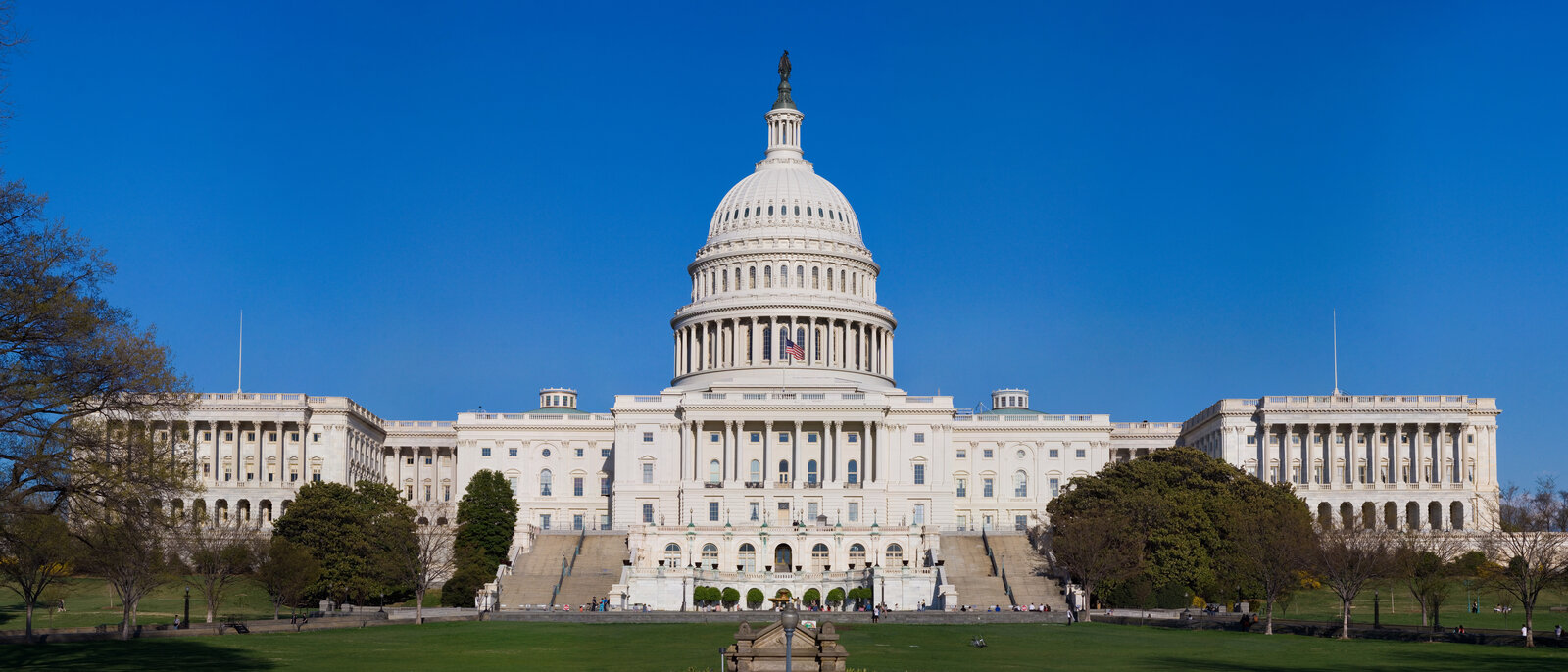
Capitol Watch is a daily digest of legislative, oversight, and budget activity on Capitol Hill. Items below reflect public records on file with the House Clerk, the Office of the Senate Daily Press, Congress.gov, individual committees, and the Congressional Budget Office. Pending matters are flagged; allegations are distinguished from findings.
Hegseth Defends $1.5 Trillion Pentagon Budget Before Senate Armed Services
Defense Secretary Pete Hegseth, Joint Chiefs Chairman Gen. Dan Caine, and acting Pentagon comptroller Jules W. Hurst III appeared before the Senate Armed Services Committee at 11:00 a.m. in SD-G50 Dirksen to defend the administration’s Fiscal Year 2027 Department of Defense budget request, according to the committee notice. The request, posted by the Pentagon at $1.5 trillion when topline supplemental authorizations are included, marks the largest nominal defense ask in U.S. history.
Filings indicate roughly $750 billion is earmarked for the Golden Dome layered missile defense architecture, a Trump administration priority. The package also reserves about $102 billion for aircraft procurement and research, close to $75 billion for unmanned systems and counter-drone programs, and approximately $65 billion for shipbuilding spread across 18 warships and 16 support vessels. Republican members of the panel argued in pre-hearing statements that sustained defense outlays act as industrial-base stimulus, while Democratic members signaled probes into the basing assumptions for the Golden Dome cost curve and the timing of F-47 next-generation fighter milestones.
The hearing closes the public phase of FY27 defense oversight ahead of subcommittee markups. Senators on both sides flagged the absence of a Senate-confirmed comptroller as an accountability concern; the acting role at the Pentagon’s CFO post has now run more than 90 days.
Senate Cloture Vote on En Bloc Nominations Tests New Procedure
The Senate is scheduled to vote today on cloture for S. Res. 690, a resolution authorizing en bloc consideration of 49 executive-branch nominations parked on the Executive Calendar. The resolution was filed Tuesday by the Majority Leader and the cloture vote is set per a unanimous-consent agreement detailed on the Senate Daily Press schedule.
The procedure, examined in a recent Congressional Research Service report (R48729), reflects a 2025 reinterpretation of Senate rules permitting batched cloture on slates of sub-Cabinet nominees. Records suggest cloture requires a simple majority and, if invoked, triggers up to 30 hours of post-cloture debate before a single confirmation vote on the bloc. Today’s roll call will be the first contested test of the new mechanism on a slate this size.
If invoked, confirmations across multiple agencies — including U.S. Attorneys, ambassadors, and assistant secretaries — would clear in a single roll call as early as Friday. Minority leadership has signaled it will force separate debate on a small subset of contested picks before any en bloc vote.
FISA Section 702 Three-Year Reauthorization Heads to Senate
The House on Wednesday passed H.R. 4844 to extend Section 702 of the Foreign Intelligence Surveillance Act for three years on a 235-191 roll call, according to reporting summarizing the Clerk’s vote tally and contemporaneous coverage from NPR and The Hill. The bill does not impose a warrant requirement for U.S.-person queries but adds new database-query restrictions, expanded oversight reporting, and criminal penalties for misuse. The text also carries a House-added prohibition on a U.S. central bank digital currency.
The Senate has scheduled cloture on the motion to proceed to S. 4344 — a clean three-year extension — no later than Friday, May 1. Majority Leader John Thune has publicly stated the House-passed package is “dead on arrival” in the Senate if it retains the CBDC provision, setting up either a stripped-down compromise or a short-term lapse of authority. Section 702 collection authority is set to sunset absent action, though prior reauthorizations have preserved active certifications through year-end notwithstanding statutory expiration.
Civil-liberties groups continue to press for a query-warrant requirement; intelligence-committee Republicans counter that the House-added oversight provisions and statutory penalties are the most substantive reform since the 2024 RISAA. The Senate vote is the next inflection point.
House Oversight: Bondi to Sit for Closed-Door Deposition in Epstein Files Probe
Chairman James Comer (R-Ky.) of the House Committee on Oversight and Government Reform announced Wednesday that former Attorney General Pam Bondi will appear before the committee for a closed-door deposition next month in the investigation into the federal handling of records related to Jeffrey Epstein, according to the committee press release and CBS News.
The deposition follows Bondi’s failure to appear under subpoena on April 14. Justice Department filings indicate Bondi was no longer in post at the time of the original date; Democratic members had moved a contempt resolution after the missed appearance. Records on file with the committee show the Department of Justice has produced approximately 3 million pages — roughly half its files — under the Epstein Files Transparency Act, the law enacted in November requiring release of federal records on the Epstein and Maxwell investigations.
Comer’s statement notes the investigation is ongoing. The case remains a pending congressional inquiry; no findings have been issued. The committee separately reported that subpoenas to former senior DOJ and FBI officials, as well as records subpoenas to former President Bill Clinton and former Secretary of State Hillary Clinton, are in various stages of production review.
Senate Permanent Subcommittee on Investigations Examines COVID Vaccine Safety Oversight
The Senate Homeland Security and Governmental Affairs Permanent Subcommittee on Investigations convened at 2:30 p.m. in SD-342 today for a hearing examining “Biden Health Officials and COVID-19 Vaccine Safety Signals,” per the weekly committee schedule. The session is the latest in a multi-month review of how prior-administration HHS leadership handled adverse-event signals captured in the Vaccine Adverse Event Reporting System and the CDC’s V-safe program.
Subcommittee filings indicate the hearing focuses on internal communications between the FDA, CDC, and the Office of the Assistant Secretary for Health regarding myocarditis signal review and informed-consent guidance. Republican staff have circulated a partial document set; Democratic members have called for context on the contemporaneous scientific record. Witnesses include former senior career officials.
The Subcommittee has subpoena authority and has used it sparingly in this inquiry, relying on voluntary production. Today’s session is open; a closed follow-on is on the schedule.
House Energy and Commerce Health Subcommittee Marks Up Food-Safety Package
The Health Subcommittee under House Energy and Commerce held a legislative hearing Wednesday on a multi-bill package titled “Healthier America: Legislative Proposals on the Regulation and Oversight of Food,” with markup activity expected next week. The committee announcement and the minority calendar entry list seven bills under consideration.
The package includes H.R. 4958 (the Grocery Reform and Safety Act), H.R. 7291 (the GRAS Oversight and Transparency Act), H.R. 8385 (the Food Labeling Modernization Act of 2026), H.R. 8429 (the Baby Food Safety Act of 2026), H.R. 7867 (the Infant Formula Safety Modernization Act of 2026), and H.R. 4725 (the TRUTH in Labeling Act). Chairmen Brett Guthrie (R-Ky.) and Morgan Griffith (R-Va.) framed the package as a chronic-disease intervention; Democratic members raised supply-chain and small-producer compliance concerns.
The set has bipartisan cosponsorship across at least three of the bills, according to filings on Congress.gov. Final markup language is expected to merge components into a single vehicle ahead of full-committee consideration.
House Appropriations Advances FY27 Subcommittee Bills
The House Committee on Appropriations advanced two of the twelve regular appropriations bills this week and noticed three more for next-week markups, per the committee markup calendar. The Agriculture, Rural Development, FDA, and Related Agencies bill was marked up Wednesday at 10:00 a.m.; the Legislative Branch and Commerce-Justice-Science subcommittees noticed 8:00 a.m. markups for early next week. Full-committee consideration of the National Security, Department of State, and Related Programs bill was rescheduled to April 28.
The pace reflects a leadership goal of completing all twelve bills through subcommittee before Memorial Recess and through full committee by July 4. Records suggest the topline allocations approved under the Senate-passed budget resolution (50-48 on April 23) constrain non-defense discretionary growth to roughly inflation, with defense receiving the bulk of the increase.
Bipartisan negotiation will be required in the Senate, where the Appropriations Committee has held FY27 budget hearings throughout April, including a session today on the U.S. Forest Service’s request before the Interior, Environment, and Related Agencies Subcommittee.
CBO Posts Cost Estimates on China Currency, Health Cyber, and Workforce Bills
The Congressional Budget Office posted a cluster of cost estimates in late April that map onto active legislative debates. The agency scored H.R. 8290, the China Exchange Rate Accountability Act of 2026, at less than $500,000 over the 2026-2031 window, per CBO publication 62394. Additional April scores cover S. 3315 (Health Care Cybersecurity and Resiliency Act of 2026), H.R. 7256 (Federal Workforce Early Separation Incentives Act of 2026), and H.R. 7723 (Safeguarding Taxpayer Dollars in Child Care Act of 2026).
CBO’s February Budget and Economic Outlook for 2026 to 2036 remains the operative baseline. CBO projects a $1.9 trillion deficit in FY26 — 5.8 percent of GDP — and federal debt held by the public rising to 120 percent of GDP by 2036. The first-half FY26 deficit ran $1.2 trillion, $139 billion below the prior-year pace, a moderation CBO attributes primarily to revenue trend rather than spending restraint.
The Office’s Recent Publications and Work in Progress snapshot lists pending analyses on Medicare Advantage benchmarks, the federal credit programs portfolio, and an interactive long-term tool slated for May.
Looking Ahead: Friday Through Mid-May
Friday brings the Senate cloture vote on motion to proceed to S. 4344 (FISA 702 extension) and continued floor debate on en bloc nominations, contingent on today’s cloture outcome. Next week’s committee schedule includes Senate Appropriations subcommittee hearings on NASA’s FY27 request, House Appropriations subcommittee markups on Legislative Branch and CJS, and Senate Judiciary action on a backlog of district-court nominations. The Senate Banking Committee has noticed a hearing on stablecoin oversight legislation.
Items relevant to TIJ investigative beats include the Bondi deposition timing in the Oversight Epstein-files probe, the Permanent Subcommittee on Investigations’ anticipated production demands following today’s vaccine-oversight session, and the Senate’s procedural posture on FISA 702 — where the divergence between the House and Senate vehicles will determine whether the surveillance authority lapses, even briefly. We will continue tracking each.
Sources: Congress.gov; Office of the Senate Daily Press; House Clerk vote tallies; House and Senate Appropriations markup calendars; Senate Armed Services Committee notice; Senate Permanent Subcommittee on Investigations weekly schedule; House Oversight and Government Reform Committee press releases; House Energy and Commerce Health Subcommittee notices; Congressional Budget Office cost estimates and February 2026 Budget and Economic Outlook. Right of reply: any official, member office, or witness named above is invited to respond at editor@tij.news; corrections will be appended.