

When federal prosecutors in Manhattan unsealed an indictment in October 2024 charging the founder of one of the world’s largest carbon credit developers with wire fraud, commodities fraud, and securities fraud, the reaction inside the voluntary carbon market was muted. The defendant, Kenneth Newcombe, had spent nearly two decades building C-Quest Capital into a flagship of the climate finance industry, distributing efficient cookstoves across rural Africa and Asia and selling the resulting emissions reductions to multinational corporations eager for green credentials. Few of those buyers wanted to talk about it.
Eighteen months later, the silence has become harder to sustain. The Verra registry has cancelled more than 5 million carbon credits issued to C-Quest projects. Twenty-seven of the company’s cookstove projects have been suspended. C-Quest itself has filed for bankruptcy, transferring what remained to a thinly documented British shell company. And in early 2025, the Integrity Council for the Voluntary Carbon Market — the global standard-setter the industry created to police itself — ruled that nearly two-thirds of all cookstove credits in circulation could not carry its quality seal because the methodologies used to generate them were, in the council’s words, “insufficiently rigorous.”
The C-Quest case was not a black-swan event. Independent academics, climate researchers, and investigative outlets have spent the past three years methodically demonstrating that the cookstove segment of the voluntary carbon market — a $1.4 billion industry that has issued credits representing roughly 7.6 percent of all voluntary offsets ever traded — is built on emissions arithmetic that is, on average, off by close to an order of magnitude. The fraud, in other words, was not the exception. It was the methodology.
How the C-Quest Scheme Worked
According to the indictment filed by the U.S. Attorney for the Southern District of New York, between 2021 and 2023 Newcombe and his head of carbon accounting, Tridip Goswami, submitted false and misleading data to Verra to obtain Verified Carbon Units (VCUs) for emissions reductions that had not, in fact, been achieved. Jason Steele, the company’s Chief Operating Officer, has pleaded guilty to wire fraud, commodities fraud, and securities fraud and is cooperating with prosecutors.
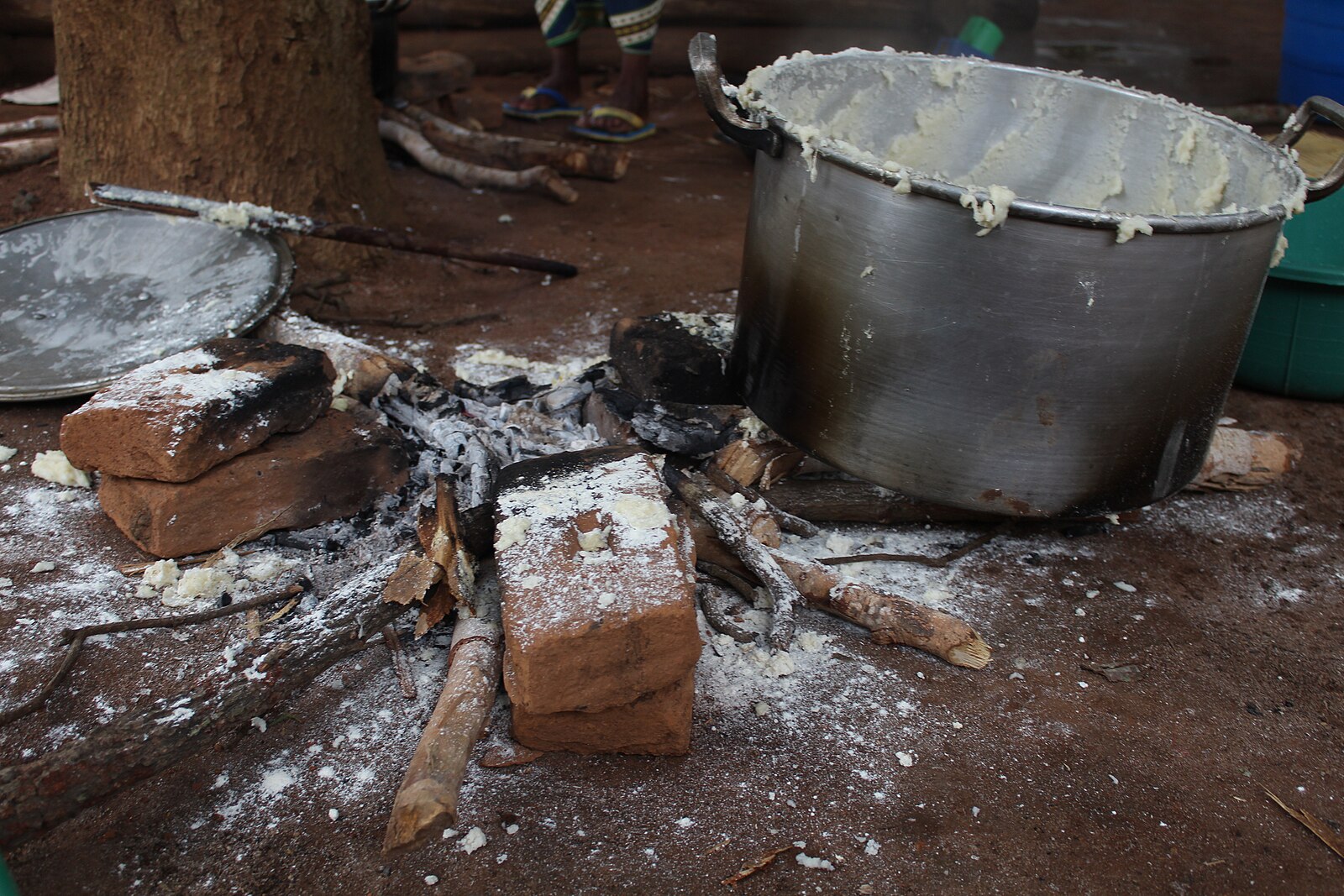
The mechanics, as described by federal prosecutors and corroborated by parallel civil filings from the Securities and Exchange Commission and the Commodity Futures Trading Commission, were almost crude. Beginning around 2020, Newcombe pushed for an aggressive expansion of cookstove distribution. C-Quest contracted with local partners across Africa, India, and Southeast Asia to install efficient stoves that were supposed to displace traditional three-stone fires, and then to monitor whether households continued using them. The savings — projected reductions in firewood combustion — were converted into credits and sold to corporate buyers.
But records cited in the indictment show that C-Quest’s installation partners often did poor work. Stoves were installed outside designated project areas. Some were never installed at all. Others broke quickly. When auditors arrived to inspect samples, prosecutors allege, C-Quest employees rebuilt or repaired missing and broken stoves before the inspection, then reported them as operational. Survey data was inflated to suggest higher household usage rates than actually existed.
The financial consequences were significant:
- By Verra’s own determination, 5,004,915 VCUs were issued in excess of the correct amount across 27 C-Quest projects.
- The SEC’s parallel civil action additionally accused C-Quest of defrauding investors, including one party that agreed to purchase Newcombe’s shares for more than $16 million and to invest up to $250 million in the company.
- An investigation by the environmental publication Down To Earth placed the total scope of the alleged scheme at roughly $250 million in fraudulent capital and credit issuance.
C-Quest filed for bankruptcy in 2024. Its remaining cookstove projects were transferred to Bridge Carbon Limited, a UK company registered in August 2024 with limited public operating history. In July 2025, Bridge Carbon asked Verra to withdraw the projects from the registry entirely, a step that effectively closed the door on the largest single block of cookstove credits ever delisted.
The Methodology Problem
The C-Quest fraud became the highest-profile cookstove case, but the academic critique has been broader, older, and harder to dismiss. In analyses tracked by the Berkeley Carbon Trading Project at the University of California, researchers concluded that widely used cookstove methodologies over-credit emissions reductions by an average factor of nine to ten. Inflated baseline assumptions about how often a traditional fire is used, optimistic adoption rates, weak monitoring, and “leakage” — the tendency of households to continue using their old fires alongside the new stove — combined to produce credits that bore little resemblance to verifiable atmospheric outcomes.
A more recent analysis of 21 cookstove projects supplying South Korean compliance buyers found that those projects collectively generated 18.3 times more credits than the underlying climate impact justified — 9.7 million credits issued for what, by the researchers’ calculation, amounted to fewer than 532,000 tonnes of actual CO₂ equivalent reductions.
In March 2025, the Integrity Council for the Voluntary Carbon Market announced that two of the most widely used cookstove rulebooks failed to meet its Core Carbon Principles. By the council’s own count, methodologies covering roughly 64 percent of all cookstove credits available at the end of 2024 could no longer claim the CCP label. The council subsequently approved three replacement methodologies — Gold Standard’s TPDDTEC v4.0 and its Metered & Measured v1.2, and Verra’s VM0050 v1.0 — but the conditions attached to those approvals require monitoring practices, including continuous-use sensors and randomized in-home audits, that most legacy projects have never performed.
The market reacted. According to S&P Global Platts, the Household Devices price benchmark fell roughly 36.8 percent year over year in 2024, ending December at $4.14 per metric ton of CO₂ equivalent. The voluntary carbon market overall held steady at $1.4 billion in 2025 only because volume growth offset a 20 percent average price decline.
Where the Money Went — and Didn’t Go
The communities meant to benefit from cookstove credits saw little of the proceeds. A multi-year investigation by the watchdog organization Swedwatch into a major Zimbabwe cookstove project found that, by October 2025, the project had issued credits worth between $6.5 million and $13.7 million — yet, according to community testimonies, almost no money reached the families whose firewood consumption was supposedly displaced. Local consultations had been minimal. Revenue-sharing was largely theoretical.
Carbon Pulse reported that Zimbabwe’s recently authorized cookstove credits — to be sold internationally under Article 6 of the Paris Agreement — failed the same ICVCM integrity tests that had disqualified the legacy methodologies, raising the prospect that sovereign-level transactions could be priced into the same downgrade cycle that has already hammered private credits.
Meanwhile, the corporate buyers who built net-zero narratives around cookstove offsets have largely declined to revisit those purchases. Public registry records show that buyers of credits from C-Quest projects included Boeing, the German energy multinational E.ON, the carbon-credit marketplace Patch (which resells offsets to more than 200 corporate clients), and 4AIR, an aviation-sustainability vendor. None of those companies has publicly announced retroactive retirement of cookstove credits later cancelled by Verra. Microsoft — which through 2025 accounted for roughly 58 percent of all carbon-credit retirements globally — has paused new carbon-removal credit purchases entirely while it reassesses methodology integrity, an internal recalibration the company has not framed as a response to the cookstove crisis but which closely tracks it.
Investor Disclosure and the SEC’s Quiet Pivot
The C-Quest case is also notable for being the first coordinated federal action by the Department of Justice, the Securities and Exchange Commission, and the Commodity Futures Trading Commission against a voluntary carbon market participant. The SEC’s complaint accused C-Quest not only of issuing inflated credits but of using them to mislead investors about the company’s revenue runway. The CFTC alleged manipulation in connection with credits that traded on its registered exchanges. The combined message — that voluntary carbon credits, despite being a chemically intangible product, are subject to the same anti-fraud framework as any other tradable financial instrument — has not yet been digested by the dozens of corporate ESG reports that continue to disclose cookstove offsets as climate progress.
There is little indication of regulatory pressure on the buyer side. The SEC formally withdrew its 2022 proposed rules on ESG fund disclosures earlier this year, a regulatory rollback that removes the most prominent route by which fund managers might have been compelled to reveal which voluntary credits backed their net-zero claims. State-level enforcement remains in flux: a number of state attorneys general have launched anti-ESG investigations focused on whether asset managers misled investors by overstating climate commitments, but the substantive question — whether the credits underlying those commitments actually represent atmospheric reductions — has been litigated only in cases like C-Quest’s.
What Remains Unknown
Several threads remain open. Newcombe’s case is pending; his attorneys have signaled a not-guilty plea on all counts, and a trial date has not been set. Bridge Carbon Limited has not publicly explained what became of the remaining C-Quest project portfolio after the July 2025 withdrawal request. And the long tail of cookstove credits already retired by corporate buyers — by Verra’s count, more than 181 million such credits have been issued across the voluntary carbon market since the segment’s inception, the vast majority generated under the methodologies the ICVCM has now flagged — sits in compliance ledgers that may eventually have to be reopened.
What is no longer in dispute is that the central premise of the cookstove segment — that distributing more efficient cooking technology in low-income households produces verifiable, additional, durable emissions reductions equivalent to those of, say, removing a tonne of CO₂ from the atmosphere by direct industrial means — has not survived contact with independent measurement. The question now is which corporations, fund managers, and government programs that anchored their climate accounting on that premise are willing to say so.