

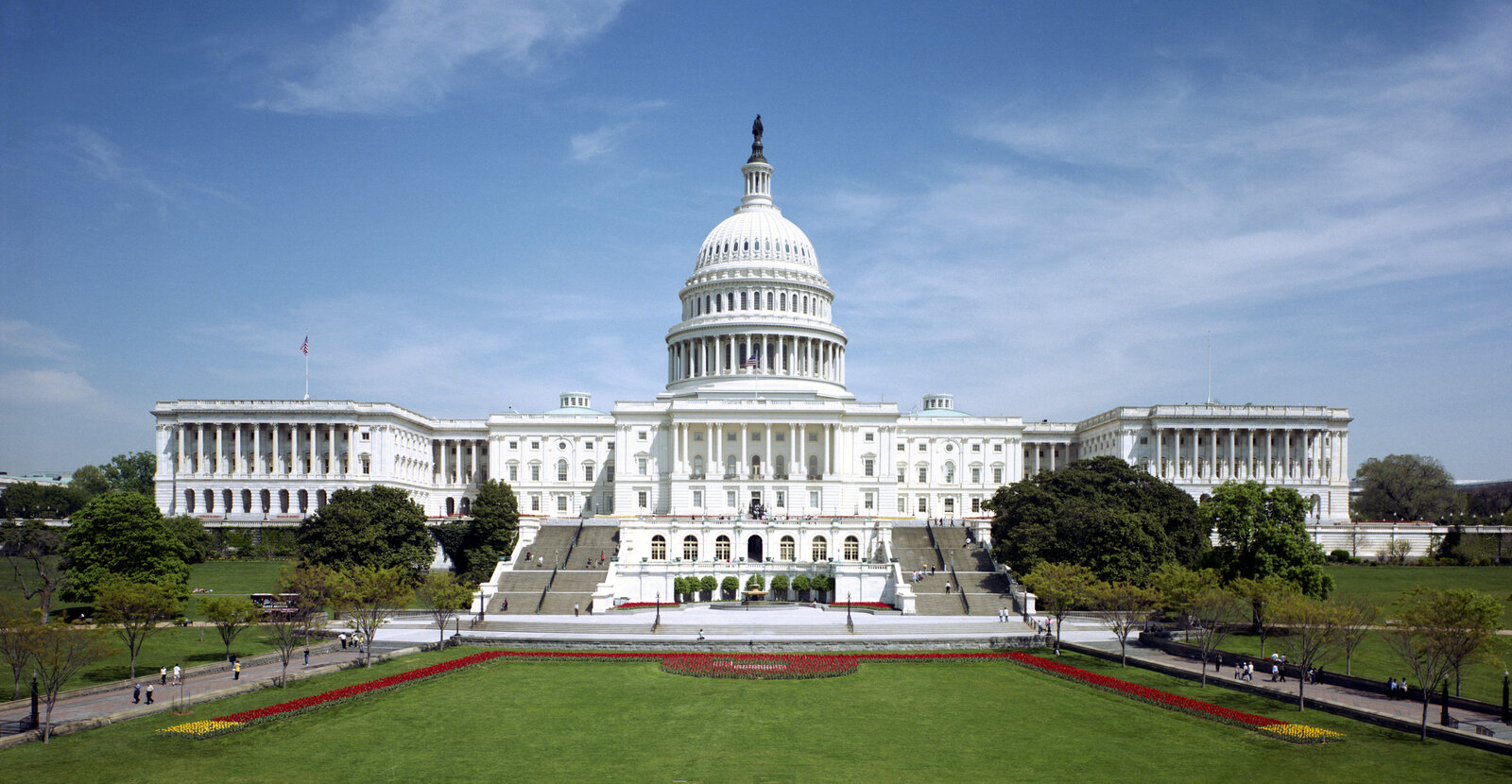
Capitol Watch is The Investigative Journal’s daily digest of congressional activity, tracking the votes, hearings, oversight actions and spending decisions that shape federal accountability. All items below are sourced to public records.
Congress returned this week to a compressed calendar and a crowded agenda. Lawmakers have roughly eight legislative working days before a five-week August recess, and competing priorities from the House, the Senate and the White House are all pressing for the same limited floor time, according to a July 13 analysis by WTOP Capitol Hill correspondent Mitchell Miller on Federal News Network. The marquee event of the day unfolded not on the floor but in an appropriations hearing room, where two Supreme Court justices made a rare appearance before House budget-writers.
1. Justices Barrett and Kagan testify on the Supreme Court budget — a first since 2019
Associate Justices Amy Coney Barrett and Elena Kagan appeared July 14 before the House Appropriations Subcommittee on Financial Services and General Government to defend the Supreme Court’s fiscal 2027 budget request, marking the first time sitting justices have testified to Congress on the Court’s finances since 2019. Records of the hearing are posted on the House Appropriations Committee website.
According to reporting by CNBC and Roll Call, the Court is seeking approximately $225.1 million for fiscal 2027, an increase of roughly 10 percent over enacted 2026 funding. The request includes about $14.6 million in additional funding for the Supreme Court Police tied to protective activities at the justices’ homes and for their families — a line item that reflects heightened security concerns for the judiciary. The justices were also expected to appear before Senate appropriators later the same afternoon.
The appearance is notable for its bipartisan, institutional character: budget testimony from the judicial branch is a routine constitutional function, but the choice of one center-right justice and one center-left justice to make the Court’s case underscores an effort to present the request as an institution-wide priority rather than an ideological one. Committee members from both parties questioned the justices on security spending and court operations.
2. House Rules Committee teed up the FY2027 State and national-security spending bill
The House Committee on Rules met Monday, July 13, at 4:00 p.m. in H-313 of the Capitol to process a slate of measures, according to the committee’s official meeting announcement. Chief among them was H.R. 8595, the National Security, Department of State, and Related Programs Appropriations Act, 2027, handled as a rule markup to set terms for eventual floor debate.
The panel, chaired by Rep. Virginia Foxx (R-N.C.), also took up H.R. 9237, the Take Care of America’s Veterans Act, and H.R. 139, the Sunshine Protection Act of 2025, which would make daylight saving time permanent and has long drawn cross-party support. The State-Foreign Operations measure had been slated for floor action earlier but was delayed amid an intraparty procedural standoff described below, making its reappearance at Rules an important signal that GOP leaders hope to restart the stalled appropriations pipeline.
The House Appropriations Committee has now advanced all of its fiscal 2027 spending bills at the committee level, but the Senate has not yet taken up any of the dozen annual appropriations measures, according to the Federal News Network analysis. With the fiscal year ending September 30, the gap between the chambers sets up a familiar autumn scramble to avoid a lapse in funding.
3. Defense authorization remains stalled after a GOP revolt over the SAVE America Act
The annual National Defense Authorization Act — a roughly $1.15 trillion defense policy bill that Congress has enacted for more than six decades — is in what the WTOP analysis called “suspended animation.” The blockage traces to a June 30 floor defeat: the House rejected a procedural rule, 198–224, that would have paired the NDAA with the SAVE America Act, a measure requiring documentary proof of citizenship to register to vote and identification to cast a ballot in federal elections. Coverage of the vote appeared in The Hill, Breaking Defense and Axios.
Fourteen House Republicans joined Democrats to sink the rule, according to those accounts, blocking a maneuver that would have bundled the two bills through a packaging process lawmakers call “MIRVing.” Reporting indicated that Rep. Anna Paulina Luna (R-Fla.), who had initially championed combining the measures, ultimately opposed the rule on the ground that attaching the SAVE Act to the NDAA would leave it vulnerable to being stripped out by the Senate. The episode marked a setback for Speaker Mike Johnson’s strategy to advance the president’s voting-eligibility priority alongside must-pass defense legislation.
The stakes extend beyond procedure. Filings and reporting indicate the Pentagon is seeking roughly $67 billion in supplemental funding connected to operations involving Iran, while a separate reconciliation package — informally dubbed “Reconciliation 3.0” and estimated near $350 billion — carries defense items including about $16 billion for the Air Force and F-35 procurement and roughly $12 billion sought by the Space Force. Several of these threads remain unresolved as the recess approaches.
4. A landmark housing bill became law — without the president’s signature
The 21st Century Road to Housing Act, described in coverage as the largest housing-affordability measure in decades, became law on July 10 after President Trump declined to either sign or veto it within the 10-day constitutional window. Under Article I, legislation the president neither signs nor returns becomes law automatically, provided Congress remains in session. The unusual outcome was reported by PBS NewsHour and NPR.
According to those accounts, the president said he was withholding his signature “in protest” over Congress’s failure to advance the SAVE America Act, and had canceled a planned June signing ceremony for the same reason. The bill nonetheless cleared both chambers with broad bipartisan support and aims to expand housing supply and reduce costs. Senate Banking Committee ranking member Elizabeth Warren (D-Mass.) issued a statement marking the enactment.
The maneuver is a rare use of a constitutional mechanism that allows a bill to become law without a presidential endorsement, and it illustrates how the voter-eligibility fight has begun to spill into unrelated legislation. Analysts cited by Federal News Network cautioned that the tactic could complicate the fall appropriations process if similar standoffs recur.
5. Senate resumes judicial confirmations
With the Senate back from a brief recess, the chamber turned to pending judicial nominations. According to the Senate floor schedule published on Congress.gov, the Senate was set to vote on confirmation of Matthew A. Schwartz of New York to be a U.S. Circuit Judge for the Second Circuit, with a district-court confirmation vote on Arthur Jones for the Southern District of Texas also on the calendar. Roll-call results for these votes are recorded in the Senate’s official roll-call vote database.
Judicial confirmations have been among the more steadily moving items in an otherwise congested chamber, and the Judiciary Committee continued to process district- and circuit-court nominees this week. Readers can track the status of individual nominations through the Senate Judiciary Committee’s judicial nominations page.
6. House Democratic report alleges FEMA resources were diverted to immigration enforcement
On July 10, Rep. Greg Stanton (D-Ariz.), ranking member of the House Transportation and Infrastructure Subcommittee on Economic Development, Public Buildings and Emergency Management, released a 34-page investigative report alleging that the administration and DHS leadership detailed Federal Emergency Management Agency personnel to Immigration and Customs Enforcement and Customs and Border Protection. The report, titled “Stretched Thin: The Erosion of FEMA’s Core Mission Under DHS,” is posted in full by House Transportation Committee Democrats, with a summary on Stanton’s official site.
The document — a minority-staff product reflecting the findings of committee Democrats — states that roughly 125 FEMA employees from the agency’s human-capital and security offices were detailed beginning in late summer 2025 to support ICE hiring, and it sets out 14 findings and eight recommendations, including recalling detailed employees and reimbursing FEMA for related costs. The report also raises legal questions, arguing that details to outside agencies extending beyond established time limits could implicate the Anti-Deficiency Act. Coverage appeared in The Washington Post and Federal News Network.
DHS has defended the personnel moves. In prior public statements, including an August 2025 posting in which the department said it was debunking “false claims” about FEMA, the department has characterized the details as temporary assignments of a limited number of human-resources and security specialists to help vet and hire new ICE officers, saying no first responders or operational disaster staff were involved and that FEMA’s core mission would not be disrupted. The allegations in the minority report have not been adjudicated, and DHS has been afforded the opportunity to respond; the department’s position is reflected above. The Investigative Journal will continue to seek documentation on both sides of the dispute.
7. Upcoming: Todd Blanche’s attorney general confirmation hearing
The Senate Judiciary Committee is scheduled to hold a confirmation hearing this week for Todd Blanche, the president’s nominee for attorney general, according to the committee’s hearing notice. The nomination is docketed on Congress.gov as PN12-5. Blanche, who was confirmed as deputy attorney general in March 2025 and has served as acting attorney general since April 2026, previously represented the president as a personal criminal-defense attorney.
Reporting by The Washington Post indicates the nomination faces scrutiny, with some Senate Republicans said to be weighing their support and outside groups organizing in opposition. Because the nomination is pending and the hearing has not yet concluded, TIJ notes that these are allegations and political assessments, not findings; the confirmation process will play out on the record before the committee. Blanche will have the opportunity to answer senators’ questions directly during the hearing.
The state of play on spending
Beyond the day’s headlines, the broader fiscal picture remains unsettled. The Federal News Network analysis noted that Senate Republican appropriators, including full-committee chair Susan Collins (R-Maine), have expressed frustration that the reconciliation fight is crowding out the regular appropriations process. WTOP also reported that Senate Republican leader Mitch McConnell (R-Ky.), who chairs the Defense Appropriations Subcommittee, had been hospitalized since mid-June, a development that could affect the pace of Pentagon funding decisions. Defense Secretary Pete Hegseth has met privately with senators to press the administration’s funding requests, according to the same reporting.
Taken together, the week illustrates a Congress moving on several tracks at once: routine constitutional business such as judicial confirmations and budget testimony proceeding on schedule, even as marquee items — the defense authorization, the annual spending bills and a large reconciliation package — remain snarled by an intraparty dispute over voting-eligibility legislation.
What to watch
Key items on the near-term calendar include the Blanche confirmation hearing before Senate Judiciary; House floor consideration of the FY2027 State and national-security appropriations bill (H.R. 8595) and the veterans measure (H.R. 9237) once the Rules Committee reports governing resolutions; and any renewed attempt to bring the NDAA to the floor. On the Senate side, appropriators have yet to mark up any of the twelve annual spending bills, leaving a heavy workload before the chamber departs for its five-week August recess. Readers can follow floor activity in real time via the Congress.gov roll-call vote records and the House floor schedule.
On the TIJ accountability beat
Several threads warrant continued investigative attention. The FEMA personnel dispute raises questions about interagency detailing and compliance with appropriations law that extend beyond any single administration, and TIJ will track whether the Government Accountability Office or agency inspectors general weigh in. The attorney general confirmation bears on the long-running question of the Justice Department’s institutional independence, a subject this publication has covered closely. And the proposed defense supplemental tied to operations involving Iran — along with reporting on munitions stockpile levels — merits scrutiny of how emergency defense dollars are authorized, appropriated and overseen. Each of these stories turns on documents and votes that are, or will become, part of the public record; Capitol Watch will follow them there.
Sources: Federal News Network/WTOP; House Committee on Rules; House Committee on Appropriations; CNBC; Roll Call; The Hill; Breaking Defense; Axios; PBS NewsHour; NPR; U.S. Senate Committee on Banking, Housing, and Urban Affairs; Congress.gov; House Transportation and Infrastructure Committee Democrats; Office of Rep. Greg Stanton; The Washington Post; U.S. Department of Homeland Security; U.S. Senate Committee on the Judiciary. This digest summarizes public records and official statements; allegations described in congressional minority-staff reports and pending nominations are noted as such and have not been adjudicated.