

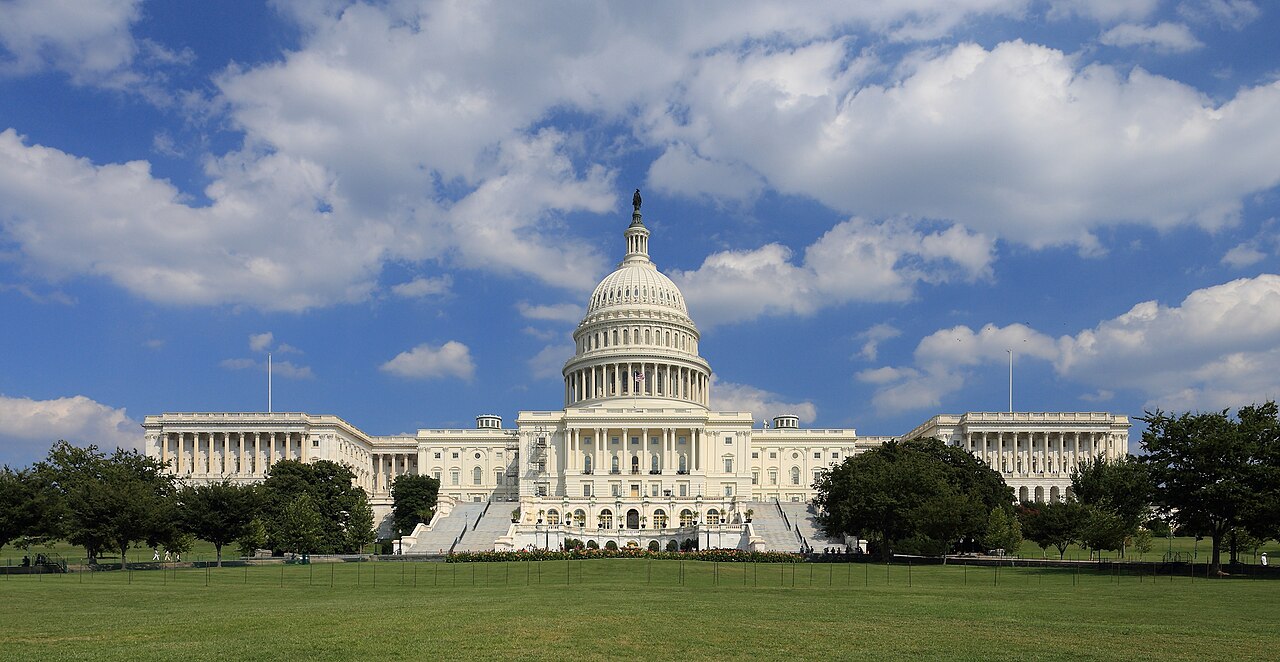
Washington — Tuesday, May 12, 2026. Both chambers reconvened this week with the Pentagon at the center of the action. Defense Secretary Pete Hegseth and Joint Chiefs Chairman Gen. Dan Caine appeared before House Appropriations defense cardinals at 8 a.m. to defend the administration’s fiscal year 2027 budget request and answer pointed questions about the recent military exchanges with Iran. Across the Capitol, Army Secretary nominees and posture witnesses faced Senate Armed Services, while subcommittees in both chambers worked through oversight, antitrust, and intellectual property dockets. Below is the day’s accountability ledger.
1. Hegseth, Caine Defend FY2027 Pentagon Topline Amid Iran Questions
The Defense Subcommittee of the House Appropriations Committee convened at 8:00 a.m. in Room 2359 Rayburn for the most closely watched budget hearing of the week. Secretary Hegseth and Gen. Caine were the lone witnesses, and the FY2027 request — submitted alongside a supplemental tied to operations in the Persian Gulf — gave appropriators on both sides of the aisle an opening to press the department on burn rate, munitions inventory, and the legal authorities cited for recent strikes. Records of the hearing are posted on the committee schedule page, where the witness list and prepared statements are linked. (House Appropriations)
Subcommittee questioning, according to the published opening statements, centered on three threads: shipbuilding shortfalls, the funding profile for replenishing precision munitions used during the Iran exchange, and the department’s persistent failure to produce a clean financial audit. Cardinals from both parties signaled that any FY2027 mark would be conditioned on more granular reporting from the Office of the Under Secretary for Acquisition and Sustainment, particularly on missile-defense interceptor lines that have been the subject of repeated reprogramming requests.
The hearing was carried by C-SPAN and the committee’s YouTube channel, with the full session also available on the C-SPAN program archive. (C-SPAN)
2. Senate Armed Services Reviews Army Posture, Then Pivots to Special Operations
At 11:00 a.m. in Dirksen G-50, the full Senate Armed Services Committee took testimony on the posture of the Department of the Army in review of the FY2027 defense authorization request and the Future Years Defense Program. The hearing is the second in this year’s posture series and is being used by SASC staff to develop the floor amendments expected when the National Defense Authorization Act moves out of committee later this summer. (Senate Armed Services)
Members focused on recruitment trajectories, the status of long-range precision fires modernization, and how the Army is absorbing lessons-learned cells stood up after the Red Sea and Persian Gulf engagements. Filings indicate the committee is paying particular attention to industrial base questions tied to 155mm production and PAC-3 throughput — both topics the Government Accountability Office has flagged in successive high-risk reports.
Following the open posture session, the Subcommittee on Emerging Threats and Capabilities, chaired by Sen. Joni Ernst (R-Iowa) with Sen. Elissa Slotkin (D-Mich.) as ranking member, was scheduled to receive classified testimony on U.S. Special Operations Command in SVC-217. The open portion is expected to be released as a partial transcript. (Legis1 hearing summary)
3. House Oversight Sets Pentagon Audit Hearing for May 13
The House Oversight and Government Reform Subcommittee on Government Operations, chaired by Rep. Pete Sessions (R-Texas), has placed “DoW Financial Management: Examining Progress and New Audit Approaches” on the calendar for Wednesday, May 13, at 2154 Rayburn. The hearing follows the Department of Defense’s FY2025 audit, which auditors closed with a disclaimer of opinion — meaning they could not gather sufficient evidence to render a judgment — and which surfaced 26 material weaknesses and two significant deficiencies. (Oversight hearings archive)
Records suggest Sessions is using the hearing to press the department on whether the 2028 statutory deadline for a clean opinion remains achievable. The Project On Government Oversight has reported that more than half of the department’s $4 trillion in assets has never been substantiated under audit, a figure committee staff have cited in pre-hearing briefings. (POGO fact sheet)
The “Audit the Pentagon Act of 2026,” H.R. 7555, is also pending before the committee and would impose escalating budget penalties on military departments and defense agencies that fail to receive a clean audit opinion. The bill’s full action history is available on Congress.gov. (H.R. 7555 actions)
4. CBO Updates 2026–2036 Outlook: Deficit Hits $1.9 Trillion
The Congressional Budget Office’s updated Budget and Economic Outlook for 2026 to 2036, released ahead of this week’s appropriations cycle, projects a fiscal year 2026 deficit of $1.9 trillion — equal to 5.8 percent of gross domestic product. Federal outlays for the year are estimated at $7.4 trillion against $5.6 trillion in revenues, leaving debt held by the public on a trajectory to reach 120 percent of GDP by 2036. (CBO Budget Outlook)
The 2025 reconciliation act, according to CBO’s modeling, increases projected deficits from 2026 through 2035 by $4.7 trillion, while higher tariff revenue reduces deficits by about $3 trillion and lower immigration adds roughly $0.5 trillion in deficit pressure once macroeconomic feedback and debt-service costs are scored. Net interest payments alone climb from $1.0 trillion in 2026 to $2.1 trillion in 2036, crossing from 3.3 percent to 4.6 percent of GDP. (Director’s statement)
The report has already been cited in dueling press releases from the House and Senate Budget Committees, and is expected to anchor floor debate when the FY2027 budget resolution comes to the Senate calendar. Companion long-term data is posted at the CBO Long-Term Budget Outlook page. (Long-Term Outlook Data)
5. Senate Judiciary: Copyright Office Oversight and Privacy Hearings
Senate Judiciary held two sessions on Tuesday. The Subcommittee on Intellectual Property, meeting at 9:00 a.m. in Hart 216, conducted oversight of the U.S. Copyright Office, with members questioning office leadership on the implementation of the 2024 generative-AI guidance, the agency’s response to the recent removal of the Register of Copyrights, and pending rulemakings. (Senate Judiciary hearings)
At 2:30 p.m. in Dirksen 226, the Subcommittee on Privacy, Technology, and the Law took testimony on whether recent civil verdicts against social-media platforms demand federal preemption or new statutory remedies. The hearing builds on the committee’s multi-year record on Section 230 reform and platform liability — a record that Holland & Knight and Pillsbury attorneys have flagged as one of the most consequential oversight tracks of the 119th Congress. (Holland & Knight analysis; Pillsbury preview)
Filings indicate the subcommittee is preparing draft language for a privacy framework that could be attached to year-end vehicles, though staff caution that committee Republicans and Democrats remain divided on the preemption question and on whether to extend a private right of action to consumers.
6. Senate Appropriations Reviews FBI, DEA, Marshals, ATF Budgets
The Senate Appropriations Subcommittee on Commerce, Justice, Science and Related Agencies is examining the President’s FY2027 budget request for the Federal Bureau of Investigation, the Drug Enforcement Administration, the U.S. Marshals Service, and the Bureau of Alcohol, Tobacco, Firearms and Explosives this week. The session is one of the committee’s most consequential oversight venues, with members from both parties using the hearing to press on personnel changes at the FBI, DEA’s southwest border posture, and ATF’s reorganized firearms enforcement program. (Senate Appropriations; Weekly committee schedule)
The hearing is one of more than a dozen scheduled this week as Senate appropriators race to complete subcommittee marks before Memorial Day. The committee’s stated goal is to clear all twelve bills on a regular order schedule, a benchmark the Senate has not met in roughly three decades.
7. Subpoenas, Contempt Motions, and the Epstein Records
The House Oversight Committee continues to work through a contempt resolution against former Attorney General Pam Bondi. Records indicate that Bondi declined to appear for a deposition on April 14 in response to a bipartisan subpoena tied to the committee’s investigation into the handling of Jeffrey Epstein-related records. Ranking Member Robert Garcia and committee Democrats filed a resolution to hold Bondi in civil contempt, while majority counsel has separately weighed criminal contempt options. (Oversight Democrats)
Chairman James Comer’s earlier round of subpoenas to former officials — including former President and Secretary of State Hillary Clinton, former President Bill Clinton, former attorneys general, and former FBI directors — remains the active framework for the committee’s Epstein records track. The committee has not yet publicly disclosed responses to those subpoenas. (Oversight press release)
Filings suggest that any contempt resolution that clears committee will be sequenced behind the FY2027 appropriations push and is unlikely to reach the House floor before late June.
8. Floor Calendar and Bills on the Move
The Senate stood adjourned until 3 p.m. on Monday and returned to a calendar dominated by nominations and the conference text on H.R. 1, the reconciliation vehicle that has anchored the 119th Congress’s tax and spending agenda. The bill’s full text and action history are maintained on Congress.gov. (H.R. 1 text)
The House placed multiple measures on its Tuesday calendar, with floor managers prepared to move on suspension bills early in the week before pivoting to appropriations conference reports. Roll call records for all House and Senate votes are aggregated on Congress.gov’s votes portal, where they are typically posted within hours of the vote. (Congress.gov roll call; Senate roll call)
Upcoming This Week
Wednesday: House Oversight Government Operations Subcommittee hearing on DoW financial management at 2:00 p.m., Rayburn 2154. Thursday: House Oversight Federal Law Enforcement Subcommittee hearing on “Privacy Protections & the Second Amendment: Examining ATF’s Relationship to the Tiahrt Amendment,” 10:00 a.m. Friday and through the weekend: continued subcommittee marks at Senate and House Appropriations. (Committee Schedule, Week of May 11–17)
Relevance to TIJ Beats
Several threads on the docket map directly to TIJ’s standing investigative beats. The Pentagon audit hearing on May 13 will test whether the department’s renewed 2028 commitment is credible — a beat TIJ has been tracking through successive failed opinions. The Senate Judiciary intellectual property session reaches into TIJ’s coverage of generative-AI accountability and the removal of the Register of Copyrights. The CBO outlook and reconciliation-bill modeling underwrite the fiscal arguments that will frame the entire FY2027 cycle. And the contempt track on the Epstein records remains the most consequential live oversight test of executive-branch cooperation with Congress this year. Filings indicate further subpoenas and depositions are pending in each thread.
Right of reply: All subjects of pending congressional inquiries referenced above retain the right of reply; TIJ will update this digest with on-record statements as they are received.