

The Investigative Journal’s daily digest of congressional activity, compiled from official records: floor logs, roll call votes, committee notices and government reports. All figures link to primary sources.
Congress packed an unusual amount of consequence into Tuesday. A House committee moved, on a bipartisan basis, to hold a billionaire financier in contempt for defying subpoenas in the Jeffrey Epstein inquiry. The Senate dealt a one-vote defeat to the crypto industry’s top legislative priority, then turned around and advanced a landmark college sports bill by a 50-vote margin. And the Congressional Budget Office put the first comprehensive price tag on the Iran war — $38 billion and climbing. Here is what the records show, and what to watch today.
1. Oversight Committee votes to hold Leon Black in contempt of Congress
The House Committee on Oversight and Government Reform voted Tuesday to advance a resolution recommending that the full House find Leon Black, the private-equity billionaire and Apollo Global Management co-founder, in contempt of Congress for refusing to comply with two subpoenas issued in the committee’s investigation of the federal government’s handling of the Jeffrey Epstein and Ghislaine Maxwell criminal cases. NBC News reported the committee vote was 41-0, a rare show of unanimity, and that Chairman James Comer (R-Ky.) expects the full House to take up the resolution as soon as Thursday.
According to the committee’s announcement, Black sat for a transcribed interview earlier this summer but began refusing to answer questions roughly an hour in, prompting Comer to issue two subpoenas: one compelling a deposition and one compelling production of nondisclosure agreements. The committee says Black failed to appear for his rescheduled September 3 deposition, produced only a single NDA despite his counsel indicating more exist, and instead filed a lawsuit against Comer and the committee. Committee records state that Black paid Epstein at least $158 million after Epstein became a registered sex offender. “Subpoenas are not suggestions,” Comer said in his opening statement.
Right of reply: Black is contesting the subpoenas in court, and his litigation disputes the committee’s authority to compel the material — a defense that will now be tested if the House votes to certify the contempt referral. Ranking Member Robert Garcia (D-Calif.), whose party supplied every minority vote for the resolution, issued his own statement backing enforcement. Bipartisan contempt referrals are uncommon; this one signals both parties see subpoena compliance as an institutional issue that outlasts any single investigation.
2. Senate blocks crypto market-structure bill by a single vote
The Senate’s long-awaited vote on the Digital Asset Market Clarity Act (H.R. 3633) ended in a 49-50 defeat Tuesday afternoon, with the motion to invoke cloture on the motion to proceed falling well short of the 60 votes required. According to the Senate Press Gallery’s floor log, Republican Sens. Susan Collins, Josh Hawley and Jerry Moran joined most Democrats in voting no, while Sen. Thom Tillis (R-N.C.) switched his vote to no for procedural reasons — a maneuver that allowed him to enter a motion to reconsider, keeping the bill technically alive.
The floor debate previewed the fight to come. Majority Leader John Thune and Sen. Cynthia Lummis (R-Wyo.) spoke for the bill, which would assign regulatory jurisdiction over digital-asset markets between the SEC and CFTC; Sen. Elizabeth Warren (D-Mass.) spoke against it, tying the legislation to President Trump’s family crypto ventures, per the floor log. The one-vote margin — and the Tillis reconsideration motion — suggests negotiations are not over, but the defeat is a setback for an industry that has spent heavily this cycle to get market-structure legislation across the line before the midterms.
3. College sports bill clears its first hurdle, 74-24
Hours after the crypto defeat, the Senate voted 74-24 to invoke cloture on the motion to proceed to the Protect College Sports Act of 2026 (S. 4668), a broadly bipartisan result on a bill that would set national standards for name, image and likeness (NIL) agreements and grant schools and conferences a limited antitrust exemption to pool and sell certain media rights. Commerce Chairman Ted Cruz (R-Texas) and Ranking Member Maria Cantwell (D-Wash.) both spoke in favor, according to the floor log; Sen. Cory Booker (D-N.J.), a former college football player, spoke against.
The 74-vote showing gives leadership room to manage floor amendments, but final Senate passage and House action remain ahead. The Commerce Committee’s summary frames the bill as a response to the litigation, transfer-portal churn and conference realignment that have reshaped college athletics. The House is examining the same terrain from another angle: the Education and Workforce Committee holds a hearing today titled “Who Gets the Scholarship? How the Global Shift in College Sports Affects Americans,” per the majority leader’s committee schedule.
4. House tees up DOJ fraud-enforcement package — and final action on Russia-Iran sanctions
The House adopted H.Res. 1530, the rule governing this week’s floor agenda, by a 214-211 recorded vote (Roll No. 300). Clerk records show two Democrats crossed over in favor and two Republicans voted no. The rule provides for consideration of five measures: H.R. 9576, which would establish a National Fraud Enforcement Division at the Justice Department; H.R. 10326, the PROOF Act, which would expand federal-state information sharing to detect and prosecute fraud in federal programs; two Congressional Review Act resolutions — H.J.Res. 210 and H.J.Res. 213 — disapproving EPA decisions on California’s nonroad-engine standards for ocean-going vessels at berth and commercial harbor craft; and the Senate amendments to H.R. 5334, the Lindsey O. Graham Sanctioning Russia and Iran Act of 2026.
The fraud-enforcement pair is worth watching for accountability reporters: a dedicated DOJ fraud division and a federal-state data pipeline would together reshape how improper-payment cases in programs like Medicaid, unemployment insurance and pandemic-era credits get built. The sanctions bill is the sleeper: the Senate returned an amended version to the House on August 7 after an 86-11 vote, records show, so House concurrence this week would send a major Russia-Iran sanctions package to the President’s desk.
5. CBO: Iran war has cost $38 billion, drained up to two-thirds of missile-defense interceptors
The Congressional Budget Office reported Tuesday that the Iran war directly cost the Pentagon roughly $38 billion through July and will likely consume $2 billion to $3 billion per month if hostilities continue — an estimate composed mostly of munitions replacement, equipment losses, fuel and pay, as first reported by Roll Call. The figure excludes repair of damaged U.S. facilities across the Gulf, veterans’ costs and diplomatic expenses. Notably, CBO wrote that it built the estimate largely from public reports because the Defense Department “did not respond to CBO’s requests for information” — a data-access failure worth flagging in its own right.
The report’s starkest finding concerns readiness: comparing reported interceptor expenditures against total purchases, CBO estimates the U.S. has used between one-half and two-thirds of its missile-defense interceptor inventory since June 2025, a shortfall the analysts said would be “especially problematic” in a conflict with an adversary fielding large missile arsenals, such as China. Rebuilding the inventory would take at least five years even at accelerated procurement rates, per the report. CBO also attributed more than 40 percent of second-quarter inflation in personal consumption expenditures to war-driven energy costs from disruptions in the Strait of Hormuz and Red Sea.
The budget dimension now shifts to the pending $67.1 billion war supplemental: CBO estimates nearly 37 percent of the request is not directly war-related. A Pentagon inspector general report published days earlier reached a similar cost figure — $33.4 billion through June 29 — and likewise flagged “strategic inventory shortfalls” in munitions.
6. Judiciary pipeline: Byrne confirmed, Mitchell queued
The Senate confirmed Matthew Byrne to be U.S. District Judge for the Southern District of Ohio on a 52-45 party-line vote Tuesday, per the Press Gallery log, with Sens. Coons, McConnell and Sanders not voting. Cloture was filed Monday on the nomination of Kasdin Mitchell for the Northern District of Texas, putting a second confirmation vote on track for this week as the majority continues working through the district-court backlog ahead of the election-season calendar crunch.
7. Around the committees: Treasury, the FBI, and homelessness-program fraud
Tuesday was a heavy oversight day off the floor. The Treasury Secretary delivered the statutorily required annual testimony on the international financial system before House Financial Services. FBI Director Kash Patel appeared before the Senate Judiciary Committee’s oversight hearing, where, according to Roll Call, he declined to rule out deploying FBI personnel to polling places on Election Day — an exchange likely to reverberate through election-administration circles this fall. And the Oversight Committee’s Delivering on Government Efficiency subcommittee held a hearing on fraud and failure in federally funded homelessness services, part of a widening examination of grant-program integrity.
What’s ahead: today and this week
Today’s committee slate, per the Congress.gov daily schedule and the majority leader’s Cliff Notes: House Financial Services marks up a nine-bill package including the Consumer Financial Protection Accountability and Reform Act (H.R. 10184) and the TRAPS Act on payment scams (H.R. 4936); House Foreign Affairs holds hearings on the terrorism landscape twenty-five years after 9/11 and on China and North Korea’s transnational repression; House Agriculture examines export demand for U.S. farm products; and the Appropriations national security subcommittee holds a budget hearing on trade and investment agencies. On the floor, the House works through the fraud-enforcement bills, the EPA disapproval resolutions and the sanctions bill under Tuesday’s rule, with the Black contempt resolution expected as soon as Thursday. The Senate resumes debate on the college sports bill, with the Mitchell judicial confirmation also queued.
One structural note as the fiscal year winds down: both chambers cleared their FY2027 stopgap before the August recess — the House on July 21 and the Senate on August 8, the earliest continuing-resolution action in decades, according to an analysis by Legislative Procedure — removing the customary September 30 shutdown cliff from this month’s calendar, as NPR reported. Full-year FY2027 appropriations work remains unfinished, with only three of the twelve regular bills through the House as of late August, the same analysis found.
On TIJ’s radar
Three threads from this week connect directly to our accountability beats. First, the Black contempt referral will test whether congressional subpoenas can reach nondisclosure agreements that may conceal underlying conduct — a question with implications far beyond the Epstein file. Second, the DOJ fraud-division bills (H.R. 9576 and H.R. 10326) would centralize fraud enforcement data TIJ regularly mines for reporting; we will track amendments affecting privacy safeguards and inspector-general access. Third, the Oversight Committee opened an investigation Monday into Bloomberg Philanthropies’ funding of state-level climate litigation offices, and Judiciary’s oversight subcommittee held a hearing on alleged voter fraud in New Jersey — both worth following for what documents the committees actually obtain.
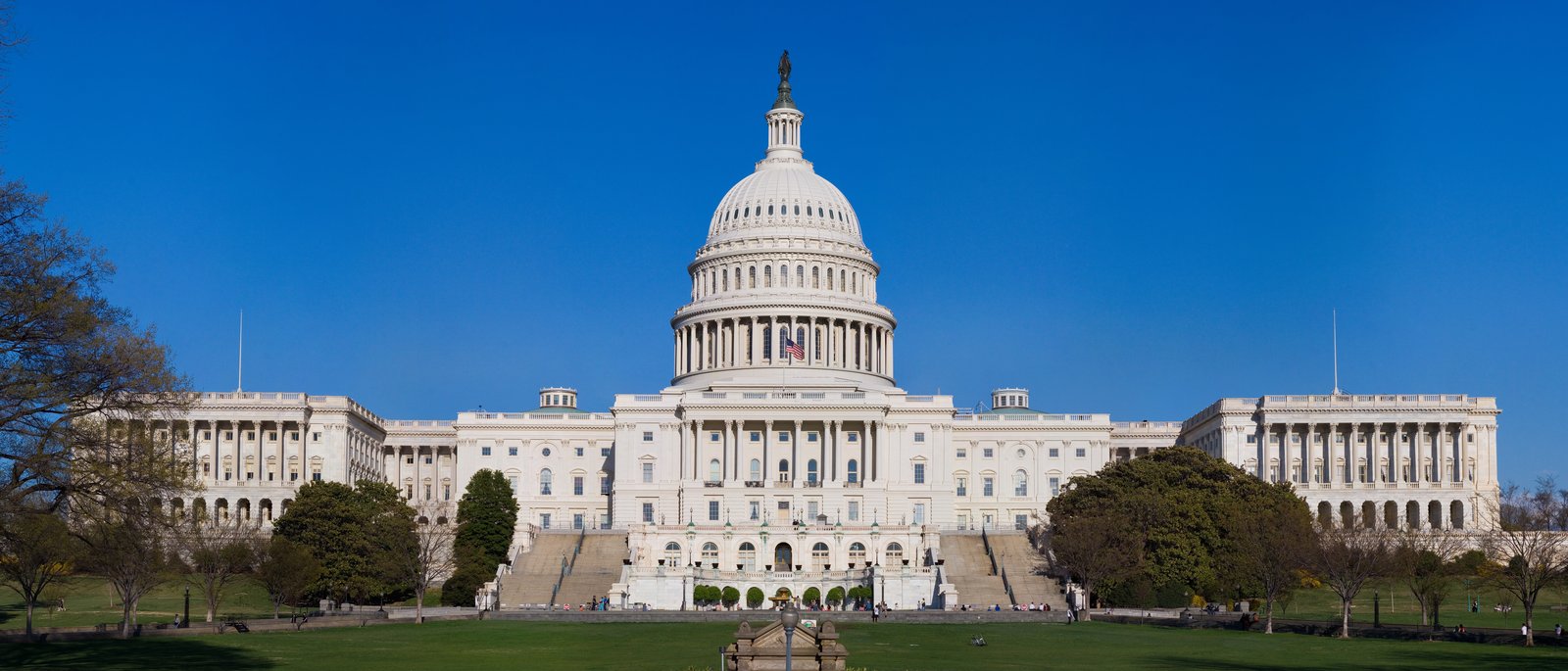
Editor’s note: This digest is compiled exclusively from official public records — Congress.gov, the House Clerk, the Senate Press Gallery, committee notices, CBO and inspector-general reports — and credible congressional press reporting, with direct links throughout. Allegations described in oversight proceedings are claims, not adjudicated findings; Mr. Black’s litigation contesting the committee’s subpoenas is pending, and referenced parties are invited to respond via The Investigative Journal’s contact page. Featured image: U.S. Capitol, via Wikimedia Commons (public domain).