

The Investigative Journal’s daily review of congressional activity, sourced to official records. All claims are linked to public documents.
House returns with four days to move a stopgap — and a crowded floor list
The House gaveled back in Monday from its five-week summer recess facing a compressed window: four scheduled session days this week, September 1–4, before members depart again until September 14, according to the official House schedule. At the top of the agenda is H.R. 6500, the Continuing Appropriations and Extensions Act, 2027, the Senate-amended stopgap that would extend current government funding through December 11 and head off a shutdown when the fiscal year ends September 30.
The bill appears on the House’s official “Bills This Week” floor list under suspension of the rules — a fast-track procedure that skips a rule vote but requires a two-thirds majority. That threshold looks attainable: the Senate passed the measure 90–6 on August 8, according to Roll Call, after days of wrangling over floor timing. The House had passed its own leaner funding extension in July, but the Senate rewrite added provisions both parties wanted resolved before the fall.
If the House clears the Senate version this week, Congress would put the shutdown question to bed nearly a month early — a notable departure from the usual September 30 brinkmanship, and one that reporting attributes to members’ desire to be on the campaign trail ahead of the November midterms rather than negotiating in Washington.
What the Senate stopgap actually does
The details of H.R. 6500 reward scrutiny. Per Roll Call’s account of Senate passage, the bill would block, through December 11, a federal rule requiring that grant awards be approved by senior political appointees — a proposal Senate Appropriations Chair Susan Collins and Democrats argued would slow federal funds and politicize grantmaking. Sen. John Kennedy of Louisiana predicted a “big fight” over the rule in December, signaling the provision is a truce, not a settlement.
The measure also delays a ban on sales of THC-infused hemp products that was set to take effect November 12; an amendment by Sens. Ted Budd and Pete Ricketts to strip the delay was tabled 61–32. Democrats said the bill closes a transfer authority they described as a loophole that could have shifted additional funds to the Border Patrol. Senate negotiators excluded a $1 billion White House request to begin a new battleship program, while retaining other accelerated Navy shipbuilding funds. The bill further extends surface transportation programs through December 11 while a full reauthorization is negotiated, extends trade arrangements with sub-Saharan African countries and Haiti for two years, and speeds spending authority for food assistance and disaster relief.
Contempt votes teed up in the Cherfilus-McCormick probe
In an unusual accountability action, the floor list includes two resolutions recommending that private citizens be held in contempt of Congress for refusing to comply with House Ethics Committee subpoenas: House Report 119-693, concerning North Miami Beach Mayor Michael Joseph, and House Report 119-694, concerning Florida political operative Hector Roos.
The committee’s reports state that both men willfully failed to comply with subpoenas issued in the panel’s investigation of former Rep. Sheila Cherfilus-McCormick, which examined allegations of unlawful campaign contributions; public reporting indicates the subpoenas were first issued in September 2025 and that Cherfilus-McCormick resigned in April. The contempt recommendations are allegations of non-compliance adopted by the committee, not criminal convictions; if the full House approves the resolutions, enforcement would move to the Justice Department. Contempt referrals targeting non-members through the Ethics Committee are rare, and the votes will test how far the House is willing to go to enforce its own subpoenas.
A censure resolution — and a member’s rebuttal
Also eligible for floor action is a resolution censuring Rep. Chuck Edwards of North Carolina, accompanied by House Report 119-756. The Ethics Committee’s report, released August 3, found that Edwards engaged in what it called persistent unprofessional and inappropriate conduct toward two female staff members, while stating that investigators found no evidence of sexual activity or explicit propositions, according to the committee’s findings as reported.
Edwards has exercised his right of reply: in an August 27 letter to colleagues, he urged the House to reject censure and argued the report describes conduct that does not amount to harassment, per the Washington Times. The Washington Post reported that Edwards ended his reelection bid days after the committee’s recommendation. A censure requires a simple majority and carries no removal from office.
Rules package: mining, lobstermen, campus boycotts, and a socialism resolution
The Rules Committee met Monday evening and reported H. Res. 1499, a rule providing for consideration of four measures this week: H.R. 1501, the Protecting Domestic Mining Act, which would treat certain mineral production activities as covered projects under the FAST Act’s permitting framework; H.R. 9436, the Northeast Lobsterman Protection Act, extending the effective period of current North Atlantic right whale regulations; H.R. 4795, the Protect Economic and Academic Freedom Act, which conditions certain Higher Education Act funds on institutions not participating in nonexpressive commercial boycotts of Israel; and H. Res. 1490, a resolution condemning socialism.
Separately, the weekly list includes H.J. Res. 1, a proposed constitutional amendment fixing the Supreme Court at nine justices. As a constitutional amendment, it would require two-thirds of both chambers and ratification by 38 states — a high bar that makes this week’s exercise largely a statement of position ahead of the midterms. The mix of measures suggests leadership is pairing must-pass funding work with message votes for the fall campaign season; how members on both sides vote will be more informative than the floor speeches.
Today’s hearing room: Houthis, sanctuary cities, welfare at 30
Committee activity resumed at full tempo this morning, per the House schedule and the Clerk’s Committee Repository. The Foreign Affairs Middle East and North Africa Subcommittee convenes “Countering Houthi Terrorism: Protecting U.S. Interests and Security in the Red Sea” at 10:00 a.m., examining threats to commercial shipping and U.S. security interests. At the same hour, the Judiciary Committee’s immigration subcommittee holds “Sanctuary Policies, Tragic Consequences.”
The Ways and Means Work and Welfare Subcommittee marks three decades since the 1996 welfare overhaul with “Welfare Reform at 30: Restoring the Promise of Work and Personal Responsibility in Federal Welfare Programs” at 2:00 p.m. Education and Workforce examines state-led child care solutions, and Energy and Commerce subcommittees hold two markups today — twelve bills in Commerce, Manufacturing, and Trade and six bills in Communications and Technology. Later this week the calendar shows a full Ways and Means hearing Wednesday and a defense subcommittee session Friday.
The numbers: CBO’s late-summer output
The Congressional Budget Office’s Monthly Budget Review for August reports that the federal deficit totaled $1.8 trillion over the first ten months of fiscal year 2026 — the fiscal backdrop against which the December 11 appropriations deadline will be negotiated. The agency’s August 5 analysis of the Navy’s proposed battleship program estimated a cost of roughly $275 billion in 2026 dollars to build 15 nuclear-powered ships through 2056, with the lead ship at about $23 billion — context for the Senate’s decision to strip the program’s $1 billion down payment from the stopgap. CBO also issued its 2026 final report on expired and expiring authorizations on August 28, a standing catalog of programs Congress funds without current authorization.
Senate outlook: judges and a crypto showdown on September 14
The Senate holds a pro forma session today at 12:30 p.m. and returns to full business Monday, September 14 at 3:00 p.m., according to the floor schedule. That evening the chamber votes on cloture for Matthew Byrne, nominated to the Southern District of Ohio. Cloture has also been filed on the motion to proceed to H.R. 3633, the Digital Asset Market Clarity Act, ripening September 15 — setting up a long-anticipated floor fight over cryptocurrency market structure legislation in mid-September.
On the TIJ radar
Three threads from this week merit continued scrutiny. First, the grant-approval rule paused by the stopgap: the December expiration guarantees a renewed fight over political control of federal grantmaking, and the rule’s paper trail — who requested it, which agencies resisted — is a documents story. Second, the contempt resolutions: if adopted, the referrals’ path through the Justice Department will show whether congressional subpoenas against private citizens carry consequences. Third, the hemp provision: the Senate record shows a four-week regulatory delay was contested enough to hold up a government-wide funding vehicle for days; who lobbied for it, and what it is worth to them, is a question the disclosure filings may answer. We will follow all three.
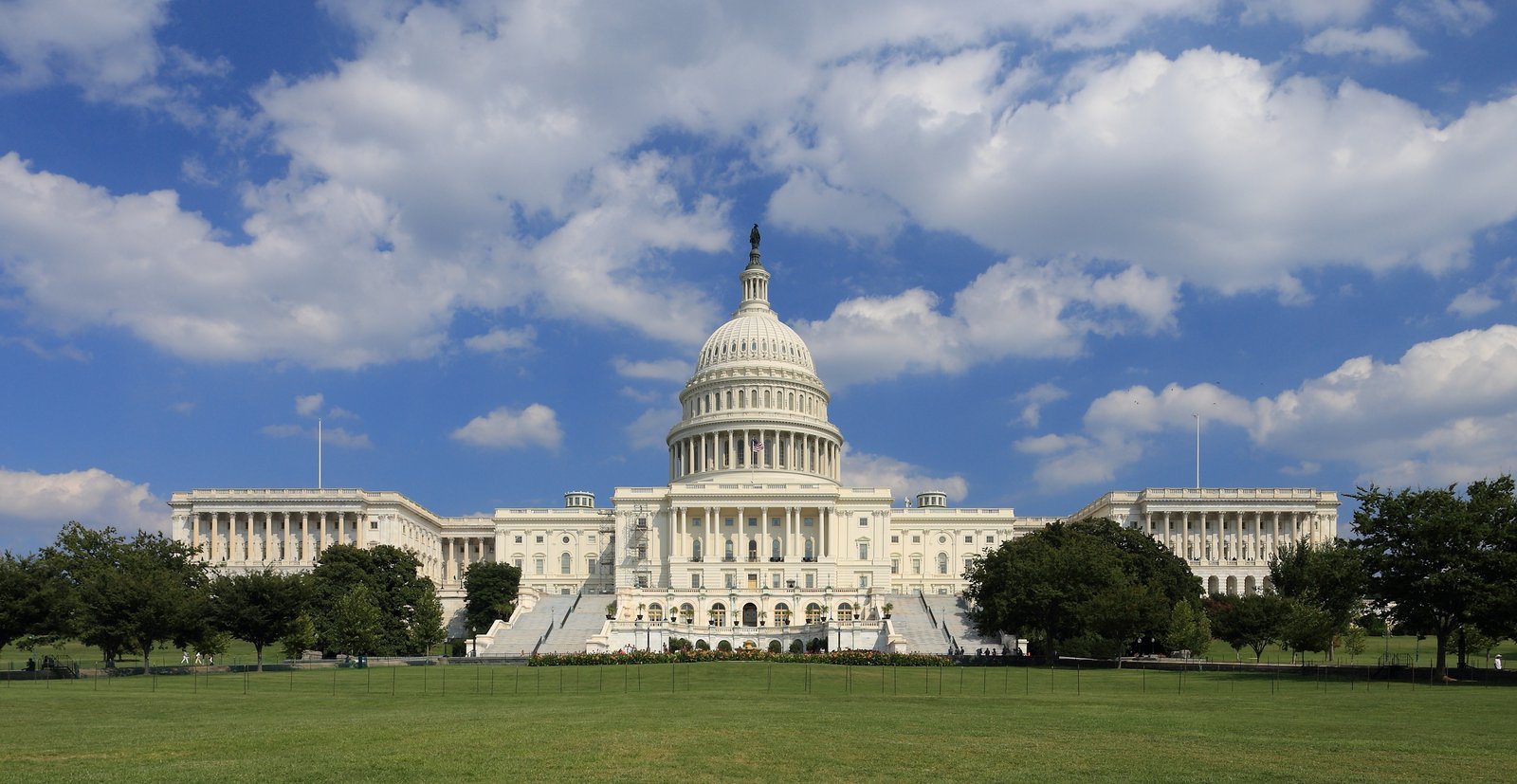
Featured image: The United States Capitol, west side. Photo by Martin Falbisoner via Wikimedia Commons, CC BY-SA 3.0.
