

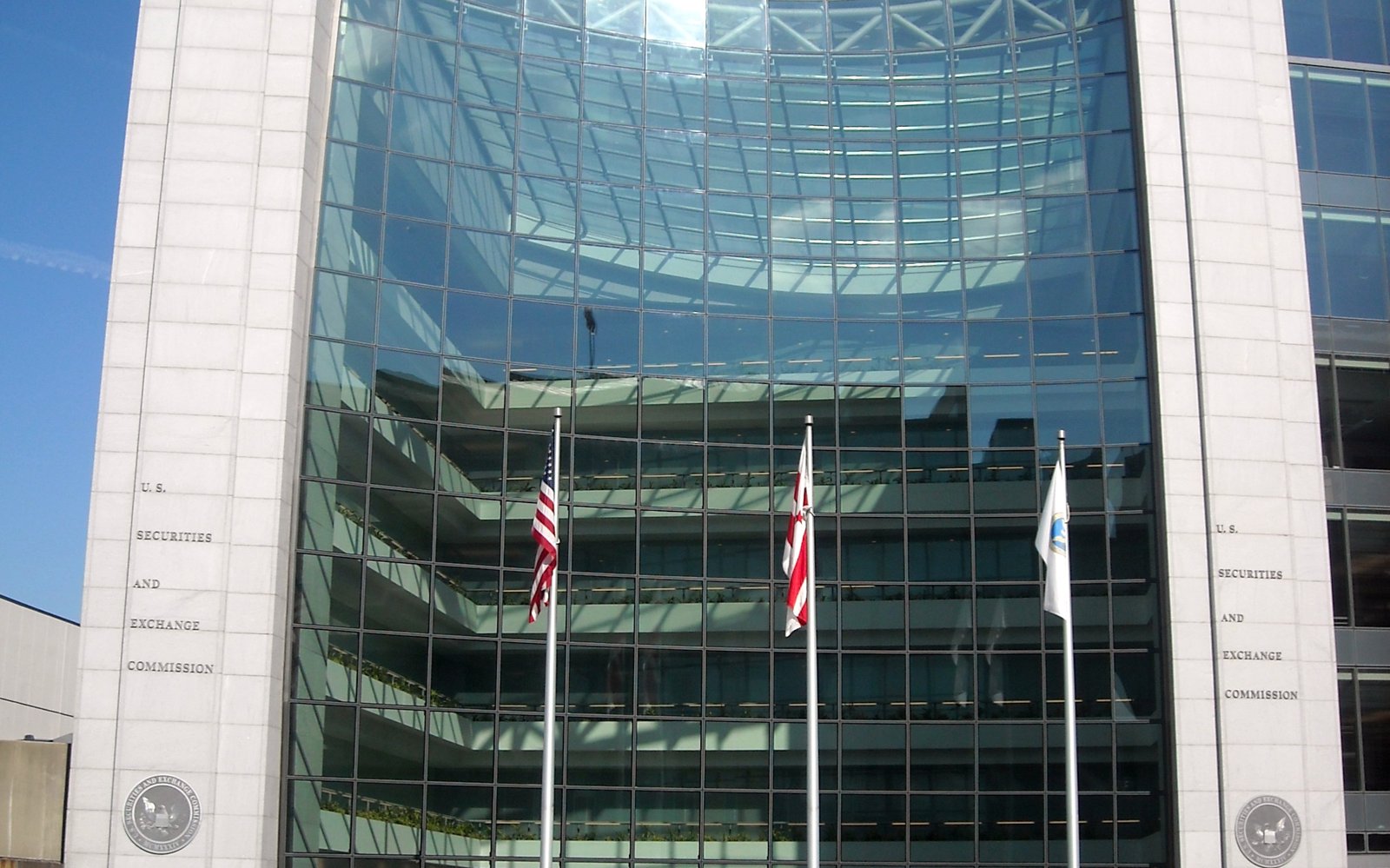
The Investigative Journal’s weekly review of notable corporate disclosures filed with the U.S. Securities and Exchange Commission. Every item below is drawn from public filings, with direct links to the source documents on SEC EDGAR.
It was an unusually heavy week at the SEC’s filing window. Intel priced one of the largest follow-on stock sales in U.S. corporate history, Strategy Inc disclosed that it sold bitcoin below its average cost to prop up a preferred stock program, and Icahn Enterprises reported a nine-figure drop in net asset value. Add a pair of merger agreements, proxy-season pay disclosures, and the approach of Friday’s 13-F deadline, and the week of August 10, 2026 offered accountability reporters plenty to work with. Here are eight disclosures that stood out.
1. Intel prices an upsized $20 billion share sale — at a discount
Intel announced a proposed $15 billion registered common stock offering on August 10, then disclosed the next morning that demand allowed it to upsize the deal to $20 billion. According to the company’s pricing announcement, Intel sold 210,526,315 shares at $95.00 apiece, with a 30-day underwriters’ option for up to 31,578,947 additional shares, for expected net proceeds of approximately $19.7 billion. The offering was expected to close August 12. The prospectus supplement filed with the SEC notes the stock last traded at $101.65 on August 7 — meaning the deal priced at a discount of roughly 6.5 percent.
The scale is the story. Follow-on equity offerings by mature U.S. companies rarely exceed a few billion dollars; a $20 billion common stock raise ranks among the largest ever completed. It also comes on top of the $6.5 billion in senior notes Intel disclosed selling in an April 30 Form 8-K, at coupons ranging from 4.650 percent to 6.200 percent. Intel says proceeds will fund “general corporate purposes,” including capital expenditures. Notably, the offering documents’ risk-factor language references “the U.S. government’s acquisition of significant equity interests” in the company among the uncertainties investors should weigh — a reminder of how unusual Intel’s shareholder register has become.
2. Strategy sells bitcoin below cost to defend its preferred stock
Strategy Inc’s August 10 Form 8-K — one of the weekly disclosures the company files on its capital markets activity — shows that between August 3 and August 9 the company sold 1,690 bitcoin for $108.6 million, an average sale price of $64,262 per coin. The same filing discloses that Strategy’s remaining 840,447 bitcoin were acquired at an average purchase price of $75,385 — meaning, per the company’s own figures, the coins were sold roughly 15 percent below average cost.
The filing states the proceeds were used entirely to repurchase 1,152,020 shares of the company’s Variable Rate Series A Perpetual “Stretch” Preferred Stock (STRC) for $108.6 million under a repurchase program announced in June. Simultaneously, Strategy sold 6,585,682 common shares through its at-the-market program for $653.1 million in net proceeds, of which $650.0 million went to a “USD Reserve” that stood at $4.65 billion as of August 9. For a company that built its identity on accumulating bitcoin rather than selling it, filings showing coin sales at a loss to support a preferred security warrant close attention — and raise questions about the durability of the layered financing structure.
3. Icahn Enterprises discloses a $765 million NAV decline
Icahn Enterprises L.P. reported second-quarter results in an August 5 Form 8-K. The attached press release and accompanying announcement disclose a net loss attributable to the partnership of $355 million, more than double the $165 million loss a year earlier, and an indicative net asset value of approximately $2.6 billion as of June 30 — down $765 million from March 31, a decline of roughly 23 percent in a single quarter.
The filing attributes the drop primarily to a $435 million decrease in the value of the partnership’s long position in CVR Energy and a $243 million decline in its interest in the investment funds, driven by losses on broad market hedges. Even so, the board declared an unchanged $0.50 quarterly distribution per depositary unit. IEP’s NAV disclosures have drawn heightened investor scrutiny since a short-seller report in 2023; a quarter in which NAV fell nearly a quarter while the distribution held steady is the kind of divergence that tends to invite questions about sustainability.
4. Jazz Pharmaceuticals buys Actio Biosciences — with unusual strings attached
Jazz Pharmaceuticals disclosed in an August 10 Form 8-K that it agreed to acquire privately held Actio Biosciences for $820 million upfront, plus up to $500 million in contingent milestones: $250 million on regulatory approval of lead asset ABS-1230 for KCNT1-related epilepsy, $100 million when annual net sales first reach $500 million, and $150 million at $1 billion. The company’s press release notes the target indication affects roughly 2,500 U.S. patients — a striking illustration of rare-disease economics, where a potential $1.32 billion outlay is justified by a patient population smaller than a high school.
The 8-K discloses several non-standard terms. Closing is conditioned on Actio first spinning out its non-ABS-1230 programs into a new company in which Jazz keeps only a minority stake, on approval by holders of at least 85 percent of Actio’s shares, and — unusually — on “the continued employment of a specified employee.” The agreement contains no termination fees and a five-month end date, a tight timeline by pharmaceutical M&A norms.
5. TPG’s mortgage REIT absorbs Cherry Hill in a $117.5 million merger
TPG Mortgage Investment Trust and Cherry Hill Mortgage Investment Corporation disclosed a definitive merger agreement on August 10. Per the joint press release filed with Cherry Hill’s Form 8-K and TPG MITT’s own filing, Cherry Hill holders will receive 0.3063 MITT shares plus $0.93 in cash per share — an implied $3.10 per share, a 29 percent premium, and a total transaction value of $117.5 million. The combined company would hold a $9.0 billion investment portfolio, with projected operating efficiencies of $7 million to $9 million annually.
One structural detail merits note: of the roughly $35 million cash component, approximately $20 million is being contributed by MITT’s external manager, an affiliate of TPG, rather than by the REIT itself — an arrangement filings indicate is paired with amendments to the manager’s incentive fee structure. Externally managed REITs are perennial governance flashpoints, and deals in which the manager writes part of the check deserve a careful read of who benefits from the added scale.
6. Proxy watch: Smucker’s annual meeting and a bruising say-on-pay season
The J.M. Smucker Company held its annual shareholder meeting on August 12, per its definitive proxy statement filed June 26, which put board elections, auditor ratification, and the advisory say-on-pay vote before investors. Compensation-data tracker Quiver Quantitative, parsing the proxy, estimates CEO Mark Smucker’s fiscal 2026 pay at $10,935,216, essentially flat year over year, and notes he sold roughly $1.5 million of stock in the past six months. Vote results are due in a Form 8-K within four business days.
The backdrop makes routine votes less routine. The 2026 season has already produced failed say-on-pay votes at several companies: filings indicate Element Solutions shareholders rejected executive pay 133.5 million votes to 94.5 million, and TG Therapeutics holders voted it down 48.9 million to 31.9 million, with similar results reported at nLIGHT and Nabors Industries in June. Failed advisory votes carry no legal force, but historically fewer than about 3 percent of Russell 3000 say-on-pay votes fail in a given year — a cluster of rejections is a signal worth tracking into the fall.
7. Insider filings: tech chiefs cash out under 10b5-1 plans
Form 4 filings this week showed continued selling by technology executives, all under prearranged Rule 10b5-1 trading plans. CrowdStrike CEO George Kurtz reported selling 20,000 Class A shares on August 4–5 at prices from $204.07 to $218.56 — roughly $4.2 million based on the disclosed range (Form 4, via StockTitan). Axon Enterprise founder-CEO Patrick Smith reported selling 9,930 shares on August 7 across 30 trades at $526 to $566 per share — roughly $5.4 million (Form 4, via StockTitan). And JFrog CEO Shlomi Ben Haim reported selling 15,000 shares on August 7 at $88.83 to $94.45, roughly $1.4 million, per his filing.
Sales under 10b5-1 plans are, by design, scheduled in advance and are not by themselves red flags. But plan adoption dates, amendment history, and aggregate selling volume across a management team remain fertile ground for disclosure reporting — particularly at companies trading near records.
8. The 13-F wave lands Friday
Institutional investors managing over $100 million must file second-quarter Form 13-F holdings reports by Friday, August 14 — 45 days after the June 30 quarter end. Early filers are already moving markets: coverage of Yacktman Asset Management’s filing indicates the firm added 846,549 Berkshire Hathaway Class B shares in the quarter, nearly quadrupling its stake to about 1.16 million shares worth roughly $581 million at quarter end. The headline event, as always, will be Berkshire Hathaway’s own filing, alongside the major hedge fund disclosures that follow. The full stream can be monitored on EDGAR’s latest-filings page. A standing caveat: 13-F data is a snapshot as of June 30, and positions may have changed materially in the six weeks since.
On TIJ’s radar
Several threads from this week’s filings warrant deeper investigation. First, Strategy’s below-cost bitcoin sales: if the pattern continues, the interaction between the company’s preferred dividends, its “USD Reserve,” and its coin holdings deserves a full accounting. Second, Intel’s $20 billion raise: how the proceeds are deployed — and how the government’s equity interest disclosed in the offering documents shapes corporate decision-making — is a running story. Third, the Cintas–UniFirst combination, a $5.5 billion deal signed in March: filings show both companies received an FTC Second Request in June, and with shareholder approval already secured, the antitrust review of uniform-rental consolidation is the remaining hurdle — and a test case worth watching. Finally, Smucker’s say-on-pay result and Friday’s 13-F wave will both land before our next edition.
Methodology and right of reply: This digest is compiled entirely from public SEC filings, company press releases, and the cited secondary sources; figures described as estimates are calculated from ranges disclosed in the underlying filings. The companies named were not contacted for comment for this weekly roundup. Corrections: editor@tij.news.
Photo: U.S. Securities and Exchange Commission headquarters, Washington, D.C. Credit: AgnosticPreachersKid via Wikimedia Commons, CC BY-SA 3.0.