

The Investigative Journal’s weekly review of the corporate filings that deserve more attention than they received. Every figure below is drawn from public records linked in the text.
The last week of August closed with an unusually consequential run of disclosures: a nine-figure antitrust settlement at one of the world’s largest private equity firms, the compensation terms for the most-watched CEO succession in corporate America, and the aftershocks of a defense contractor’s abrupt leadership change. Here is what the filings show — and what they leave unsaid.
KKR settles DOJ antitrust complaint for $250 million — and says law firms will pick up the tab
In an 8-K filed with the SEC, KKR & Co. disclosed that on August 26 it entered a Stipulation and Order with the Justice Department’s Antitrust Division to resolve a civil complaint, filed in January 2025 in the Southern District of New York, over premerger notification requirements under the Hart-Scott-Rodino Act for transactions its affiliates entered in 2021 and 2022. Under the stipulation, a KKR subsidiary would pay $250.0 million, and the division would release all defendants and terminate related investigations. The proposed final judgment still requires judicial approval under the Antitrust Procedures and Penalties Act.
The scale is striking. HSR enforcement has historically produced penalties in the single-digit millions — the Justice Department’s 2016 settlement with ValueAct Capital, at $11 million, was announced at the time as the largest of its kind. A $250 million resolution appears to be of a different order entirely, records suggest, and signals how seriously the division treated the alleged filing deficiencies.
The most unusual line in the filing is KKR’s own: the firm said the civil penalty “will have no financial impact on the firm, our funds, or any of our investors and will be fully reimbursed by outside law firms.” KKR added that it strongly disagrees with the division’s characterization, believes it acted in good faith under its prior filing process, and settled to avoid the distraction of litigation. The filing does not name the law firms, describe the reimbursement arrangement, or say whether malpractice insurance is involved — questions this publication intends to pursue.
Apple prices its CEO transition: $58 million target for Ternus, $47 million for Cook
On September 1 — John Ternus’s first day as chief executive — Apple filed an amended 8-K disclosing the pay architecture behind the transition it announced in April. Mr. Ternus’s salary rises to $3 million, alongside a prorated restricted stock unit award targeted at $2.5 million for his fiscal 2026 service and a fiscal 2027 annual equity award with a target value of $55 million — 75 percent in performance-based RSUs tied to Apple’s total shareholder return against the S&P 500, 25 percent time-based.
Tim Cook, now executive chairman, will draw a $2 million salary and a fiscal 2027 equity award targeted at $45 million, split evenly between performance-based and time-based RSUs, with a retirement provision that preserves vesting if he steps away after the first anniversary of the grant. Bloomberg pegged the combined targets at roughly $58 million and $47 million, respectively.
For context, recent Equilar surveys have put median S&P 500 CEO pay in the neighborhood of $17 million. Apple is paying its new chief executive more than three times the median — and, notably, is still paying its former one nearly as much to stay in the boardroom. Shareholders will get a say-on-pay referendum on these figures at the next annual meeting.
L3Harris: a chairman-CEO exits with no severance after a conduct investigation
The most consequential governance disclosure of the past month continues to be L3Harris Technologies’ August 17 8-K, which disclosed that chairman and CEO Christopher Kubasik and the company “mutually agreed” to end his employment effective immediately, following an investigation by the board’s independent directors, assisted by independent counsel. The board determined he “engaged in conduct that was not consistent with the values of the Company as outlined in its Code of Conduct.” The filing states the conduct did not involve financial reporting, controls, customer relationships, or operational performance — and it describes the conduct no further.
The economics are what set this filing apart. Mr. Kubasik retains previously vested stock options but receives no severance payments, no benefits, and no accelerated vesting of unvested equity — a forfeiture-heavy outcome that is rare among large-cap CEO separations, which typically carry multimillion-dollar exit packages even under clouds. The separation agreement includes mutual releases and mutual non-disparagement covenants; as of publication, no further detail on the underlying conduct appears in the company’s public filings.
Successor Sam Mehta, previously head of segments comprising roughly 80 percent of company revenue, receives a $1.25 million base salary, a 200 percent target bonus, and a $13.25 million long-term incentive target — an annualized package near $17 million that filings indicate is broadly in line with aerospace and defense peers. Lewis Hay III was named independent chairman, splitting the roles Mr. Kubasik held jointly.
FedEx proxy: CEO pay more than doubles to $27.6 million
FedEx’s definitive proxy statement, filed ahead of the company’s September 28 annual meeting, discloses fiscal 2026 total compensation of $27,554,018 for CEO Raj Subramaniam, according to the summary compensation table as reported by Quiver Quantitative — an increase of roughly 114 percent from about $12.9 million a year earlier, per an analysis of the disclosures attributing the jump to new incentive programs. Doubling a chief executive’s pay in a single year is well outside the single-digit annual increases typical for S&P 500 leaders, and proxy advisors tend to scrutinize one-time incentive grants of this scale. How ISS and Glass Lewis treat the package ahead of the say-on-pay vote will be worth watching.
Insider selling watch: CoreWeave, AIG, Mercury Systems
Form 4 filings over the past two weeks show heavy selling at the top of several companies. CoreWeave CEO Michael Intrator sold 307,692 Class A shares on August 25 at weighted average prices between roughly $88.31 and $89.93 — approximately $27.3 million — under a Rule 10b5-1 plan adopted in November 2025, according to his Form 4 filed August 27. The filing shows he retains tens of millions of Class B shares, convertible one-for-one into Class A, directly and through family trusts and an LLC — so the sale trims, rather than reduces meaningfully, his economic stake in the AI-infrastructure firm.
At AIG, executive chair Peter Zaffino disposed of more than 236,000 shares for approximately $18.1 million on August 12 and 13, also under a 10b5-1 plan, per his Form 4. And at defense electronics maker Mercury Systems, chairman and CEO William Ballhaus sold roughly $15.7 million in stock on August 21 and 24 following an option exercise — with proceeds primarily covering the exercise price, withholding taxes, and transaction costs, according to reporting on the filing, which is available via the company’s investor relations site. Pre-scheduled plans and option mechanics soften the signal in each case — but the clustering of nine-figure aggregate sales by chief executives in a single fortnight is the kind of pattern disclosure rules exist to surface.
Amrize’s CFO steps down — and stays on the payroll for a year
Amrize, the Holcim spinoff that began trading on the NYSE last year, disclosed in an August 24 8-K that CFO Baris Oran is stepping down “for personal reasons,” with the company stating the departure involves no disagreement over financial controls, reporting, operations, or policies. Under his Swiss-style employment agreement, a 12-month notice period now runs until August 2027, during which Mr. Oran remains an employee — an arrangement that would be unusual under American at-will norms and effectively functions as a year of paid transition. Successor Samuel Poletti, the company’s M&A chief, receives a $725,000 base salary, a 100 percent target bonus, $860,000 in additional performance stock units, and expatriate benefits including a $100,000 annual housing allowance — and, notably, no termination or change-of-control payments under either of his agreements.
13-F corner: Berkshire’s $37 billion Alphabet position
Berkshire Hathaway’s second-quarter 13-F, filed August 14, disclosed a roughly $299 billion equity portfolio across 29 positions and an 83 percent increase in its Alphabet stake, to about 106 million shares worth approximately $37 billion — now the conglomerate’s third-largest holding behind Apple and American Express, according to CNBC’s analysis of the filing. Analyses by Kiplinger and others noted Berkshire was a net buyer of equities for the first time in 14 quarters — a directional shift in the first full year of Greg Abel’s leadership that institutional investors will be reading closely for what it says about valuations, and about how the post-Buffett portfolio will be run.
On TIJ’s radar
Three threads from this week’s filings warrant deeper reporting. First, KKR’s assertion that outside law firms will fully reimburse a $250 million government penalty: which firms, under what arrangement, and with what insurance backing — none of it disclosed. Second, L3Harris’s undescribed conduct findings: the company’s next proxy statement should be examined for any additional detail on the investigation and on how the board treated Mr. Kubasik’s outstanding awards. Third, the cadence of CoreWeave insider sales under plans adopted shortly after its IPO lockup era — a pattern worth tracking quarter by quarter. Filings cited in this article are available at the SEC EDGAR links above; readers with information on any of these matters can reach the newsroom through the contact page.
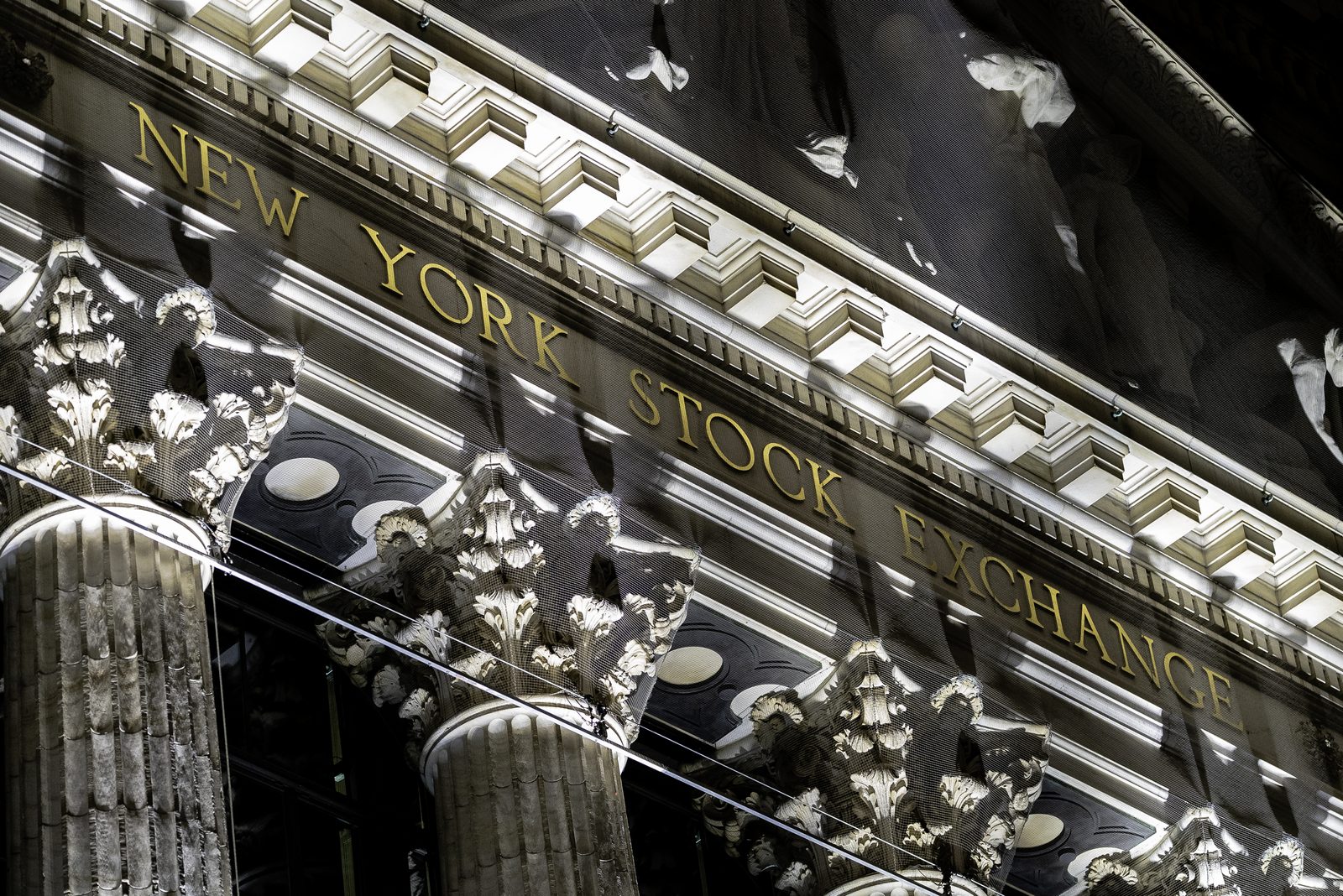
All claims above are sourced to the linked public filings and reports. Companies and individuals named are invited to submit responses or corrections, which will be published. Featured image: the New York Stock Exchange, Broad Street. Photo: Billie Grace Ward, CC0, via Wikimedia Commons.