

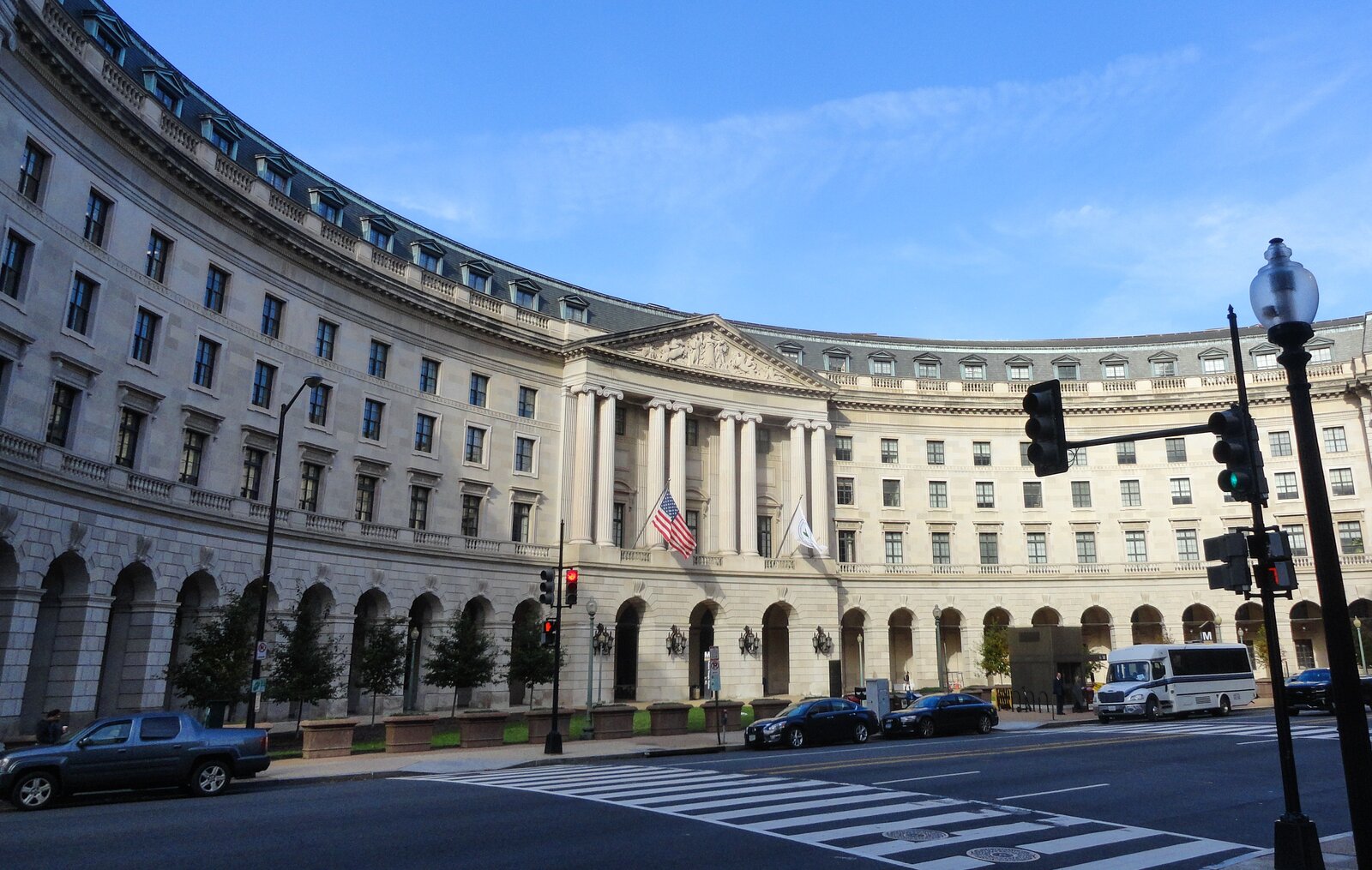
EPA Watch is The Investigative Journal’s weekly review of federal and state environmental enforcement activity. This edition surveys the week ending Friday, June 3, 2026.
Environmental enforcement in the United States is moving in two contrary directions at once. Federal totals are well off their 2024 highs, with EPA’s Q1 2026 docket showing 91 finalized settlements producing roughly $3.4 million in civil penalties — a modest figure by historical standards, according to a quarterly summary compiled by EHS Leaders from agency case data. At the same time, state attorneys general have continued to drive nine-figure environmental recoveries, most visibly the multi-state push against the manufacturers of polychlorinated biphenyls. The week ending June 3 captured both trendlines clearly: a handful of small federal settlements lodged in the Federal Register, a major Clean Air Act resolution against a defeat-device seller, and parallel state settlements with Monsanto that together exceed $130 million.
What follows is a structured digest of the week’s most consequential enforcement actions, drawn from EPA press releases, Department of Justice Federal Register notices, state attorney general offices, and public consent-decree filings. Penalty figures, defendants, and case captions are taken from those primary sources; pending matters are flagged.
1. KX Wheels: $700,000 Clean Air Act settlement over aftermarket “defeat devices”
On May 27, 2026, the Department of Justice lodged a proposed Consent Decree in United States v. KX Wheels, et al., Civil Action No. 2:26-cv-00231 (E.D. Wash.). The complaint alleges that KX Wheels, 658736 B.C. Ltd., and two individual defendants, Philip Sweeney and Stuart McKeown, violated Section 203(a)(3)(B) of the Clean Air Act by selling or offering for sale at least 3,609 aftermarket products that bypass, defeat, or render inoperative emissions controls on motor vehicles, according to the June 3 Federal Register notice. The proposed decree requires injunctive relief and $700,000 in civil penalties.
The case fits squarely within EPA’s National Compliance Initiative on stopping aftermarket defeat devices, which the agency has identified as one of the largest sources of excess on-road emissions. Records indicate the products at issue were marketed to diesel pickup owners who modify their vehicles to remove emission controls. EPA estimates a single tampered heavy-duty pickup can emit hazardous pollutants at rates equivalent to dozens of compliant vehicles, which is why the agency has continued these cases even as overall federal enforcement output has fallen.
Penalty size in defeat-device cases historically tracks the volume of product sold and the duration of the conduct. The $700,000 figure here is in line with mid-sized recent settlements in this docket. Public comment on the proposed decree runs through July 3, 2026.
2. Michigan v. Monsanto: $108 million PCB pollution settlement
Michigan Attorney General Dana Nessel announced on May 18, 2026 that the state had secured a $108 million settlement with Monsanto Company, Solutia Inc., and Pharmacia LLC over polychlorinated biphenyl contamination of Michigan’s natural resources, according to the state’s announcement. Monsanto will make an initial $32 million payment in June 2026, a second $32 million payment by March 2027, and an additional contingent payment that the state values at between $44 million and $176 million depending on the outcome of related indemnity litigation.
The settlement funds will be administered jointly by the Michigan Department of Environment, Great Lakes, and Energy and the Department of Natural Resources to remediate PCB-contaminated property and restore impacted natural resources. PCBs, manufactured by Monsanto until they were banned in the United States in 1979, persist for decades in sediment, soil, fish, and human tissue, and remain among the most-cited contaminants in state fish-consumption advisories.
Michigan becomes the 12th state to reach a PCB-related settlement with Monsanto, according to the Michigan AG’s office. The pattern — state-led recoveries that dwarf any single federal civil penalty in the same period — is now a structural feature of environmental enforcement and one TIJ will continue to track.
3. Rhode Island v. Monsanto, Solutia, and Pharmacia: $25 million guaranteed, up to $62.5 million
The same week, Rhode Island Attorney General Peter Neronha announced a parallel settlement with the same Monsanto-affiliated defendants for $25 million guaranteed and up to $62.5 million depending on indemnity outcomes. Monsanto will make an initial $12.5 million upfront payment to Rhode Island in June 2026, with up to $50 million in additional payments contingent on litigation between Monsanto and PCB purchasers.
According to the state’s release, the proceeds will fund restoration of contaminated waterways and protection of natural resources. The Rhode Island action mirrors complaints filed by Michigan and other states alleging that the manufacturers knew of PCB toxicity decades before the federal ban, a claim Monsanto has consistently disputed. The settlement resolves the state’s claims without an admission of liability.
Read together, the Michigan and Rhode Island agreements illustrate the role state attorneys general are playing as federal enforcement output declines. Public-record figures compiled by the Environmental Data and Governance Initiative show federal civil penalties fell from roughly $68 million in the comparable Biden-era period to roughly $54 million in the first year of the current administration, even as concluded cases ran higher. State actions are quietly filling part of that gap.
4. United States v. Diconia, LLC: Burley Demolition Asbestos Site CERCLA cost recovery
On May 18, 2026, the Justice Department lodged a proposed Consent Decree in United States v. Diconia, LLC, et al., Civil Action No. 4:25-cv-7-AKB (D. Idaho), according to the May 21 Federal Register notice. The decree resolves a Section 107 cost-recovery action under the Comprehensive Environmental Response, Compensation, and Liability Act concerning the Burley Demolition Asbestos Site in Cassia County, Idaho.
Under the proposed terms, settling defendant Brian Tibbets agrees to pay $10,000 plus interest to reimburse EPA’s past response costs at the site. In exchange, the defendant receives covenants not to sue and contribution protection under CERCLA Sections 107(a) and 113. The dollar figure is modest, but the case fits a recurring pattern: small or distressed property owners left holding the bag for abandoned asbestos demolition debris, with EPA recovering only a fraction of the actual cleanup costs. EPA had previously assessed an $88,000 administrative penalty against a related Idaho property owner over asbestos violations, suggesting the broader response cost at this site was substantially higher than the $10,000 reimbursement now being recovered.
5. Kinder Morgan / Milwaukee Bulk Terminal: Region 5 Clean Water Act expedited settlement
EPA Region 5 issued a public notice (docket CWA-05-2026-0015) of intent to execute an Expedited Settlement Agreement with Kinder Morgan/Milwaukee Bulk Terminal for alleged Clean Water Act violations involving industrial stormwater discharge to Lake Michigan in violation of the facility’s NPDES permit. The respondent has agreed to pay a civil penalty of $10,681.
Expedited Settlement Agreements are EPA’s mechanism for resolving lower-tier violations quickly without full litigation. They typically carry small penalties but require the respondent to certify that violations have been corrected. The Milwaukee terminal handles bulk commodities at a Great Lakes port — a category EPA has historically scrutinized for stormwater compliance because of the volume of fugitive dust, coal, salt, and aggregate handled outdoors. The size of the penalty is unremarkable, but the proximity to Lake Michigan and the volume of bulk-terminal stormwater compliance failures nationwide make this a useful data point for evaluating Region 5’s water enforcement posture.
6. Hidden Valley Quarry (Secon / Colaska): Alaska Clean Water Act ESA
EPA Region 10 issued a proposed administrative penalty settlement with Secon, a Colaska subsidiary, for Clean Water Act violations at its Hidden Valley Quarry in Juneau, Alaska. EPA alleges the operator failed to sign and certify routine site inspections and quarterly visual assessments, failed to maintain photographs of water samples, and failed to keep training records. The respondent agreed to pay a civil penalty of $1,875 and certified that the violations have been corrected.
The penalty is small, but the recordkeeping pattern is the story. EPA Region 10 and the Alaska Department of Environmental Conservation have repeatedly cited construction-materials operators in Southeast Alaska for paperwork gaps that frequently signal underlying monitoring failures. Records suggest that quarry stormwater is one of the most under-monitored discharge categories in the state.
7. State criminal enforcement: Commonwealth v. Marchand
Massachusetts Attorney General Andrea Joy Campbell announced this spring that Michael L. Marchand, owner of Marchand Environmental, was sentenced to two years in the House of Correction, suspended for three years of probation, after a Norfolk Superior Court jury convicted him on twelve counts of uttering false public documents. The case involved falsified septic-waste transport and disposal records submitted to the Town of Bellingham Board of Health between January and March 2024.
According to the Massachusetts AG’s press release, the actual location where the septage was disposed remains unknown. A separate civil lawsuit by the AG’s Environmental Protection Division alleges violations of the Massachusetts Wetlands Protection Act, the state Clean Waters Act, and the Solid Waste Disposal Act for allegedly dumping septic, construction, and demolition waste into wetlands at the company’s Blackstone facility. The civil case remains pending.
Criminal environmental cases against small operators are an enforcement category that tends to receive limited national press but accounts for a growing share of state-level actions. The Marchand case illustrates how falsified manifests — a common compliance choke point — can flip a regulatory case into a criminal one.
8. Federal RCRA criminal docket: Fehse sentencing
On March 30, 2026, a federal court sentenced Natalie Fehse, the former general manager at GoTec Plus Sun in Kentucky, to five years of probation including ten months of home detention and a $5,000 fine, after she pleaded guilty to knowingly storing hazardous waste without a permit in violation of the Resource Conservation and Recovery Act. The facility had stockpiled 249 drums and 27 cubic yards of hazardous waste without a permit, according to the Justice Department’s Environmental Crimes Bulletin.
The case is a useful baseline for what RCRA criminal enforcement looks like in 2026: probation-heavy sentences, modest fines, and a focus on facility managers rather than corporate officers. Records suggest the EPA Criminal Investigation Division’s referrals to DOJ have ticked downward over the past year, a trend TIJ will continue to track.
Patterns to watch
Three structural shifts are visible in the week’s docket. First, state attorneys general are now the primary source of large-dollar environmental recoveries. The combined Michigan-and-Rhode-Island PCB total of more than $133 million dwarfs every federal civil penalty announced in the same period. Second, EPA’s Q1 2026 docket data shows the Clean Air Act remained the largest single penalty driver, led by a $781,175 fine against a Kansas building-materials manufacturer for MACT-standard violations, with FIFRA and RCRA contributing smaller but steady caseloads. Third, the PFAS regulatory rollback announced in mid-May has not, as of this week, translated into a corresponding pullback in PFAS-related civil litigation; the 3M and DuPont multi-billion-dollar settlements with public water utilities remain on their existing payment schedules.
Worth a deeper TIJ investigation
Two threads warrant follow-up reporting. The first is the apparent gap between the cost recovered from settling parties at small CERCLA sites and EPA’s actual response expenditures — the Burley site recovery of $10,000 is one of several recent examples where the cleanup-to-recovery ratio appears to be heavily lopsided. The second is whether bulk-commodity port terminals, like the Kinder Morgan Milwaukee facility, are systematically under-penalized for stormwater violations relative to the volume of pollutant loading reaching the Great Lakes. Both questions require document-level work in EPA’s ECHO database and FOIA requests for the underlying inspection reports.
TIJ will return next Friday with the next EPA Watch.
Primary sources
- EPA Enforcement and Compliance History Online (ECHO)
- EPA Civil and Cleanup Enforcement Cases and Settlements
- EPA Proposed Consent Decrees and Draft Settlement Agreements
- DOJ ENRD Proposed Consent Decrees
- Federal Register: KX Wheels Consent Decree (June 3, 2026)
- Federal Register: Diconia / Burley Asbestos Site Consent Decree (May 21, 2026)
- Michigan AG: Nessel Monsanto PCB Settlement
- Rhode Island AG: Neronha Monsanto PCB Settlement
- EPA Region 5: Kinder Morgan / Milwaukee Bulk Terminal ESA
- EPA Region 10: Hidden Valley Quarry settlement
- DOJ ENRD: Environmental Crimes Bulletin – March 2026
- EHS Leaders: EPA Enforcement Roundup Q1 2026
- Massachusetts AG: Marchand sentencing
This digest summarizes public records and pending matters. Allegations are not findings; pending cases are noted. The Investigative Journal welcomes corrections at tips@tij.news.