

Federal Register Watch is a daily digest of notable entries in the Federal Register, the official journal of the United States government. This edition covers the most recent published issue, dated Wednesday, July 8, 2026; the July 9 issue had not yet posted at the time of publication.
The July 8 issue of the Federal Register ran heavy on regulatory housekeeping, trade determinations and tribal repatriation notices, but several entries carry real consequences for infrastructure operators, consumers, energy markets and federal contractors. The Pipeline and Hazardous Materials Safety Administration advanced the day’s only rulemaking flagged as economically significant, while the Drug Enforcement Administration opened a comment window on a proposed drug ban and the Interior Department set the terms for a congressionally mandated Gulf oil-and-gas lease sale. Below are eight entries worth tracking, with comment deadlines and direct links to the source documents.
PHMSA proposes to modernize pipeline repair criteria
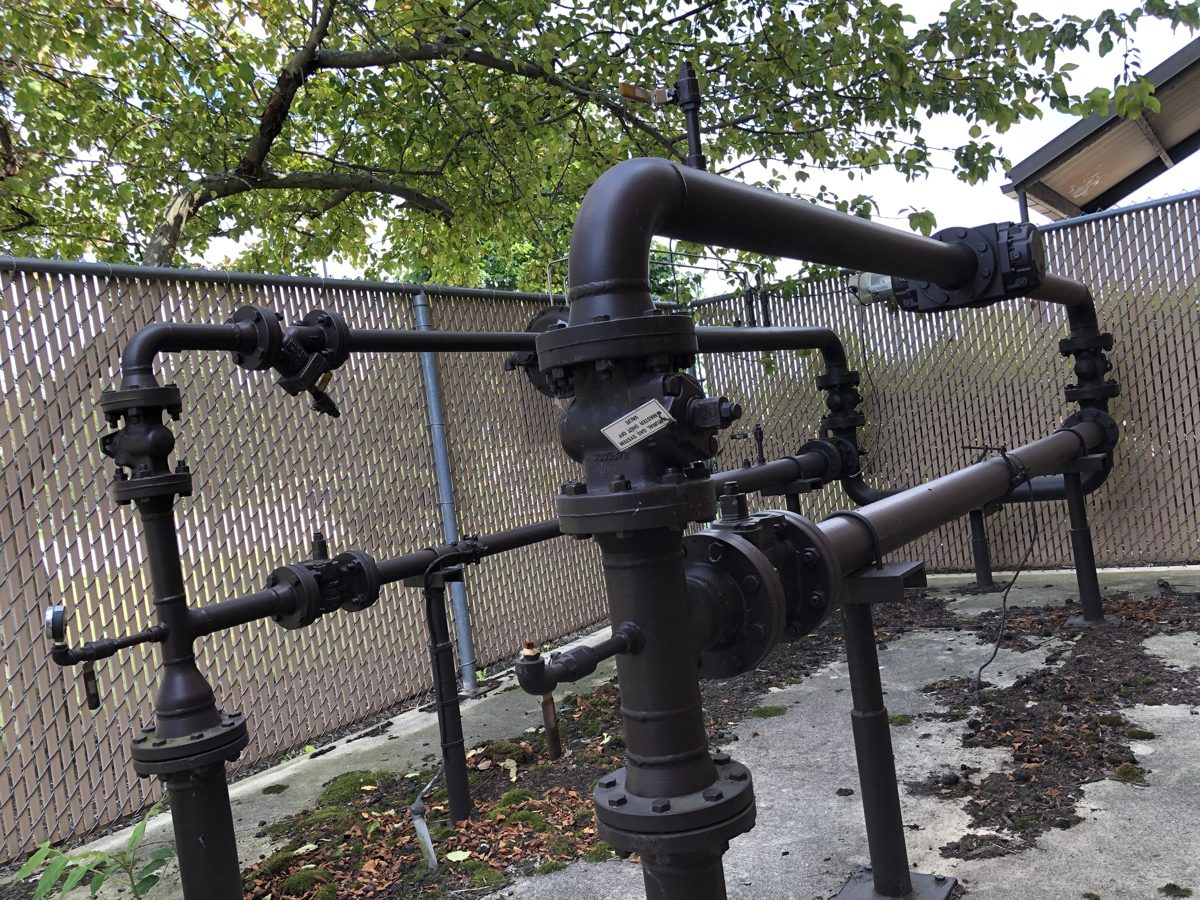
The Pipeline and Hazardous Materials Safety Administration (PHMSA) published a notice of proposed rulemaking that would rewrite the “anomaly response” criteria governing how operators of gas transmission and hazardous liquid pipelines identify, schedule and remediate defects. According to the agency’s summary, the proposal is driven by “twenty years of technological development” that allows operators to address pipeline anomalies “more effectively and in a less costly manner.” The rule would finalize certain safety improvements advanced in recent gas-transmission rulemakings and extend those standards to hazardous liquid pipelines.
The document is the only entry in the July 8 issue that the agency designated as economically significant (regulation identifier 2137-AF44), a classification reserved for rules expected to have a material effect on the economy. At 35 pages, it is also the issue’s longest substantive rulemaking. PHMSA frames the changes as both a safety upgrade and a cost-saving measure for the roughly 3 million miles of pipeline the agency oversees nationally, and it says a set of accompanying revisions is intended to “improve compliance.”
The comment period is open through September 8, 2026. Because the rule touches the balance between remediation costs borne by operators and the pace at which defects must be repaired, filings indicate it is likely to draw responses from both industry and pipeline-safety advocates.
DEA moves to place tianeptine in Schedule I
The Drug Enforcement Administration issued a proposed rule that would place tianeptine, along with its isomers, esters, ethers and salts, in Schedule I of the Controlled Substances Act. If finalized, the action would subject anyone who manufactures, distributes, imports, exports, researches or possesses the substance to the administrative, civil and criminal controls that apply to Schedule I drugs.
Tianeptine is an antidepressant that is not approved for any medical use in the United States. It has been sold in gas stations and convenience stores, and the Food and Drug Administration has previously warned consumers about products containing it; in press coverage it is sometimes referred to as “gas station heroin.” Records show a number of states have already restricted or banned the substance ahead of any federal action, so a Schedule I placement would federalize a patchwork of existing state prohibitions.
The DEA is accepting comments through August 7, 2026, with electronic submissions cut off at 11:59 p.m. Eastern on the final day. Scheduling decisions of this kind typically hinge on the agency’s eight-factor analysis and any accompanying medical and scientific evaluation, and interested parties can respond through the docket referenced in the notice.
FCC sets effective date for submarine-cable security rules
A Federal Communications Commission notice announced that the Office of Management and Budget has approved new information-collection requirements adopted in the Commission’s 2025 Report and Order (FCC 25-49), setting a July 8, 2026 effective date for a series of amended rule sections. The order — “Review of Submarine Cable Landing License Rules and Procedures To Assess Evolving National Security, Law Enforcement, Foreign Policy, and Trade Policy Risks” — was adopted to address the security of the undersea cables that carry the overwhelming majority of transoceanic internet and data traffic.
While this particular entry is procedural — it makes specific reporting and application requirements effective now that the paperwork burden has cleared federal review — it operationalizes a broader rulemaking aimed at foreign-adversary risk in critical communications infrastructure. The underlying order was published at 90 FR 48648 in October 2025. For readers tracking supply-chain and national-security policy, the effective date marks the point at which cable-landing licensees begin complying with the new disclosure regime.
Interior sets terms for Gulf of America lease sale
The Bureau of Ocean Energy Management (BOEM) published the final notice of sale for “Gulf of America Outer Continental Shelf Oil and Gas One Big Beautiful Bill Act Lease Sale 3.” The bureau will open and publicly announce bids at 9 a.m. Central on Wednesday, August 12, 2026. According to the notice, the sale is being held pursuant to Section 50102 of the One Big Beautiful Bill Act (OBBBA), which mandates that the Secretary of the Interior conduct the sale within a set timeframe.
The statute directs the Secretary to offer the same lease form, lease terms, economic conditions and stipulations contained in the earlier region-wide sale known as Lease Sale 254. The notice, together with its “Information to Lessees” and lease stipulations, forms the package that prospective bidders must rely on. The entry is a clear example of enacted legislation driving a specific, time-bound agency action, and it illustrates how the OBBBA is reshaping the federal offshore leasing calendar.
BOEM asks whether the Outer Continental Shelf could host space launches
In one of the issue’s more forward-looking entries, BOEM issued a request for information on the “potential use of submerged lands and existing offshore facilities on the Outer Continental Shelf for space launch-related activities,” including offshore launch platforms and possible re-entry sites. The bureau is explicit that it is “not proposing a specific project, lease, easement, right-of-way, or authorization” and is instead gathering technical, environmental, operational, legal and interagency input.
BOEM invited responses from industry, academic institutions, nongovernmental organizations, Tribal governments, state and local governments, federal agencies and members of the public. The request signals early regulatory interest in the intersection of commercial spaceflight and offshore leasing — an area with no established federal framework. Responses are due no later than August 7, 2026.
OMB rescinds cost accounting standards to align with GAAP
The Office of Management and Budget’s Cost Accounting Standards Board issued a final rule wholly rescinding Cost Accounting Standards (CAS) 408 and 411 and rescinding most provisions of CAS 404 and 409 in order to conform federal contractor accounting rules to Generally Accepted Accounting Principles (GAAP). Remaining content from CAS 404 and 409 is being relocated within the Code of Federal Regulations. The rule follows an earlier notice of proposed rulemaking.
Cost Accounting Standards govern how contractors measure, assign and allocate costs on large federal contracts, and any change to them ripples through defense and civilian procurement alike. Consolidating the standards with GAAP is intended to reduce duplicative or conflicting requirements, though the practical effect will depend on how contracting officers and auditors apply the streamlined framework. The rule takes effect August 7, 2026.
USDA weighs new beef-grading standards
The Agriculture Department’s Agricultural Marketing Service (AMS) published a notice requesting comment on revisions to the United States Standards for Grades of Carcass Beef. The request stems from a petition by the American Wagyu Association, which asked AMS to add marbling degrees to the USDA Prime grade to better characterize modern cattle genetics that the agency says are “not always differentiated within the current marbling degrees.”
AMS is also seeking comment on whether to eliminate the skeletal maturity requirement for carcasses determined by dentition to be under 30 months of age, citing scientific research on beef tenderness. Because USDA grades directly influence pricing and consumer expectations at the meat counter, filings indicate the proposal could carry commercial weight for producers and retailers. Comments are due on or before September 8, 2026.
Presidential document marks the Declaration’s 250th anniversary
The issue’s Presidential Documents section carried an entry commemorating the 250th anniversary of the adoption of the Declaration of Independence. The document appears in the July 8 issue as the nation continues its semiquincentennial observances. As a commemorative presidential document, it carries symbolic rather than regulatory weight, but its publication in the Federal Register places it in the permanent record of official government actions.
What we’re watching for TIJ’s beats
Three threads in this issue bear on The Investigative Journal’s core coverage. On national security, the FCC’s submarine-cable order — now partly in effect — is part of a wider federal push to harden critical communications infrastructure against foreign-adversary risk, a story with direct implications for supply-chain accountability. On energy and public lands, the Gulf of America lease sale shows how the One Big Beautiful Bill Act is converting statutory mandates into concrete offshore sales, a pipeline of activity worth auditing sale by sale. And on government accountability, the OMB decision to rescind long-standing cost accounting standards touches the machinery of federal contracting, where changes to auditing rules can quietly reshape how billions in taxpayer dollars are tracked.
Readers should also note a correction, C1-2026-12542, to the Department of Homeland Security’s proposed naturalization application fee adjustments — an immigration-cost item we will continue to follow. Each of the proposed rules above remains open for public comment; the dockets referenced in the source documents, accessible through Regulations.gov, are the appropriate channel for submitting a response. Federal Register Watch will return with the next issue.
Sources: U.S. Federal Register (federalregister.gov), issue of July 8, 2026, and the individual documents linked above. Featured image: “Natural Gas Pipeline Station” by Mbrickn, licensed under CC BY 4.0, via Wikimedia Commons.