

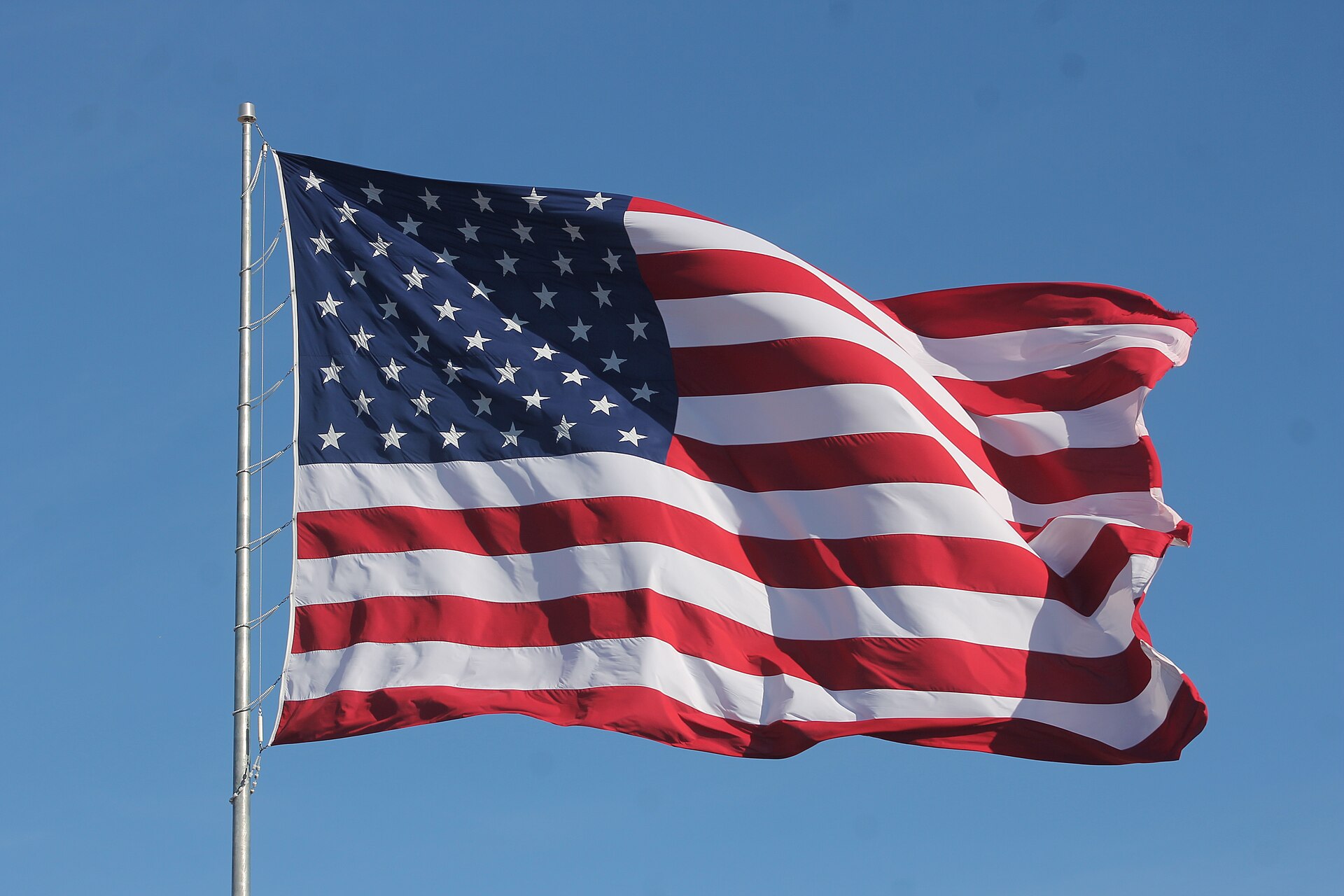
The Federal Trade Commission has filed its first three enforcement actions under President Trump’s March 13, 2026 executive order directing the agency to police “Made in America” claims — and the lead defendant is a Florida-based seller that marketed Chinese-manufactured American flags as “100% Made in the USA” to a customer base built on patriotic appeal.
The three federal court complaints — filed April 14, 2026 in the Southern District of Florida, the Southern District of New York, and the Northern District of Illinois — extract a combined $867,743 in consumer redress from Americana Liberty LLC, TouchTunes Music Company, and Oak Street Manufacturing. Each company had previously received an FTC warning letter on July 8, 2025, and each declined to bring its labeling into compliance before the agency moved to court.
The cases offer the clearest federal documentation to date of a pattern long visible to investigators and aggrieved customers: products marketed with American flags, military symbols, and “Built by Americans for Americans” branding are routinely sourced from factories in China, the Dominican Republic, and Brazil. The Made in USA Labeling Rule, finalized in 2021, requires that “all or virtually all” of a product be made domestically before any unqualified U.S.-origin claim can appear in advertising or on a label.
The Flag Case: Americana Liberty and the China Pipeline
The Americana Liberty enforcement action is the most directly connected to patriotic consumer fraud. According to the FTC complaint filed in the Southern District of Florida (Case No. 26-cv-61085-DSL), Americana Liberty LLC and its affiliated entity Three Nations LLC — along with principals Maximiliano Ojeda, Virginia Hilfiger, and Julian Groves — sold American flags, U.S. military flags, flagpole kits, and related patriotic display products under banners including “Made in the USA,” “All-American Made,” “100% Made in the USA,” “100% American Made Tough,” and “Built by Americans for Americans.”
Filings indicate that several of the products were wholly imported from China, and others incorporated significant or essential foreign components from China. The defendants are also alleged to have violated the federal Textile Act and Textiles Rules by failing to include the mandatory country-of-origin disclosures that govern flag and textile labeling.
Under the stipulated order, the defendants agreed to:
- Pay $167,743 in consumer redress;
- Cease making unqualified U.S.-origin claims;
- Provide mandatory disclosures on textile fiber products; and
- Directly notify past consumers of the settlement.
The Commission vote to issue the complaint and order was 2-0.
The Dartboards and the Boots: Imported Components, Premium Pricing
The other two settlements broaden the picture. TouchTunes Music Company, LLC, the operator of jukebox and entertainment networks, also sold electronic dartboards under the Arachnid 360 brand for residential and commercial use. According to the FTC complaint, the company stamped its dartboards with unqualified “Made in the USA” claims across its website and marketing materials while sourcing essential components — including computer chips, cameras, and flat-screen monitors — from foreign factories. Final U.S. assembly does not satisfy the FTC’s “all or virtually all” standard when core components are imported.
TouchTunes stipulated to $625,000 in consumer redress — by the FTC’s account, the largest civil monetary judgment in a Made in USA Labeling Rule case to date.
Oak Street Manufacturing Company, LLC, doing business as Oak Street Bootmakers, sold boots, loafers, and moccasins under claims that they were “handcrafted 100%” in the United States and “More than Made in USA,” and that the “entire product” was made “from heel-to-toe, using no pre-assembled components from overseas.” The FTC complaint alleges that since May 2023 Oak Street had been sourcing uppers from a factory in the Dominican Republic and outsoles from a factory in Brazil — and in some cases the final “bottoming” assembly was performed in the Dominican Republic rather than the United States. The company agreed to $75,000 in consumer redress and a permanent injunction against further U.S.-origin misrepresentations.
A Multi-Year Pattern, Documented at Last
FTC Bureau of Consumer Protection Director Christopher Mufarrige framed the sweep as a defense of both consumers and domestic manufacturers. “The FTC is committed to ensuring that ‘Made in the USA’ claims are truthful and trustworthy,” Mufarrige said in the agency’s April 14 press release. The three cases follow a July 2025 warning-letter round in which FTC staff put the same defendants — plus two additional companies — on notice that their labeling claims appeared to violate federal law.
The two companies that received warning letters but escaped litigation — acrylic display manufacturer Marketing Holders LLC and trailer manufacturer Lamar Trailers, Inc. — received closing letters after agreeing to remediation. The FTC explicitly reserved the right to file lawsuits against either if compliance lapses.
The sweep validates a pattern that consumer-protection litigators and supply-chain researchers had been mapping for years. The Made in USA standard is straightforward — final assembly, significant processing, and “all or virtually all” components must be domestic — but the digital marketing economy made enforcement difficult. Direct-to-consumer brands routinely sell on Shopify, Amazon, and TikTok Shop with patriotic packaging that buyers, particularly older and politically engaged consumers, rarely cross-check against country-of-origin disclosures.
A January 2024 CFTC bulletin on precious-metals fraud noted that affinity-targeted retail fraud — schemes that lean on patriotic, religious, or political branding — has been one of the most enduring categories of consumer harm, in part because victims are slow to report when the brand identity matches their political identity. Industry analysts who track direct-to-consumer flag and apparel sellers have documented similar dynamics: customers who pay $75 to $200 for an “American-made” flagpole kit are unlikely to file a complaint when they discover the components shipped from Yiwu or Ningbo.
Why It Took an Executive Order
The FTC has had the Made in USA Labeling Rule on its books since 2021, but enforcement actions were sparse — fewer than ten contested cases per year on average, with most resolved by closing letter rather than litigation. The March 13, 2026 executive order “Ensuring Truthful Advertising of Products Claiming to be Made in America” directs the FTC and other federal agencies to prioritize country-of-origin enforcement ahead of the United States’ 250th-anniversary commemorations in 2026.
Law firms tracking the directive — including Morgan Lewis and Kelley Drye — have advised corporate clients to expect additional sweeps targeting apparel, hardware, and home goods sectors through 2026. The Americana Liberty case is the template: a warning letter, a refusal to remediate, a complaint, and a stipulated order that requires both consumer redress and direct customer notice.
Records indicate the $867,743 recovered in the April 14 sweep represents a small fraction of the actual losses imposed on U.S. consumers and the legitimate domestic manufacturers that priced fairly. The MUSA Labeling Rule provides for civil penalties under Section 19 of the FTC Act for redress, but the agency does not currently seek treble damages or restitution beyond direct consumer harm. The Trump administration’s executive order does not change that framework, but it does signal that future cases — and future stipulated orders — should be expected to reach further into the patriotic-merchandise market.
What Remains Unknown
The April 14 sweep names three defendants and warns two more. It does not name the dozens of e-commerce sellers documented in earlier reporting on dropshipped “American-made” flags, apparel, and tactical gear, nor does it touch the influencer economy that promotes them. The FTC closing letters to Marketing Holders and Lamar Trailers acknowledge that the agency’s primary tool — a warning letter followed by negotiated compliance — depends on voluntary cooperation by sellers that have a brand reputation to protect. Anonymized dropshippers operating under shifting LLC names are harder to deter.
The Americana Liberty defendants must now notify past customers of the settlement. The TouchTunes order requires the same. Whether those notices translate into refunds, returns, or further private litigation will depend on consumer follow-through and on the FTC’s administration of the Section 19 redress fund. Both districts — the Southern District of Florida for Americana Liberty and the Southern District of New York for TouchTunes — have shown willingness in similar cases to require companies to fund consumer-facing claims portals, but the timing on those mechanisms is not yet public.
The most consequential question is whether the April 14 sweep marks the beginning of a sustained enforcement program or a one-off symbolic action timed to the 250th anniversary. The pace of warning letters issued in 2025, the volume of cases moving through the FTC’s investigative pipeline, and the agency’s coordination with the Office of the U.S. Trade Representative on country-of-origin import data are the variables to watch through the second half of 2026.
For consumers who paid premium “American-made” prices for products shipped from Chinese factories, the federal record now confirms what supply-chain reporting had long suggested. Whether the law catches up to the volume of the fraud is a different question, and one the FTC’s redress pages — case by case, stipulated order by stipulated order — will answer over the next several years.