
Influence Watch is The Investigative Journal’s monthly review of federal lobbying disclosures, foreign-agent registrations and revolving-door moves. Every figure below is drawn from public records filed under the Lobbying Disclosure Act (LDA) or the Foreign Agents Registration Act (FARA), from congressional and Justice Department documents, or from published analyses of those records. Direct links to the underlying filings and databases are provided throughout.
The big picture: a quiet month on paper, a loud one in practice
October is an in-between month for federal lobbying data. Third-quarter LDA reports covering July 1 through September 30 are not due at the Senate Office of Public Records and the House Clerk until October 20, so the comprehensive quarterly totals will not be available until next month’s edition. What the records already show is the backdrop: a record 17,118 organizations spent roughly $2.7 billion on federal lobbying in the first half of 2026, according to OpenSecrets’ August analysis, keeping the year on pace for a tenth consecutive annual record. TIJ reviewed those midyear figures in detail in August’s Influence Watch.
In the absence of fresh quarterly totals, the most revealing records this month come from three places: a newly published OpenSecrets investigation into prediction-market lobbying across 41 states, an unusual Justice Department statement on foreign-agent liability, and a cluster of congressional inquiries into foreign money behind U.S. advocacy groups. Each is examined below.
Top finding: prediction markets build a 41-state influence operation
The standout disclosure of the month is an OpenSecrets investigation, published in late September and syndicated nationally in early October, documenting how event-contract platform Kalshi, its rival Polymarket and the industry’s new trade group have spent at least $3 million in 2026 on lobbying and political contributions at the federal and state levels. The spending comes as the companies fight a multi-front legal battle over whether their products are federally regulated swaps or state-regulated gambling, a question OpenSecrets notes is moving toward the Supreme Court after federal judges split on it.
The federal side of the ledger is substantial on its own. Kalshi reported nearly $1 million in federal lobbying through June 30, according to filings compiled on its OpenSecrets client profile, and has retained six outside firms. Its largest outside account, Miller Strategies, was paid $240,000 in the first half; OpenSecrets data shows the firm, headed by Jeff Miller, who served as finance chair for the 2025 inaugural committee, ranked as the fifth-highest-grossing lobbying firm at midyear. Kalshi also paid $120,000 to Lincoln Policy Group, founded by former Sen. Blanche Lincoln, who chaired the Senate Agriculture Committee, the CFTC’s authorizing panel, while in office. Polymarket reported $180,000 in federal lobbying through Advocus Partners, whose roster includes a former senior CFTC policy adviser.
Disclosures show Kalshi lobbying on three Senate bills: the Prediction Market Act, the Protect College Sports Act, which passed the Senate on October 5 and now awaits House action, and the National Defense Authorization Act, which contains sections that would bar bets on military operations and restrict Defense Department personnel from trading on prediction markets.
The state-level picture is what makes this month’s finding notable. OpenSecrets reports that, as of September, Kalshi had at least one registered lobbyist in 41 states, nearly all retained since April. In New York, the company’s state filings indicate it raised its retainer with Brown & Weinraub Advisors from $10,000 to $25,000 a month, committed another $25,000 a month to the Mirram Group through July 2027 and registered its head of state relations as an in-house lobbyist, putting projected New York lobbying above $400,000. In California, Cal-Access records show $62,000 spent in the first half of 2026 through Redwood Public Affairs, whose co-founder previously served as chief of staff to the state attorney general.
The political-contribution records are equally pointed. IRS Form 8872 filings reviewed by OpenSecrets show Kalshi gave $147,500 to the Republican Attorneys General Association and $170,000 to the Democratic Attorneys General Association in the first half of 2026, along with $100,000 and $150,000 respectively to the Republican and Democratic Governors Associations. Those are the same attorneys general whose offices are suing or investigating prediction markets; OpenSecrets cites a July letter from 44 state attorneys general to the CFTC characterizing the platforms as a new form of casino. A Kalshi spokesperson told OpenSecrets the company supports candidates on both sides of the aisle, as many regulated companies do.
The industry’s trade association, the Coalition for Prediction Markets, launched in December 2025 with Robinhood, Coinbase, Crypto.com and Underdog as members. LDA filings show it paid $100,000 to four Invariant lobbyists and registered two Determinant lobbyists as of June 30. Its leadership illustrates the revolving door in miniature: president Sean Patrick Maloney and senior adviser Patrick McHenry are both former House members, and former CFTC Commissioner Brian Quintenz joined as a senior adviser in July.
Revolving door: the midyear pattern holds
No new executive-branch ethics pledge has been issued since the prior administration’s two-year post-employment lobbying restriction was rescinded in January 2025, and the records continue to reflect that. A Sludge review of second-quarter disclosures documented several recent White House and agency officials registering to lobby the offices they left within months, including a former acting assistant secretary at Interior now at Squire Patton Boggs whose largest client, Polar LNG, paid $380,000 in a single quarter. The Campaign Legal Center’s running tally, meanwhile, counts at least 47 former lobbyists nominated for or serving in senior political-appointee roles as of April 2026, the industry-to-government direction of the same door. Third-quarter filings due October 20 will show whether the pace of the spring and summer departures continued; TIJ will review them next month. OpenSecrets’ Revolving Door database remains the most complete public index of these career moves.
The pattern is not confined to Washington. A Spotlight PA analysis published September 3 found at least 48 former members of Pennsylvania’s General Assembly registered as lobbyists, with clients frequently drawn from industries they once helped regulate. The state’s disclosure records cited in the analysis show a former House member who sponsored adult-use cannabis legislation now registered for a cannabis company, and a former Gaming Oversight Committee member now representing a skill-games manufacturer. Pennsylvania requires only a one-year cooling-off period; proposals to extend it to two or five years have not advanced out of committee.
Foreign agents: DOJ issues a rare public warning
On September 16, the Justice Department’s Office of Public Affairs published a stand-alone statement titled “Liability for Unregistered Foreign Agents,” reminding the public that acting in the United States at the direction or control of a foreign principal without registering under FARA or notifying the Attorney General under 18 U.S.C. § 951 can carry civil and criminal liability. The statement specifically identifies public demonstrations intended to further a foreign power’s propaganda or other goals as activity that can trigger registration obligations, and invites the public to report suspected undisclosed foreign direction to the FBI.
Practitioners describe the release as unusual. A Cooley LLP analysis notes that a February 2025 Attorney General memorandum had narrowed criminal FARA enforcement toward espionage-like conduct, and reads the new statement, together with a September 2025 presidential memorandum and the department’s stated intent to finalize its long-pending FARA rulemaking, as a signal that enforcement may broaden again. Cooley also connects the statement to months of congressional correspondence urging FARA scrutiny of advocacy networks with foreign ties, including a February letter from Sen. Josh Hawley. Client alerts from Paul Hastings and Covington reached similar conclusions. On October 3, the FARA Unit also published a new batch of advisory opinions on registration triggers and exemptions, available through the department’s advisory-opinion archive.
The year’s most significant FARA enforcement outcome remains the May conviction of former Rep. David Rivera on charges of acting as an unregistered agent of Venezuela, announced by the U.S. Attorney’s Office for the Southern District of Florida. All current registrations, supplemental statements and informational materials are searchable at the Justice Department’s FARA filings portal.
Think tanks and advocacy funding: Congress follows the money
Foreign funding of U.S. advocacy organizations drew formal congressional attention from several directions this quarter. On September 10, House Science Committee Chairman Brian Babin and Oversight Subcommittee Chairman Rich McCormick sent letters to the National Science Foundation and to four advocacy groups, Indivisible Project, Sierra Club, 350.org and Oil Change International, requesting documents on foreign donors, foreign principals and any internal analysis of FARA obligations related to opposition to data-center development. The letters cite an April 2026 American Energy Institute report asserting that 12 organizations opposing data centers had collectively received more than $39 million from foreign donors, and a 2025 Americans for Public Trust report tracing nearly $2 billion from five foreign charities into U.S. energy and climate advocacy. Those figures are the committees’ citations of third-party research and have not been independently verified by TIJ; the recipient organizations have not been accused of wrongdoing.
Separately, the House Oversight Committee’s investigation of Sixteen Thirty Fund and its Chorus creator program continued, with a May 14 subpoena cover letter stating that the fund had produced 135 pages since November 2025 and questioning the timing of Chorus’s registration as a trade name under a separate entity. That inquiry is framed around disclosure gaps at the FEC and DOJ rather than any adjudicated violation. On the policy side, the Think Tank and Nonprofit Foreign Influence Disclosure Act remains pending; U.S. think tanks are still under no general obligation to disclose foreign funding.
What TIJ is watching next
Three influence networks from this month’s records warrant deeper investigation. First, the prediction-market lobby’s state strategy: the combination of six-figure contributions to attorneys-general associations, in-house lobbyists drawn from the attorneys-general community, and retainers in the two states leading enforcement is a structure TIJ intends to map state by state using disclosure records as they are filed. Second, the third-quarter LDA filings due October 20, which will be the first full quarter of data since the spring wave of White House departures to K Street and will show whether clients such as Polar LNG sustained their spending. Third, the intersection of the Justice Department’s FARA statement and the congressional inquiries into foreign-funded advocacy: if the department acts on referrals of the kind its statement invites, the registrations or enforcement actions that follow will appear in the public FARA record, and TIJ will report them.
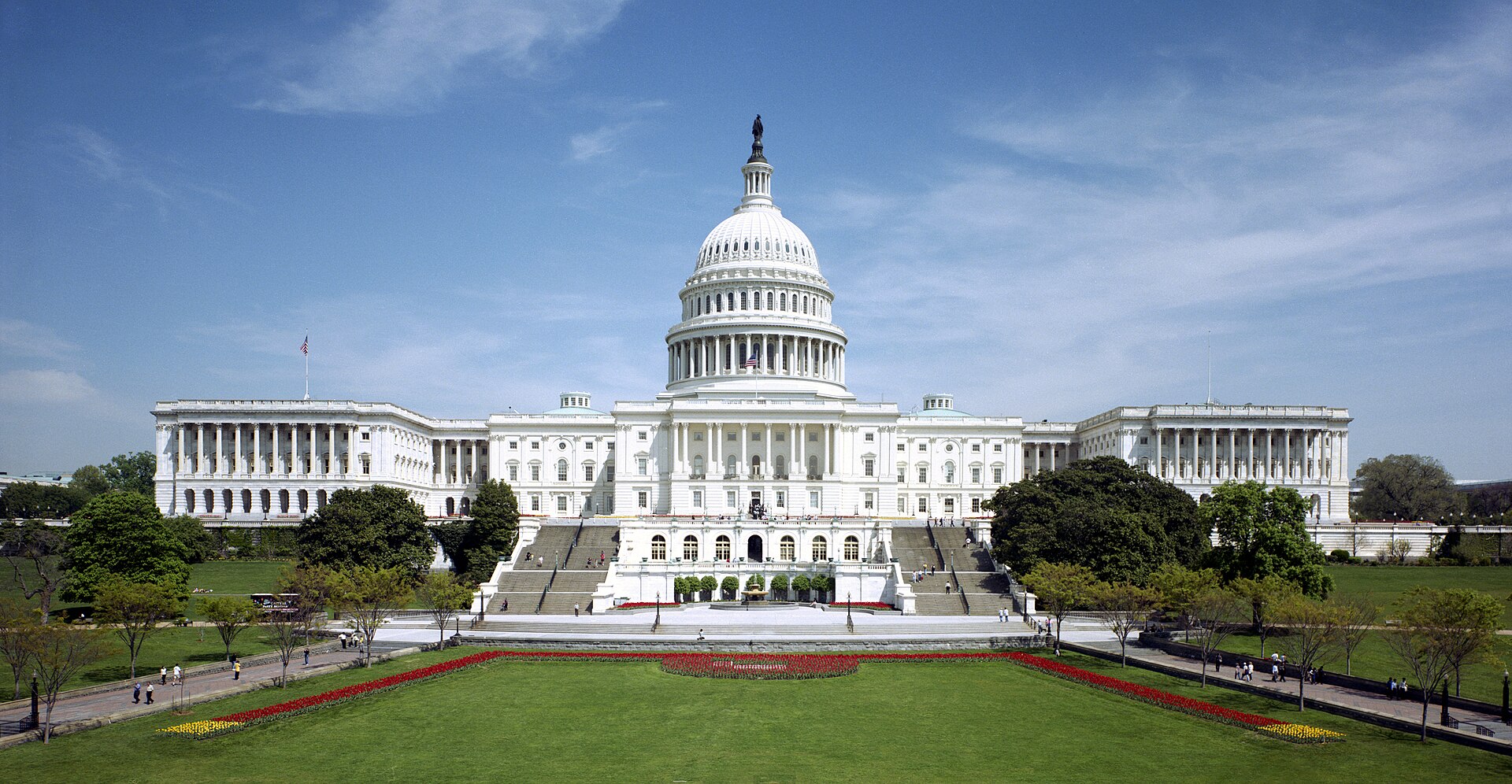
Featured image: The U.S. Capitol. Public-domain photograph via Wikimedia Commons.
Methodology and right of reply: This report is based entirely on public disclosure records, government documents and published analyses linked above. Figures attributed to OpenSecrets, Sludge, Spotlight PA, congressional committees and law-firm analyses reflect those organizations’ reviews of the underlying filings; TIJ has not independently verified amounts beyond the cited records. Rivera’s conviction is a jury finding. All other matters described, including congressional inquiries and the Justice Department’s policy statement, are civil, regulatory, legislative or unadjudicated, and no unlawful conduct is implied where none has been found. Lobbying and political contributions described here are lawful and publicly disclosed activities. Individuals and organizations named in this report who wish to respond or submit corrections may contact the editors at tij.news; responses will be appended or incorporated. No named party had responded at the time of publication.