

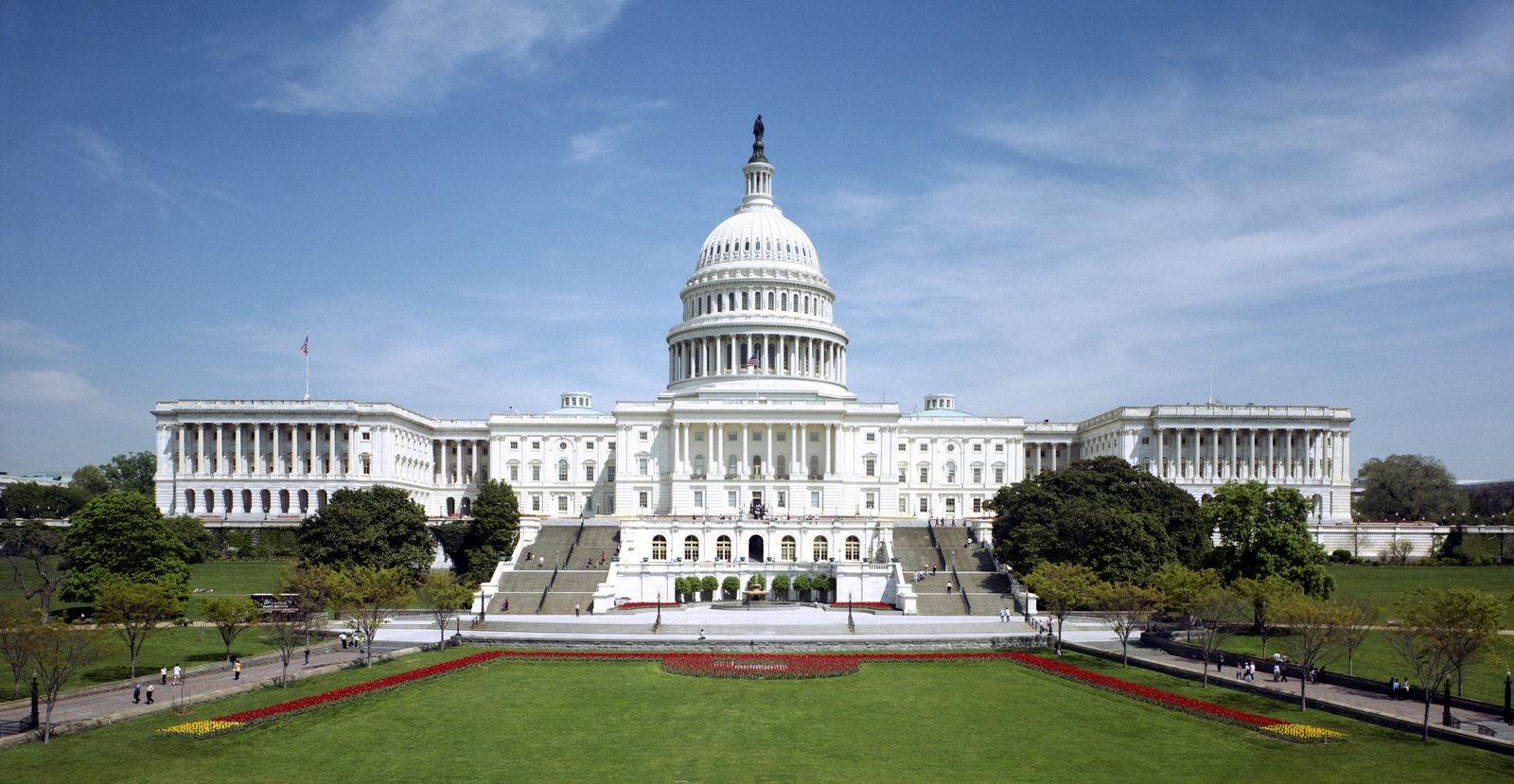
Legislative Watch is The Investigative Journal’s weekly tracker of bills, budget battles, and regulatory action moving through Washington. This edition covers developments through Friday, June 19, 2026. Status labels reflect public records as of publication; measures noted as pending have not become law.
Congress entered the final stretch before its Independence Day recess with an unusually crowded floor and committee calendar, racing to lock in a once-in-a-generation housing package even as the broader Fiscal Year 2027 spending process slipped behind schedule. Lawmakers also pressed forward on the annual defense policy bill, absorbed the fiscal aftershocks of a newly enacted $70 billion immigration-enforcement measure, and advanced a cluster of committee bills touching consumer fraud, college athletics, digital assets, and small business. The throughline this week was bipartisanship on pocketbook issues colliding with party-line fights over enforcement spending and the calendar pressure of a midterm election year.
1. Housing: Senate moves landmark bipartisan overhaul toward the president’s desk
The week’s marquee development was the Senate’s decision to take up the final, reconciled version of the 21st Century ROAD to Housing Act (H.R. 6644). On June 16, the Senate agreed to a motion to proceed to the House message by a vote of 87–8 (Roll Call Vote No. 175), and Majority Leader John Thune moved to concur in the House amendment with a substitute, Amendment No. 5823. A cloture vote followed on June 18, clearing the way for final passage.
The bill, championed by Senate Banking Committee Chairman Tim Scott (R-S.C.) and developed alongside the House Financial Services Committee, is the product of more than a year of bicameral negotiation. The House first passed it 390–9 in February, the Senate approved a version 89–10 in March, and the House concurred with an amendment in May before this week’s renewed Senate action. According to a myth-versus-fact document released by Banking Committee Republicans, the Congressional Budget Office assessed the updated package as deficit-neutral, because its pilot programs require subsequent appropriations before any funds are spent.
Industry reporting indicates the final text limits institutional investors’ acquisitions of single-family homes—a priority pushed by the White House—while dropping an earlier provision that would have forced institutional owners to sell built-to-rent properties within seven years. The measure also modernizes the HOME Investment Partnerships Program for the first time in three decades, raises Federal Housing Administration multifamily loan limits, and authorizes a pilot for small-dollar mortgages of $100,000 or less, according to HousingWire. Chairman Scott told CNBC the bill could reach the president’s desk within two to three weeks; the National Association of Realtors notes that regulatory costs alone add more than $131,000 to the price of a typical new home.
2. Defense: FY2027 NDAA advances in both chambers near $1.15 trillion
The annual National Defense Authorization Act for Fiscal Year 2027 cleared committee in both chambers. The House Armed Services Committee approved its version (H.R. 8800) on June 4 by a vote of 44–12 after a 14-hour markup that processed roughly 900 amendments, endorsing about $1.15 trillion in defense programs, Roll Call reported.
The Senate Armed Services Committee followed, voting 18–9 to advance its bill. The Senate measure authorizes roughly $1.14 trillion—about $1 trillion for the Defense Department and $41 billion for defense-related activities at the Energy Department—broadly in line with the administration’s request. Among its structural changes, the bill would establish a combatant command focused on drones, according to Breaking Defense.
The committee tallies reflected a larger-than-usual bloc of opposition for a measure that is typically bipartisan. Several Democrats, including Sens. Tim Kaine (D-Va.), Tammy Duckworth (D-Ill.), and Elissa Slotkin (D-Mich.), voted against advancing the bill, with Kaine tying his objection to demands that Congress vote to authorize—or end—ongoing hostilities involving Iran. Both NDAAs now await floor consideration.
3. Immigration enforcement: $70 billion reconciliation package signed into law
The fiscal backdrop to the week was the enactment of a second budget reconciliation bill—informally “Reconciliation 2.0,” carried as S.2, the Secure America Act sponsored by Sen. Lindsey Graham (R-S.C.). The measure provides roughly $70 billion for immigration enforcement—approximately $38 billion for Immigration and Customs Enforcement, $22 billion for Customs and Border Protection, and about $5 billion for contingency and operational costs—funding those agencies through the remainder of the current presidential term, according to the National Immigration Forum.
The Senate approved the package after an overnight session on June 5, and the House passed it 214–212 on a party-line vote on June 9; the president signed it into law the following day. Republicans used reconciliation to bypass the Senate’s 60-vote threshold after enforcement funding was stripped from the FY2026 Department of Homeland Security spending bill, which became law in the spring following a 76-day partial shutdown of the department. Democrats argue the approach cedes congressional oversight by funding the agencies “with few strings attached,” while Republicans frame it as securing the administration’s enforcement priorities, records and statements indicate.
4. Appropriations: FY2027 markups advance, but a deadline slip looms
Appropriators continued building the twelve FY2027 spending bills, though the timeline points toward a stopgap. The Committee for a Responsible Federal Budget’s appropriations tracker shows the House moving first on several measures after completing the FY2026 cycle only in April. The House Appropriations Committee’s homeland security subcommittee advanced its FY2027 DHS bill along party lines, with Subcommittee Chairman Mark Amodei (R-Nev.) cautioning that reconciliation “is not the way we should fund regular operations of agencies,” per Federal News Network.
On the research side, the House Commerce-Justice-Science bill—approved by the full committee in May and awaiting a floor vote—proposes steep reductions for the National Science Foundation, NASA, and the National Institute of Standards and Technology. Analysts at the Computing Research Association calculate that, with earmarks removed, NIST’s core research account would fall about 26 percent year over year. The group notes a broad expectation that final appropriations will not be enacted by the October 1 start of the fiscal year and may not be resolved until after the November midterm elections.
5. Consumer protection: GUARD Act targets elder fraud and “pig butchering”
The GUARD Act (H.R. 2978), sponsored by Rep. Zach Nunn (R-Iowa) with 23 bipartisan cosponsors, was ordered reported in an amended form by a unanimous 52–0 vote across the House Judiciary and Financial Services Committees on May 13. The bill would let state, local, and Tribal law enforcement agencies use eligible federal grant funds to investigate elder financial fraud, “pig butchering” scams, and general financial fraud.
The legislation also clarifies that federal agencies may assist those jurisdictions with blockchain and related tracing tools, and it directs the Treasury Department and the Financial Crimes Enforcement Network to report to Congress on the state of scams and recommended responses. The unanimous committee vote signals rare cross-party consensus on combating financial exploitation, an area of growing law-enforcement concern as crypto-enabled fraud schemes proliferate.
6. College athletics: Protect College Sports Act clears Senate Commerce
The Senate Commerce, Science, and Transportation Committee on June 18 advanced the Protect College Sports Act of 2026 (S. 4668) by a bipartisan 19–9 vote, sending it to the full Senate. The bill would codify student athletes’ rights to earn compensation for their name, image, and likeness while establishing scholarship and health-care protections in federal law.
Key provisions would preempt conflicting state NIL laws, create a student-athlete ombudsman, set transfer and eligibility rules, bar practices designed to evade compensation limits, and prohibit the formation of a college “super league.” The committee action follows the stalled House “SCORE Act” effort and represents the furthest a comprehensive federal NIL framework has advanced, Roll Call reported. Backers say a national standard is needed to replace a patchwork of state rules; critics question the bill’s antitrust provisions.
7. Digital assets: CLARITY Act stalls in the Senate
Momentum on crypto market-structure legislation cooled. The Senate Banking Committee advanced the Digital Asset Market Clarity (CLARITY) Act by a 15–9 committee vote on May 14, with all Republicans joined by two Democrats. By mid-June, however, the bill had not advanced to the floor as negotiators worked through disputes over illicit-finance and “bad actor” provisions, according to CoinDesk.
The treatment of anti-money-laundering safeguards remains the central sticking point between the parties and with the White House. Sen. Cynthia Lummis (R-Wyo.) warned that if a market-structure framework does not pass this year, the window could close until around 2030. With the Senate calendar dominated by appropriations and the defense bill, the measure’s near-term path is uncertain.
8. Small business: committee bills on AI and antitrust draw CBO review
The House Small Business Committee reported nine bills favorably in late May, several of which were placed on the Union Calendar on June 3. Among them, the SBA Artificial Intelligence Utilization Act of 2026 (H.R. 8881), from Reps. Brad Finstad (R-Minn.) and George Latimer (D-N.Y.), would require the Small Business Administration to report annually to Congress on its use of AI and machine learning, including benefits, risks, and management measures. It was reported 23–0.
The Main Street Competes Act (H.R. 8882), from Reps. Hillary Scholten (D-Mich.) and Derek Schmidt (R-Kan.), also cleared 23–0; it would direct the SBA’s Office of Advocacy to report on how federal antitrust enforcement affects small-business competitiveness, drawing on data from the Justice Department and Federal Trade Commission. CBO scored an identical predecessor version of the Main Street Competes Act at roughly $3 million over five years, with no net effect on the deficit and any spending subject to appropriations, according to the agency’s estimate.
On the TIJ beat: accountability and oversight to watch
Several threads this week map directly onto The Investigative Journal’s focus on fiscal accountability and the integrity of public institutions. The fraud-fighting push extends beyond the GUARD Act: the House also queued up the Stopping Fraudulent Payments Act (H.R. 8464) and the Fraud Prevention and Accountability Act (H.R. 8312) for floor consideration, signaling sustained attention to improper federal payments. The CBO continues to publish cost estimates for measures considered under suspension of the rules, a useful record for tracking the fiscal footprint of fast-moving bills (CBO cost estimates).
The reconciliation route used to fund ICE and CBP—and the bipartisan unease, voiced even by appropriators in the majority, about funding standing agencies outside regular order—will remain a live oversight question as the FY2027 DHS bill moves. So will the CLARITY Act’s unresolved anti-money-laundering provisions, which sit at the intersection of financial-crime enforcement and digital-asset policy. We will track each of these measures’ progress, vote margins, and cost estimates in the weeks ahead.
Sourcing note: Every status and figure above is drawn from public records—Congress.gov, the Congressional Record, committee releases, and the Congressional Budget Office—or from named secondary reporting where noted. Members and committees cited had the opportunity to state their positions on the public record. Pending measures are identified as such and have not been enacted.