

WASHINGTON — Tuesday, July 7, 2026. The Investigative Journal’s Morning Wire covers overnight and early-morning developments across government, the courts, and international affairs. This briefing was compiled from wire reports, official statements, and primary records available as of early Tuesday. Where a claim rests on a single account or a party’s characterization, it is attributed and flagged accordingly.
The day’s dominant story sits abroad: President Donald Trump is in Turkey for a NATO summit that opens Tuesday in Ankara, even as Iran stages a multi-day state funeral for its slain supreme leader and Hamas announces it is dissolving its government in Gaza. At home, a holiday-shortened Congress returns to a stalled floor and a ticking clock on a bipartisan housing bill.
Government
Trump arrives in Ankara as NATO leaders convene
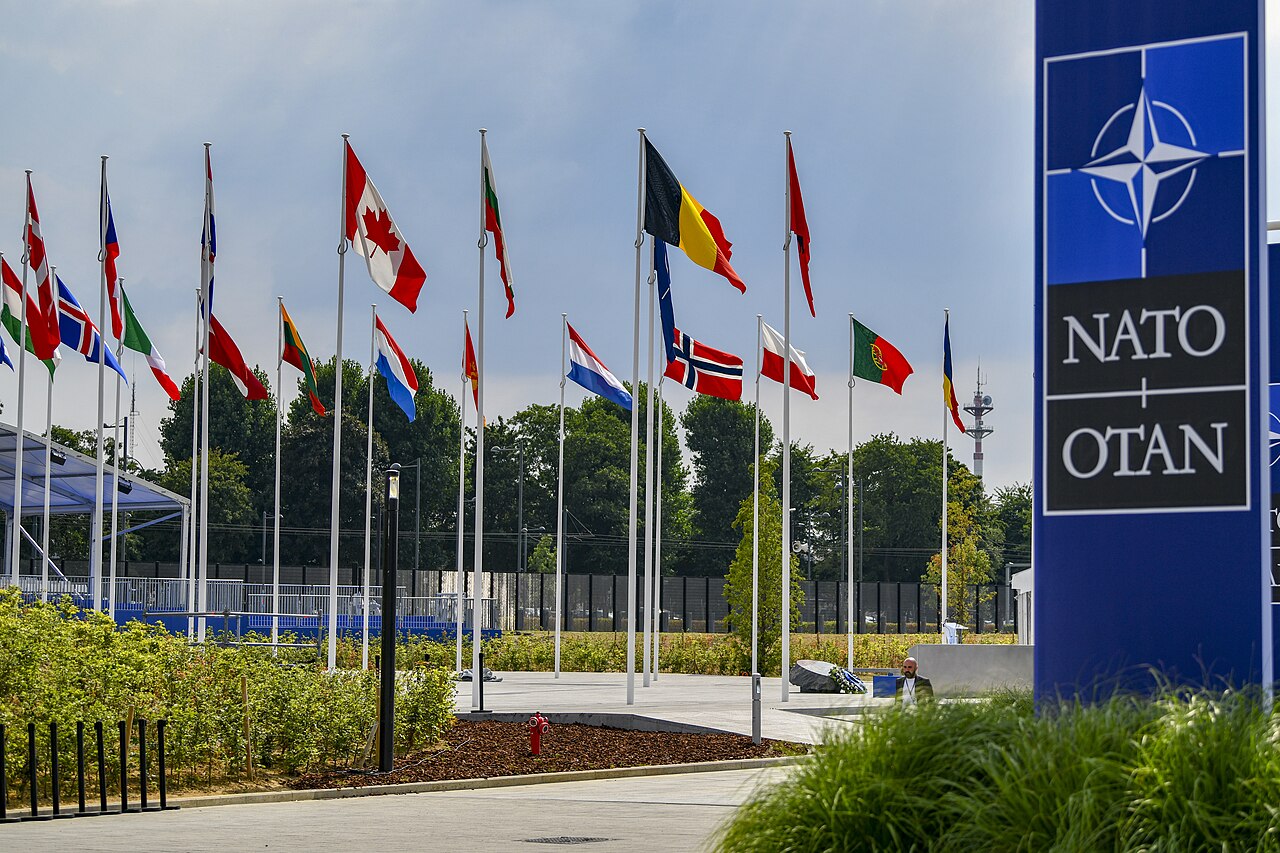
President Trump traveled to Ankara on Monday for the 2026 NATO summit, which the alliance says will run July 7–8 at Turkey’s Presidential Complex, according to NATO’s official summit overview. It is the 36th NATO summit and the second hosted by Turkey. Secretary General Mark Rutte has framed the agenda around three priorities — increasing allied defense investment, expanding transatlantic defense-industrial production, and sustaining support for Ukraine.
A Congressional Research Service briefing prepared for lawmakers notes that the central questions in Ankara concern how members will meet earlier spending pledges. Reporting from Punchbowl News indicated Trump departed Washington on Monday, with the House and Senate both out on recess. The president is expected to hold bilateral meetings on the margins, including with Turkish President Recep Tayyip Erdogan and Ukrainian President Volodymyr Zelenskyy; the White House schedule is posted on its live events page.
House GOP revives SAVE America Act push through reconciliation
Speaker Mike Johnson (R-La.) said the House will try again to advance the SAVE America Act, this time by folding it into a party-line budget reconciliation package, according to reporting by Talking Points Memo and Democracy Docket. “The big urgency is to get SAVE America passed,” Johnson said in a Fox News Sunday interview quoted by multiple outlets. The measure would require documentary proof of citizenship to register and photo identification to vote in federal elections; supporters cast it as an election-integrity safeguard, while critics describe it as voter suppression.
The path remains uncertain. As Punchbowl News and MS NOW report, the bill has twice fallen short of 60 votes in the Senate, and reconciliation rules — enforced by the Senate parliamentarian — bar provisions that are not primarily budgetary. Johnson has floated a multibillion-dollar grant program to incentivize states to adopt citizenship-verification and voter-ID requirements as a workaround. Senate Majority Leader John Thune (R-S.D.) has publicly questioned whether a third reconciliation package can pass. A group of House conservatives led by Rep. Anna Paulina Luna (R-Fla.) blocked floor action before the recess, delaying the annual defense-policy bill.
Ten-day clock runs on bipartisan housing bill
A bipartisan housing-deregulation bill sent to the president last week will become law without his signature if he does not act, Punchbowl News reports, citing sources who place the constitutional 10-day deadline at midnight July 10. Trump has publicly criticized the measure even though his administration helped negotiate it, and the standoff is tied to the broader fight over the SAVE America Act. Under Article I, a bill becomes law if the president neither signs nor returns it within 10 days while Congress is in session.
Surveillance lapse and intelligence vacancy await Congress
Lawmakers return to an unresolved intelligence impasse. Section 702 of the Foreign Intelligence Surveillance Act lapsed on June 12 amid a dispute over the acting director of national intelligence, according to Federal News Network. The Senate Intelligence Committee is reported to be planning a July 15 confirmation hearing for Jay Clayton, the president’s nominee for DNI, which some Republicans view as a potential off-ramp on reauthorizing the warrantless surveillance authority.
Courts
D.C. Circuit clears expanded “expedited removal”
A divided federal appeals court allowed the administration to resume nationwide use of expedited removal — fast-track deportations without a hearing before an immigration judge — for migrants who cannot show they have been in the country for more than two years. The U.S. Court of Appeals for the D.C. Circuit ruled 2–1, with Judges Justin Walker and Neomi Rao in the majority, overturning a district court’s block, as reported by NPR, The Hill, and PBS News. The challengers had argued the government lacked adequate safeguards against wrongful deportation; litigation continues.
Supreme Court term closes with executive-power wins
The just-concluded Supreme Court term produced several rulings the administration counts as victories, which the Department of Homeland Security summarized in a June 25 statement. Court reporting compiled by NPR indicates the Court, in a 6–3 decision, narrowed the 1935 Humphrey’s Executor precedent and upheld the president’s power to remove members of independent agencies, and separately allowed changes to Temporary Protected Status designations to proceed. A related order in Trump v. Cook is posted on the Court’s site. Not every ruling favored the government; per NPR’s term summary, the justices also affirmed constitutional protections on birthright citizenship. Readers should note these are final decisions from late June, not overnight developments.
Justices to weigh proof-of-citizenship voting case next term
Looking ahead, the Court has agreed to hear a dispute over state requirements that voters document their citizenship, one of six cases added to next term’s docket, according to SCOTUSblog. The case could bear directly on the citizenship-verification provisions at the center of the SAVE America Act fight in Congress, making it one of the most consequential grants of the coming year.
International
Millions mourn as Iran buries Khamenei; U.S. talks paused
Hundreds of thousands of mourners filled central Tehran on Monday for the funeral procession of the late Supreme Leader Ayatollah Ali Khamenei, who Iranian and Western outlets say was killed in a February 28 U.S.-Israeli airstrike at the start of this year’s war. The BBC and The Associated Press reported crowds along a roughly 10-kilometer route, with some demonstrators carrying placards calling for violence against President Trump. U.S. federal authorities have tracked Iranian threats against Trump and other officials for years, the AP noted.
According to a Reuters analysis, Tehran is using the spectacle to project unity and to strengthen its negotiating position over the Strait of Hormuz, the chokepoint it disrupted during the war. U.S.–Iran talks on a permanent settlement and on fully reopening the strait appear paused until after the burial, which the Independent and RFE/RL report is scheduled for Thursday in Mashhad. These figures come amid a fragile ceasefire, and casualty and attendance counts cited by state media should be treated as unverified.
Trump holds Ukraine, Russia calls ahead of summit
Over the July 4 holiday weekend, Trump spoke separately by phone with Zelenskyy and Russian President Vladimir Putin about ending the war in Ukraine, according to CBS News and CNBC. Zelenskyy described a “very good” call and said the two leaders would continue their discussion at the Ankara summit; the Kremlin characterized the Putin call as “businesslike” and lasting roughly 85–90 minutes, per RFE/RL. The outreach followed a large Russian strike on Kyiv earlier in the week that reports say killed at least 30 people. Any characterization of what was agreed rests on the parties’ own accounts.
Hamas says it is dissolving its Gaza government
Hamas announced Monday that it is dissolving the “emergency committee” that has administered Gaza, clearing the way to transfer authority to a UN-backed technocratic body known as the National Committee for the Administration of Gaza, PBS News reported. The move is framed as a step toward implementing the U.S.-brokered ceasefire and Gaza plan. Israel dismissed the announcement as cosmetic — an official told The Washington Times it “has no significance” because Hamas members remain in place — and, per The Times of Israel, the international “Board of Peace” said it would judge by “actions, not promises,” insisting the committee control all weapons in Gaza. The step does not resolve the central, unmet requirement that Hamas disarm.
Worth Watching
Events and decisions on the calendar for Tuesday and the days immediately ahead:
- NATO summit, Ankara (July 7–8): Opening sessions and the alliance’s Defence Industry Forum, plus expected Trump–Erdogan and Trump–Zelenskyy bilaterals.
- Iran funeral procession: Ceremonies move to Qom on Tuesday and toward Najaf and Karbala on Wednesday, with burial in Mashhad set for Thursday, per BBC coverage — a period widely seen as a marker for whether U.S.–Iran talks resume.
- Housing bill deadline (July 10): The 10-day window for the president to sign or return the bipartisan housing measure closes at midnight, after which it becomes law automatically.
- DNI confirmation hearing (July 15): The Senate Intelligence Committee is expected to take up Jay Clayton’s nomination, a potential off-ramp for the lapsed Section 702 surveillance authority.
- Congress: House and Senate leaders will test whether a third reconciliation package — and the SAVE America Act workaround — can move, with a defense-policy bill and 10 remaining appropriations bills due before the September 30 funding deadline.
- Supreme Court: The newly granted proof-of-citizenship voting case joins a docket that will shape election-administration law heading into the November midterms.
The Investigative Journal compiles the Morning Wire from public records and independent wire reporting. Items involving pending litigation or contested political claims are noted as such; allegations are distinguished from findings. Corrections and requests for reply may be directed to the editor.