

The Investigative Journal’s Afternoon Wire is a daily digest of the day’s major developments across government, the courts, and international affairs. Every item is sourced to a public record or a wire report; pending matters are noted as such.
The dominant story of the day remains the sharp re-escalation between Washington and Tehran. After Iranian forces struck three commercial tankers in the Strait of Hormuz, U.S. Central Command carried out its most extensive strikes on Iran in weeks, President Trump declared the two countries’ interim understanding effectively “over,” and oil markets jumped. The fallout rippled through a NATO summit in Ankara, energy policy, and the price of crude. Below, the wire for Thursday, July 9, 2026.
Government
Treasury rescinds Iran oil waiver; crude jumps. The Trump administration moved to reimpose energy sanctions on Iran, revoking a waiver that had briefly permitted Iranian oil and petrochemical sales on global markets. According to reporting by The Hill and CNBC, the Treasury Department said “General License X” — issued weeks earlier as part of an interim arrangement with Tehran — would be superseded by a narrower “General License X1” that authorizes no new Iranian oil sales and allows only a wind-down of pending transactions through July 17, with proceeds held in a blocked, interest-bearing account.
The market reaction was immediate. International Brent crude rose roughly 5 percent, trading above $75 a barrel, The Hill reported, as traders weighed the risk that hostilities near the Strait of Hormuz — a chokepoint for a substantial share of the world’s seaborne oil — could disrupt supply. The waiver had been tied to a 60-day U.S.–Iran memorandum of understanding struck the prior month; its rescission underscores how fragile that understanding has become.
Labor market cools as inflation stays elevated. The most recent federal data point to a softening economy. Nonfarm payrolls rose by a seasonally adjusted 57,000 in June, well below May’s 129,000 and short of consensus forecasts near 115,000, according to the Bureau of Labor Statistics figures reported by CNBC. At the same time, inflation has remained above the Federal Reserve’s 2 percent target, with recent readings running materially higher — a dynamic that complicates the central bank’s path.
Fed Chair Kevin Warsh, speaking at a policy forum, described inflation as “too high” while declining to signal the central bank’s next move. The Fed held its benchmark rate steady in June, and its own projections have left open the possibility of further tightening later in the year. Analysts note that the weak June payrolls print makes an imminent rate increase harder to justify, even as officials keep a wary eye on energy-driven price pressures.
Senate defense bill heads to the floor. The Senate Armed Services Committee has advanced its version of the National Defense Authorization Act for Fiscal Year 2027, filed as S.4784 by Chairman Roger Wicker and Ranking Member Jack Reed. Committee materials indicate the measure authorizes roughly $1.15 trillion and emphasizes readiness, modernization, and support for service members. The panel announced completion of its markup, clearing the bill for floor consideration — the 66th consecutive year the NDAA has moved under regular order, a rare marker of bipartisan continuity in an otherwise divided Congress.
Courts
Appeals court declines to restore Trump’s name at Kennedy Center. A three-judge panel of the U.S. Court of Appeals for the D.C. Circuit denied the administration’s request to pause a lower-court order that removed the President’s name from the John F. Kennedy Center for the Performing Arts. According to NPR and CNBC, the panel found that the movants had not shown they would be “irreparably injured” absent a stay while the underlying appeal proceeds.
The dispute stems from a lower-court ruling that the Kennedy Center’s board acted contrary to law in naming the building after the sitting president. This is a procedural ruling on a request for a stay, not a final decision on the merits; the appeal remains pending, and the administration retains further legal options. Records indicate the litigation is ongoing, and today’s order leaves the lower court’s directive in place for now.
Supreme Court turns away Carroll appeal; funds ordered released. The U.S. Supreme Court declined to take up President Trump’s appeal in the long-running civil dispute brought by writer E. Jean Carroll, and a federal judge subsequently ordered the release of funds — the original $5 million jury award, roughly $5.8 million with accrued interest — that had been held pending review. CNBC reported the high court’s denial ends one avenue of appeal in the matter.
Both Carroll and the President are public figures, and this is a civil case: juries in two trials found Mr. Trump civilly liable for defaming Ms. Carroll after he denied her account. The President has consistently denied wrongdoing and has pursued appeals; the Supreme Court’s action addresses the procedural posture rather than re-litigating the facts. A separate, larger defamation judgment in a related case has followed its own appellate track. Readers should note the distinction between a civil finding of liability and a criminal conviction; no criminal charges are at issue here.
International
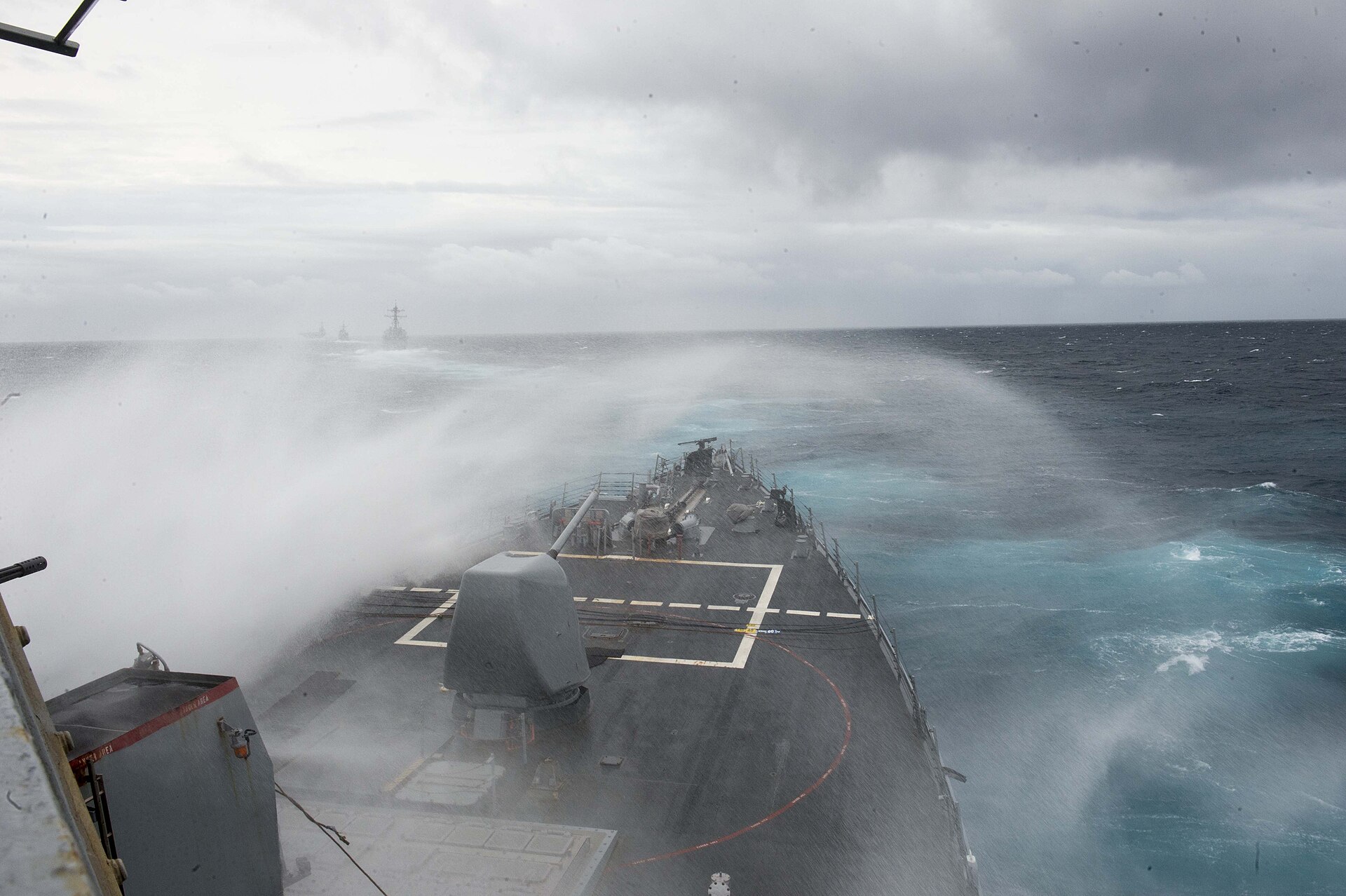
U.S. strikes dozens of Iranian targets after Hormuz tanker attacks. U.S. forces struck more than 80 targets across Iran — including air-defense systems, command-and-control nodes, coastal radar, anti-ship missile sites, and dozens of Islamic Revolutionary Guard Corps fast boats — in retaliation for Iranian attacks on three tankers in the Strait of Hormuz, The Hill and NPR reported, citing Central Command. Reports indicate the vessels sustained damage but that no crew fatalities were confirmed.
Tehran responded with strikes aimed at U.S.-partnered Gulf states. According to NPR, Iran launched missiles and drones toward Bahrain and Kuwait, most of which were intercepted or caused no major damage. CBS News reported the exchange as the sharpest since the interim understanding was reached, raising the prospect that the pause in hostilities may not hold.
Trump calls interim deal ‘over’ but leaves door open. Speaking as a NATO summit wrapped, the President said the interim agreement with Iran is, in his view, “over,” while adding that he would allow diplomatic contacts to continue. NATO Secretary-General Mark Rutte publicly backed the overnight strikes as “absolutely necessary.” The combination of renewed strikes and the revoked oil waiver, officials suggested, is intended to pressure Tehran back toward terms rather than to abandon negotiations outright.
NATO summit in Ankara yields Ukraine pledges and friction. At the alliance’s summit in Turkey, NATO leaders pledged $80 billion in support for Ukraine across this year and next, and President Trump said the United States would grant Kyiv a license to manufacture Patriot air-defense systems — a long-standing Ukrainian request. The summit was not without tension: the President criticized several European partners, singled out Spain over its posture on the Iran campaign, and pressed allies again on defense spending and his interest in Greenland. His meeting with Ukrainian President Volodymyr Zelensky, by contrast, struck a markedly warmer tone than earlier encounters, with both sides signaling openness to a security framework.
Administration signals it will lift Syria terrorism designation. On the summit’s sidelines, the President met Syrian President Ahmad al-Sharaa, and Secretary of State Marco Rubio said afterward that the United States intends to remove Syria’s designation as a state sponsor of terrorism as part of a phased normalization, according to NPR. Rubio framed the step as a way to “unlock international trade and investment” and give Syria’s post-Assad government a path to rebuild. The move would extend a normalization process that began with sanctions relief the prior year.
Tomorrow’s Watch
Energy markets and the July 17 deadline. With the Iranian oil waiver rescinded, traders will watch whether the wind-down window closing July 17 — and any further incidents near the Strait of Hormuz — keeps upward pressure on crude. Sustained higher energy prices would feed directly into the inflation debate now confronting the Fed.
Senate floor business. The Senate is positioned to take up the FY2027 NDAA (S.4784) and continues to work through executive and judicial nominations. Floor scheduling can shift, but the defense bill’s progress will be a key marker of whether regular order holds.
Inflation data on deck. The next major price reading — the June Consumer Price Index — is scheduled for release by the Bureau of Labor Statistics on July 14, followed by the Producer Price Index on July 15. Those figures will help clarify whether energy costs and tariffs are still pushing prices higher.
Iran diplomacy. Watch for signals from Washington and Tehran on whether back-channel talks resume after the President declared the interim deal “over.” Any statement from the State Department, Central Command, or Gulf partners could reset expectations quickly.
The courts. Expect continued proceedings in the Kennedy Center appeal at the D.C. Circuit, and any administration response to today’s rulings. As always, The Investigative Journal will distinguish procedural steps from final judgments as these matters develop.
The Afternoon Wire summarizes public records and wire reporting available as of publication. Where matters are pending, outcomes may change; corrections will be issued as warranted.