

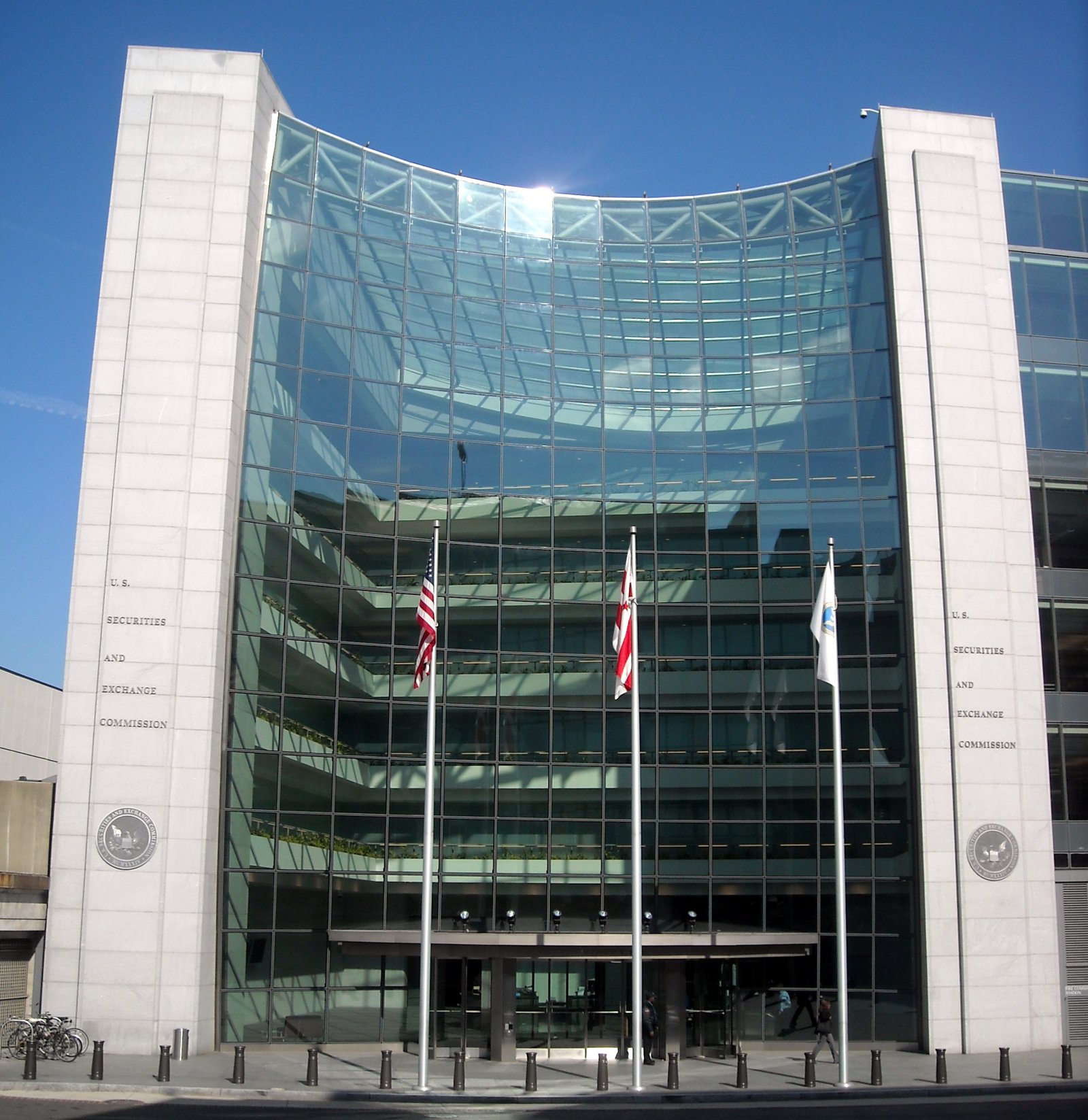
SEC Watch is The Investigative Journal’s daily review of notable filings, enforcement actions, and disclosures drawn directly from the public record at the U.S. Securities and Exchange Commission.
The Commission opened the week with one of its most significant enforcement actions of the year: civil fraud charges against the three former finance executives of Tricolor Holdings, the Texas subprime auto lender whose September 2025 bankruptcy left asset-backed securities investors facing hundreds of millions of dollars in losses. Today’s edition also covers a $74 million alleged pre-IPO boiler room, a public company accused of overstating revenue by roughly 345 percent, Berkshire Hathaway’s closely watched quarterly portfolio disclosure, and material-event filings from Home Depot and XTI Aerospace that merit attention from disclosure watchers.
SEC Charges Former Tricolor Executives Over $1.9 Billion ABS Collapse
The SEC on August 18 charged Daniel Chu, Jerome Kollar, and Ameryn Seibold — the former CEO, CFO, and Senior Director of Finance of Tricolor Holdings LLC — with fraud in connection with what the agency describes as a multi-year scheme to double-pledge hundreds of millions of dollars of subprime auto loans across multiple asset-backed securities offerings and lenders. According to Litigation Release No. 26612, Tricolor raised more than $1.9 billion through ABS offerings from at least 2020 through its September 2025 bankruptcy, while the defendants allegedly portrayed the company as financially sound despite knowing it faced significant liquidity constraints.
The complaint, filed in the Southern District of New York, alleges that offering materials represented collateral loans as free and clear of other liens when many had been or would soon be pledged elsewhere, and that the defendants manipulated loan metrics to make non-paying or defaulted loans appear current — and therefore eligible for securitization pools. Filings indicate more than $945 million in ABS principal remained outstanding at the time of the bankruptcy. The SEC seeks injunctions, disgorgement, civil penalties, and officer-and-director bars against Chu and Kollar; the U.S. Attorney’s Office for the Southern District of New York announced parallel criminal charges in December 2025. These are allegations, and the civil claims remain unproven pending litigation.
The case is significant beyond its dollar figure. Tricolor’s collapse rattled the private credit and auto ABS markets last fall, and the SEC’s account — investigated by its Complex Financial Instruments Unit with assistance from the FBI and the FDIC Office of Inspector General — suggests regulators are reconstructing how double-pledged collateral moved undetected through securitization warehouses for years. The answer to that question matters to every bank and institutional investor with warehouse-lending exposure.
$74 Million “Pre-IPO” Fund Operation Charged as Boiler Room
On August 17 the Commission announced charges against New York resident Andrew Spaventa and three entities he controlled — The Spaventa Group LLC, TSG Capital Advisors LLC, and TSG Alpha Partners LLC — over unregistered fund offerings that promised retail investors access to shares of “pre-IPO” private companies. Per Litigation Release No. 26611, the defendants raised more than $74 million from over 800 mostly retail investors across eleven private funds between roughly December 2020 and June 2025.
The complaint alleges a structural markup scheme: Spaventa’s entities bought pre-IPO shares and resold them to his own funds at prices averaging approximately 46 percent above cost, passing the markup to investors as hidden fees while telling them upfront fees would be at most 12.5 percent — or nothing at all. The SEC alleges roughly $23 million in fees was extracted, with more than $12 million paid to a network of over 100 cold-calling sales agents and about $4 million flowing to Spaventa personally. Records suggest many targets were retirees reached through high-pressure telephone pitches. The allegations have not been adjudicated.
Netcapital: SEC Alleges Public Company Overstated Revenue 345 Percent
In a case that reads as a preview of the SEC’s renewed accounting-fraud focus, the agency this month sued Netcapital Inc. and five affiliated individuals in federal court in Boston, alleging the crowdfunding-portal operator improperly recognized nearly $14 million in revenue from sham consulting agreements — some of which were allegedly forged — between October 2021 and January 2024. According to Litigation Release No. 26607, the improper recognition amounted to overstating revenue by approximately 345 percent while the company raised more than $25 million from investors.
The complaint names John Fanning, who allegedly functioned as an officer without formal designation; CFO Coreen Kraysler; former CEO Martin Kay; accountant Paul Riss; and former CEO Cecilia Lenk. Lenk, without admitting the allegations, has consented to a proposed final judgment including injunctions and a $50,000 penalty, subject to court approval. The remaining defendants face unresolved claims, and the allegations against them remain untested in court.
The timing is notable: the SEC announced on August 5 a new Financial Reporting and Accounting Unit within the Division of Enforcement, dedicated to pursuing accounting and financial-reporting fraud. Issuers with aggressive revenue-recognition practices should expect more cases in this mold.
Berkshire’s 13F: A Net Buyer Again, With Alphabet at the Center
Berkshire Hathaway’s quarterly Form 13F-HR, filed with the SEC on August 14, disclosed 29 U.S. equity holdings valued at approximately $299.3 billion as of June 30, with Apple, American Express, Coca-Cola, and Alphabet as the largest positions, according to filing data compiled by 13f.info. Alphabet’s arrival among the conglomerate’s top holdings is the quarter’s headline change: CNBC reported that Berkshire added roughly $17 billion to its Alphabet stake during the quarter.
Press analyses of the filing, including Forbes, indicate Berkshire was a net buyer of equities for the first time in fourteen quarters — a meaningful signal from a firm that spent more than three years harvesting gains and building cash. Reported adds included Delta Air Lines, Lennar, Macy’s, and The New York Times, with trims in Bank of America, DaVita, Kroger, Ally Financial, and Capital One. As always, 13F data shows positions as of quarter-end only; it does not capture subsequent trading or non-U.S. holdings.
Home Depot’s 8-K: Solid Quarter, and a Tariff-Refund Disclosure Worth Reading
Home Depot’s Form 8-K filed August 18 reported second-quarter net sales of $47.9 billion, up 5.7 percent, with comparable sales up 1.7 percent and GAAP diluted EPS of $4.79 versus $4.58 a year earlier. The company reaffirmed fiscal 2026 guidance of 2.5 to 4.5 percent total sales growth and adjusted operating margin of 12.8 to 13.0 percent, per the earnings exhibit.
The detail that stands out for disclosure watchers: the filing indicates the company’s fiscal 2026 guidance includes IEEPA tariff refunds, which management expects to partially offset unplanned fuel, energy, and other product-input costs. As trade-policy litigation reshapes duty flows, expect more issuers to quantify tariff refunds as a guidance component — a disclosure line investors did not have to parse two years ago.
XTI Aerospace: CEO Exit, Internal Governance Review, Delayed 10-Q
Small-cap aviation firm XTI Aerospace disclosed in a Form 8-K that Scott Pomeroy resigned as chairman, CEO, and director on August 17, receiving a $200,000 separation payment and immediate vesting of 2,000,000 options. The filing states the board is conducting an internal review of matters relating to Pomeroy and related corporate governance matters and is evaluating implications for the company’s disclosures and controls; the filing does not detail the review’s subject matter, and no wrongdoing has been established.
The company appointed Jeremy Schneiderman, chief executive of its Drone Nerds subsidiary, as interim CEO. Notably, the governance review has already had a reporting consequence: the company filed a Form 12b-25 disclosing a delayed Form 10-Q for the quarter ended June 30, 2026. Late quarterly reports paired with undefined internal reviews are precisely the fact pattern that tends to precede restatements or enforcement referrals — or, alternatively, a clean bill of health. Either way, the next filing will be informative.
Fabrinet’s 10-K: 35.7 Percent Growth, and Four Customers Supplying 57 Percent of It
Optical-manufacturing contractor Fabrinet’s annual report, filed with the SEC on August 18, shows revenue of $4.64 billion for the fiscal year ended June 26, 2026, up 35.7 percent from $3.42 billion — growth driven by AI-datacenter optics demand. The same filing discloses that four customers each contributed at least 10 percent of revenue and together accounted for 57.4 percent of the total, with Cisco, NVIDIA, Nokia, and Amazon identified among the company’s largest customers.
The concentration disclosure is the story. A supplier whose fortunes ride on four buyers is exposed to order reductions, pricing pressure, and program transitions largely outside its control — a risk the company itself flags in the filing. For investors extrapolating AI-infrastructure growth rates, the 10-K’s risk-factor section is a useful counterweight to the income statement.
Filings That May Warrant Deeper TIJ Investigation
Several smaller filings from the August 18 docket merit follow-up. Azio AI Holdings’ quarterly report indicates cash strain and a Nasdaq listing deadline. DUKE Robotics filed a $50 million shelf registration even as filings indicate its auditor has cited going-concern risk. Flotek Industries disclosed that its board revoked approval of a Puerto Rico power project, freezing the initiative. And Braskem reported a $476 million injection as a joint venture enters prepackaged Chapter 11. TIJ will examine the underlying EDGAR filings for each.
We will also continue tracking the Tricolor litigation docket, the unresolved Netcapital claims, and XTI Aerospace’s delayed 10-Q.
Editorial note: This digest is compiled from public records — SEC litigation releases, EDGAR filings, and agency press releases — linked throughout. SEC complaints contain allegations, not findings; all defendants are entitled to contest the claims in court, and no party named in a pending matter had filed a public response as of publication. TIJ did not seek comment from named parties prior to publication; parties who wish to respond may contact the editorial desk and responses will be appended. Featured photo: SEC headquarters, Washington, D.C., by AgnosticPreachersKid via Wikimedia Commons, CC BY-SA 3.0.