

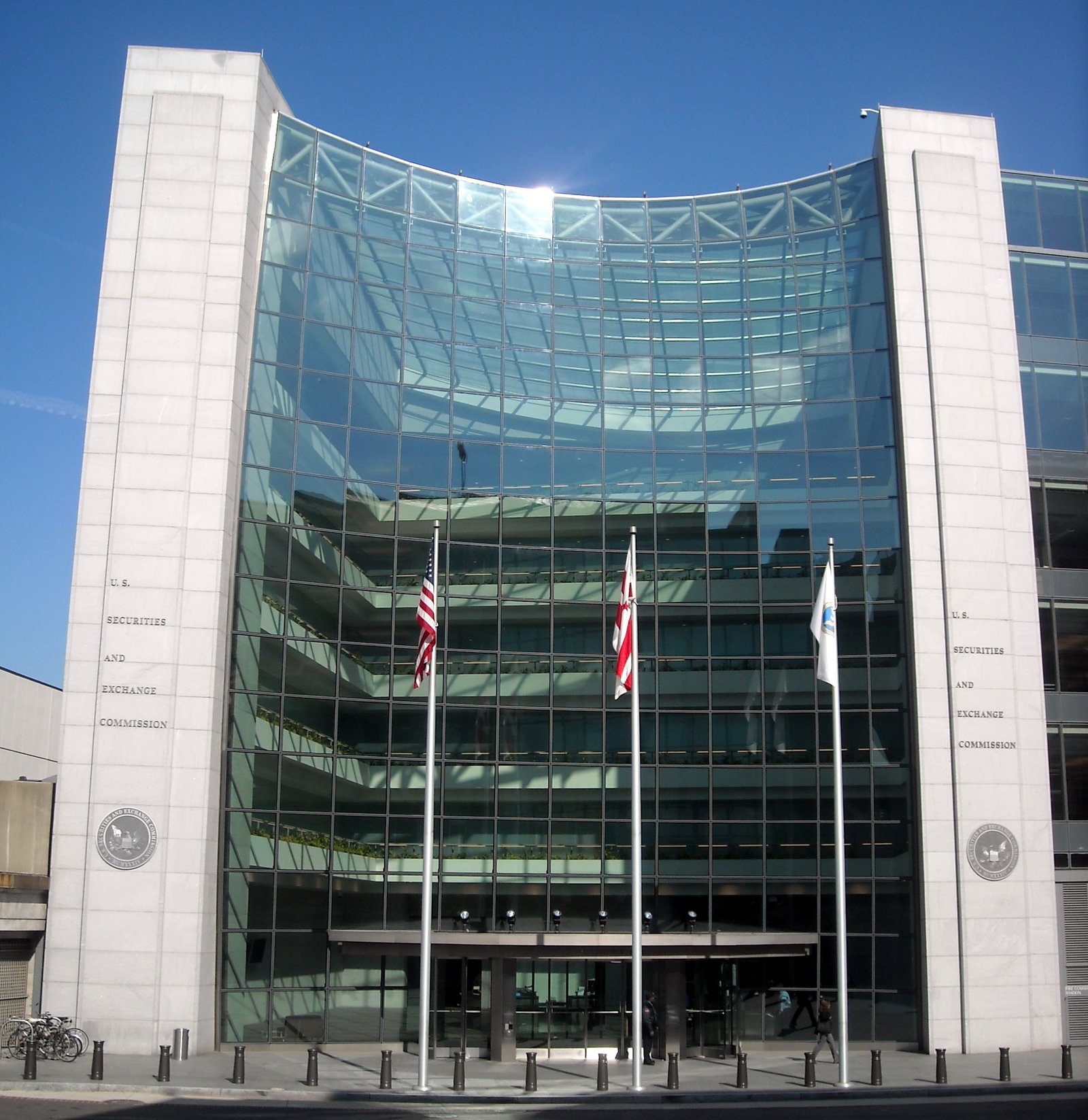
SEC Watch is The Investigative Journal’s running digest of notable filings and enforcement activity drawn from the U.S. Securities and Exchange Commission’s EDGAR system, litigation releases, and newsroom. All figures below are sourced to public records; allegations that have not been adjudicated are identified as such.
The trading week ending July 10 offered a compact snapshot of where the Securities and Exchange Commission is directing its attention. On the enforcement side, the Commission stood up a new unit aimed squarely at fraud against ordinary investors, then closed out a cluster of individual insider-trading and unregistered-broker matters — several of them resolved in parallel with criminal cases. On the disclosure side, a government-services contractor formalized a top-to-bottom leadership change, and a clinical-stage biotechnology company filed a fiscal-year report that places a single August regulatory date at the center of its outlook. Below are the filings TIJ is tracking, with direct links to the underlying records.
SEC Enforcement
1. SEC creates a Retail Fraud Working Group
On July 7, the Commission announced the creation of a Retail Fraud Working Group (Press Release 2026-63) that it says will strengthen the Division of Enforcement’s ability to identify and combat fraud targeting everyday investors. According to the release, the group will focus on offering frauds, pump-and-dump schemes, market manipulation, and breaches of duty by investment advisers and broker-dealers, and will serve as a dedicated resource for “proactive case generation” while coordinating with domestic regulators, foreign counterparts, and the SEC’s Office of Investor Education and Assistance.
The Commission said the group will be led by Kate Zoladz, Deputy Director for the West, and Kim Frederick, Assistant Director in the Asset Management Unit. Chairman Paul S. Atkins framed the initiative as “a return to the core values and principles of the enforcement program,” and Enforcement Director David Woodcock said the effort would generate cases and build partnerships “using data and technology to find and stop those who seek to take advantage of retail investors.”
The move is consistent with the enforcement posture the Commission described in its fiscal year 2025 enforcement results, published April 7, in which it said it had “recentered” the program on fraud and investor protection. The individual actions resolved this week — detailed below — track that stated emphasis on holding individuals accountable, often alongside criminal authorities.
2. Former investor-relations executive and two associates settle insider-trading claims
In a litigation release dated July 10 (LR-26582), the SEC disclosed that on July 8 it filed proposed final consent judgments against Robert Alan Yedid, Andrew Kaufman, and Mark Jacobs, whom it had charged in an August 2025 complaint with insider trading that allegedly produced more than $500,000 in combined illegal profits. The Commission alleges that Yedid, a managing director at a consulting firm advising pharmaceutical and biotechnology companies on investor communications, obtained material nonpublic information about the firm’s clients — including drug-trial results, financial and regulatory information, and pending mergers — and passed it to Kaufman and Jacobs between roughly 2019 and 2024. According to the complaint, Kaufman shared some of the proceeds with Yedid by handing him envelopes of cash.
All three men pleaded guilty in a parallel criminal case in the Southern District of New York. Court records cited by the SEC indicate Yedid was sentenced to 15 months of incarceration, a $50,000 fine, and forfeiture of $244,901; Kaufman received time served, a $95,000 fine, community service, and forfeiture of $489,802; and Jacobs received probation, a $20,000 fine, community service, and forfeiture of $36,138. The proposed civil judgments, which remain subject to court approval, would hold Yedid liable for a total of $167,819.91, Kaufman for $391,579.80, and Jacobs for $36,138, with each amount deemed satisfied by the criminal forfeiture orders. The court had previously entered judgments enjoining the three from further violations and barring Yedid from associating with a broker-dealer or serving as an officer or director of a public company.
3. AstraZeneca diligence-team member settles over Icosavax trades
The Commission on July 9 filed a settled action (LR-26581) against Maryland resident Weiguo Zhai, alleging he traded ahead of the December 12, 2023 announcement of AstraZeneca’s acquisition of Icosavax, Inc. through a tender offer. According to the complaint, filed in the District of Maryland on July 8, Zhai worked at an AstraZeneca subsidiary and sat on the due-diligence team evaluating the transaction, and used confidential information acquired through that role to buy 1,000 shares of Icosavax in his own brokerage account and 1,000 shares in his wife’s account before the deal was public.
The SEC states that Icosavax’s share price rose approximately 49.48% on the announcement, generating what it describes as $10,006 in illicit profits. Without the matter proceeding to trial, Zhai consented to a judgment — subject to court approval — that would permanently enjoin him from violating the antifraud and tender-offer provisions of the securities laws and order him to pay the $10,006 in disgorgement, $1,535 in prejudgment interest, and a civil penalty equal to the trading gain. The case is a reminder that even small-dollar deal trading tied to merger diligence remains an enforcement priority; the Commission credited its Philadelphia Regional Office and the assistance of FINRA.
4. Cross-border microcap scheme reaches another settlement
In LR-26583, dated July 10, the SEC said it filed a consent and proposed final judgment as to Steve Bajic, one of 15 defendants in a fraudulent microcap scheme the Commission first charged in January 2020. The complaint alleged that Bajic, a citizen of Canada and Croatia, worked with Rajesh Taneja to help undisclosed company insiders and control persons secretly sell large blocks of microcap stock, using a network of foreign entities to conceal ownership. The judgment orders Bajic to pay $837,734 in disgorgement — deemed satisfied by a forfeiture order in his parallel criminal case in the District of Massachusetts — and imposes a penny-stock bar.
The filing also recaps the broader case: the Commission noted it would not seek a civil penalty against Taneja under a bifurcated judgment entered in 2021, and that a 2023 consent judgment against a related defendant, Christopher McKnight, had ordered disgorgement of $985,044, prejudgment interest of $164,082, and a $75,000 penalty. Records indicate the litigation, handled out of the Boston Regional Office, remains ongoing as to remaining parties.
5. Las Vegas “financial education” firm settles unregistered-broker charges
On July 6, the SEC announced a final consent judgment (LR-26580) entered June 29 against Quest Education L.L.C. of Las Vegas, its principal Daniel Blue, and two former employees, David Christopher White and Keitoh Jordan Spears, for allegedly acting as unregistered brokers and selling unregistered securities. According to the complaint, Quest marketed itself as an investor-education company that helped customers set up self-directed retirement accounts to buy alternative investments, while its largest revenue driver was commission payments from third parties in exchange for steering customers into unregistered offerings.
The Commission alleges Quest collected roughly $2.5 million in commissions between October 2019 and April 2023 by soliciting customers to invest in offerings from at least eight issuers, and that White and Spears each received more than $200,000. Without admitting the allegations, the defendants consented to injunctions under Section 5 of the Securities Act and Section 15(a)(1) of the Exchange Act; Blue was additionally barred from participating in the issuance, purchase, offer, or sale of any security, and Blue and Spears were each ordered to pay an $11,823 civil penalty. The retirement-account marketing angle sits directly in the lane of the newly announced Retail Fraud Working Group.
Corporate Disclosure Watch
6. DLH Holdings formalizes a CEO and CFO handoff
Government-services and health-IT contractor DLH Holdings Corp. (Nasdaq: DLHC) disclosed a leadership transition in an 8-K filed July 6 reporting events of June 29. Under Item 5.02, longtime President and Chief Executive Officer Zachary C. Parker resigned the top job effective June 30 and will remain on the board as a non-employee director. Chief Financial Officer Kathryn M. JohnBull, 67, was appointed President and CEO effective July 1 and named a director; Steven V. Oroho, Jr., 43, previously the company’s senior vice president for finance and accounting, was appointed CFO and treasurer the same day.
The filing details the incoming compensation packages. JohnBull’s new employment agreement provides a $600,000 base salary, an incentive-bonus target of 100% of salary, restricted stock units valued at 75% of base salary vesting after three years, and a severance benefit of two times base salary under specified termination scenarios. Oroho’s arrangement sets a $340,000 base salary, a bonus opportunity of up to 70%, and a $200,000 RSU grant. The company said it expects to enter a separation agreement with Parker, along with advisory and consulting agreements to support the transition through the end of fiscal 2026 — terms it said would be reported in a subsequent 8-K. For a company whose CFO is stepping directly into the CEO role, investors will look to that follow-on filing and the next quarterly report for continuity in guidance and controls.
7. Replimune’s fiscal-year report hinges on an August FDA date
Clinical-stage biotechnology company Replimune Group, Inc. (Nasdaq: REPL) closed its fiscal year ended March 31, 2026 with results the company reported on June 29 and detailed in its Annual Report on Form 10-K. The Woburn, Massachusetts company posted a net loss of $313.9 million for the year, up from $247.3 million a year earlier, with research-and-development spending of $221.2 million and selling, general and administrative expense of $98.7 million as it scaled toward a potential commercial launch.
The disclosure that matters most is regulatory. The company said the FDA has accepted the resubmitted Biologics License Application for its lead candidate, RP1 (vusolimogene oderparepvec) in combination with nivolumab for advanced melanoma, treating it as a complete, “class 1” response with a goal date of August 2, 2026, and has told the company to expect an advisory-committee meeting in late July. Replimune reported $268.9 million in cash, cash equivalents, and short-term investments as of March 31 — down from $483.8 million a year earlier — which it said it believes will fund operations into the first quarter of calendar 2027, excluding any potential product revenue. That runway frames a binary event: an approval would open a commercial pathway, while a setback would sharpen questions about the company’s financing needs. As always, the company’s own forward-looking-statement disclaimer cautions that the review outcome and timing are uncertain.
What TIJ Is Watching
Several threads from this week’s records warrant deeper reporting. First, the Retail Fraud Working Group’s first wave of cases will test whether the Commission’s stated pivot toward retail protection produces a measurably different case mix; the Quest Education matter, built on “financial education” marketing and self-directed retirement accounts, is a template worth tracking. Second, the Yedid matter spotlights investor-relations and communications consultancies as a recurring conduit for leaked material nonpublic information — a vector that merits a closer look at how such firms wall off client data. Third, the Zhai and Bajic settlements underscore the Commission’s continued coordination with criminal prosecutors, with civil disgorgement frequently “deemed satisfied” by forfeiture; the net monetary recovery to investors in such parallel cases is a subject TIJ intends to quantify.
On the disclosure side, DLH Holdings’ promised separation-agreement filing and Replimune’s August 2 FDA action date are near-term catalysts we will follow through EDGAR. Readers can review the primary records via the SEC’s litigation releases and press releases pages, and companies named above are entitled to respond; TIJ will update this digest with any statements provided.