

The Afternoon Wire is The Investigative Journal’s daily digest of the day’s major developments across government, the courts, and international affairs. Every item below is sourced to public records and independent reporting. Sunday, July 12, 2026.
A fast-moving Sunday delivered two stories of the first magnitude: U.S. Central Command confirmed a third round of American strikes on Iran after an Iranian attack set a container ship ablaze in the Strait of Hormuz, and the office of Sen. Lindsey Graham announced that the South Carolina Republican had died at 71. Below, a structured look at where things stand across Washington, the federal courts, and the wider world — and what to watch on Monday.
Government
Sen. Lindsey Graham dies at 71
Sen. Lindsey Graham, the four-term South Carolina Republican and prominent Senate voice on foreign policy, died Saturday night, his office said. He was 71. According to his office, Graham died following a “brief and sudden illness”; emergency personnel had responded to a report of cardiac arrest at his Capitol Hill residence, Fox News reported. Multiple national outlets, including The Washington Post and Bloomberg, confirmed the death.
Reporting indicates Graham had been abroad only days earlier, meeting Ukrainian President Volodymyr Zelenskyy in Kyiv on Friday, and had been scheduled to appear Sunday morning on NBC’s “Meet the Press.” A staunch ally of President Trump and a leading Republican voice on national security, Graham was seeking reelection this year. His death removes an influential figure from the Senate at a moment of acute international crisis and leaves South Carolina’s congressional delegation and the chamber’s narrow partisan math in flux. Records indicate that under South Carolina procedures the process for filling the seat now falls to state officials; details on succession and funeral arrangements had not been announced as of Sunday afternoon.
Justice Department subpoenas four New York Times reporters over Air Force One reporting
The Department of Justice has subpoenaed four New York Times journalists — Julian E. Barnes, Eric Lipton, Tyler Pager and Eric Schmitt — seeking to compel their testimony before a federal grand jury in Manhattan on Wednesday, the newspaper reported. According to NPR, federal agents delivered some of the subpoenas to reporters’ homes on Friday evening, and the demands cited “an alleged violation of federal criminal law.” The Times said the subpoenas followed its reporting that the Secret Service urged the president to travel from last month’s NATO summit in Turkey aboard an older Air Force One rather than the Boeing 747-8 donated by Qatar, and that the gifted aircraft lacked certain defensive countermeasures.
The subpoenas were issued by U.S. Attorney Jay Clayton of the Southern District of New York, who has been nominated to serve as director of national intelligence and is scheduled to appear before the Senate Intelligence Committee on Wednesday. Times deputy general counsel David McCraw called the move a “brazen act” that “should shock the conscience of any American who believes in the Constitution and the press freedom it protects.” The Reporters Committee for Freedom of the Press said the subpoenas break from longstanding DOJ practice of seeking information from journalists only as a last resort, PBS reported. The Justice Department has not publicly detailed the underlying leak investigation; the matter remains at the grand jury stage, and no charges have been announced.
Catastrophic flooding in Missouri prompts state emergency and mass rescues
Historic flash flooding across central, south-central and southeastern Missouri triggered hundreds of rescues over the weekend after torrential rain overwhelmed rivers and roads. Gov. Mike Kehoe declared a state of emergency on July 10, and officials reported that more than 350 people were rescued across three counties, ABC News reported. Among the most dramatic operations, National Guard helicopters airlifted roughly 168 teens and 60 adults from Camp Taum Sauk in Reynolds County after floodwaters stranded the group.
State officials said Missouri Task Force 1 was activated with specialized swift-water teams and rescue boats, according to St. Louis Public Radio. Data from the National Weather Service indicated some areas received six to twelve inches of rain in under 24 hours. Damage assessments were still underway Sunday, and additional rain remained possible into the new week, keeping the focus on recovery, road closures and river levels.
Courts
Fifth Circuit: detained immigrants entitled to bond hearings
In a decision with significant implications for immigration enforcement, the U.S. Court of Appeals for the Fifth Circuit ruled on July 2 that noncitizens held under expanded mandatory-detention practices are entitled to a bond hearing within 90 days of detention, at which the government must offer an “individualized justification” for continued custody. The 2-1 ruling arose from the cases of three longtime Texas residents and holds that the government cannot detain people for indefinite periods without an individualized determination, The Texas Tribune reported.
The ruling is binding across the Fifth Circuit, which covers Texas, Louisiana and Mississippi, and the American Immigration Council described it as a check on the administration’s detention approach. Judge Cory Wilson, a Trump appointee, dissented, writing that he would not order release because, in his reading, the detained individuals are not entitled to challenge their detention under current immigration law. The government could seek further review; the decision is subject to potential appeal.
Ohio judge orders resumption of stalled immigration processing
A federal district judge granted a preliminary injunction directing the government to resume processing certain immigration benefits that plaintiffs said had been frozen for nationals of countries covered by the administration’s travel restrictions. The case was brought by 25 foreign nationals who said applications for work authorization, green cards and other benefits had stalled, according to Democracy Forward, which is involved in the litigation. Filings indicate the order requires the agencies to restart adjudications while the case proceeds; it is a preliminary ruling, not a final judgment on the merits.
The higher-court backdrop: recent Supreme Court immigration wins for the administration
The lower-court rulings land against a backdrop of Supreme Court decisions that went the administration’s way earlier this term. In late June, the Court issued orders that the government characterized as victories on Temporary Protected Status and on the treatment of asylum seekers arriving at the border. The Department of Homeland Security welcomed the outcomes in an official statement, while immigrant-rights groups such as the American Immigration Council criticized them. Taken together, the June Supreme Court orders and the July circuit and district rulings show a legal landscape moving in different directions at different levels — a dynamic likely to continue as appeals advance.
International
U.S. launches third round of strikes on Iran after Strait of Hormuz ship attack
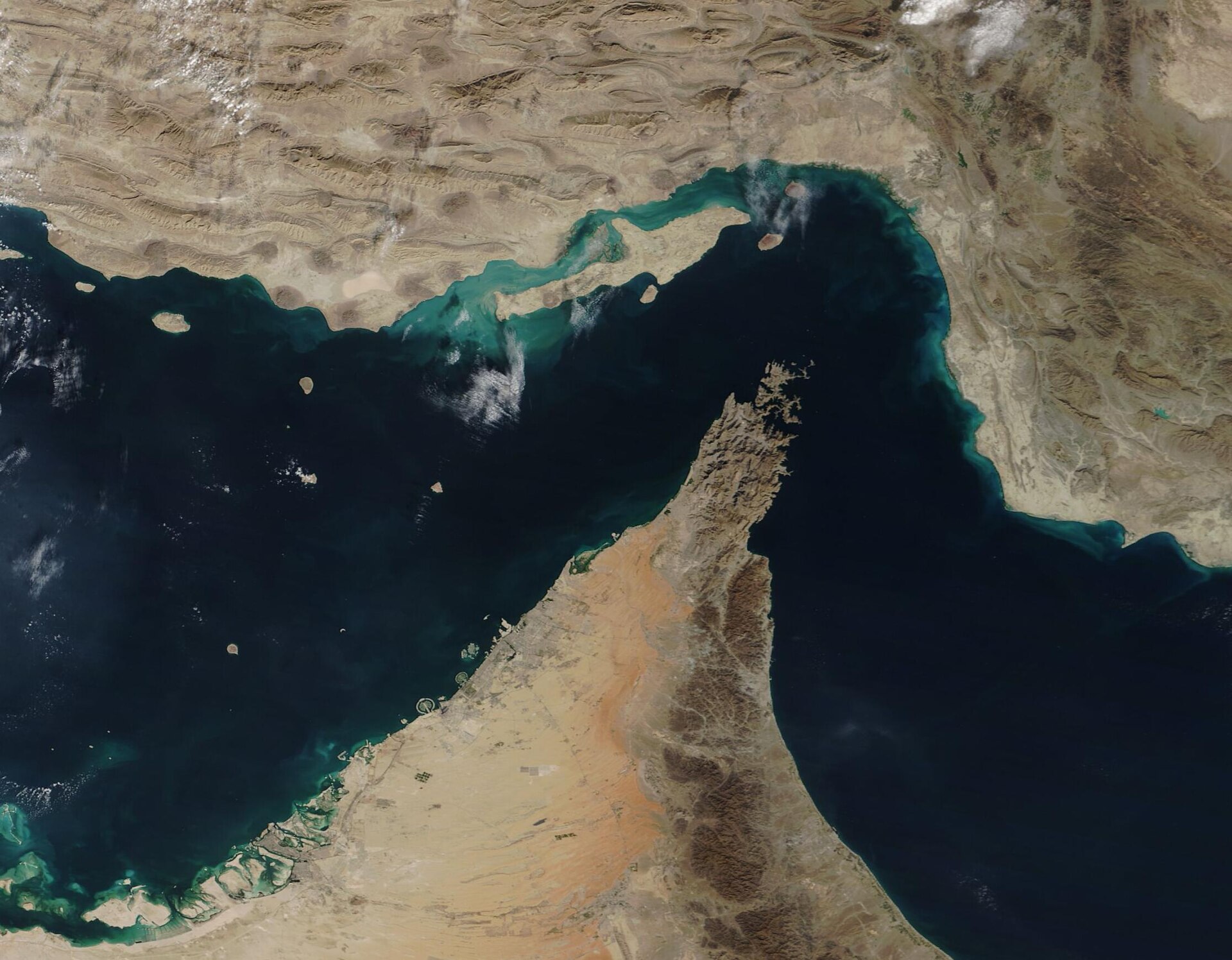
U.S. forces attacked Iran early Sunday after an Iranian strike set a Cyprus-flagged container ship ablaze in the Strait of Hormuz, forcing its crew to abandon the vessel, The Associated Press reported via NPR. U.S. Central Command said it struck roughly 140 targets — far more than in the prior two rounds — hitting missile and drone launch sites, ammunition dumps and communications equipment, and said the operation was intended to “degrade Iran’s ability to attack civilian mariners and commercial vessels freely transiting the strait.” Defense Secretary Pete Hegseth wrote online, “Iran made a poor choice. Now they pay.”
CENTCOM said the targeted ship suffered “significant engineroom damage” and that a civilian crew member was missing; the U.K. Maritime Trade Operations center said the vessel had been hugging the Omani shoreline, a route ships have used to avoid Iranian territorial waters. Iran’s Revolutionary Guard said multiple vessels had “disregarded our warnings,” and Tehran said the strait would remain closed “until further notice,” per the same reporting and The Washington Times. The exchange marks the sharpest escalation since the interim arrangement meant to wind down a war that began Feb. 28 frayed earlier this month.
Iran strikes Gulf states as energy stakes mount
Iran responded to the U.S. strikes with attacks that set off missile alerts across the Gulf. The United Arab Emirates warned the public of an incoming missile-and-drone attack, explosions were reported near Qatar, and Qatar’s military said it intercepted incoming fire; alerts also sounded in Bahrain, home to the U.S. Navy’s Fifth Fleet, according to the AP account. Iran’s new supreme leader, Ayatollah Mojtaba Khamenei, vowed that Iranians would avenge the death of his father in the war’s opening strikes. Two rounds of U.S. strikes last week killed at least 17 people and wounded 115, an Iranian Health Ministry spokesperson said.
The Strait of Hormuz is among the world’s most important energy chokepoints; roughly a fifth of globally traded oil and natural gas moved through it before the war, and analysts have warned that a prolonged closure risks a serious supply shock. The World Bank has documented sharp price swings tied to disruptions in the waterway. Oil had retreated from wartime highs near $120 a barrel, but a sustained closure would put renewed upward pressure on prices — a dynamic markets will test when trading resumes.
Reported Iranian plot to assassinate Trump; president warns of overwhelming response
Separately, Israel shared intelligence with the United States indicating Iran had discussed a plan to assassinate President Trump, CNN reported. CNN noted a dispute over specificity, with sources describing less a fully formed operational plot than talk among Tehran hard-liners. The president responded forcefully, writing on social media that “1,000 missiles are locked and loaded” and warning that Iran would be decimated if any attempt were carried out; Bloomberg reported his vow to “decimate” Iran. These are reported intelligence assessments and statements; independent verification of the underlying plot is limited, and readers should treat the threat characterization as contested.
Rep. Ro Khanna says he was detained by settlers and soldiers in the West Bank
Democratic Rep. Ro Khanna of California said he was blockaded for more than an hour in the occupied West Bank by armed Israeli settlers, with Israeli soldiers subsequently arriving on the scene, and was released after calls to the U.S. Embassy in Jerusalem, CNN reported. Khanna, who said he had been visiting a school damaged by settler violence, described armed men circling his group’s vehicles. The Israel Defense Forces disputed his account of soldiers’ role, saying troops dispatched to the scene dispersed civilians and reopened the road and “did not take part in blocking” it, according to PBS. The competing accounts remain unreconciled.
Former Qatari emir Sheikh Hamad bin Khalifa Al Thani dies at 74
Sheikh Hamad bin Khalifa Al Thani, the former emir who reshaped Qatar’s global profile before voluntarily handing power to his son in 2013, has died at 74, Qatar’s state news agency announced and multiple international outlets confirmed, including NBC News. Sheikh Hamad ruled from 1995 to 2013 and oversaw Qatar’s emergence as a diplomatic and investment power. His death comes as Qatar sits at the center of Gulf security concerns amid the Iran crisis.
Tomorrow’s Watch
Markets and oil. With Iran declaring the Strait of Hormuz closed “until further notice,” Monday’s market open will be an early gauge of how traders price the risk of a prolonged disruption to a corridor that carries roughly a fifth of the world’s traded oil and gas.
Press-freedom flashpoint on Wednesday. The four subpoenaed New York Times reporters are due to testify before a Manhattan grand jury on Wednesday — the same day U.S. Attorney Jay Clayton is scheduled to appear before the Senate Intelligence Committee for his confirmation hearing as director of national intelligence. Expect motions, statements from press-freedom groups, and questions from senators of both parties.
Graham succession and the Senate. Watch for tributes, funeral arrangements and the process for filling South Carolina’s Senate seat, along with the near-term impact on the chamber’s agenda and vote math at a moment of international crisis.
Iran escalation. Key questions include whether the interim framework to end the war can be salvaged, whether Gulf states are drawn further into the exchange, and what Iran’s new leadership does next.
Missouri recovery. Federal and state damage assessments continue, with attention on additional rainfall, river crests and any expansion of disaster assistance.
Reporting compiled from public records, official statements and independent wire and outlet coverage. Where accounts conflict or facts remain unverified, that is noted in the text. This briefing distinguishes allegations from findings; pending legal matters are identified as such.