

The Investigative Journal’s Afternoon Wire is a daily digest of the day’s developments across government, the courts, and international affairs. Every item is sourced to public records or primary documents. Allegations are distinguished from findings, and pending matters are flagged as such.
WASHINGTON — July 21, 2026. The renewed conflict between the United States and Iran continued to reach into American pocketbooks on Tuesday, as the national average price of gasoline moved back above $4 a gallon and the White House opened a new front in its trade agenda with steep tariffs on Canada. In the courts, a federal judge in Brooklyn closed one of the most consequential cartel prosecutions in a generation. Abroad, a widening set of maritime crises around the Arabian Peninsula threatened to compound the strain on global energy supplies.
Government
Trump imposes 50% tariffs on select Canadian goods under 1930 trade law
President Donald J. Trump on Monday signed three proclamations imposing an additional 50 percent duty on a range of Canadian imports, invoking Section 338 of the Tariff Act of 1930 — a rarely used provision that permits the president to respond to trade practices the administration characterizes as discriminatory. According to a White House fact sheet, the three actions target motor vehicles, alcoholic beverages, and dairy — sectors the administration says have faced unfair treatment in the Canadian market.
The proclamations state that the new duties apply to covered goods “regardless of whether a good originates under” the United States–Mexico–Canada Agreement, and carve out exemptions for energy, potash, fish, critical minerals, and products already subject to Section 232 tariffs. The measures take effect at 12:01 a.m. Eastern on August 19, 2026, according to the text of the motor-vehicle proclamation. U.S. Trade Representative Jamieson Greer said in a statement the actions were intended to “level the playing field” for American exporters.
Reporting by PBS News indicated the duties cover roughly $20 billion in annual imports, spanning products from milk and cream to hockey equipment. The move marks a further escalation in a trade dispute that has intensified through the summer. Canadian officials and affected industries are expected to weigh potential countermeasures before the August effective date, and the 30-day window leaves room for negotiation.
Gasoline moves back above $4 a gallon as Iran conflict strains fuel supplies
The national average price for a gallon of regular gasoline rose back above $4.00 on Monday, according to AAA, as renewed fighting between Washington and Tehran disrupted the flow of oil through the Strait of Hormuz. CNN reported the increase followed the collapse of an earlier truce and the resumption of U.S. military operations against Iran.
Figures compiled by AAA show sharp regional variation, with parts of the South near $3.60 a gallon while West Coast drivers pay above $5. Brent crude has pushed back above $80 a barrel amid the disruption. Records indicate prices had spiked toward $4.50 earlier in the conflict before easing on news of a first-stage agreement, only to climb again as that deal unraveled. Analysts cited in the reporting caution that further disruption to Persian Gulf shipping could keep upward pressure on pump prices into the late summer.
U.S. imposes additional sanctions on Sudan over chemical-weapons determination
A fresh tranche of U.S. sanctions on Sudan took effect Monday, formalized in a Federal Register notice issued under the Chemical and Biological Weapons Control and Warfare Elimination Act of 1991. The action builds on the State Department’s 2025 determination that the Government of Sudan used chemical weapons in 2024.
According to the notice, the measures oppose international-financial-institution lending to Sudan, tighten export controls, and bar Sudanese state-owned carriers from operating in U.S. airspace, with exemptions preserved for humanitarian and food assistance. The Sudanese government has publicly rejected the underlying allegation. This briefing notes that the specific claim regarding the deployment of chlorine remains disputed and is presented as an allegation contested by Khartoum, distinct from the U.S. government’s formal determination under the CBW Act.
Courts
Sinaloa Cartel co-founder ‘El Mayo’ Zambada sentenced to life, ordered to forfeit $15 billion
Ismael “El Mayo” Zambada García, a co-founder of the Sinaloa Cartel, was sentenced Monday to life in prison by U.S. District Judge Brian M. Cogan in federal court in Brooklyn, according to the U.S. Department of Justice. The court also ordered Zambada to forfeit $15 billion, a sum the department described as reflecting decades of trafficking proceeds.
Zambada pleaded guilty in August 2025 to engaging in a continuing criminal enterprise and to a racketeering charge, admitting a leadership role in an organization that moved large quantities of narcotics into the United States over decades, the U.S. Attorney’s Office for the Eastern District of New York said. U.S. Attorney Joseph Nocella Jr. announced the sentence alongside the Drug Enforcement Administration, the FBI, and Homeland Security Investigations.
CNN reported that the sentencing closes one of the most significant cartel prosecutions since the conviction of Joaquín “El Chapo” Guzmán. Records referenced at the hearing indicated declining cognitive health; the defense requested that his medical condition be weighed and that he be placed outside a maximum-security facility. Because sentencing concludes the trial-court phase, any challenge would proceed through the appellate process.
Appeals court pauses injunction on Postal Service mail-ballot rule
A three-judge panel of the U.S. Court of Appeals for the D.C. Circuit stayed a lower-court injunction that had blocked a U.S. Postal Service rule tied to a Trump executive order on election-mail procedures, The Hill reported. The panel found that the Postal Service had made a strong showing the challenge to the still-unfinished rule may not yet be ripe for review.
The ruling is procedural and does not resolve the underlying legality of the policy, which stems from a March 31, 2026 executive order on election integrity. As Democracy Docket noted, related litigation continues in other jurisdictions and the case remains pending. This briefing flags the matter as unresolved on the merits; the stay permits the rulemaking to proceed while the courts weigh the substantive questions.
International
U.S.–Iran conflict intensifies; naval blockade tightens around Strait of Hormuz
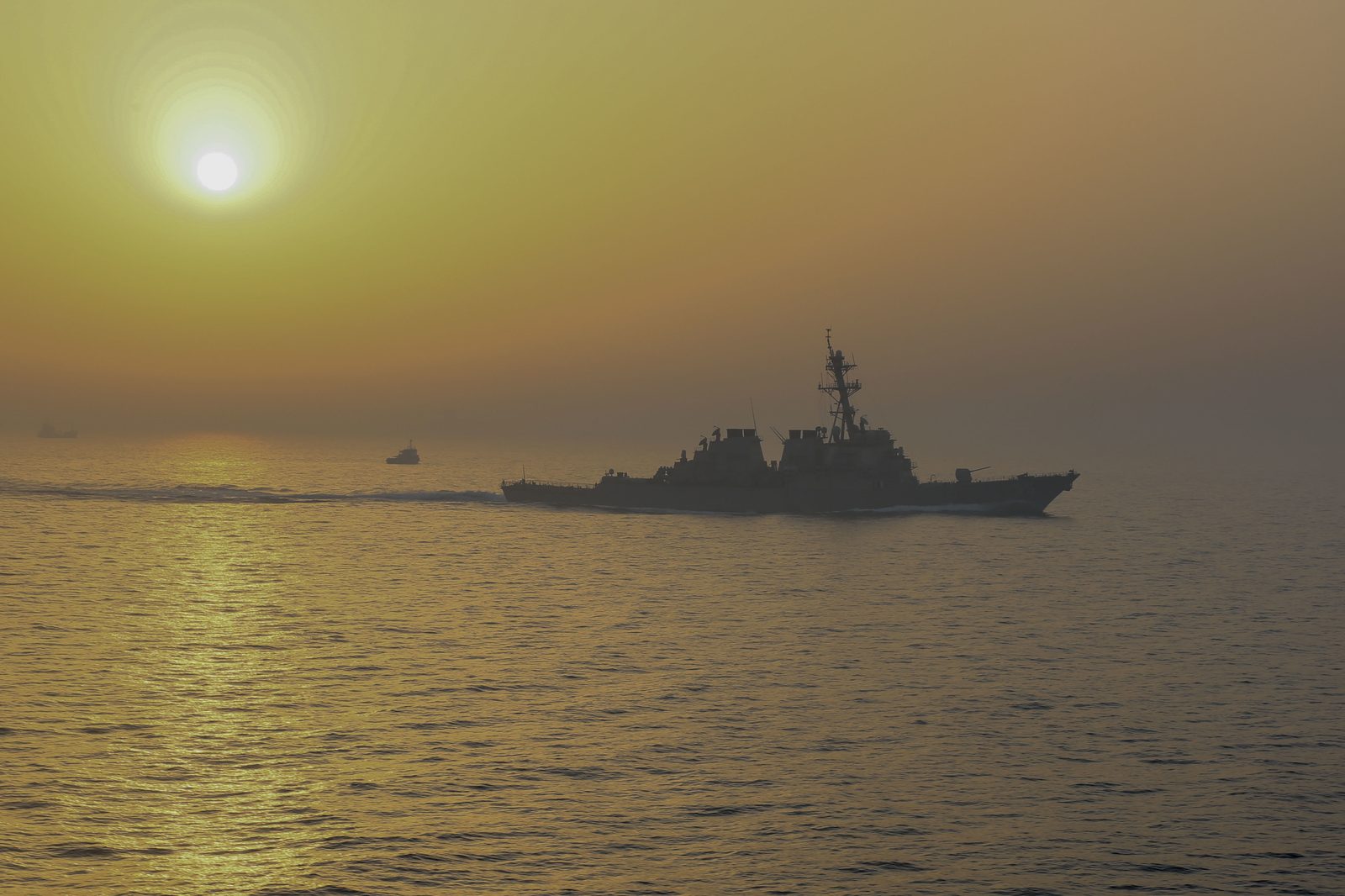
Military operations between the United States and Iran continued this week after the collapse of an earlier ceasefire, with U.S. Central Command maintaining a naval blockade of Iranian ports that took effect July 14, according to CNN’s live coverage. Iranian President Masoud Pezeshkian has described the situation as a “full-scale war,” and mediators Pakistan and Qatar have floated a 10-day ceasefire proposal aimed at reviving an earlier memorandum of understanding.
The disruption has sharply curtailed shipping through the Strait of Hormuz, a chokepoint for a substantial share of the world’s seaborne oil. The United Arab Emirates said Iranian missiles struck two tankers in Omani territorial waters, killing one crew member, CNN reported; Iran, in turn, claimed to have disabled two vessels it described as operating outside approved routes. Those competing claims originate with opposing parties to the conflict and could not be independently verified within the briefing window.
The confrontation is the principal driver behind the renewed climb in global oil prices and U.S. gasoline costs noted above. It has also drawn scrutiny on Capitol Hill, where lawmakers have advanced war-powers measures seeking to constrain further U.S. military involvement — a debate expected to continue this week.
Yemen’s Houthis declare naval blockade of Saudi Arabia
Yemen’s Iran-aligned Houthi movement said Monday it was imposing a naval blockade on Saudi Arabia, a step that threatens to widen the regional conflict and further disrupt energy shipments, CNBC reported. In a statement, the group said it was declaring “a maritime embargo against the criminal Saudi enemy … effective immediately,” framing the move as retaliation for what it called a siege of Yemen.
A full closure of the Bab el-Mandeb strait — the southern gateway to the Red Sea — could halt Saudi oil exports to Asia and reduce global oil supply by an estimated 7 percent, NBC News reported, citing analysts. Coming alongside the interruption of traffic through the Strait of Hormuz, the declaration raises the prospect that two of the region’s critical maritime corridors could be constricted at once. The practical scope of the blockade remained unclear on Tuesday.
Hamas names Khalil al-Hayya as overall leader
Hamas named Khalil al-Hayya as its overall leader on Monday, according to a statement from the group reported by Al-Monitor. Al-Hayya, the group’s exiled Gaza chief and a lead negotiator in ceasefire talks, prevailed in an internal ballot over former political leader Khaled Meshaal.
Al-Hayya succeeds Yahya Sinwar, who was killed in combat with Israeli forces in October 2024. As UPI reported, he has become an increasingly central figure since the deaths of Sinwar and former political chief Ismail Haniyeh. Analysts cited in the reporting cautioned that the selection could signal the organization’s posture in stalled negotiations over disarmament and a durable ceasefire, though the practical implications will take time to assess.
Tomorrow’s Watch
Several developments bear watching on Wednesday, July 22, and in the days immediately following:
Congressional oversight of Middle East policy. The House Foreign Affairs Committee has scheduled hearings for the week of July 22, including sessions before its Middle East and North Africa subcommittee, according to the committee’s hearings schedule. With U.S. forces engaged around the Strait of Hormuz, testimony could sharpen the ongoing debate over war-powers authority.
Oil and fuel markets. With gasoline back above $4 a gallon and two regional maritime corridors under threat, energy markets are likely to remain volatile. Watch for updated AAA pump-price data and Brent crude movements as the blockades develop.
Canada’s response to the new tariffs. The 50 percent duties do not take effect until August 19, leaving a 30-day window in which Ottawa may announce countermeasures or pursue negotiations. Statements from Canadian trade officials and industry groups are expected in the coming days.
Federal Reserve. The Federal Open Market Committee’s next scheduled meeting approaches at the end of the month, per the Fed’s published calendar. Rising energy costs add a fresh variable to the inflation picture policymakers will weigh.
The Afternoon Wire will return tomorrow. Corrections and right-of-reply requests may be submitted to the newsroom; parties named in connection with pending matters are entitled to respond, and this briefing will note any material updates.