

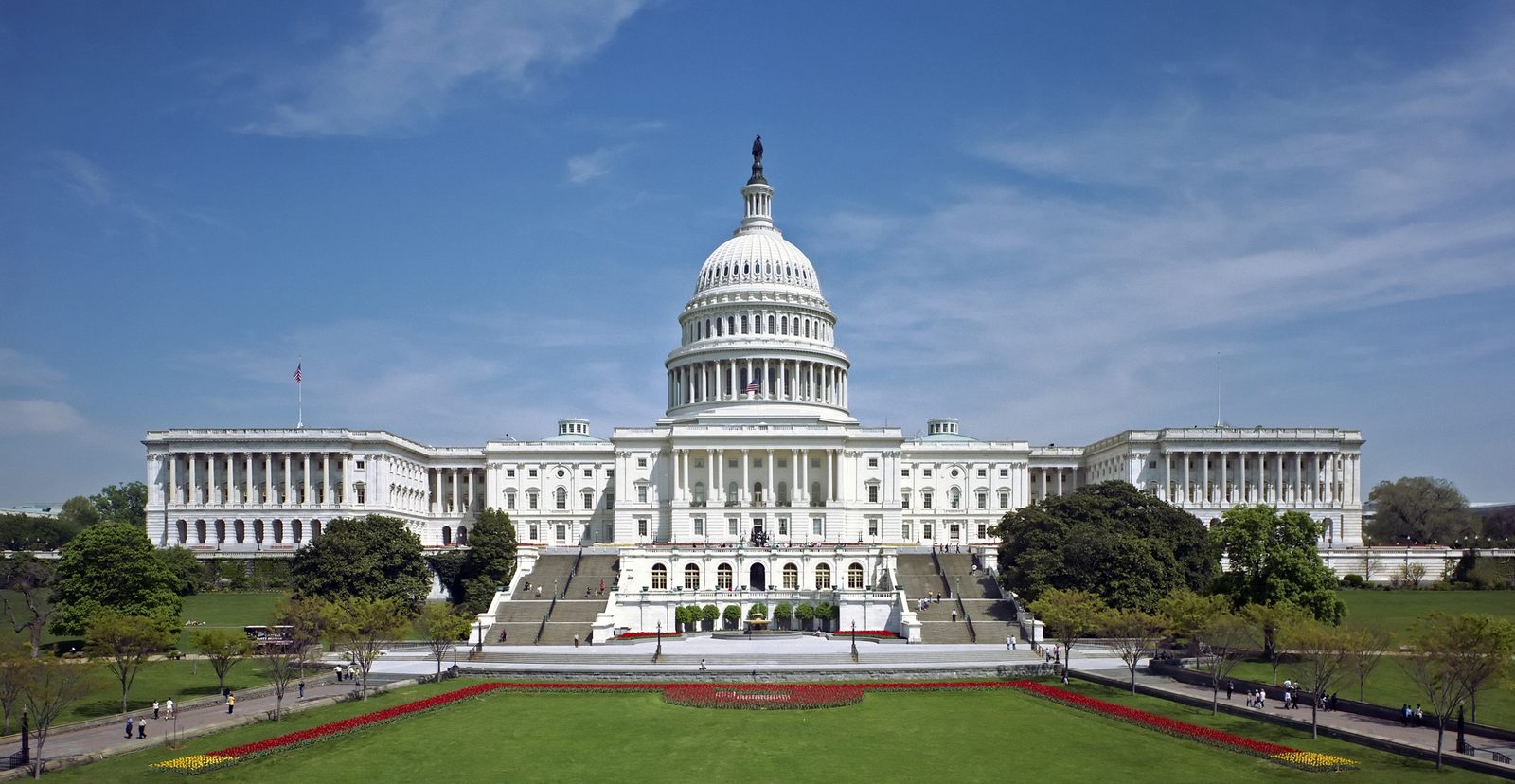
UPDATE (Aug. 7, late afternoon): The Senate passed H.R. 5334, the vehicle for the Sanctioning Russia Act of 2026, by a vote of 86–11, and confirmed the 74-nomination en bloc package under S.Res. 817 by 51–47. The chamber then invoked cloture on the Collins substitute to H.R. 6500, the stopgap funding vehicle. The sanctions measure now returns to the House, where its path remains unsettled.
WASHINGTON — The Afternoon Wire is The Investigative Journal’s daily digest of the developments that matter across government, the courts, and international affairs. Today: the economy posts its first monthly job losses in more than a year, the Senate works through a stack of nominations and a major Russia sanctions vehicle, immigration policy takes new turns at both ends of Pennsylvania Avenue, and a framework for reopening the Strait of Hormuz begins to take shape.
Government
Payrolls post surprise 23,000-job decline; unemployment dips for the wrong reason
The U.S. economy unexpectedly shed 23,000 nonfarm jobs in July, according to Employment Situation data released Friday morning by the Bureau of Labor Statistics — far below the roughly 80,000-job gain economists had forecast, CNN Business reported, and the first outright monthly payroll decline recorded since mid-2025. The unemployment rate ticked down to 4.1 percent, but the improvement came with an asterisk: labor force participation slipped to 61.4 percent from 61.5 percent, per Yahoo Finance’s live coverage — a rate falling because fewer people are in the workforce, not because hiring strengthened.
Revisions compounded the miss. June’s gain, initially reported at 57,000, was cut to roughly 20,000, according to Friday’s coverage — and the prior BLS release had already trimmed a combined 74,000 from April and May. Reporting attributed employer caution to a stack of headwinds: an aging workforce, rapid AI adoption, elevated oil prices, and uncertainty tied to the war with Iran. Private-sector data had pointed the same direction: payroll processor ADP reported Wednesday that private employers added just 44,000 workers in July. Markets, for their part, treated bad news as good news on rates: stock futures rose after the release as traders bet the weak print would keep the Federal Reserve from hiking, per CNBC’s market blog — a notable turn after oil-driven inflation had put a hike on the table.
Senate races through 74 nominations, tees up Russia sanctions votes
The Senate convened at 10 a.m. Friday for a working session capping a busy week. According to the Senate Daily Press gallery schedule, the chamber resumed post-cloture consideration of 74 nominations en bloc under the terms of S.Res. 817, with a series of four roll call votes beginning at 11:30 a.m., including confirmation of the en bloc package.
The chamber then turns to legislative session on H.R. 5334, the vehicle for the Sanctioning Russia Act of 2026, sponsored in substance by Sen. Lindsey Graham. The Senate voted 86-12 late last month to advance the measure, which records indicate would mandate sanctions on senior Russian officials, corporations, and financial institutions until Moscow ends hostilities against Ukraine, and would authorize steep tariffs — up to 100 percent — on countries that continue large-scale purchases of Russian energy. A compromise amendment framework described in Bloomberg Government’s bill analysis also targets Iran’s energy revenues. Trade-press reporting suggests the bill’s path in the House remains unsettled even with a Senate supermajority behind it.
White House signs orders on “birth tourism” and citizenship
President Trump on Thursday signed an executive order titled “Ending Birth Tourism,” directing the State Department and the Department of Homeland Security to deny visas to, and permanently bar entry of, foreign nationals found to be traveling to the United States on nonimmigrant visas for the purpose of giving birth on U.S. soil. The order delegates the President’s authority under section 215(a) of the Immigration and Nationality Act to both secretaries and authorizes action against operators who facilitate such travel, while preserving humanitarian and national-interest exemptions.
A companion order, “Continuing to Protect the Meaning and Value of American Citizenship,” was signed the same day, according to the White House’s presidential actions log. The text frames citizenship as “not a commodity to be acquired through calculated exploitation and evasion of the immigration laws.” Implementation will run through agency rulemaking and guidance, and — as with much of the administration’s immigration agenda — the orders are likely to draw court tests; no challenge had been docketed publicly as of this writing.
Fauci contempt referral heads to the Justice Department
The Senate Homeland Security Committee voted 8-5 along party lines Thursday to hold Dr. Anthony Fauci in contempt of Congress after he declined, citing the Fifth Amendment, to answer questions at a hearing on the origins of the COVID-19 pandemic. Committee Chairman Rand Paul said the referral would be transmitted directly to the attorney general rather than through a full Senate vote, a procedural route that legal analysts told NPR is likely to face challenge.
Fauci’s counsel called the vote “a crude political stunt intended to punish Dr. Fauci for exercising his constitutional rights,” according to The Washington Post. It bears noting that a contempt referral is an allegation, not a finding of wrongdoing; any prosecution decision rests with the Justice Department, and reporting indicates a 2025 presidential pardon covering Fauci’s prior government service would not reach conduct occurring after January 2025. The full committee proceedings are available via C-SPAN.
Blackburn cruises in Tennessee; general election set
U.S. Sen. Marsha Blackburn won Tennessee’s Republican gubernatorial primary Thursday, taking roughly 43.6 percent of the vote against Rep. John Rose (32.9 percent) and state Rep. Monty Fritts (23.5 percent), according to NBC News’ results tally. Memphis Democrat Jerri Green won her party’s nomination with about 69 percent.
The result sets up a November contest in a state Republicans have dominated statewide for more than a decade, and — should Blackburn win — a Senate vacancy that would ripple into 2027. Full county-level results and candidate lists are compiled by Ballotpedia.
Courts
Sotomayor declines to halt $656 million terrorism judgment against PLO
Justice Sonia Sotomayor this week refused to pause enforcement of a $656 million judgment against the Palestine Liberation Organization and the Palestinian Authority in litigation brought under the Anti-Terrorism Act by American victims of attacks in and around Jerusalem in the early 2000s that killed 33 people, PBS NewsHour reported, citing the wire account of the order.
Court filings indicate the PLO and PA argued that immediate payment could destabilize government services in the West Bank while their appeal of the judgment’s reinstatement proceeds. The denial follows the Supreme Court’s 2025 ruling upholding the jurisdictional statute that allowed the case to go forward, and it moves plaintiffs — after more than two decades of litigation — a step closer to collecting, though coverage notes further appellate proceedings remain pending.
Judge rules State Department’s green-card “freeze” unlawful as applied
U.S. District Judge Amit Mehta of the District of Columbia held that the State Department’s January 2026 policy directing consular officers to refuse certain immigrant-visa applications — while the government developed new screening for whether applicants might become dependent on public benefits — exceeds the department’s authority under the Immigration and Nationality Act, Bloomberg Law reported. The ruling, issued in a memorandum opinion, ran in favor of an individual plaintiff, a Brazilian EB-5 investor whose application was halted.
The opinion reasons that Congress assigned the public-charge determination to consular officers on an individualized basis, not to a categorical departmental freeze. Filings indicate the policy had paused mostly family-based applications from a list of roughly 75 countries. The government’s response options, including appeal, remained open as of this writing; the decision’s immediate effect is limited to the named plaintiff, according to practitioner analysis.
Somalia TPS termination stays on ice pending constitutional claims
U.S. District Judge Allison Burroughs entered an administrative stay late last week blocking, for now, the administration’s termination of Temporary Protected Status for Somali nationals, after plaintiffs filed an amended complaint alleging Fifth Amendment due-process and equal-protection violations, Fox News reported. The plaintiffs’ position is set out in a release from their counsel.
The order tests the boundaries of the Supreme Court’s June decision in Mullin v. Doe, which narrowed lower courts’ ability to block TPS terminations on non-constitutional grounds. DHS’s top lawyer characterized the new stay as “defiance, obstruction, and delay,” per the Fox News account, while plaintiffs contend constitutional claims fall outside the high court’s limits. The dispute is pending, and no court has ruled on the merits of the constitutional claims.
International
A Hormuz framework takes shape — on Iran’s terms as much as Washington’s
Iran and Oman have agreed on the geographic coordinates of proposed inbound and outbound commercial shipping routes through the Strait of Hormuz, Bloomberg reported, the clearest sign yet that the strait — impassable since fighting between the United States and Iran resumed July 8 — could reopen to tanker traffic. Reports indicate the framework contemplates a joint coordination center for maritime traffic, with the International Maritime Organization and the United States expected to be involved in any formal announcement.
Tehran has conditioned an actual reopening on the removal of the U.S. naval blockade and a halt to attacks on Iranian infrastructure, according to Euronews, while President Trump has said publicly that a Hormuz deal would precede a nuclear agreement, per CNBC. The path remains volatile: overnight Thursday, an Iranian semi-official news agency claimed explosions in the strait were linked to Iran intercepting “hostile targets,” and recent reporting suggests Tehran may seek to exclude U.S. and Israeli vessels from any reopened corridor, according to Yahoo Finance — claims that could not be independently verified. The human cost of the war that began February 28 continues to mount: Pentagon casualty data cited by CNN records 18 U.S. troops killed and 687 wounded to date. Oil markets have priced in cautious optimism, with Brent trading near $80.
Houthi strikes kill dozens of Yemeni government troops in deadliest day in years
Missile and drone attacks by the Iran-backed Houthis on Thursday struck camps of Yemen’s internationally recognized government in Marib and Hadramout provinces, killing at least 30 troops and wounding at least 50, Yemeni officials told NBC News; one military source put the death toll as high as 58. A Houthi spokesman said the strikes responded to a buildup of Saudi-backed forces in the country’s east.
The attacks amount to the most serious rupture of Yemen’s de facto truce since 2022 and spilled across the Saudi border, where officials said 11 civilians were wounded in Najran, according to The Washington Post. The escalation underscores how the U.S.-Iran war has activated Tehran-aligned fronts across the region — a dynamic that complicates both the Hormuz talks and Gulf states’ efforts to stay out of the line of fire.
Zelensky’s Belgrade gambit
Ukrainian President Volodymyr Zelensky will travel to Serbia on Saturday for his first visit of his presidency — and the first by a Ukrainian head of state since Russia’s 2022 full-scale invasion — to meet President Aleksandar Vučić, European Western Balkans reported, citing the Serbian presidency’s announcement. The agenda reportedly covers EU accession paths, economic ties, and energy.
The visit puts Vučić’s long balancing act between Moscow and the West under a spotlight: Serbia has refused to join sanctions on Russia even as it pursues EU membership, as IBTimes UK notes. A senior Ukrainian official described the trip’s symbolism bluntly in remarks relayed by regional media. Whether the optics translate into policy movement — on sanctions, reconstruction contracts, or energy transit — is the question to watch.
Tomorrow’s Watch
Saturday, August 8 brings three items worth tracking. First, Hawaii holds its all-mail primary election, with ballots due by 7 p.m. local time; nominees for governor, lieutenant governor, congressional seats, and legislative races will be set, per the state Office of Elections. Second, the Zelensky–Vučić meeting in Belgrade, detailed above, could produce announcements on energy or Ukraine’s reconstruction — or simply a photograph Moscow would rather not see. Third, watch for a possible formal announcement on the Strait of Hormuz transit framework; reporting suggests the IMO and Washington would be party to any rollout, and officials on both sides have gestured at a deal within days.
In Washington, the Senate’s Friday votes on H.R. 5334 will clarify the sanction bill’s timetable, though its House path remains unsettled heading into the weekend. And the next major economic data point arrives August 28, when BLS publishes its preliminary benchmark revision to establishment survey data — a release that, records suggest, could meaningfully reshape the picture of 2026 hiring.
The Afternoon Wire is compiled from public records, official statements, and on-the-record reporting. All claims are attributed to linked sources; matters described as pending are unresolved as of publication time.