

The Investigative Journal’s weekly review of what corporate America told regulators — and what those filings reveal. All claims below are drawn from public SEC records and linked source documents.
The week of August 17 belonged to Form 13-F. Institutional managers overseeing more than $100 million in U.S. equities faced an August 14 deadline to disclose their second-quarter holdings, and the filings that landed on SEC EDGAR redrew the map of who owns what. Berkshire Hathaway’s quarterly report — showing an Alphabet stake that filings indicate now approaches $28.2 billion — headlined the season. But the week’s disclosures ran well beyond 13-Fs: shareholders of a company being acquired by a French advertising giant voted overwhelmingly against its executives’ deal-related pay packages, a $70 billion apartment landlord was born via 8-K, and insiders at two companies trading near record highs reported selling tens of millions of dollars in stock.
Berkshire’s Alphabet surge: a $28 billion signal from Omaha
Berkshire Hathaway’s Form 13F-HR filed August 14 reported a U.S. equity portfolio of approximately $299.3 billion across just 29 positions — a notably concentrated book compared with the 40-plus positions the company reported through most of 2025, according to filing histories compiled by 13f.info. The headline move: Berkshire’s Alphabet Class A holding grew to 78.79 million shares from 54.25 million, a roughly 45 percent increase, while its smaller Class C position grew more than sevenfold, according to an analysis by Hedge Fund Alpha. Reporting on the filing indicates the combined Alphabet stake is now worth approximately $28.2 billion — about 9.4 percent of the portfolio, making it Berkshire’s fourth-largest disclosed holding behind Apple (22.0 percent), American Express (17.1 percent) and Coca-Cola (10.9 percent).
The filing — among the first quarterly portfolio disclosures since Greg Abel succeeded Warren Buffett as chief executive — also documents a continued retreat from financials. Filings indicate Berkshire cut its Bank of America position by roughly 30.2 million shares and reduced its Capital One stake by more than half. For a portfolio that held Bank of America as its second-largest position as recently as 2024, the rotation from banks into a mega-cap technology platform is a strategic statement that 13-F watchers will parse for quarters to come. A caveat the filings themselves impose: 13-Fs disclose only U.S.-listed long equity positions as of quarter-end, with a 45-day lag, and reveal nothing about cash, short positions or subsequent trades. Other marquee filers met the same deadline — Hedge Fund Alpha’s roundup reports that Stanley Druckenmiller’s Duquesne opened new positions including Bitdeer and Hyperliquid, and that Bill Ackman and Carl Icahn filed substantial position changes of their own.
LiveRamp shareholders bless the merger, reject the executives’ deal pay
LiveRamp Holdings’ Form 8-K filed August 17 reports a special-meeting result that should get more attention than it will. Shareholders of the San Francisco data-connectivity firm overwhelmingly adopted the May 16, 2026 merger agreement under which MMS USA Holdings — an affiliate of Paris-based Publicis Groupe — will acquire the company: 51,578,202 votes for, just 60,073 against. But in a separate advisory vote, the same shareholders rejected the merger-related compensation packages for LiveRamp’s named executive officers by a lopsided margin — 44,262,875 votes against versus 7,304,002 in favor, or roughly 86 percent of votes cast in opposition.
The split verdict is striking because the same meeting approved LiveRamp’s regular say-on-pay proposal with about 98 percent support. Shareholders, in other words, appear to have no quarrel with ongoing pay practices — only with what executives stand to collect because of the deal. For context, average say-on-pay support across the 2026 proxy season ran about 91 percent, according to Corporate Board Member, which makes an 86 percent rejection a significant outlier. The vote is non-binding, and the filing does not indicate any change to the payouts; the sums at issue are detailed in the company’s July 6, 2026 proxy statement referenced in the 8-K. Whether LiveRamp’s board responds to the rebuke before closing is a disclosure worth watching.
A $70 billion landlord arrives by 8-K
The largest single corporate event disclosed this week came from Equity Residential, which reported in a Form 8-K that its merger of equals with AvalonBay Communities closed on August 17, creating Vivmark Residential (NYSE: VMRK). According to the filing, each AvalonBay share converted into 2.793 Vivmark shares, with the company issuing approximately 400 million new common shares; former AvalonBay holders own about 51 percent of the combined company and former Equity Residential holders about 49 percent on a fully diluted basis.
The disclosed scale is remarkable: an equity market capitalization of approximately $51 billion, an enterprise value of approximately $70 billion, more than 184,000 rental apartments, roughly 11,100 units under construction across 33 communities, and a $4.2 billion development-rights pipeline covering about 9,900 future homes. The filing indicates Benjamin Schall serves as CEO and Stephen Sterrett as board chairman, with a planned initial annualized dividend of $2.81 per share and dual A3/A- credit ratings. A residential landlord of this size — among the largest in U.S. history — will concentrate ownership in the apartment markets where the two REITs overlap, and how regulators and tenants’ advocates respond to that concentration is a story TIJ intends to follow.
Oasis crosses 6.5 percent of Vail Resorts — on a “passive” schedule
Hong Kong-based Oasis Management Company and its founder Seth Fischer disclosed beneficial ownership of 2,329,018 shares of Vail Resorts — 6.5 percent of the ski operator’s 35.6 million shares outstanding — in a Schedule 13G/A filed August 14. At Vail’s roughly $5.3 billion market value, the disclosed position is worth in the neighborhood of $350 million. Notably, the filing is a 13G — the schedule reserved for holders certifying their shares are held “in the ordinary course of business” and not to change or influence control — rather than an activist’s Schedule 13D.
That certification sits awkwardly next to press reports. Ski-industry outlet SnowBrains reports that Oasis is considering a proxy campaign that could target Vail’s board and push for the sale of some mountain properties. Those reported intentions remain unverified, and Oasis’s own filing asserts passive intent. The mechanical tell to watch: if Oasis’s purpose changes, securities rules would require it to convert to a Schedule 13D, a filing that typically lands within days of an activist decision. Vail, for its part, added MGM Resorts CEO Bill Hornbuckle to its board on July 30, according to company announcements — board composition moves that take on new significance with a 6.5 percent holder in the wings.
KLA’s chief executive sells $17.4 million under a trading plan
KLA Corp. President and CEO Richard P. Wallace reported selling 87,568 shares of the semiconductor-equipment maker at $198.95 per share — approximately $17.4 million — in a Form 4 filed August 12. The filing states the August 11 sale was executed under a Rule 10b5-1 trading plan adopted November 19, 2025, the safe-harbor mechanism that lets insiders pre-schedule trades to rebut any inference of trading on inside information. Post-sale, Wallace still reports direct holdings of 778,943 shares, including 386,970 tied to unvested restricted stock units — a retained position worth roughly $155 million at the sale price.
Context matters on both sides. The share count reflects KLA’s ten-for-one stock split, announced in May 2026 according to company releases, and the company’s stock ranks among the top-60 U.S. companies by market value at roughly $272 billion. A single pre-planned sale amounting to about 10 percent of the CEO’s direct holdings is within the range governance analysts generally consider unremarkable — 10b5-1 sales by technology executives have been routine through the sector’s run — but the cadence of KLA insider filings (three Form 4s and two Form 144s between August 11 and 13, per EDGAR-derived trackers) suggests scheduled selling windows are active across the executive suite while the stock trades near highs.
Brinker insiders sell into a record Chili’s run
A cluster of insider filings at Brinker International, parent of Chili’s, drew notice this week. Chief Legal Officer Daniel S. Fuller reported disposing of 13,481 shares worth about $3.3 million across August 13 and August 17, per a Form 4 — though the filing indicates 5,480 of those shares were withheld to cover taxes on a vesting award and 2,200 were gifted, leaving open-market sales as only part of the total. The Motley Fool reports that several other Brinker executives — including the CEO, chief marketing officer and operating chief — filed sales in the same window, timed around a common August 13 vesting date.
The selling follows a roughly 50 percent one-year total return for the stock and a fiscal 2026 in which Chili’s closed its fifth consecutive year of same-store sales growth — a cumulative run the company pegs at 71 percent, with fiscal fourth-quarter company sales of $1.52 billion. Records suggest the pattern here is vest-and-sell mechanics rather than coordinated conviction selling: tax withholding on same-day vesting is non-discretionary, and clustered filings around vesting dates are the norm at large public companies. Still, executives electing to sell the discretionary remainder with shares at records is a data point shareholders are entitled to weigh — which is precisely why Section 16 requires these filings within two business days.
What warrants a closer look
Three threads from this week’s filings merit deeper TIJ investigation. First, the Oasis–Vail situation: a passive 13G certification coexisting with reported proxy-fight preparations is exactly the fact pattern that has previously drawn SEC attention to 13G/13D boundaries, and any amendment converting to Schedule 13D would be immediately consequential for a company whose shares sit well below their 2021 highs. Second, LiveRamp’s rejected deal-pay vote: the merger proxy’s golden-parachute tables deserve a line-by-line read before closing, and the board’s response — if any — will say much about how seriously advisory votes are taken when a company is on its way out of public markets. Third, Vivmark: the combination of the two largest coastal apartment REITs closed with little fanfare, and the market-by-market concentration data buried in the merger documents deserves scrutiny that antitrust reviewers may or may not have given it.
Sourcing note: This roundup is based on documents filed with the U.S. Securities and Exchange Commission and linked press reports; figures are as stated in the cited filings. Companies and individuals referenced are invited to submit responses or corrections to The Investigative Journal. Nothing here is investment advice.
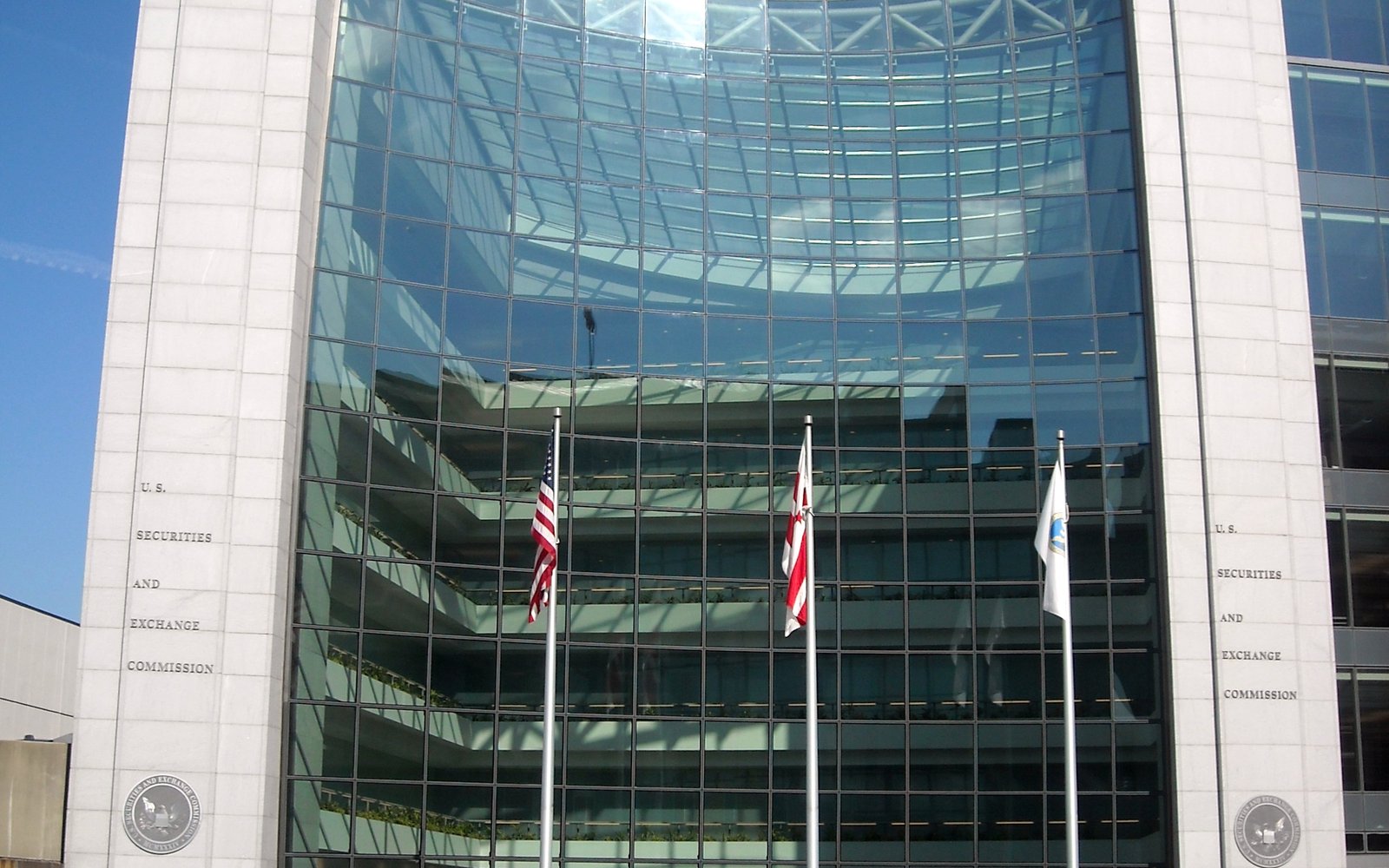
Image: U.S. Securities and Exchange Commission headquarters, Washington, D.C. Photo by AgnosticPreachersKid via Wikimedia Commons, CC BY-SA 3.0.