

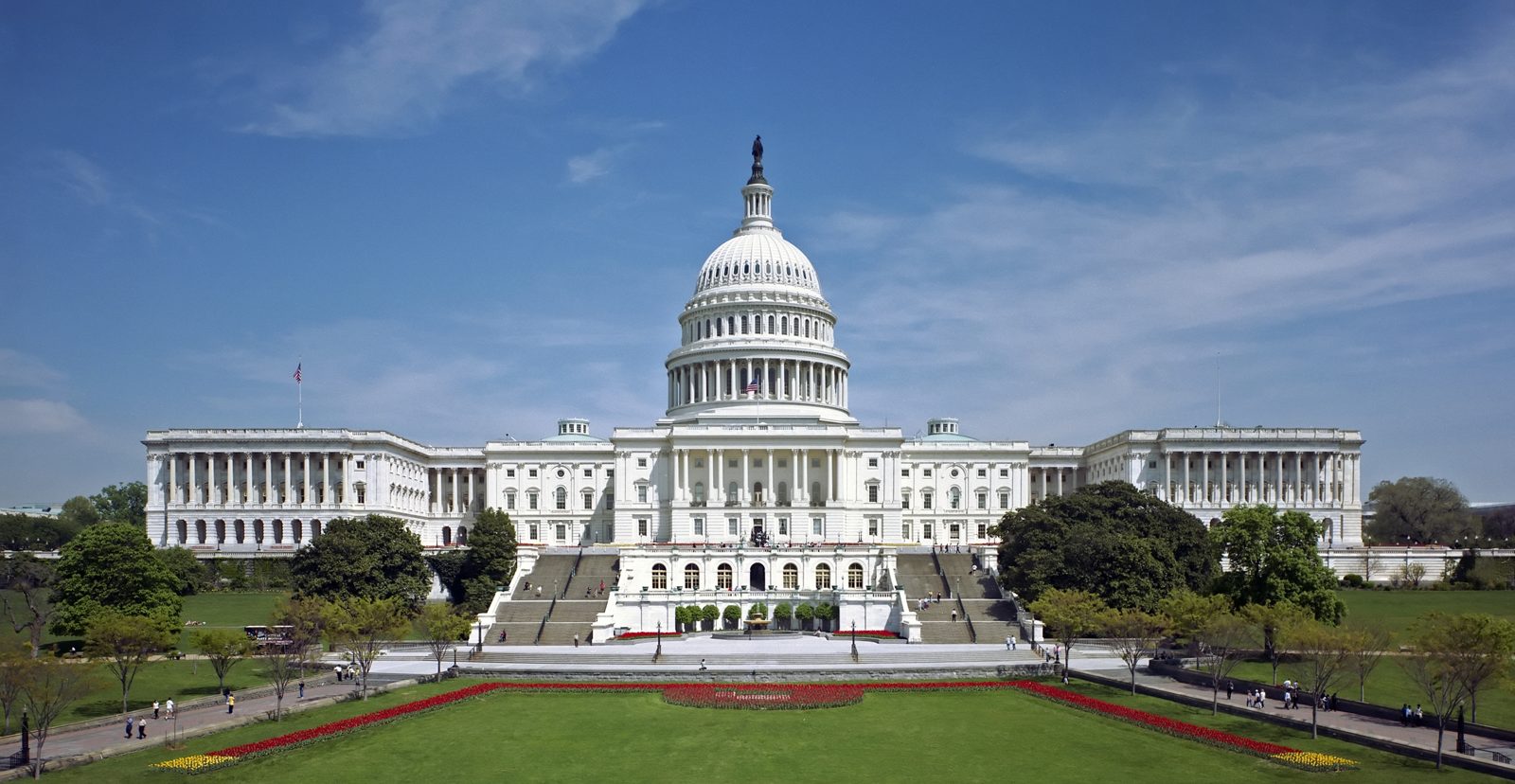
Both chambers of Congress return to legislative business today with the usual September shutdown drama conspicuously absent. With government funding already locked in through December 11, the week’s docket is instead dominated by foreign policy and financial regulation: the House is scheduled to take up the Senate-amended Russia and Iran sanctions package named for the late Sen. Lindsey Graham, while the Senate faces a closely watched procedural vote on the first major digital-asset market structure bill to reach its floor. Below, The Investigative Journal’s daily digest of floor action, committee activity, and fiscal data — with links to the underlying public records throughout.
House set to act on Graham-named Russia and Iran sanctions package
The top item on the House calendar this week is the Senate amendment to H.R. 5334, the Lindsey O. Graham Sanctioning Russia and Iran Act of 2026, which the Majority Leader’s weekly schedule lists for consideration pursuant to a rule. The Senate passed the amended bill in early August by a broad bipartisan margin — 86-11, according to reporting compiled from the Senate’s roll call vote records — after using the House-passed measure as the vehicle for the sanctions package. The Rules Committee posting and the engrossed Senate amendment show the sanctions provisions as Division A, with the bill’s original educator tax deduction language retained as Division B.
According to the bill text, the package would expand sanctions authorities targeting Russian government officials, financial institutions, energy activity, sovereign debt, and uranium imports, and would authorize duties on countries that purchase Russian-origin oil or natural gas or facilitate sanctions evasion. It would also extend the Iran Sanctions Act of 1996 through 2031. The measure carries the name of Sen. Lindsey Graham of South Carolina, its longtime champion, who died in July at 71. Roll Call reported in late July on the Senate’s deliberations over how to move the package; House passage of the Senate amendment would clear the measure for the president’s desk.
The schedule also notes that H. Con. Res. 93, a resolution sponsored by Rep. Seth Moulton (D-Mass.) directing the removal of U.S. Armed Forces from hostilities with Iran pursuant to the War Powers Resolution, “may be considered” later in the week — a floor debate worth watching alongside the sanctions vote.
Senate tees up test vote on crypto market-structure bill
The Senate convenes at 3:00 p.m. today, and the cloture motion on the motion to proceed to H.R. 3633, the Digital Asset Market Clarity Act, ripens Tuesday at 2:15 p.m., according to the Senate Daily Press Gallery. The bill, which cleared the House with bipartisan support in July 2025 per its Congress.gov history, would divide regulatory jurisdiction over digital assets between the Securities and Exchange Commission and the Commodity Futures Trading Commission.
Tuesday’s vote is procedural — cloture on the motion to proceed requires 60 votes, meaning Republicans, who hold 53 seats, would need at least seven Democratic or independent votes to open debate. The law firm Paul Hastings’ crypto policy tracker notes that the CFTC has signaled it will advance digital-asset rulemaking regardless of the bill’s fate — a reminder that the regulatory landscape is moving whether or not Congress acts this year. A failed cloture vote would likely push comprehensive market-structure legislation past the midterm elections.
No shutdown cliff: funding runs through December 11, but FY27 bills lag
For the first time in years, mid-September arrives without a government funding crisis. President Trump signed H.R. 6500, the Continuing Appropriations and Extensions Act, 2027, into law this month, extending funding through December 11, 2026. The House gave final approval to the Senate-amended measure on September 1 by a 370-48 vote, according to industry summaries of the roll call, after the Senate adopted its version 90-6 in August. Appropriations Chairman Tom Cole, in floor remarks, said the stopgap “gives the nation, and our constituents, certainty” while full-year bills are completed.
The Congressional Budget Office’s estimate for the measure details the extensions included alongside the continuing appropriations. The remaining work is substantial: the Congress.gov appropriations status table indicates the House Appropriations Committee has reported all of its FY2027 bills, but only three have passed the full House. The December 11 date now functions as the real deadline for either an omnibus, a package of minibuses, or another stopgap — and the lame-duck timing, five weeks after the midterm elections, will shape the negotiating leverage on both sides.
CBO: deficit reaches $2.0 trillion with one month left in the fiscal year
The Congressional Budget Office’s Monthly Budget Review for August 2026 estimates the federal deficit totaled $2.0 trillion over the first 11 months of fiscal year 2026, with an estimated $168 billion deficit in August alone. CBO data show the 11-month shortfall was $6 billion smaller than the same period last year — but adjusted for timing shifts in federal payments, the deficit would have been $82 billion larger than the prior-year figure, according to the agency.
The report indicates outlays rose about 2 percent, roughly $147 billion, driven by mandatory programs and interest on the debt, while receipts increased $154 billion. The Committee for a Responsible Federal Budget’s analysis of the CBO data underscores that interest costs remain among the fastest-growing categories of federal spending. CBO’s September review, due next month, will close the books on FY2026 — a benchmark figure that will frame the December appropriations endgame.
Water resources authorization anchors a heavy suspension calendar
Beginning Tuesday, the House takes up H.R. 9497, the Water Resources Development Act of 2026, under suspension of the rules — the biennial authorization for Army Corps of Engineers flood control, navigation, and ecosystem projects, and traditionally one of the most reliably bipartisan infrastructure vehicles in Congress. Suspension bills require a two-thirds majority, so passage would signal the bill’s broad support heading to the Senate.
The week’s suspension calendar, posted on the Majority Leader’s schedule, also includes a Ways and Means package of tax-administration bills: the Protecting Taxpayers from Ghost Preparers Act, the Tax Relief for Fraud Victims Act, the AI Tax Integrity Act of 2026, and the End Tax Penalties on American Hostages Act. Monday’s slate features H.R. 10159, conveying Fort Bragg land to North Carolina for a state veterans’ home, and Sen. Joni Ernst’s Billion Dollar Boondoggle Act, which would require annual reporting on federal projects running at least $1 billion over budget or five years behind schedule.
House to vote on overturning EPA approvals of California vessel rules
Under a rule this week, the House considers two Congressional Review Act resolutions — H.J. Res. 210 and H.J. Res. 213 — disapproving EPA decisions related to California’s nonroad engine pollution standards for ocean-going vessels at berth and commercial harbor craft. The resolutions, sponsored by Reps. Fong and Gallagher respectively per the schedule listing, extend the running dispute over California’s authority to set emissions rules with national ripple effects for shipping and port operations.
The same rule package covers H.R. 9576, the National Fraud Enforcement Division Act of 2026, and H.R. 10326, the Preventing Rip-offs and Obtaining Oversight of Funds Act — two Judiciary Committee measures aimed at federal fraud enforcement and funds oversight. Roll call results for all rule-bill votes will post to the House Clerk’s vote database as they occur.
Oversight Committee turns to homelessness spending and drug pricing Tuesday
The House Oversight and Government Reform Committee has two hearings noticed for Tuesday, September 15. At 10:00 a.m., a hearing titled “Unequal Treatment: Addressing the Drivers of Unaffordability for Oral Chemotherapy” examines why patient costs for oral cancer drugs diverge from infused treatments. At 2:00 p.m., the committee convenes “Fixing Fraud and Failure in Federally Funded Homelessness Services” — a session squarely aimed at accountability for federal grant dollars flowing through homelessness programs.
Witness lists and prepared testimony typically post to the committee’s hearing pages ahead of the gavel; both sessions will stream on the committee site. The homelessness hearing follows a summer of committee activity on fraud themes, including a July session on emerging fraud threats, according to the committee’s hearings archive.
Nominations: Senate resumes votes tonight; confirmation hearings Wednesday
The Senate’s first roll call of the week comes at approximately 5:30 p.m. today: cloture on the nomination of Matthew R. Byrne of Ohio to be U.S. District Judge for the Southern District of Ohio (Executive Calendar #902), per the Daily Press Gallery’s floor schedule. The vote marks the chamber’s return to recorded votes following its summer state work period, which closed with pro forma sessions.
Confirmation machinery accelerates midweek: the Senate Judiciary Committee has a nominations hearing set for Wednesday at 10:15 a.m., and the Foreign Relations Committee has posted a nominations hearing the same morning. Also Wednesday, the Commerce Committee holds an executive session to consider measures including the MARA Act, the Virginia Graeme Baker Pool and Spa Safety Reauthorization, and Coast Guard promotions, according to Chairman Ted Cruz’s announcement.
On TIJ’s radar
Several items this week intersect with The Investigative Journal’s accountability beats. The Billion Dollar Boondoggle Act would create a standing public record of the government’s most delayed and over-budget projects — a dataset worth mining if it becomes law. Tuesday’s homelessness-services hearing goes to the heart of federal grant oversight, and the ghost-preparer and fraud-victim tax bills respond to documented enforcement gaps in tax administration. We will track the roll calls on the sanctions package and the CRA resolutions as they post to the Clerk’s database, and CBO’s final FY2026 deficit tally next month will merit close reading against this year’s spending debates. As always, readers can verify every item above through the linked primary records.
Photo: The west front of the United States Capitol. Public domain image via Wikimedia Commons.
