

The Investigative Journal’s daily digest of floor votes, hearings, and oversight actions, drawn from official congressional records. Every claim below links to the primary record.
Funding countdown: 13 days to the September 30 deadline
The dominant fact of life on Capitol Hill this week is arithmetic: current federal funding expires at the end of September 30, and Congress has 13 days to act. The Senate moved early, approving a bipartisan continuing resolution by a 90–6 vote in early August that would hold funding at current levels through December 11, contemporaneous reports indicate, deferring full-year decisions until after the November midterms. The House Appropriations Committee, for its part, has framed its recent work as a “proactive step to prevent partisan shutdown” and protect the full-year funding process.
The stakes are documented in recent history. Fiscal year 2026 opened with the longest funding lapse in modern history — a shutdown running from October 1 through mid-November 2025 — and budget trackers at the Committee for a Responsible Federal Budget continue to flag September 30 as the controlling deadline on the fiscal calendar. Whether the House takes up the Senate’s stopgap as-is, amends it, or moves its own vehicle remains the open question for the next two weeks; House floor notices so far this week have been silent on a CR vote.
House passes Water Resources Development Act of 2026, 415–9
The House on Wednesday evening passed H.R. 9497, the Water Resources Development Act of 2026, by a vote of 415–9 (Roll Call 313). The biennial bill authorizes U.S. Army Corps of Engineers studies and projects covering navigation, flood control, hydropower, water supply, and emergency management; sponsors’ materials indicate the 2026 edition authorizes 131 new feasibility studies and 10 new construction projects, according to Rep. Rick Larsen’s office.
WRDA remains one of the few genuinely bipartisan infrastructure traditions left in Congress — Wednesday’s nine dissenting votes underline that — and the U.S. Chamber of Commerce had urged passage. The Senate Environment and Public Works Committee approved its own bipartisan WRDA in July, so the two chambers must still reconcile their versions before a final bill reaches the President’s desk this fall.
DOJ fraud division codified in House bill; educator tax measure heads to the White House
The House on Wednesday passed H.R. 9576, the National Fraud Enforcement Division Act of 2026, 352–72 (Roll Call 309). The bill, sponsored by Rep. Brad Finstad, would write the Justice Department’s National Fraud Enforcement Division into statute; the Majority Leader’s floor materials describe the week’s agenda as codifying the administration’s fraud-enforcement structure and improving data sharing between states and the federal government, according to the House schedule. The 352-vote margin indicates broad cross-party support for making the anti-fraud office permanent rather than leaving it to executive discretion.
The chamber also voted 262–159 (Roll Call 308) on H.R. 5334, the SEED Act — the Supporting Early-childhood Educators’ Deductions Act — after the Rules Committee teed up consideration of the Senate’s amendments. The bill extends the federal educator expense deduction to early-childhood educators, per the Ways and Means Committee summary; with the House acting on the Senate-amended text, floor records suggest the measure has now completed congressional action. Two further suspension bills cleared by lopsided margins Wednesday: the Ratepayer Protection Act, 417–12 (Roll Call 312), and the Retire through Ownership Act, 401–18 (Roll Call 314).
Narrow House votes target EPA approvals of California engine rules
In the week’s closest floor fights, the House adopted a pair of Congressional Review Act resolutions aimed at Environmental Protection Agency decisions on California’s nonroad-engine emissions standards. H.J.Res. 210, covering the “Ocean-Going Vessels At-Berth” notice, passed Tuesday (Roll Call 306); H.J.Res. 213, covering the “Commercial Harbor Craft Regulations” notice, followed Wednesday on a 214–208 vote (Roll Call 311) — a near party-line result with almost no margin to spare.
CRA resolutions need only simple majorities in both chambers, but the Senate’s calendar between now and the funding deadline is crowded, and the White House’s formal position on these two measures was not published in the records reviewed for this digest. The votes extend a multi-year congressional campaign over California’s authority to set stricter-than-federal emissions rules for engines used in ports and harbor craft — a fight with direct consequences for shipping costs on the West Coast.
War powers: House adopts Iran resolution; Senate locks in October debate
The House on Tuesday adopted H.Con.Res. 93 (Roll Call 307), directing the President, pursuant to section 5(c) of the War Powers Resolution, to remove U.S. Armed Forces from hostilities with Iran, per the measure’s official title. Across the Rotunda, the Senate has entered a unanimous-consent agreement under which H.Con.Res. 89, the parallel war-powers measure, will be discharged from the Foreign Relations Committee no later than Friday, October 2, with up to six hours of debate before an adoption vote, according to the Senate Press Gallery’s floor record.
The sequencing sets up a defined constitutional moment in early October: both chambers on record, on the clock, on the question of congressional war authority. Separately, the House on Tuesday voted to table H.Res. 1486, a resolution proposing articles of impeachment against President Trump (Roll Call 298), disposing of the measure without further proceedings.
Senate: crypto market bill stalls at 49–50; college sports bill advances
The Senate this week declined to advance H.R. 3633, the Digital Asset Market Clarity Act, with the cloture motion drawing 49 yeas against 50 nays — short of the 60 required, Senate roll-call records indicate. The result leaves the crypto industry’s top legislative priority — a market-structure framework dividing oversight between the SEC and CFTC — stalled despite months of negotiation.
Moving in the opposite direction is S. 4668, the Protect College Sports Act of 2026, the Cruz–Cantwell framework for college athletics: it cleared a 74–24 cloture vote earlier this week, records and contemporaneous accounts indicate, and the motion to proceed comes to a vote at approximately 11:45 a.m. today. The bill would bar schools and conferences from restricting athletes’ name-image-likeness deals, require athletes to report NIL compensation above $600, cap agent fees at 5 percent, guarantee one penalty-free transfer, and grant a limited antitrust exemption for pooled media-rights sales. The administration has said the President’s advisers would recommend he sign it, per the Commerce Committee, and CBO has published its cost estimate for the bill. Also Wednesday: an artificial-intelligence bill, S. 5417, was blocked when Sens. Kennedy and Paul lodged dueling objections to each other’s unanimous-consent requests, and the chamber passed H.R. 7250 (Fort Peck rural water reauthorization) and H.R. 3657, the Hydropower Licensing Transparency Act, the Senate Press Gallery’s record shows.
Oversight: committee votes 41–0 to recommend contempt for Leon Black
The House Oversight and Government Reform Committee voted 41–0 this week to recommend holding investor Leon Black in contempt of Congress, according to reporting on the committee vote and the committee’s own release. Committee records state that Black did not comply with subpoenas directing him to appear on September 3 and to produce certain nondisclosure agreements sought in the committee’s investigation into the federal government’s handling of the Jeffrey Epstein and Ghislaine Maxwell cases.
The contempt recommendation now goes to the full House, which would decide whether to refer the matter to the Justice Department. Two cautions belong in any fair account: a contempt recommendation is a legislative action, not a judicial finding of wrongdoing, and Black has actively contested the committee’s process — he filed suit against the committee, filings indicate, challenging the investigation itself. Black has not been charged with any offense arising from the probe, and his litigation position constitutes his response for the record.
Budget watch: CBO clears estimates for suspension-calendar bills
The Congressional Budget Office released a batch of cost estimates dated September 11 covering bills queued for this week’s suspension calendar, including S. 4429 (Connected Vehicle Security Act of 2026), S. 4570 (U.S. Technology Procurement and Access to Trusted Hardware Act), H.R. 9342 (GPO Modernization Act of 2026), and H.R. 3334 (USCP Empowerment Act of 2025), per CBO’s cost-estimates database. None of the published summaries reviewed for this digest flagged major deficit effects, though readers should consult the individual estimates for detail. CBO’s scoring pace matters this month: with a stopgap pending, the office’s baseline work quietly shapes what a December full-year deal can contain.
On the calendar
Today the Senate convenes at 10:00 a.m. and, following leader remarks, votes at approximately 11:45 a.m. on the motion to proceed to S. 4668, then on cloture on the nomination of Kasdin Miller Mitchell to be U.S. District Judge for the Northern District of Texas, with a confirmation vote expected at approximately 1:45 p.m. if cloture is invoked, per the published Senate schedule. The Senate Foreign Relations Committee holds a nominations hearing at 10:30 a.m. in SD-419. The House convened at 9:00 a.m., per the Clerk of the House. Ahead: the Senate’s outer deadline of October 2 for the Iran war-powers vote, and September 30 for government funding.
For the accountability file
Three threads from this week merit continued investigative attention. First, the House passed a Whistleblower Protection Act update (H.R. 4646) on Tuesday (Roll Call 303) — the operative question is whether strengthened statutory language translates into fewer retaliation cases in practice, something disclosure records will show over time. Second, if the National Fraud Enforcement Division is codified, the metrics DOJ reports to Congress — recoveries, referrals, prosecutions — become auditable public records worth tracking against the division’s claims. Third, the Black contempt referral will test how the full House and the Justice Department handle a contempt recommendation adopted unanimously in committee; the docket in Black’s suit against the committee bears watching for what it reveals about the investigation’s document trail.
Sources: Clerk of the U.S. House of Representatives, U.S. Senate Press Gallery, Congress.gov, GovInfo, committee releases, and the Congressional Budget Office, linked throughout. Where a fact rests on press accounts rather than a primary record, the text says so. Corrections: editor@tij.news.
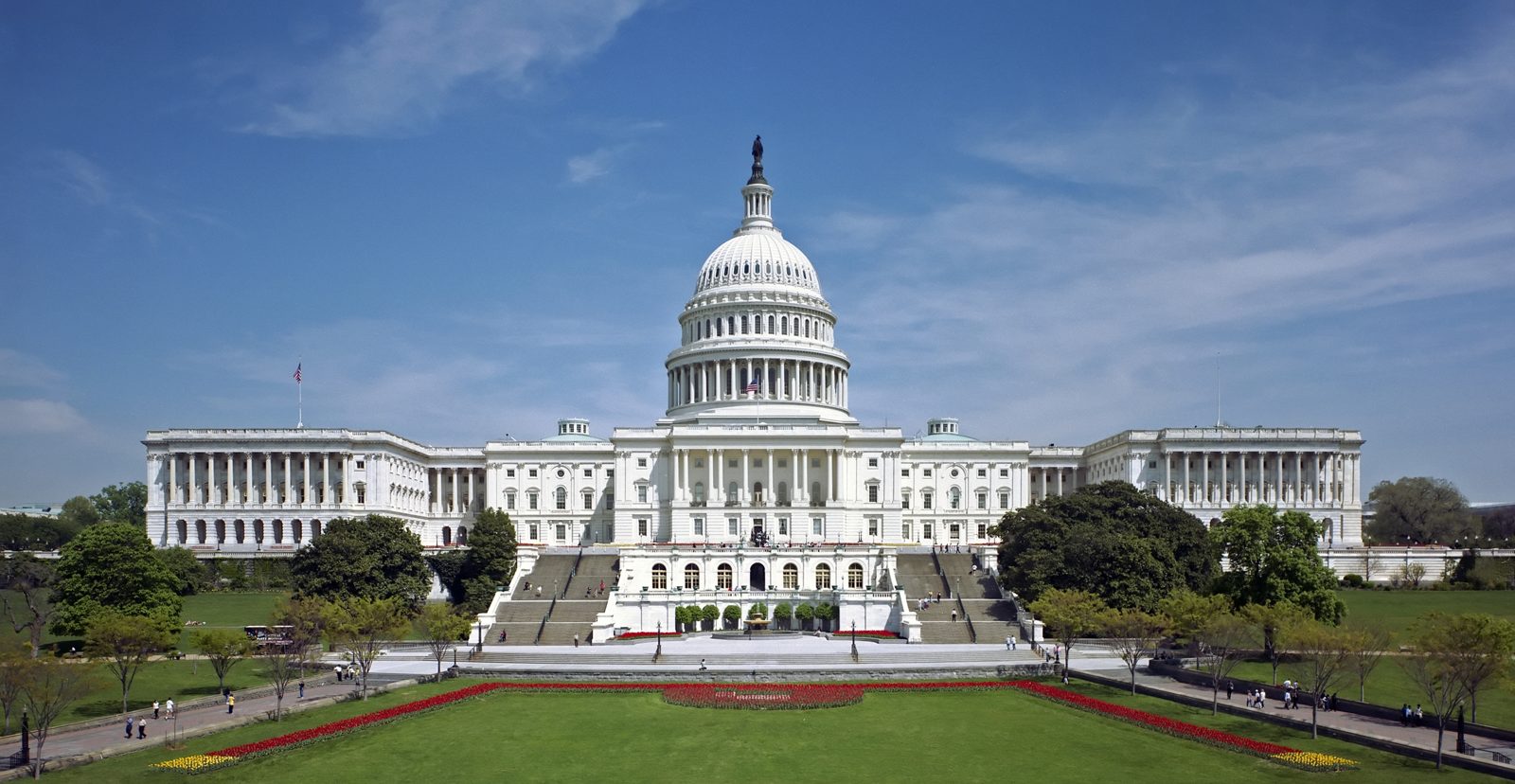
Featured image: West front of the U.S. Capitol. Public domain, via Wikimedia Commons.