

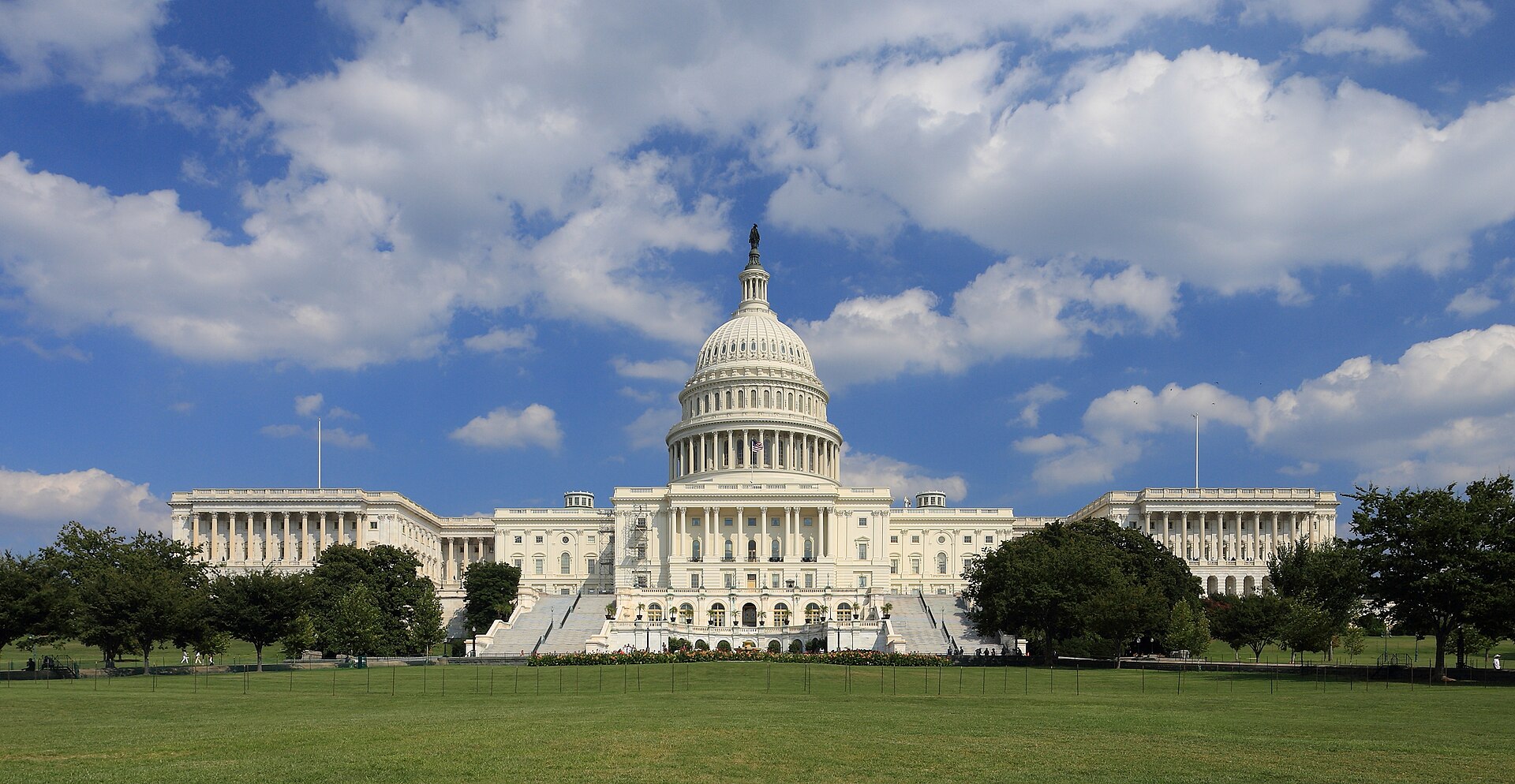
WASHINGTON — Neither chamber of Congress held a recorded floor vote this week. The House and Senate are on a midterm-campaign recess, holding only pro forma sessions until lawmakers return on November 9 for the lame-duck period that closes out the 119th Congress, according to the National Low Income Housing Coalition and a schedule summary from the National Energy & Fuels Institute. Even so, oversight activity has continued by letter, subpoena and statement. The most notable development is a bipartisan appeal to the White House over a Russian diesel arrangement. Below are the notable actions of the past several weeks, with context on what comes next.
1. Twelve senators, split evenly by party, urge the White House to rescind the Russian diesel deal
On Tuesday, October 13, twelve senators sent President Trump a letter asking him to rescind a diesel arrangement he announced after what he described as an October 9 agreement with Russian President Vladimir Putin, NPR reported. The signers include six Democrats (Richard Blumenthal, Chris Coons, Dick Durbin, Jack Reed, Jeanne Shaheen and Sheldon Whitehouse) and six Republicans, among them Susan Collins, John Cornyn, Mitch McConnell, Lisa Murkowski and Thom Tillis.
According to NPR, the president said Russia would supply more than 300,000 tons of diesel, followed by 500,000 tons in November and one million tons soon after, with a further 3 million tons possible depending on the condition of Russian refineries. The senators wrote that the arrangement would give Moscow additional revenue and offer “limited to no relief to Americans” on energy costs. The White House pointed reporters to the president’s remarks Tuesday, in which he said the fuel would be sold on the world market because global prices had risen.
The analysis here is about process rather than motive. The letter is not binding, and the sources reviewed do not establish whether the arrangement conflicts with existing sanctions or tariff authorities Congress approved earlier this year. House Foreign Affairs Democrats separately criticized the licensing decision and pointed to H.R. 8222, the End Russian Oil Windfalls Act, introduced in April. The letter’s even partisan split is the notable feature: it suggests that Russia policy remains an area where members of both parties are willing to press the executive branch. The administration has not been shown to have responded to the letter itself as of this writing.
2. House Veterans’ Affairs Committee votes 19-0 to subpoena Oracle’s top executives
On September 2, the House Veterans’ Affairs Committee voted 19-0 to subpoena Oracle Chairman and Chief Technology Officer Larry Ellison and Co-CEO Mike Sicilia over the Department of Veterans Affairs’ electronic health record modernization program, FedScoop reported. Ranking Member Mark Takano said Oracle had been invited to testify but withdrew citing timing constraints. VA Deputy Secretary Paul Lawrence testified, and Chairman Mike Bost, a Republican, said VA’s initial cost estimates rarely prove to be the final ones.
The figures behind the dispute are substantial. Oracle, which acquired Cerner, was nearing its original $10 billion contract ceiling when VA raised it to roughly $27 billion and extended the contract to 2031, according to FedScoop. The same report says VA’s lifecycle estimate is about $48 billion, and that the Government Accountability Office has made 18 recommendations on the program, 14 of which are not fully implemented. Military Times reported that Senate Veterans’ Affairs ranking member Richard Blumenthal and six committee Democrats wrote to Oracle on September 23 seeking cost documentation, an itemization of the “unanticipated complexities” cited, and an explanation of what changed since Sicilia told senators in 2022 that Oracle would absorb costs above $10 billion. Oracle’s response is requested by October 23. The letter also asked Senate Chairman Jerry Moran to hold a full-committee hearing.
The subpoenas are a pending oversight step, not a finding of wrongdoing. Oracle’s right of reply remains open, and TIJ has not reviewed any company response.
3. GAO reaffirms that “pocket rescissions” violate the Impoundment Control Act; Senate Appropriations chair objects
On September 25, the White House sent Congress an $810 million package of proposed cancellations of previously appropriated funds, near the end of the fiscal year. Senate Appropriations Chair Susan Collins, a Republican, issued a statement calling the package unlawful and saying the Office of Management and Budget had held the funds for months without reporting an impoundment to Congress. On September 29, the Government Accountability Office said such late-year cancellations would violate the 1974 budget law, Roll Call reported.
The administration disputes that reading. Budget Director Russ Vought dismissed the GAO opinion on social media, and the White House argues the statute does not expressly prohibit the practice, according to Roll Call. The same report notes that GAO’s opinion is unlikely to have practical effect absent litigation, and that the Supreme Court last year allowed the administration to cancel more than $4 billion in foreign aid in an order that said it was not a final ruling on the merits. A separate lawsuit has been filed over canceled HUD housing-counseling funds, per the NLIHC. This is a constitutional-process dispute over the power of the purse, and it involves Republicans and Democrats on the appropriations side. It is likely to resurface when Congress returns to write full-year spending bills.
4. Continuing resolution averts an October 1 shutdown and sets a December 11 deadline
Congress cleared a continuing resolution funding the government at current levels through December 11, with the House voting 370-48 and the Senate having approved it 90-6, according to the Association of Community College Trustees. The measure was signed, per the American Association of Colleges of Osteopathic Medicine. It also blocks an OMB proposed grantmaking rule until the deadline.
None of the 12 fiscal 2027 appropriations bills has been completed. The Senate Appropriations Committee adjourned without releasing its bills, with Collins and Vice Chair Patty Murray reportedly at odds on defense and non-defense totals, per NLIHC. That leaves roughly five weeks after the November 9 return to pass full-year bills, an omnibus-style package, or another stopgap. The farm bill extension also expired September 30, and the Senate version needs 60 votes amid an unresolved SNAP cost-sharing dispute, according to NEFI.
5. New bills reflect oversight and fraud themes
A congressional bulletin tallied 16 bills introduced October 13, identifying 13. Several touch accountability beats: H.R. 10806 (Rep. Claudia Tenney, R-N.Y.) addresses Medicare home health fraud; H.R. 10796 (Rep. Don Bacon, R-Neb.) is the U.S.-Israel Defense Technology Cooperation Act; H.R. 10799 (Rep. Glenn Grothman, R-Wis.) concerns H-1B exempt wage modernization; and a “Make Data Centers Pay Act” from Rep. Eugene Vindman would require data centers of 20 megawatts or more to cover incremental electricity costs. Introduction is only the first step, and most bills never receive a committee vote. Bill text and sponsor details should be confirmed on Congress.gov, since the bulletin did not list numbers for every measure.
6. A run of oversight letters
Lawmakers also sent a series of letters this week, per the same bulletin. Sens. Maria Cantwell and Mike Rounds wrote to Director of National Intelligence Jay Clayton and OSTP Director Michael Kratsios on AI safety and cybersecurity. Sen. Martin Heinrich wrote to Energy Secretary Chris Wright about Strategic Petroleum Reserve levels, which the letter put at 283.8 million barrels. Sen. Catherine Cortez Masto and Rep. Steven Horsford wrote to Spirit Airlines and Google about the sale of employee data for AI training. Sens. Blumenthal, Takano and others wrote to VA Secretary Doug Collins about the Oracle contract. Sen. Elizabeth Warren and Rep. Ayanna Pressley asked Wynn Resorts about the Encore Boston Harbor strike, with a reply requested by October 23. Letters are requests for information; recipients’ responses were not available.
7. Democrats hold a field hearing on ICE shootings in Texas
Today, October 15, at 11:30 a.m. CT in Austin, a group of Democratic House members including Greg Casar, Bennie Thompson and Pramila Jayapal plans a field hearing on ICE shootings across Texas, including the shooting of Wilber Garcés-Pérez, according to the bulletin. Because the House is in recess and the event is not convened by a committee chair, it is not an official committee hearing and will not produce an official transcript. Claims about individual incidents should be treated as allegations pending official findings, and the Department of Homeland Security’s account is not part of the event as described.
What’s ahead
- October 15: Democratic field hearing in Austin (not an official committee proceeding).
- October 23: Requested response dates for Oracle (Senate Democrats’ letter) and Wynn Resorts.
- November 3: Midterm elections.
- November 9: Congress returns for the lame-duck session.
- December 11: Current funding expires; appropriations and farm bill unresolved.
Official schedules are posted on the Congress.gov committee schedule.
Relevant to TIJ’s investigative beats
Three threads merit follow-up. First, procurement oversight: the Oracle subpoenas and the GAO’s open recommendations will be a test of how Congress polices large technology contracts. Second, the power of the purse: the pocket-rescission dispute, with a Republican appropriator and GAO on one side and the White House on the other, will shape fiscal 2027 negotiations. Third, program-integrity legislation such as the Medicare home health fraud bill. TIJ will track any documents produced in response to the October 23 deadlines. Right of reply: organizations and officials named in this digest are invited to submit responses to the editor at editor-sc@tij.news.
Sources: Congress.gov, Senate Appropriations Committee, NPR, Roll Call, FedScoop, Military Times and other outlets as linked. Figures are as reported by those sources and were not independently verified.