

WASHINGTON — Ukrainian drones set fire to Russia’s largest Baltic oil port in the early hours of Friday, the Census Bureau reported another monthly gain in retail sales, and the full Fifth Circuit disposed of one of the most closely watched immigration cases of the Trump era without reaching its central question. Here is The Investigative Journal’s afternoon digest of the day’s developments across government, the courts, and the world — with links to the primary records throughout.
Government
July retail sales extend the streak, with Jackson Hole on the horizon
The Census Bureau released its advance estimate of July retail and food services sales Friday at 8:30 a.m., and reporting on the release indicates sales rose 0.5 percent from June — a solid gain, though slightly below consensus expectations. The figure follows a soft June print of 0.2 percent, which the bureau’s prior advance report flagged as statistically indistinguishable from zero, and a strong 1.0 percent gain in May.
Private gauges point the same direction. The National Retail Federation’s Retail Monitor showed July sales excluding automobiles and gasoline up 0.32 percent from June and 5.15 percent from a year earlier — the tenth consecutive monthly increase by that measure, according to the NRF data, though annual growth cooled from June’s pace. The consumer, in short, is still spending, but with less momentum than early summer.
The timing matters: this is among the last major demand-side readings the Federal Reserve will digest before the Jackson Hole Economic Symposium, where the Fed chair’s keynote is scheduled for August 28. A resilient-but-cooling consumer complicates the rate debate in both directions.
White House orders shipbuilding overhaul, including a fifth naval shipyard
President Trump on Thursday signed a National Security Presidential Memorandum on rebuilding the Navy and the shipbuilding industrial base. According to the accompanying White House fact sheet, the memorandum directs the establishment of a fifth naval shipyard — which the administration says would be the first new one in more than 80 years — plus a component repair center for submarine programs and a full reorganization of Naval Sea Systems Command.
Two provisions stand out. First, the memorandum directs that CVN-81, the future carrier of the Ford class, be built with traditional steam catapults and hydraulic weapons elevators rather than the electromagnetic launch systems and advanced elevators that produced years of delays on earlier hulls. Second, it expands the so-called “Finland model” piloted in the Coast Guard icebreaker program: foreign shipbuilders that make durable investments in U.S. yards and train American workers may temporarily build up to two ships in their home yards to bridge delivery gaps. Both moves signal a preference for schedule certainty over technological ambition — a notable course correction in naval procurement.
Tariffs of up to 100 percent on imported drones
Also Thursday, the president signed a proclamation adjusting imports of unmanned aircraft systems on national-security grounds. Per the fact sheet, the schedule imposes a 100 percent tariff on drones above 25 kilograms takeoff weight or with thermal-imaging capability, along with their docking stations and critical components; 25 percent on smaller drones and other components; and preferential rates of 15 percent for the EU, Japan, South Korea, Switzerland, Liechtenstein, and Taiwan — and 10 percent for the United Kingdom — where substantially all hardware and software originates in those countries or the U.S.
Most tariffs take effect 21 days after signing, with 180-day phase-ins for less sensitive components. The document also authorizes a Commerce Department onshoring program for new domestic drone manufacturing investment. The practical target is unstated but unmistakable: the U.S. commercial drone market has long been dominated by Chinese manufacturers, and the proclamation’s origin-based carve-outs are designed to reward allied supply chains while pricing out adversarial ones.
Cyber memorandum enlists private sector against foreign crime networks
Rounding out a heavy week of executive action, a Wednesday memorandum on combating transnational cyber-enabled crime directs a new program — run out of the Homeland Security Task Force’s National Coordination Center, with executive directors from DOJ and DHS — to conduct cyber operations disrupting foreign criminal organizations. The fact sheet says vetted private companies would propose and help conduct operations “under the direction, control, and authority of the U.S. Government,” and cites more than $20.8 billion in reported consumer losses to cyber-enabled crime in 2025. The delegation of offensive cyber work to private partners, even supervised, is likely to draw scrutiny from Congress and civil-liberties groups as details emerge.
Courts
En banc Fifth Circuit rules Alien Enemies Act challenge moot
The full U.S. Court of Appeals for the Fifth Circuit on Thursday dismissed as moot the marquee challenge to the president’s invocation of the Alien Enemies Act of 1798, Courthouse News reports. The Venezuelan petitioners at the center of the case were ultimately removed under ordinary immigration law — the Immigration and Nationality Act — rather than the wartime statute, and the en banc court concluded it could no longer grant effective relief, according to The Hill.
The upshot: after a trip to the Supreme Court and back, the core question — whether the 1798 statute can support peacetime removals of alleged gang members — remains unresolved. The ACLU, which brought the case, said in a statement that it would continue pressing the issue in other pending cases. For now, the administration retains a favorable status quo without a merits precedent either way — and both sides retain their arguments for the next vehicle.
Former SPLC official added to fraud indictment; defense says she is innocent
Federal prosecutors in the Middle District of Alabama announced this week that a second superseding indictment has added a defendant and charges in the government’s ongoing case involving the Southern Poverty Law Center. According to CBS News, the indictment names Heidi Beirich, 59, former director of the organization’s Intelligence Project, in counts including wire fraud conspiracy, conspiracy to submit false statements to a federally insured bank, and conspiracy to commit concealment money laundering. Filings allege payments were routed to confidential informants inside extremist groups in ways that misled donors and banks.
These are allegations, not findings; Beirich is presumed innocent unless and until proven guilty. Her attorney, Michael Proctor, said his client is innocent and characterized the prosecution as politically motivated, PBS NewsHour reported. The case bears watching as a test of how far the government’s theory — that a watchdog organization’s payments to informants constituted fraud on donors and financial institutions — holds up in court.
DOJ quiet on appeal of National Firearms Act ruling
Nine days after a federal judge in Texas struck down the National Firearms Act’s registration scheme as applied to suppressors and short-barreled rifles and shotguns — reasoning that Congress’s zeroing-out of the transfer tax removed the registration regime’s constitutional footing, as described in the plaintiffs’ account of the decision — the Justice Department has not signaled whether it will appeal, The Hill reports. The department’s silence is itself consequential: absent an appeal, a district-court precedent of unusual breadth in firearms regulation would stand, and the government’s posture will shape whether the question reaches the appellate courts at all.
International
Ukraine strikes Russia’s Baltic oil gateway — again
Ukrainian drones attacked Ust-Luga, Russia’s largest Baltic Sea port and a critical crude and fuel export hub, overnight into Friday. Regional governor Alexander Drozdenko said 54 drones were involved, that the roughly four-hour attack sparked a fire at the facility, and that no one was hurt, according to the Kyiv Post; The Moscow Times reported the blaze was extinguished by morning. Port infrastructure was damaged, per the governor’s account relayed by the Kyiv Independent. Records suggest this is at least the sixth strike on Ust-Luga this year, a facility that handled roughly 700,000 barrels of oil per day in 2025.
The strike fits a widening pattern. A refinery in Russia’s Far East remains “completely shut down” for months following an earlier Ukrainian attack, its regional governor said this week, per the Kyiv Independent — evidence that Kyiv’s deep-strike campaign against Russian energy infrastructure now reaches thousands of kilometers beyond the front. With ground lines largely static, both sides appear to be waging the war’s most consequential offensives against fuel, ports, and power.
Kushner heads to Israel and Egypt as Gaza plan enters a harder phase
Jared Kushner will travel to Israel and Egypt next week with officials of the Board of Peace, the body established under the U.S.-backed Gaza framework, to push implementation of the plan’s next stage, Haaretz reported Friday, citing sources familiar with the trip. The visit comes amid friction over sequencing — security arrangements, reconstruction, and governance — that has slowed the transition from ceasefire to stabilization. The itinerary itself is a signal: Washington is putting its most senior negotiating figures back on the ground rather than managing the file remotely.
Israel to shift West Bank civilian enforcement from IDF to police
Israeli Defense Minister Israel Katz said Friday he intends to transfer civilian law enforcement authority in the West Bank from the military to the police, according to The Times of Israel. The announcement follows days of unrest around the Palestinian village of Qusra that drew condemnation across the Israeli political spectrum, including from settler leadership. The proposed shift would be a significant structural change in how order is maintained in the territory, and its practical effect — on both settler violence and Palestinian communities — will depend entirely on implementation details that remain unspecified.
Tomorrow’s Watch
Anchorage, one year on. Saturday marks one year since the Trump–Putin summit in Alaska on August 15, 2025 — the first U.S.–Russia leaders’ meeting of the war. A year later, the fighting continues; the most recent Russia Matters war report card records incremental territorial exchanges and no ceasefire. Expect retrospectives and possibly statements from both capitals.
The weekend schedule. The White House typically releases the president’s weekend movements Friday evening; the public calendar is tracked at Roll Call’s Factbase. Watch for any reaction to the Ust-Luga strike and for follow-through on the week’s shipbuilding and tariff actions.
Diplomatic runway. The Kushner–Board of Peace trip to Israel and Egypt is expected to get underway next week, per Haaretz — the next hard test of the Gaza framework’s second stage.
Down the calendar. Markets now look toward the Fed’s Jackson Hole symposium and the chair’s August 28 keynote, with July retail sales in hand. And at the Supreme Court, the administration’s next moves are previewed in SCOTUSblog’s analysis of pending government petitions — several of which could land on the fall docket.
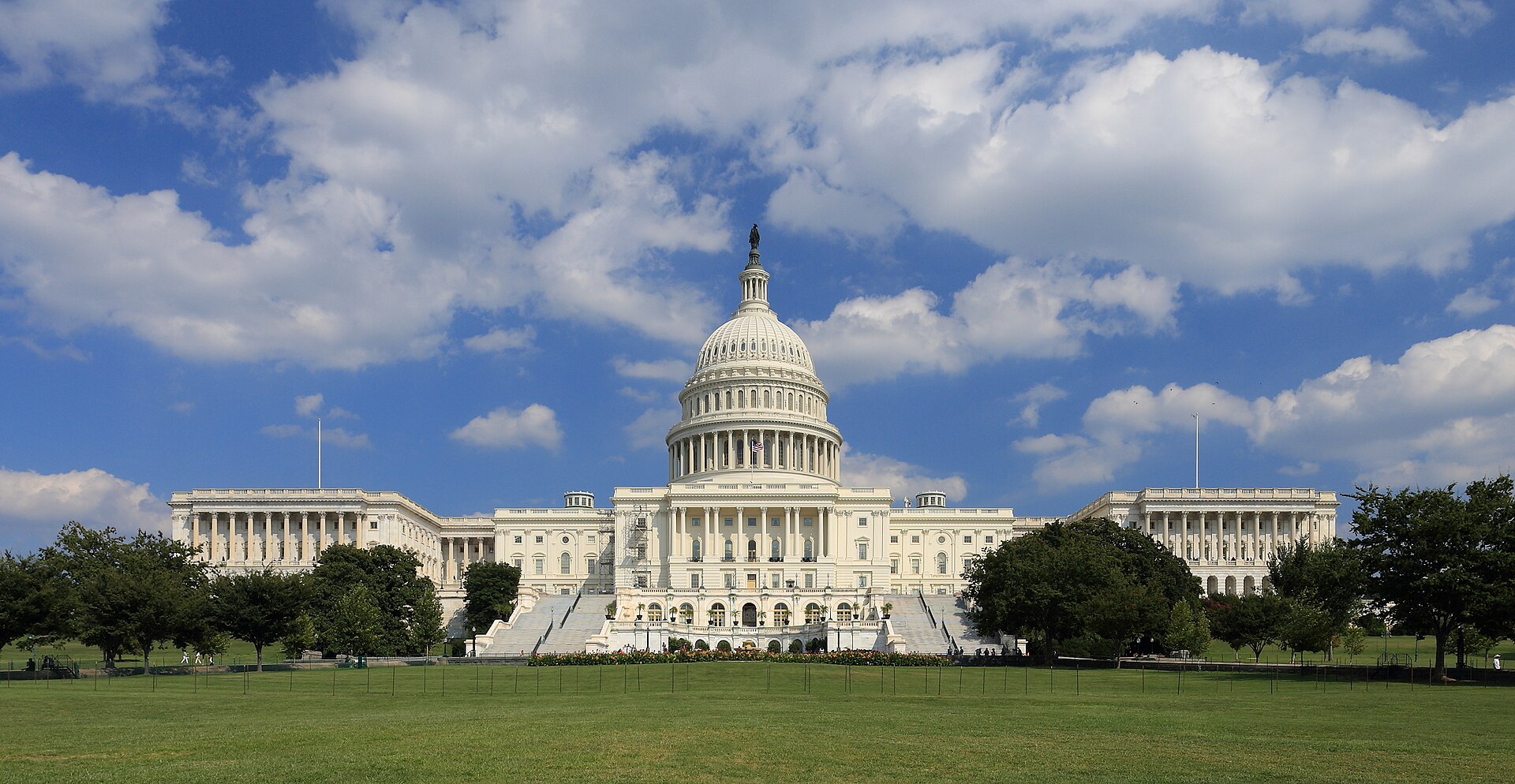
The Investigative Journal wire briefings are compiled from public records, official statements, and source documents linked inline. Featured image: U.S. Capitol, west front, by Martin Falbisoner via Wikimedia Commons (CC BY-SA 3.0).