

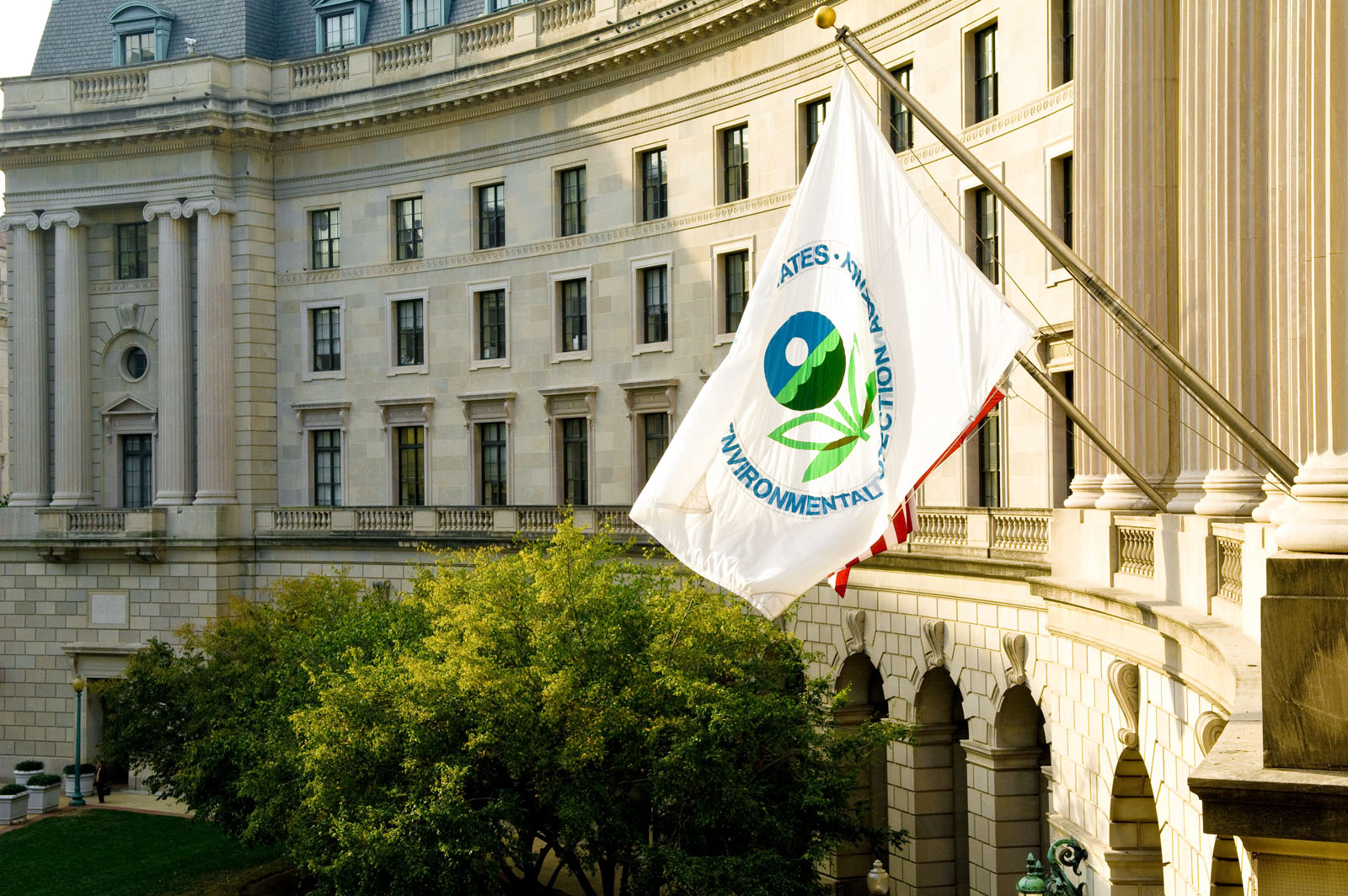
EPA Watch is The Investigative Journal’s weekly review of federal and state environmental enforcement, built from public records. Figures and allegations below are drawn from EPA press releases, regional public notices, U.S. Department of Justice announcements, and consent-decree filings. Where an action is proposed rather than final, or where charges are pending, we say so. A single week is a snapshot, not a trend; readers seeking the full record can query EPA’s Enforcement and Compliance History Online (ECHO) database directly.
The week’s most recognizable name belonged to a railroad. On June 18, the U.S. Environmental Protection Agency announced that Union Pacific Railroad Company agreed to pay $155,234 to resolve alleged violations of the Toxic Substances Control Act (TSCA) tied to the mishandling of polychlorinated biphenyl (PCB) waste at its Oakland, California property. But the larger penalties, and arguably the more consequential cases, came from a pharmaceutical manufacturer in Massachusetts, a steel mill in Colorado, and a criminal courtroom in Houston. Below are eight enforcement developments from the week of June 15, each documented in the public record.
1. Union Pacific settles PCB disposal case for $155,234 (TSCA, finalized)
According to EPA’s June 18 announcement, the agency’s Pacific Southwest region found that, after Union Pacific removed PCB-contaminated soil from its 73rd Avenue property in Oakland under the supervision of the California Department of Toxic Substances Control, the railroad improperly disposed of 334 tons of PCB cleanup waste in 2022 at a landfill not authorized to accept it. EPA’s filing further states the company failed to document the waste or notify the receiving landfill of its contents, and failed to properly document disposal of an additional 205 tons at an approved facility.
PCBs are man-made chemicals manufactured in the United States from 1929 until a 1979 ban; they persist in the environment and bioaccumulate through the food chain. Under TSCA, PCB-containing waste must be identified and documented before disposal at facilities engineered to receive it. “Companies that generate PCB-containing waste have a responsibility to properly manage it so toxic substances aren’t released into the environment,” EPA Pacific Southwest Regional Administrator Michael Martucci said in the announcement. Under the settlement, Union Pacific certified that it has returned to compliance with TSCA regulations.
The railroad disputed the agency’s characterization while agreeing to resolve the matter. “While Union Pacific does not agree with the allegations raised by the U.S. EPA, we appreciate the agency’s willingness to work toward an agreeable resolution,” the company said in a statement reported by Trains and Bay City News, adding that it “has worked to remediate the property for several years.” EPA records note the Oakland site has undergone phases of investigation and cleanup since 1998, with the current remediation phase beginning in 2018.
2. Nitto Denko Avecia pays $858,889 over hazardous-waste violations (RCRA, finalized)
The week’s largest civil penalty went to a pharmaceutical preparation manufacturer. On June 9, EPA’s New England region announced a settlement with Nitto Denko Avecia, Inc. resolving alleged violations of the Resource Conservation and Recovery Act (RCRA) and Massachusetts hazardous-waste regulations at two facilities in Milford, Massachusetts. The agreement requires the company to pay $858,889 and to come into compliance.
EPA filings indicate the alleged violations, identified during a hazardous-waste compliance evaluation, involved hazardous-waste air emissions, design and installation requirements for hazardous-waste tank systems, equipment inspections, waste and storage-area labeling, and contingency planning. To return to compliance, the company implemented a leak detection and repair program for tanks and equipment managing hazardous waste, began daily visual inspections of RCRA-regulated tank systems, and updated its hazardous-waste contingency plan. “This agreement with Nitto Avecia serves as a reminder to pharmaceutical and biotech manufacturers about their duties and commitments to federal and state regulations that protect workers, communities, and the environment,” EPA New England Regional Administrator Mark Sanborn said.
3. Rocky Mountain Steel Mills faces proposed $308,173 water penalty (CWA, proposed)
On June 17, EPA Region 8 issued a public notice of a proposed Consent Agreement with CF&I Steel, L.P., doing business as Rocky Mountain Steel Mills (RMSM), over alleged Clean Water Act violations at its facility on South Freeway in Pueblo, Colorado (Docket No. CWA-08-2026-0009). The agency alleges the company violated Sections 301(a) and 402 of the Clean Water Act by failing to comply with terms of its Colorado Discharge Permit System permit.
Specifically, EPA’s filing alleges RMSM discharged pollutants in excess of permitted effluent limitations on 14 occasions between April 2020 and July 2025, failed to properly operate and maintain its treatment and control systems, and failed to follow the EPA-approved sampling methodology for oil and grease. Under the proposed agreement, the company has agreed to pay a civil administrative penalty of $308,173 and waived its right to a hearing.
Because this is a proposed Class II administrative penalty, it remains subject to a 30-day public comment period, with comments due July 17, 2026, before EPA decides whether to finalize the order. The allegations have not been adjudicated.
4. Texas lab CEO and two others plead guilty to falsifying wastewater data (CWA, criminal)
In one of the week’s most serious matters, three Texas residents admitted to Clean Water Act violations tied to falsified wastewater testing. According to a Department of Justice release reproduced by EPA’s Office of Inspector General on June 11, Derek McCoy, 52 — CEO of a laboratory that sampled and tested wastewater from local treatment facilities — Deena Higginbotham, 56, the lab’s director of client services, and John Montgomery, 60, admitted to falsifying or aiding and abetting the falsification of data required under federal and state law.
Court filings cited by prosecutors allege that, for roughly three years, the three altered wastewater test results to falsely show that treatment facilities did not exceed pollutant limits in their state-issued discharge permits. The falsified results — which records indicate masked exceedances of ammonia, E. coli, and phosphorus — were then submitted to EPA and the Texas Commission on Environmental Quality. “By submitting falsified data, these defendants undermined the integrity of a program specifically designed to safeguard human health,” Acting U.S. Attorney John G.E. Marck said.
U.S. District Judge David Hittner accepted the guilty pleas and set sentencing for September 3. Each defendant faces up to two years in federal prison and a possible $250,000 maximum fine; sentencing has not yet occurred. The case was investigated by EPA’s Criminal Investigation Division, EPA’s Office of Inspector General, and the TCEQ Environmental Crimes Unit through the Texas Environmental Enforcement Task Force.
5. Two Oklahoma injection-well operators hit with proposed drinking-water orders (SDWA, proposed)
EPA Region 6 issued back-to-back proposed orders against oil-and-gas injection-well operators in Osage County, Oklahoma, in a single week. On June 11, the agency noticed a proposed administrative compliance order against Terrapin Energy, LLC (Docket SDWA-06-2026-1125), alleging that the company maintained injection Well No. 20W in a manner that could allow fluid containing contaminants to move into an underground source of drinking water and failed to demonstrate the well’s mechanical integrity. On June 16, EPA followed with a parallel proposed order against White Palace Energy, LLC (Docket SDWA-06-2026-1118), citing similar alleged Safe Drinking Water Act violations at injection Well No. 11.
Both notices invoke EPA’s authority under Section 1423 of the Safe Drinking Water Act and allege failures of mechanical integrity — a core protection meant to keep injected fluids from migrating into aquifers. Both proposed orders remain open for public comment, and the allegations have not been finalized. The clustering of two Underground Injection Control actions in the same Oklahoma county within five days is a pattern worth watching.
6. Vermont contractor settles lead-paint case at New Hampshire job site (TSCA/RRP, finalized)
On June 16, EPA New England announced a settlement with ReArch Company Inc., a South Burlington, Vermont construction firm, resolving alleged violations of TSCA’s Renovation, Repair and Painting (RRP) Rule during its renovation of the historic Woolen Mill Apartments in Newport, New Hampshire. Records indicate that, during an inspection, EPA observed alleged failures to contain renovation dust and debris, to cover floors with plastic sheeting, to post warning signs, and to maintain required records — practices designed to protect occupants, especially children, from lead exposure in pre-1978 housing.
Under the agreement, ReArch paid a penalty of $18,715 and certified ongoing compliance with the RRP Rule, including covering floor surfaces with impermeable material, posting clear signage, maintaining renovation records for up to three years, and properly containing renovation waste. The release notes that in 2025 EPA reestablished an internal committee of senior leaders across its program offices and ten regions to reduce children’s exposure to lead, framing the case within that initiative.
7. Municipal and industrial water cases: Scranton and ExxonMobil’s Joliet refinery (CWA, proposed)
Two additional Clean Water Act matters illustrate the breadth of EPA’s permit enforcement. On June 9, EPA Region 3 proposed a $49,500 penalty against the City of Scranton, Pennsylvania (Docket CWA-03-2026-0073) to settle alleged violations tied to the operation of its municipal separate storm sewer system (MS4). That proposed Consent Agreement and Final Order is open for comment through July 20, 2026.
On the industrial side, EPA Region 5’s administrative docket includes a proposed Consent Agreement and Final Order against ExxonMobil Oil Corporation’s Joliet Refinery in Channahon, Illinois (Docket CWA-05-2026-0010), in which the agency states that an appropriate penalty to settle the alleged Clean Water Act violations is $136,200. As with the other administrative actions above, these penalties are proposed and the underlying allegations remain subject to public process rather than final findings of liability.
8. The broader docket: consent decrees and mobile-source cases in the pipeline
Beyond the individual settlements, the Justice Department’s Environment and Natural Resources Division is currently accepting public comment on several lodged environmental consent decrees, according to its proposed consent-decree page. Matters with comment windows overlapping this week include United States v. Borax, Inc. (comment period June 11–July 13, 2026), United States v. KX Wheels (June 3–July 6), United States v. City of Fort Smith, Arkansas (May 22–June 22), United States v. Diconia LLC (May 21–June 22), and United States v. Robert Bosch LLC (May 15–June 15). Separately, EPA’s 2026 Clean Air Act vehicle and engine enforcement page, last updated June 16, lists a string of mobile-source resolutions — including the KX Wheels consent decree and multiple aftermarket and import respondents — pointing to continued activity against defeat devices and non-compliant engines.
Patterns in the week’s activity
Several threads run through the week’s docket. First, toxics and chemicals enforcement under TSCA featured prominently: the Union Pacific PCB case and the ReArch lead-paint case both fall under TSCA, and they follow EPA’s June 4 announcement of a $630,737 TSCA chemical-reporting settlement with agribusiness firm Wilbur-Ellis Company in California and Washington. Three TSCA actions in roughly two weeks suggests sustained attention to chemical handling and reporting.
Second, Clean Water Act permit enforcement spanned both industry and government — a steel mill (Rocky Mountain Steel), a refinery (ExxonMobil Joliet), and a city storm-sewer system (Scranton) — underscoring that effluent and stormwater compliance obligations apply across sectors. Third, the Safe Drinking Water Act actions clustered geographically, with two Underground Injection Control orders in Osage County, Oklahoma, both alleging mechanical-integrity failures. Fourth, criminal enforcement targeted data integrity: the Houston guilty pleas centered on falsified self-reported monitoring data, the kind of information regulators and the public rely on to trust that permit limits are being met.
A procedural note for readers: a majority of this week’s dollar figures come from proposed administrative orders carrying public comment periods, not final judgments. Finalized, paid settlements this week (Union Pacific, Nitto Avecia, ReArch) totaled roughly $1.03 million in civil penalties; the proposed administrative penalties (Rocky Mountain Steel, Scranton, ExxonMobil Joliet) would add about $494,000 more if finalized as written. These are penalty figures only and do not capture the often far larger cost of injunctive relief and compliance work — a dynamic visible in the year’s marquee Superfund matter, the $668 million Lower Duwamish Waterway cleanup settlement reached in March with more than 100 responsible parties near Seattle.
What warrants a closer look
Three threads from this week merit deeper TIJ reporting. The Osage County injection-well cluster is the clearest: two proposed Safe Drinking Water Act orders in five days, both alleging mechanical-integrity failures on wells sitting above underground drinking-water sources, raise the question of whether Region 6 is escalating Underground Injection Control scrutiny of Oklahoma operators — and how many aging wells across the Osage mineral estate share similar conditions. The underlying dockets (SDWA-06-2026-1118 and -1125) and any related orders are public.
The Houston data-falsification case also deserves follow-up. Falsified compliance data strikes at the foundation of the Clean Water Act’s self-monitoring system, and this is not an isolated event — DOJ records show a comparable Tennessee prosecution involving a Nashville-area pre-treatment operator earlier this year. A broader examination of third-party environmental testing labs, and of how often self-reported discharge data is independently verified, would test whether these cases are outliers or symptoms.
Finally, the Rocky Mountain Steel Mills timeline invites scrutiny: EPA’s notice alleges 14 effluent exceedances stretching from April 2020 to July 2025 before a proposed penalty arrived in mid-2026. The gap between alleged violations and enforcement, and the facility’s discharge history into the Pueblo-area watershed, are documented in the public docket and ECHO record and would reward a closer read. As always, TIJ welcomes the affected parties’ responses; companies and agencies named here may submit documented corrections for review.
Sourcing note: All penalty amounts, dates, and allegations in this digest are drawn from EPA press releases, EPA regional public notices, U.S. Department of Justice announcements, and consent-decree filings linked inline. Readers can independently verify enforcement histories through EPA’s ECHO database and the agency’s civil and cleanup enforcement cases page. Proposed actions are identified as such and reflect allegations, not final findings of liability.