

WASHINGTON — Good morning. In today’s Wire: the Pentagon says the American military presence in Iraq is on track to end by September 30; a federal judge in Boston again blocks changes to mail-ballot handling ahead of the midterms; the White House press office prepares for a changing of the guard; and negotiators inch toward a deal that could reopen the Strait of Hormuz. Here is what moved overnight and what to watch today.
Government
Leavitt to leave the White House podium at month’s end
White House Press Secretary Karoline Leavitt will step down at the end of August, President Trump announced Wednesday in a social media post, saying she is departing “so she can spend more time with her beautiful young children and family,” according to NPR. Leavitt, 28, was the youngest person to hold the job and the first to serve in it while pregnant; the announcement came less than a month after she returned from maternity leave.
In a statement quoted by The Hill, Leavitt said she could not “be the best mom my two young children deserve while devoting the constant time, energy, and attention required of the White House Press Secretary.” The president said Leavitt will remain one of his top outside advisers heading into the midterm cycle. No successor has been named, making the coming weeks a notable personnel watch item for an administration entering a high-stakes election season.
New presidential memorandum targets transnational cybercrime networks
President Trump on Wednesday signed a National Security Presidential Memorandum authorizing federal law enforcement to use cyber tools against transnational criminal organizations operating from foreign jurisdictions, according to a White House fact sheet. The memorandum directs the Homeland Security Task Force’s National Coordination Center to build a program for cyber operations that disrupt these networks, led by executive directors drawn from the Justice and Homeland Security departments.
The fact sheet indicates the center will also “leverage the capability and innovation of the private sector” under U.S. government direction and control — an unusually explicit invitation for private-sector participation in offensive-leaning cyber operations. How that authority is scoped, and what oversight applies to operations conducted abroad, will be worth tracking as implementing guidance emerges.
Medicaid and CHIP funding ends for gender-transition interventions for minors
The Centers for Medicare & Medicaid Services said it will implement a rule ending the use of federal Medicaid and Children’s Health Insurance Program funds for puberty blockers, cross-sex hormones, and surgical procedures for minors, with the CHIP restriction applying to those under 19, according to wire reporting carried by U.S. News. CMS Administrator Mehmet Oz said in a statement that “children deserve our protection, not experimental interventions that pose serious risks and convey no proven benefits,” citing a Department of Health and Human Services evidence review that reported significant evidence gaps and safety concerns.
Legal challenges appear likely. Josh Rovenger, legal director at GLBTQ Legal Advocates and Defenders, said the rule “is putting up barriers between parents and their ability to make the best medical decisions for their children,” per STAT News, and signaled litigation to come. Expect early skirmishing over venue and preliminary relief; the rule’s effective dates and state-level implementation mechanics will determine how quickly the change is felt in practice.
July inflation: 3.4 percent annual, shelter still doing the heavy lifting
The Consumer Price Index rose 0.1 percent in July on a seasonally adjusted basis and 3.4 percent over the last 12 months, with core CPI up 0.2 percent on the month and 2.5 percent on the year, the Bureau of Labor Statistics reported in its July release. The annual headline rate ticked down from 3.5 percent, and shelter accounted for roughly two-thirds of the monthly increase, according to CNBC’s analysis of the data.
The report suggests the energy-driven price burst from earlier this year is easing, though energy remains hostage to conditions in the Gulf — a direct line from the Hormuz standoff covered below to the American grocery bill and gas pump. With headline inflation still running ahead of wage growth near 3.2 percent, real earnings pressure remains a live issue for households, and today’s producer-price data will sharpen the picture of what is in the pipeline.
Courts
Boston judge again bars mail-voting changes, citing 90-day election window
U.S. District Judge Indira Talwani in Boston reinforced a nationwide block on the Postal Service implementing portions of the president’s executive order tightening mail-in voting rules, ruling in litigation covered by WBUR and The Hill. “That it is now less than 90 days before the November 3, 2026 midterm elections underscores the critical need for an injunction to prevent Defendants from changing election rules on the eve of the election,” Talwani wrote, according to the filings quoted in those reports.
The ruling lands after an appeals court earlier allowed some of the administration’s ballot-handling changes to proceed, leaving a patchwork that election administrators must now navigate. Analysis published by Votebeat indicates the practical effect of the order on the midterms is shrinking as injunctions accumulate and state deadlines pass. Appeals are likely; the question is whether any change can lawfully take effect inside the election window courts are now explicitly protecting.
NFA registration injunction takes effect as appeal posture remains unclear
A federal injunction against enforcement of the National Firearms Act’s registration scheme for suppressors and short-barreled firearms took effect this week, following U.S. District Judge James Wesley Hendrix’s 66-page opinion in the consolidated cases Silencer Shop Foundation v. ATF and Jensen v. ATF, as reported by The Washington Times. The court reasoned that after Congress zeroed out NFA transfer and making taxes effective January 1, the registration regime could no longer be sustained under the taxing power — and rejected the government’s Commerce Clause fallback.
Two cautions from the record: the injunction is party-specific rather than nationwide, and Judge Hendrix stayed his own order for seven days to give the government a chance to seek appellate relief — a window that has now closed, per reporting from The Firearm Blog. Reports suggest the Justice Department has been weighing whether to appeal; no notice had been docketed as of this writing. Watch the Fifth Circuit.
Eleven charged in decade-long, 1,000-marriage immigration fraud scheme
Federal prosecutors unsealed a two-count indictment charging 11 people with conspiring over more than a decade to arrange in excess of 1,000 sham marriages to fraudulently obtain immigration status for foreign nationals, primarily citizens of the People’s Republic of China, according to the Justice Department’s announcement. The indictment alleges some participants paid up to $100,000 per arranged marriage.
The scale alleged here — roughly two sham marriages a week for ten years — would make this one of the larger marriage-fraud prosecutions in recent memory, and it arrives amid a broader enforcement push on immigration-adjacent fraud. As with all pending cases, the charges are allegations; the defendants are presumed innocent unless and until proven guilty.
Former SPLC executive indicted as group calls broader case meritless
The Justice Department secured a criminal indictment against a former Southern Poverty Law Center executive on three federal counts, including wire fraud conspiracy and conspiracy to commit money laundering, according to wire reporting carried by U.S. News. Prosecutors’ filings tie the charges to the organization’s use of paid informants to gather information on far-right groups.
The SPLC has characterized the government’s broader case against it as “meritless,” a position noted in Alabama Reporter coverage of a ruling this week allowing related litigation to proceed. These are pending matters: the indictment reflects allegations only, the defendant is presumed innocent, and the organization disputes the government’s theory. Both tracks — the individual prosecution and the institutional case — bear watching for what they signal about DOJ’s posture toward advocacy organizations’ investigative practices.
International
Iraq pullout on track for September 30, officials say
The U.S. military is on track to withdraw all forces from Iraq by the end of September, American officials said Wednesday, closing out a presence that began with the 2003 invasion, according to The Washington Post. The drawdown implements a 2024 U.S.-Iraq agreement to end the counter-ISIS coalition mission, and follows the president’s July announcement alongside Iraq’s prime minister that “we don’t think we need the military there anymore.”
Reporting from Kurdistan24 indicates the mission is transitioning toward Erbil and Syria rather than disappearing outright — a meaningful distinction for counterterrorism reach in the region. The unresolved questions: who backfills intelligence and logistics support for Iraqi forces, and whether a residual advisory relationship survives Baghdad’s politics after the last uniformed Americans depart.
Hormuz reopening hinges on Iranian conditions as Oman channel narrows differences
Iran’s foreign minister said Tehran is “very close” to a deal with Oman on managing the Strait of Hormuz, which has been effectively closed to shipping since hostilities with the United States began in late February, according to CNN’s reporting on the talks. Iran’s national security chief has publicly conditioned reopening on the U.S. lifting its naval blockade, withdrawing forces, permanently ending the war, paying compensation, and releasing frozen assets.
On Tuesday, Iranian officials pushed back on the president’s claims of control over the waterway, saying the strait will not reopen until Iran’s conditions are met, per The Times of Israel’s live coverage. The gap between “very close” on the Omani channel and maximalist public demands suggests the usual two-track diplomacy — but with roughly a fifth of the world’s oil transit normally moving through Hormuz, every week of closure feeds directly into the energy-price picture described in the CPI item above.
Israel announces first targeted strike in Gaza since August 3
The Israeli military said Wednesday it carried out a drone strike targeting a Hamas commander in northern Gaza — its first announced targeted strike since August 3 — despite pressure to hold fire from officials overseeing the postwar arrangements, according to Associated Press reporting. Palestinian media reports indicated one person was killed and another wounded in a strike on a vehicle in Beit Lahiya.
The strike tests the durability of the October 2025 ceasefire framework, under which the remaining hostages were released and a technocratic governing committee was established for Gaza. Hamas has dissolved its Gaza government but has refused to disarm, citing continuing Israeli strikes — a standoff in which each targeted operation becomes both a security action and a negotiating message.
Drone war intensifies: strikes reported on Novorossiysk and Crimea
Ukrainian drones struck targets in Russia’s Black Sea port of Novorossiysk and across occupied Crimea overnight into Wednesday, with a fire reported at a Russian military facility and explosions near Sevastopol, according to reporting compiled by the Kyiv Independent and the Russia Matters war report card. Ukraine’s air force said it downed 112 of 138 drones Russia launched in overnight attacks; Ukrainian officials reported a woman killed in Kherson and strike damage in Odesa and Zaporizhzhia.
President Zelensky said this week that Vladimir Putin “does not want to stop the war,” adding that Ukraine has a plan to force the issue. With both sides escalating deep-strike campaigns against ports, energy nodes, and logistics, the Black Sea corridor — and the export economics that ride on it — remains the theater to watch.
Worth Watching
- 8:30 a.m. ET — July Producer Price Index and weekly jobless claims. Forecasters expect PPI up 0.2 percent on the month with core at 0.3 percent, and initial claims near 202,000, per Investing.com’s calendar. After yesterday’s CPI, this is the week’s second read on the inflation pipeline.
- Virginia hemp ruling. U.S. District Judge Robert S. Ballou is expected to decide whether to halt Virginia’s new hemp regulations before they take effect Saturday, with businesses warning inventories would become illegal overnight, per WDBJ.
- White House ballroom appeal window. The D.C. Circuit stayed its order halting ballroom construction for two weeks from August 7 to allow a Supreme Court appeal, per NPR — watch for an emergency application in the coming days.
- NFA appeal decision. With the suppressor-registration injunction now in effect, a Justice Department notice of appeal to the Fifth Circuit could come at any time.
- 82 days to the midterms. Election-rules litigation is accelerating as courts apply heightened scrutiny to late changes — expect more rulings in the mail-voting docket and state-level disputes in the days ahead.
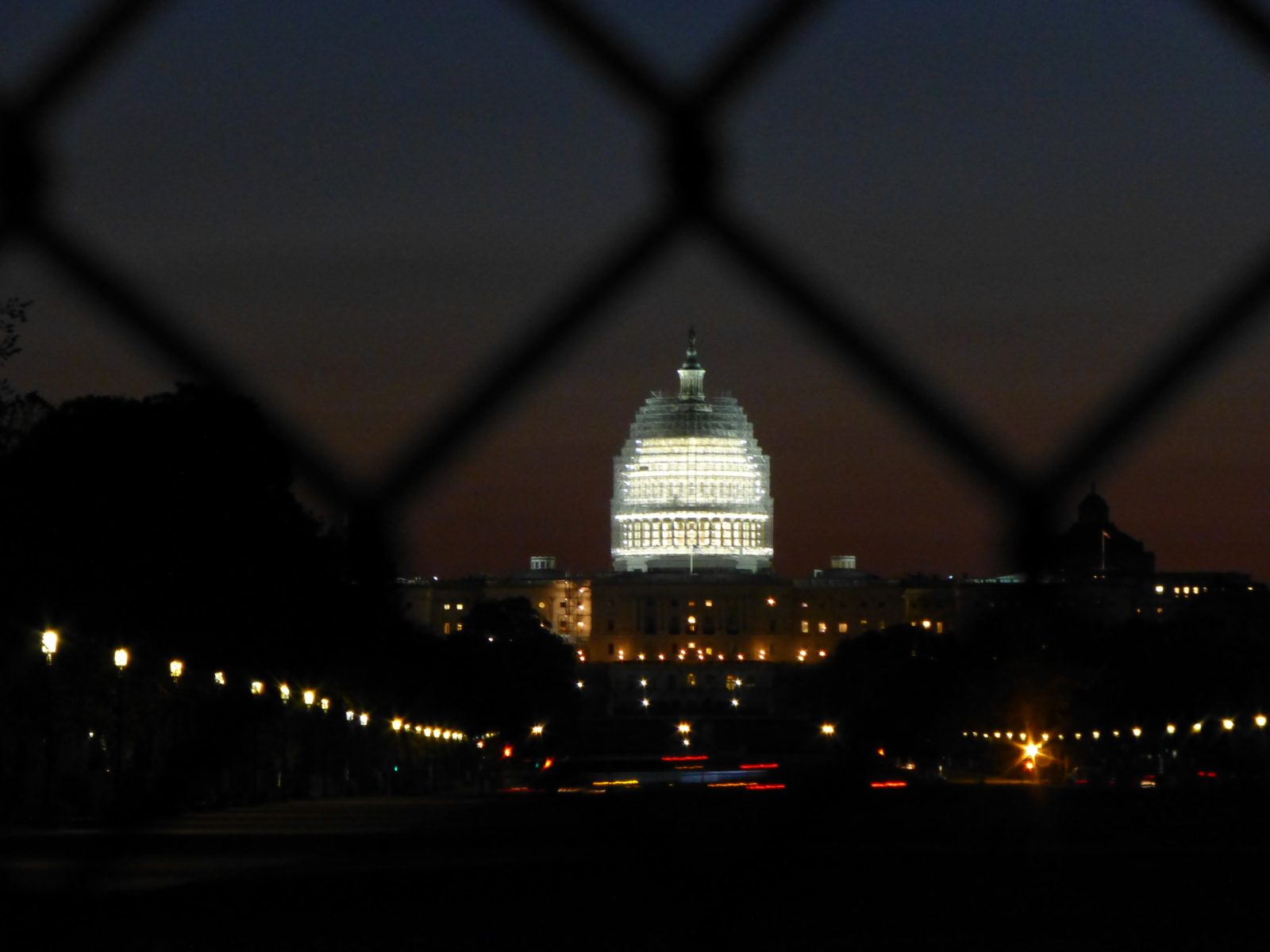
Featured image: The United States Capitol. Photo by Crglenn via Wikimedia Commons, licensed under CC BY-SA 4.0.

The Morning Wire is The Investigative Journal’s daily digest of overnight developments across government, courts, and international affairs. All items are sourced to public records, official statements, or wire reporting linked inline. Individuals and organizations named in pending matters are presumed innocent unless proven otherwise; parties wishing to respond to any item may contact the editorial desk.