

The Morning Wire is The Investigative Journal’s daily digest of overnight developments across government, the courts, and international affairs. Every item below is drawn from public records, official statements, and wire reporting, with links to the underlying sources.
Government
Treasury launches “Operation Economic Outcast” against Iran; Tehran vows “seismic” response. Treasury Secretary Scott Bessent on Monday unveiled what he described as an “economic onslaught” against Iran and its trading partners, formally launching a campaign the administration calls Operation Economic Outcast, according to CBS News. The action, which follows President Trump’s pledge of an “economic D-Day,” designated nearly 60 Iran-linked entities, individuals, and vessels and issued five new sectoral sanctions determinations — covering digital assets, technology, gold, aviation, and shipping — under Executive Order 13902, according to an analysis of the OFAC action by TRM Labs.
Treasury said the designations include brokers, companies, and shadow-fleet vessels operating across the United Arab Emirates, Hong Kong, China, Singapore, Switzerland, and Europe that transport Iranian oil and channel revenue to the Islamic Revolutionary Guard Corps-Qods Force, per NPR’s account of the announcement. “Every country has a defined timeline to shut down activities we have identified. If they do not take action, we will do so unilaterally through Treasury authorities,” Bessent said, as reported by Axios. Notably, The Washington Post reported that Monday’s package stopped short of targeting major Chinese banks — widely viewed as the most consequential potential escalation. Iranian officials vowed to respond in a “seismic manner,” and Tehran has warned of ship seizures in the Strait of Hormuz, according to CNBC. Records suggest the measures land on an Iranian economy already under acute strain, with the rial trading near record lows.
Justice Department opens National Fraud Detection Center. The Justice Department on Monday announced the launch of the National Fraud Detection Center, a prosecutor-led, multi-agency team charged with investigating actors who defraud federal programs, including schemes run from overseas. “Today’s announcement sends a clear message: if you defraud federal programs, we have the tools and the law enforcement partners to find you,” said Assistant Attorney General Colin McDonald of the department’s National Fraud Enforcement Division, according to the release.
Inaugural members include the FBI, Homeland Security Investigations, IRS Criminal Investigation, FinCEN, the Pandemic Response Accountability Committee, and inspectors general from more than a dozen federal agencies, the department said. The center builds on the Fraud Division created in April and supports the administration’s Task Force to Eliminate Fraud, chaired by Vice President J.D. Vance — part of a broader push to consolidate cross-program visibility that officials say has historically allowed fraud actors to exploit multiple federal programs undetected.
Postal Service finalizes mail-ballot rule — contingent on the Supreme Court. The U.S. Postal Service published regulations on Friday that would restrict mail voting, its latest step to comply with the president’s executive order on election procedures, The New York Times reported. According to the rule as described in that reporting, the Postal Service would not deliver mail ballots in states that decline to share voter data with the federal agency — but the agency said it would “not take actions to implement the rule specifically for the 2026 election” unless the Supreme Court rules in the administration’s favor in the pending emergency litigation (see Courts, below).
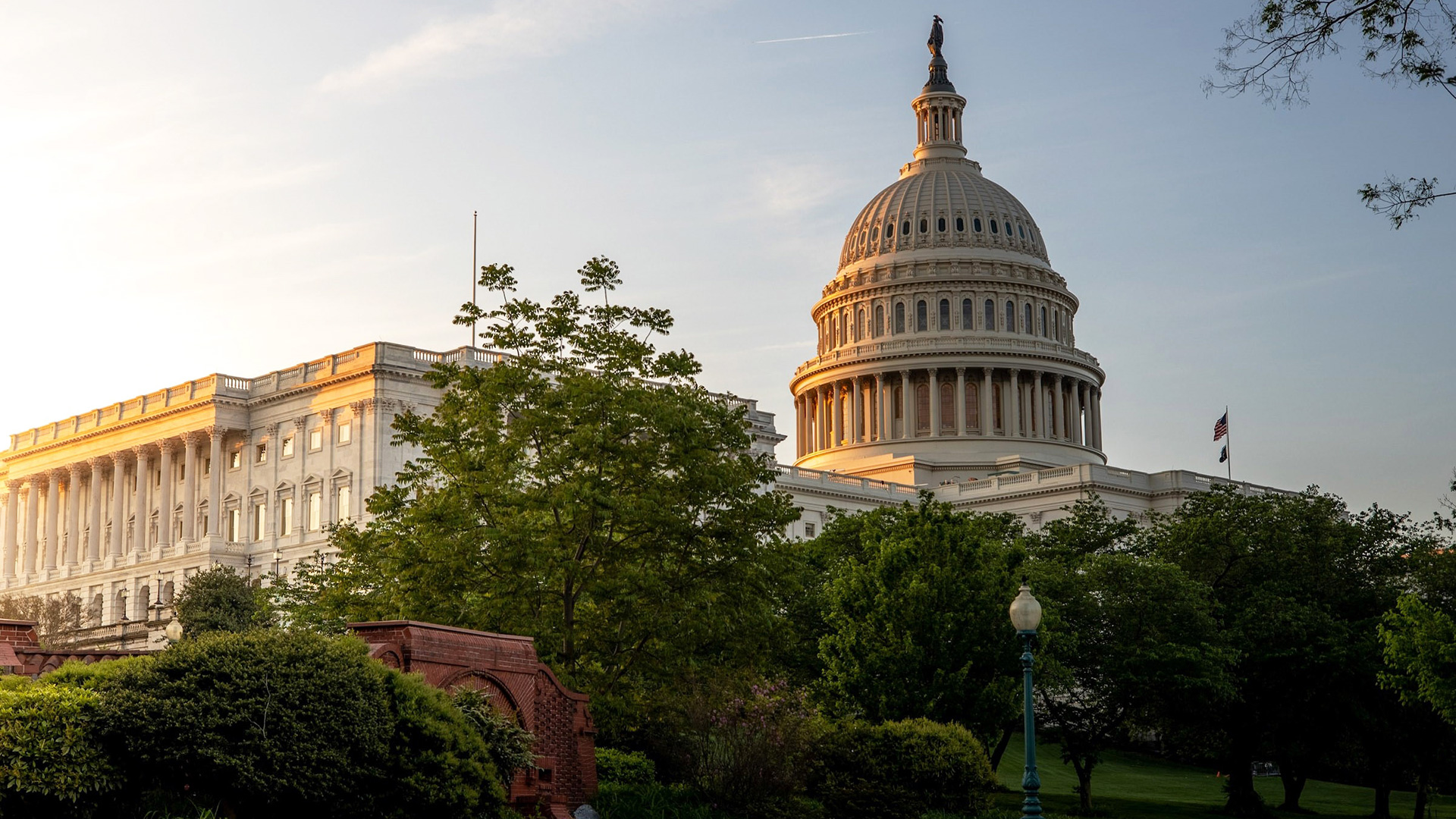
Congress remains in recess as fall deadlines stack up. The Senate met in a brief pro forma session Monday, with 20 public bills and one resolution introduced and no committee meetings held, according to the Congressional Record daily digest. Lawmakers return after Labor Day to a compressed calendar headlined by the September 30 government funding deadline, with appropriations work still unfinished and the Iran sanctions campaign likely to draw oversight attention in both chambers.
Courts
A Supreme Court ruling on the mail-ballot executive order could come at any time. The administration’s emergency application asking the justices to clear the way for full implementation of the president’s March executive order on mail-in voting has been fully briefed since August 4, and “the court’s decision could come at any time,” SCOTUSblog noted Monday. Twenty-three states and the District of Columbia are challenging the order; twelve states have filed in support of the administration. The timing matters: filings indicate the Postal Service’s newly finalized rule, and potentially state procedures for the 2026 midterms, hinge on the outcome.
White House ballroom construction continues under an administrative stay. Chief Justice John Roberts on Friday issued a temporary order keeping on hold a district court injunction that would have stopped above-ground work on the new 90,000-square-foot White House ballroom, SCOTUSblog reported. The National Trust for Historic Preservation, which is challenging the project, has urged the justices to leave the lower-court ruling in place; its counsel, former White House counsel Gregory Craig, argued in filings that the government is “trying to outrun judicial review.” The administrative stay is procedural and does not resolve the underlying dispute, which remains pending on the emergency docket.
DOJ signals Supreme Court appeal on acting U.S. attorney appointments. After two federal appeals panels ruled last week that the department cannot keep unconfirmed U.S. attorneys in place by retitling them once their interim appointments lapse — decisions affecting Sigal Chattah in Nevada and John Sarcone III in the Northern District of New York — a department spokesperson said DOJ disagrees with the rulings and plans to appeal to the Supreme Court, The Hill reported. The dispute tests the boundaries of the Federal Vacancies Reform Act and could determine how long top prosecutors may serve without Senate confirmation.
Chicago jury convicts former Philips engineer in trade-secrets case tied to Chinese competitor. A federal jury convicted Chih-Yee Jen, 71, a former engineer at Philips Medical Systems’ Aurora, Illinois facility, of conspiring to steal X-ray tube trade secrets for the benefit of China-based Kunshan GuoLi Electronic Technology, the Justice Department announced Monday. Court records show two other former Philips engineers pleaded guilty before trial; sentencing dates run from December through January 5, 2027. Kunshan GuoLi, a related company, and a company vice president were also indicted but remain on the court’s fugitive calendar and have not been arraigned — the charges against them are allegations, and they have not entered pleas or responded in court.
International
Russia strikes Ukraine on its Independence Day; Kyiv hits logistics and defense targets inside Russia. A Russian drone struck a nine-story apartment building in central Chernihiv around midday Monday, injuring at least 20 people, including three children, as Ukraine marked the 35th anniversary of its independence, according to the Kyiv Independent’s war update, citing local authorities. Ukraine’s Air Force said Russia launched 143 drones plus anti-ship and guided missiles overnight; officials reported at least eight killed and 43 injured nationwide over the preceding day. Ukraine’s military said its own overnight strikes hit Ozon e-commerce logistics centers, a defense-industrial facility, and a MiG-29 fighter jet inside Russia. Kyiv also announced the return of 10 service members previously listed as missing in action, in what President Volodymyr Zelensky called a “special exchange” conducted via Belarus.
U.K. shares Storm Shadow missile blueprints; EU releases $7.1 billion in defense loans. Britain agreed to let defense manufacturer MBDA share classified technical data on Storm Shadow/SCALP cruise missile components with Ukraine, a step the U.K. government says will pave the way for missile assembly in Ukraine, according to the announcement released during Prime Minister Andy Burnham’s first visit to Kyiv since taking office. Kremlin spokesman Dmitry Peskov called the move “fuel on the fire.” Separately, the European Commission approved 6.1 billion euros ($7.1 billion) in defense loans for air defenses, missiles, ammunition, and radars, drawn from the bloc’s 90-billion-euro Ukraine Support Loan facility — a reminder that Europe has become Kyiv’s principal military backer.
Strikes in Gaza test the U.S.-brokered ceasefire. The Israeli military and Shin Bet said Monday they struck two Hamas weapons storage sites located inside mosques in Gaza’s Shati and Deir al-Balah areas, according to The Times of Israel’s live coverage; Palestinian media reported that a mosque and a desalination plant were hit in Gaza City’s Sheikh Radwan neighborhood. Hospital officials said at least four people were killed, including two children, The Washington Post reported, roughly a week after Washington asked Israel to curb attacks. The exchanges underscore the fragility of the ceasefire framework as diplomatic efforts continue over Hamas disarmament and Israeli withdrawal timelines.
Worth Watching
Economic data, 9:00–10:00 a.m. ET. A heavy morning slate: the S&P CoreLogic Case-Shiller home price index for June (9:00 a.m.), followed at 10:00 a.m. by the Conference Board’s August consumer confidence reading, July new home sales, and the Richmond Fed manufacturing survey, per Kiplinger’s weekly calendar. Confidence data will be closely parsed after the University of Michigan’s preliminary August sentiment index fell to 51 — data shows household moods remain pressured by elevated gasoline prices tied to reduced Strait of Hormuz traffic.
The Supreme Court’s emergency docket. The mail-ballot ruling could arrive any day, and the White House ballroom stay remains unresolved. Either decision would carry immediate operational consequences — for state election administration in one case, and for federal construction and historic-preservation review in the other.
Iran fallout. Watch for responses from governments given compliance “timelines” under the new sanctions regime, any further OFAC designations, and shipping-industry reaction in the Gulf. Tehran’s threatened countermeasures — and whether Chinese financial institutions ultimately face U.S. action — remain the key open questions.
On the docket and in the chambers. Congress remains in pro forma sessions until after Labor Day, with the September 30 funding deadline approaching. Sentencing dates in the Philips trade-secrets case and the 6th Circuit’s handling of the government’s appeal in the Abrego Garcia matter bear watching in the weeks ahead.
The Morning Wire is compiled from public records and primary sources. Where litigation is pending, no inference of wrongdoing should be drawn from allegations that have not been adjudicated. Parties named in pending matters may submit responses to the Journal for publication.