

Morning Wire is The Investigative Journal’s daily digest of overnight breaking news and early-morning developments across government, the courts, and international affairs. All items are drawn from public records, official statements, and wire reporting. Pending matters are flagged as such.
Friday opens with Washington still absorbing two consecutive foreign-policy votes in which the House broke with party leadership, a fresh batch of Supreme Court opinions reshaping administrative and securities law, and an uneasy ceasefire in the Gulf that diplomats on both sides describe as fragile. The May employment report, due from the Labor Department this morning, will set the tone for markets and for the Federal Reserve’s mid-June meeting.
Government
House passes Ukraine aid and Russia sanctions, defying GOP leadership. The House voted 226-195 on Thursday to approve a package that would make $8 billion in direct loans available for Ukraine’s defense, provide more than $1 billion in security and reconstruction assistance, and impose escalating sanctions on Russian financial institutions and energy companies. According to CNN’s reporting, eighteen Republicans broke with leadership to advance the bill, sponsored by Rep. Gregory Meeks, D-N.Y. The measure also would levy a 500 percent tariff on Russian imports and establish a Ukraine Reconstruction Trust Fund, per The Hill. Its path in the Senate remains uncertain, where backers would need 60 votes to overcome a filibuster.
House clears war powers resolution on Iran. Earlier in the week, the chamber adopted a war powers resolution intended to constrain further U.S. strikes on Iran, voting 215-208. As The Washington Post reported, it was the first time such a measure cleared either chamber on a final vote since the conflict began more than three months ago. The two votes together mark a notable assertion of congressional prerogative on national-security questions; neither resolution is binding without Senate concurrence.
Justice Department drops ‘anti-weaponization’ fund. Acting Attorney General Todd Blanche told lawmakers this week that the Department of Justice is no longer moving forward with a proposed fund to compensate people who say they were wrongly prosecuted, according to CNN’s coverage of his testimony. Officials had floated the concept earlier this year; the decision to shelve it, records of the hearing indicate, removes a once-touted initiative from the department’s near-term agenda.
Labor market in focus. The Bureau of Labor Statistics releases the May jobs report this morning. Economists surveyed ahead of the release expected payroll gains in the range of roughly 85,000 to 105,000 with the unemployment rate holding near 4.3 percent, CNN Business reported. Analysts noted that the shutdown of Spirit Airlines operations in early May could weigh on transportation employment.
Courts
Supreme Court sides with FCC on forfeiture orders. In FCC v. AT&T, decided Thursday, the justices held that the Federal Communications Commission may issue forfeiture orders without a jury, ruling that the practice does not offend the Seventh Amendment. The case arose from the agency’s finding that the carrier sold confidential customer location data, as summarized in Bloomberg Law’s daily rundown. The decision is being read as a meaningful affirmation of agency enforcement authority.
SEC disgorgement standard clarified. In Sripetch v. SEC, the Court held that the Securities and Exchange Commission need not show that an investor suffered a pecuniary loss before obtaining a disgorgement remedy under the relevant provisions of the securities laws. The opinion, listed among the day’s decisions on the Justia U.S. Supreme Court Center, lowers a threshold the defense bar had argued should apply.
Patent inducement ruling. The justices also decided Hikma Pharmaceuticals USA Inc. v. Amarin Pharma, Inc., holding that the inducement element of an induced-infringement claim must be clear to the relevant audience and affirmative. The ruling, also catalogued by Justia, carries implications for generic-drug labeling disputes.
Redistricting decision reverberates. Earlier in the week the Court issued its decision in Allen v. Milligan, a challenge to Alabama’s 2023 congressional map that plaintiffs argued diluted Black voting strength. The Brookings Institution noted the ruling could affect the 2026 midterm landscape. The Court’s term is not over; opinions in several closely watched cases, including disputes over Temporary Protected Status, are expected later this month.
International
Gulf ceasefire holds, barely. The nominal ceasefire between the United States and Iran has been repeatedly tested by back-and-forth incidents, even as officials pursue an end to the war. Iranian Foreign Minister Abbas Araghchi said Wednesday that “no tangible progress” had been made in negotiations, while adding that lines of communication with Washington remained open, according to CBS News. President Trump has said the killing of American troops would be a “very good reason” to restart military action, ABC News reported.
Lebanon truce contingent on Hezbollah. Lebanon and Israel agreed to renew their ceasefire, but conditioned it on Iran-backed Hezbollah ceasing fire and on operatives withdrawing from part of southern Lebanon, per CBS News. Hezbollah rejected the arrangement, which would have created “pilot” security zones barring the group. Araghchi warned that any Israeli attack on Beirut could trigger a “full-scale resumption” of the U.S.-Iran conflict — a statement that underscores how tightly the Lebanese and Gulf tracks are now linked.
Energy markets watch the Strait. With a U.S. blockade continuing pending the outcome of talks, traders remain attentive to any disruption near the Strait of Hormuz, a chokepoint for global oil flows. Officials have signaled the ceasefire is open-ended but reversible, leaving markets to price in continued volatility.
Worth Watching
Jobs report, 8:30 a.m. ET. The Labor Department’s May employment release will be the day’s pivotal data point. A reading that confirms a healthy but cooling labor market would, futures pricing suggests, keep the Federal Reserve on hold when it meets June 17, with the federal funds rate expected to remain in the 3.50–3.75 percent range.
Senate math on Ukraine. Attention now shifts to the Senate, where the Ukraine aid and sanctions package faces a 60-vote threshold. Committee schedules and floor activity are posted on the Senate’s hearings and meetings page and the congressional calendars.
More opinions from the Court. With the term winding down, additional Supreme Court rulings are expected in the coming weeks, including on Temporary Protected Status. The docket and opinion releases are tracked at the U.S. Supreme Court Center.
Diplomatic readouts. Watch for official statements out of Washington, Tehran, Jerusalem, and Beirut for any shift in the ceasefire posture. We will update this briefing as the day develops.
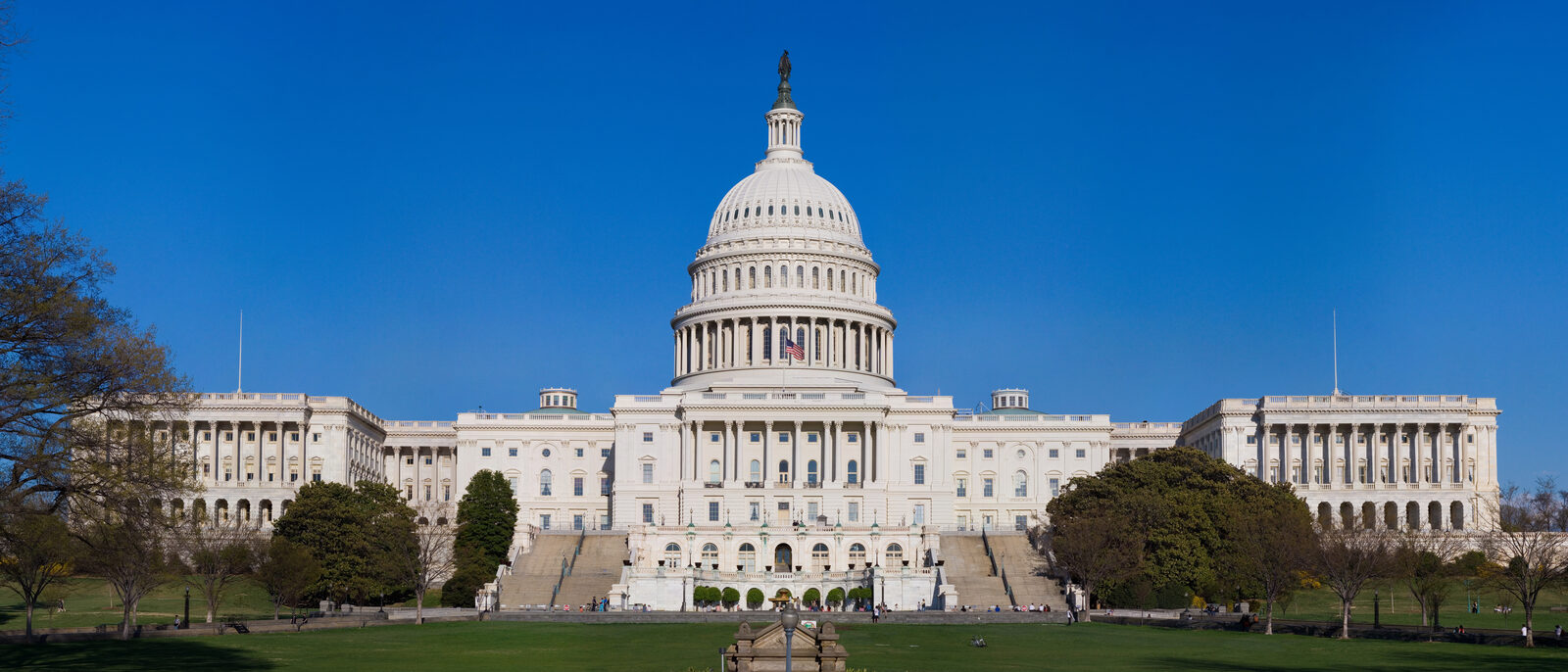
Image: U.S. Capitol, via Wikimedia Commons. The Investigative Journal aims for accuracy; corrections may be sent to the editor. Parties named in pending matters are entitled to a right of reply.