

The Investigative Journal’s SEC Watch reviews the filings, enforcement actions, and rulemakings posted to SEC.gov and EDGAR. Today’s edition covers the Commission’s Friday, August 21 docket — the last business day before this morning — along with the most consequential disclosures and actions posted during the week of August 17.
The Securities and Exchange Commission closed last week with a five-release enforcement docket headlined by insider trading charges against two former Wall Street investment bankers who, according to the Commission’s complaint, turned advance word of a utility buyout into roughly $18.5 million in trading profits. Records posted to SEC.gov during the week also show fraud charges against the former leadership of collapsed subprime auto lender Tricolor, a proposed settlement with the CEO of Nasdaq-listed Live Ventures, and a major crypto rulemaking now open for public comment.
Ex-bankers charged over $18.5 million in trading ahead of South Jersey Industries buyout
The SEC on Friday filed fraud charges against Gavin Wolfe and Jason Satsky, two former investment bankers, alleging insider trading in South Jersey Industries, Inc. ahead of the utility’s February 24, 2022 announcement that it had agreed to be acquired by a private investment fund. According to the complaint, filed in the Southern District of New York, Satsky was co-head of an energy and utility group at a New York investment bank advising South Jersey on the deal and served as lead banker on the transaction.
The complaint alleges Satsky tipped his longtime colleague and close friend Wolfe, who bought more than 2.2 million shares and made approximately $18.5 million when the stock rose roughly 40 percent on the announcement. Wolfe allegedly also tipped others whose trades generated approximately $515,000 in profits. The SEC is seeking permanent injunctions, civil penalties, and officer-and-director bars against both men, and it named eight entities through which Wolfe allegedly traded — including Evergreen Capital, L.P. and GAW Holdings, LLC — as relief defendants. These are allegations in a pending civil case; no court has ruled on them.
Tricolor’s former executives charged over $1.9 billion ABS program
In one of the week’s most significant actions, the SEC on August 18 charged Daniel Chu, Jerome Kollar, and Ameryn Seibold — the former CEO, CFO, and senior director of finance of Texas-based Tricolor Holdings — over an alleged multi-year scheme to double-pledge hundreds of millions of dollars of subprime auto loans across multiple asset-backed securities offerings and lenders.
According to the complaint, Tricolor raised more than $1.9 billion through ABS offerings from at least 2020 until its September 2025 bankruptcy while representing that collateral loans were free of other liens, and defendants allegedly manipulated loan metrics to make defaulted loans appear current and securitization-eligible. More than $945 million in principal remained outstanding to ABS investors at the bankruptcy, the SEC says. The Southern District of New York announced parallel criminal charges in December 2025. The civil charges, filed under the antifraud provisions of the securities laws, seek disgorgement, penalties, and officer-and-director bars against Chu and Kollar. The allegations remain unproven in both proceedings.
Trade Desk finance director accused of trading around his own company’s earnings
Friday’s docket also included charges against Jesse R. Mitchell, formerly senior director of financial planning and analysis at digital advertising company The Trade Desk. The SEC’s complaint alleges Mitchell used advance receipt of quarterly earnings results to buy 3,850 shares ahead of a positive second-quarter 2024 release, clearing nearly $20,000, and later to buy out-of-the-money put options ahead of the fourth-quarter 2024 release containing the company’s first-ever revenue guidance miss. When the stock dropped more than 30 percent the next day, Mitchell allegedly sold the options for a profit of over $318,000.
Notably, the filings indicate the alleged trades violated not only blackout windows but the company’s outright ban on employees trading its options. The Trade Desk itself is not accused of wrongdoing. Federal prosecutors in Manhattan announced a parallel securities fraud indictment against Mitchell on August 20. The charges are allegations pending in court.
Live Ventures CEO and former CFO consent to proposed judgments
The SEC filed consents and proposed final judgments Friday as to John “Jon” Isaac, CEO of Nasdaq-listed Live Ventures Inc., and Virland A. Johnson, the company’s former CFO, in a financial and disclosure fraud case dating to 2021. The SEC’s amended complaint alleged Isaac engineered a transaction creating $915,500 of fraudulent “other income” that boosted fiscal 2016 pre-tax income by 20 percent, and that a 2016 press release carried earnings per share 40 percent higher than the audited figure. Johnson allegedly made false statements to outside accountants in a 2018 management representation letter.
Without admitting the allegations, Isaac consented to a proposed judgment — still subject to court approval — enjoining future violations of Sections 17(a)(2) and (3) of the Securities Act and imposing a $175,000 civil penalty; Johnson consented to a proposed injunction under Rule 13b2-2 and a $118,225 penalty. Filings indicate Isaac remains the company’s chief executive.
SEC moves to compel Texas oil venture to honor subpoenas in $42.7 million probe
The Commission asked a federal court in Texas to compel 1859 Operating, LLC, five affiliated entities, and six individuals to comply with investigative subpoenas outstanding since April 2024. The investigation concerns a potential offering fraud involving fractional undivided working interests in oil leases through which respondents raised approximately $42.7 million, according to the SEC’s application.
The filing states respondents have produced roughly 8,344 documents out of what their own counsel described as potentially hundreds of thousands, if not millions, of responsive records, and that scheduled testimony has been repeatedly canceled. Importantly, the SEC states its fact-finding investigation is ongoing and it has not concluded that anyone violated the securities laws.
Final judgment closes out microcap promotion case
Rounding out Friday’s docket, a federal court in New York entered a final consent judgment against Brian Keasberry in a 2024 case alleging a microcap accumulation-and-promotion scheme that ran from 2017 to 2021. The judgment orders $37,500 in disgorgement, $12,864 in prejudgment interest, and a $37,500 penalty, and imposes penny-stock and officer-and-director bars. The SEC’s litigation against co-defendants continues.
Regulation Crypto Assets: comment clock running on a new offering regime
On the rulemaking side, the Commission’s August 18 proposal of “Regulation Crypto Assets” may prove the most consequential item of the month for capital formation. The proposed rules would create two registration exemptions for investment contracts involving crypto assets — a one-time exemption for offerings up to $5 million over four years, and a $75 million per-12-month exemption carrying financial statement and ongoing reporting requirements — plus a conditional safe harbor under which a crypto asset would be deemed outside the “investment contract” definition of a security.
The proposal would also preempt state registration requirements for exempt offerings and certain secondary transactions. Chairman Paul S. Atkins framed the package as a pathway to “onshore innovation in crypto asset markets.” The comment period runs 60 days from Federal Register publication — a window worth watching for how traditional market participants respond to the state-preemption provisions.
Corporate Disclosure Watch: Ameresco CFO heads for the exit
In corporate filings, energy services company Ameresco, Inc. (NYSE: AMRC) disclosed in an 8-K filed August 19 that Mark A. Chiplock resigned as executive vice president, chief financial officer, and chief accounting officer, effective September 25, 2026. The filing states the resignation was to pursue other professional opportunities and was not the result of any disagreement with the company on operations, policies, or practices. A CFO search is underway, per the company’s EDGAR filings.
What may warrant a deeper look
Three threads from this week’s records stand out for further TIJ reporting. First, the 1859 Operating subpoena fight: a $42.7 million retail-facing oil-interest offering paired with what the SEC describes as near-total noncompliance with two-year-old subpoenas raises questions about where investor funds went — answers that may emerge in the Northern District of Texas docket. Second, the network of LLCs named as relief defendants in the Wolfe case — spanning capital, financial, and property-management entities — suggests a trading and asset structure worth mapping against public real estate and corporate records. Third, the Tricolor complaint’s account of double-pledged collateral invites scrutiny of the underwriters and trustees who packaged the ABS deals — and of what their diligence caught or missed before $945 million in investor principal was stranded.
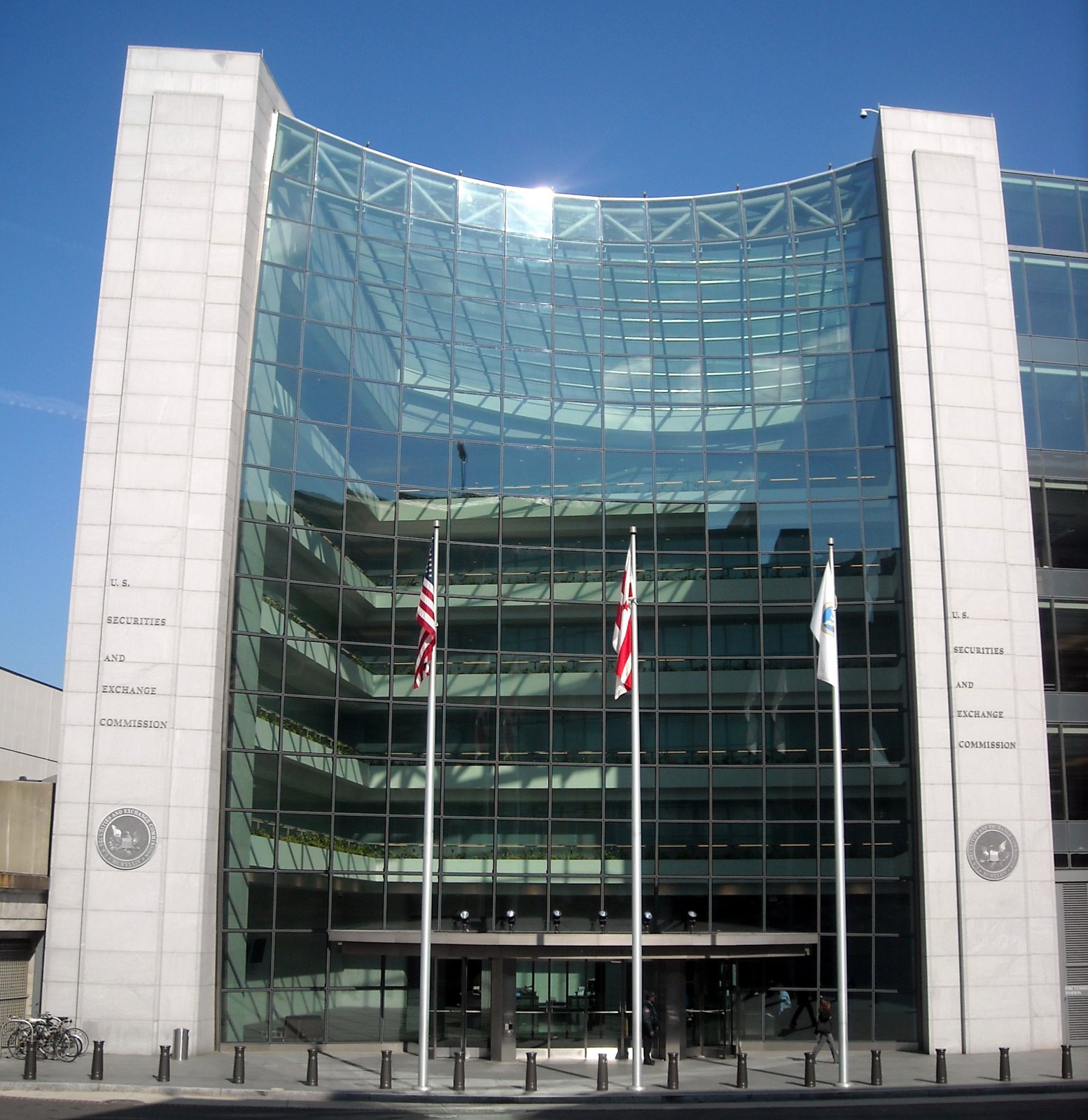
Editor’s note: This digest is compiled from SEC litigation releases, press releases, and EDGAR filings linked above. Civil complaints contain allegations, not findings; settlements noted as “without admitting” reflect the defendants’ positions in the linked records. TIJ did not seek comment from named parties for this filings roundup; parties wishing to respond may contact the editors. Featured image: U.S. Securities and Exchange Commission headquarters, Washington, D.C. Photo by AgnosticPreachersKid via Wikimedia Commons, CC BY-SA 3.0.
