

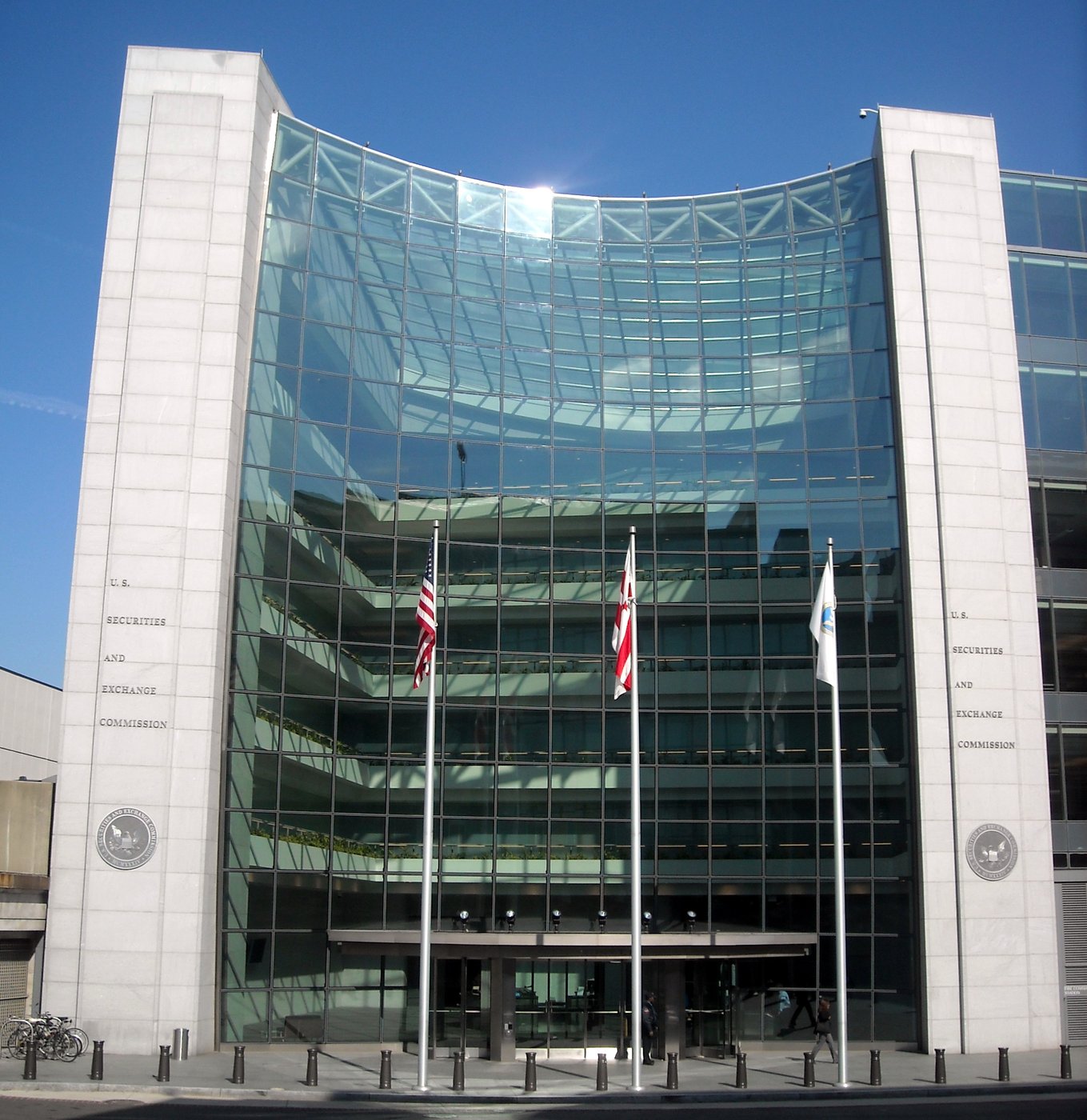
WASHINGTON — July 16, 2026. A marquee bank merger, back-to-back departures in the executive suites of two well-known issuers, an unusually expensive debt amendment at a small-cap technology firm, and a law-enforcement disruption at a data-services company dominated the latest wave of filings to reach the Securities and Exchange Commission’s EDGAR system. The disclosures landed as the Commission itself continued a visible pivot — standing up a new enforcement unit aimed at retail fraud even as it advances a broad, deregulatory rulemaking agenda. Today’s SEC Watch covers six notable filings and the enforcement backdrop against which they were made. Every claim below is drawn from public records; allegations are distinguished from findings, and pending matters are flagged as such.
1. First Hawaiian to acquire TriCo Bancshares in an all-stock deal creating a roughly $34 billion bank
In a Form 8-K dated July 12, 2026, First Hawaiian, Inc. (Nasdaq: FHB) disclosed that it had entered into an Agreement and Plan of Reorganization and Merger with TriCo Bancshares (Nasdaq: TCBK), parent of Chico, California-based Tri Counties Bank. According to the filing, the transaction is structured in three steps: a First Hawaiian subsidiary, Horizon Merger Sub, will merge into TriCo; the surviving company will then merge into First Hawaiian; and Tri Counties Bank will merge into First Hawaiian Bank, which survives as the combined depository. The companies’ joint press release, furnished as Exhibit 99.1, states that TriCo shareholders will receive 2.095 First Hawaiian shares for each TriCo share, valuing the exchange at $63.12 per TriCo share based on First Hawaiian’s July 10, 2026 closing price.
Filings indicate the combined institution would hold approximately $34 billion in assets, which the companies describe as the sixth-largest bank headquartered in the Western United States. First Hawaiian and TriCo shareholders are expected to own roughly 65% and 35% of the combined company, respectively. Four current TriCo directors — including Chairman, President and CEO Rick Smith — are slated to join the First Hawaiian boards, and the release says First Hawaiian will retain the Tri Counties Bank brand on the mainland with no branch closings anticipated. Both boards unanimously approved the agreement, and the parties expect to close by the end of 2026, subject to regulatory and shareholder approvals.
The 8-K also carried preliminary second-quarter results, disclosed ahead of First Hawaiian’s scheduled July 24 earnings release: net income of $73.4 million and diluted EPS of $0.60, up from $67.8 million and $0.55 in the prior quarter, with net interest margin expanding to 3.25%. The deal is significant because bank consolidation among mid-cap regionals has accelerated in a higher-for-longer rate environment, and any transaction of this size faces a multi-agency regulatory review in which commercial real estate concentration and integration risk are common friction points. Evercore and Sullivan & Cromwell advised First Hawaiian; Keefe, Bruyette & Woods and Holland & Knight advised TriCo. Read the First Hawaiian 8-K on EDGAR and the joint press release (Exhibit 99.1).
2. Brown-Forman’s CEO signals retirement after nearly three decades
Brown-Forman Corporation (NYSE: BFA, BFB), the Louisville-based maker of Jack Daniel’s and Woodford Reserve, disclosed under Item 5.02 of a July 13, 2026 Form 8-K that President and Chief Executive Officer Lawson Whiting had announced his decision to retire “after nearly 30 years of distinguished service,” effective upon the appointment of a successor. The filing states that the board has initiated a search for the company’s next chief executive.
The disclosure is material because leadership continuity is a closely watched variable at consumer-staples companies navigating softer spirits demand and an uncertain trade environment for imported and exported alcohol. Records do not indicate that Whiting’s departure stems from any disagreement with the company; the 8-K frames the move as a planned retirement, and a related press release was furnished under Regulation FD. Investors and TIJ readers will want to watch whether the board elevates an internal candidate — a frequent pattern at family-influenced issuers — or looks outside. Read the Brown-Forman 8-K on EDGAR.
3. CoStar Group discloses a CFO change — and the compensation package that comes with it
Real-estate data and marketplace company CoStar Group, Inc. (Nasdaq: CSGP) reported in a Form 8-K that Chief Financial Officer Christian Lown informed the company on July 7, 2026 of his decision to resign effective July 31, “for another opportunity outside the Company’s industry.” The filing states the resignation was not the result of any disagreement with the company on its operations, policies or practices. The board named Robin Rossmann, 45, currently CoStar’s Managing Director for Europe, as the incoming CFO, effective July 31.
The 8-K details Rossmann’s offer terms with unusual specificity: an annual base salary of £440,000 that converts to $590,000 upon his relocation to Arlington, Virginia; a target annual bonus of 100% of base salary; a one-time equity award valued at $2.5 million (40% in restricted stock units, 60% in performance stock units tied to 2026–2028 metrics); and a $500,000 relocation subsidy. Executive-compensation disclosures of this kind offer a window into how growth-oriented issuers structure incentives around performance versus retention. The transition also merits attention because CFO turnover at a company of CoStar’s scale can affect the cadence and tone of financial guidance. Read the CoStar Group 8-K on EDGAR.
4. Genasys extends a Cantor Fitzgerald term loan on notably steep terms
Genasys Inc. (Nasdaq: GNSS), a maker of critical-communications and emergency-management technology, disclosed in a July 13, 2026 Form 8-K that it had entered into and closed a Third Amendment to its Term Loan and Security Agreement with lenders and Cantor Fitzgerald Securities as agent. The filing states that $15,206,812.50 was outstanding on the closing-date term loan, and that the maturity was extended one year, from July 13, 2026 to July 13, 2027.
The amended economics are worth flagging. According to the 8-K, the loan continues to bear interest at three-month SOFR plus 5%, but is now also subject to a “guaranteed minimum return of 20%” — a multiple-on-invested-capital feature — with the company obligated to make $1 million monthly payments beginning October 1, 2026 and to maintain a $4 million minimum-liquidity covenant. In a related warrant amendment, the exercise price of outstanding warrants was reduced from $2.53 to $2.28 per share. Terms of this kind — a guaranteed lender return layered atop a floating rate, tight liquidity covenants, and repriced warrants — often signal constrained financing options for a small-cap borrower. The filing cautions that the agreement’s representations were made solely for the parties’ benefit and should not be relied upon by investors. Read the Genasys 8-K on EDGAR.
5. Alarum Technologies pauses network services after a reported law-enforcement action
Alarum Technologies Ltd. (Nasdaq: ALAR), an Israel-based data-collection and internet-access company, furnished a Form 6-K attaching three early-July press releases describing a fast-moving incident at its subsidiary NetNut Ltd. According to the filing, on July 2 the company responded to what it described as the reported seizure of certain domains associated with its subsidiary’s residential proxy network; on July 3 it provided an update “regarding recent law enforcement action” affecting those domains; and on July 4 it announced a temporary operational pause of certain network services while it investigates.
As a foreign private issuer, Alarum reports on Form 6-K rather than 8-K, and the disclosures reflect the company’s own characterization of events; the filing does not identify the agency involved or specify any charges, and no findings against the company are stated in the record reviewed. Residential proxy networks — services that route internet traffic through consumer IP addresses — have drawn increasing scrutiny from regulators and law enforcement worldwide, and an operational pause of core services is a material development for a company whose revenue depends on network availability. TIJ will monitor subsequent filings for detail on scope and financial impact. Read the Alarum Technologies 6-K on EDGAR.
6. SEC stands up a Retail Fraud Working Group
On the regulatory side, the Commission announced on July 7, 2026 (Press Release 2026-63) the creation of a Retail Fraud Working Group within the Division of Enforcement. According to the release, the group is designed to identify and combat offering frauds, pump-and-dump schemes, market manipulation, and breaches of duty by investment advisers and broker-dealers, and to coordinate with regulatory partners and investor-education efforts.
SEC Chairman Paul S. Atkins framed the initiative as “a return to the core values and principles of the enforcement program,” while Enforcement Director David Woodcock said the group would bring “focused energy and resources” to protecting retail investors. The working group will be led by Kate Zoladz, Deputy Director, West, and Kim Frederick, Assistant Director in the Asset Management Unit. The move is significant for what it signals about enforcement priorities under the current Commission: a concentration of resources on frauds that directly harm everyday investors. Read the SEC announcement.
The enforcement and rulemaking backdrop
The new working group arrives amid a broader recalibration at the agency. Earlier this year, the Commission announced a settled accounting-and-disclosure-fraud action against Archer-Daniels-Midland Company and former executives, in which ADM — without admitting or denying the findings — agreed to a $40 million civil penalty over adjustments that the SEC’s order found overstated operating profit in its Nutrition segment; a litigated action against a former executive remains pending, and pending allegations are not findings of liability (PR 2026-15). The Commission’s Market Abuse Unit also charged 21 individuals in an alleged, decade-long insider-trading scheme built on information said to have been misappropriated from law firms; those charges, too, are allegations to be resolved in court (PR 2026-44).
At the same time, the Commission’s public docket shows a deregulatory tilt in rulemaking. According to the SEC’s press-release archive, the agency has proposed rescinding its climate-related disclosure rules, floated permitting optional semiannual (rather than quarterly) reporting by public companies, and rescinded a prior policy governing denials of settlements in enforcement actions. Reported neutrally, these are structural changes to the disclosure and enforcement environment that public companies and investors will be tracking as comment periods run. The full record is available on the SEC press-releases page.
What may warrant deeper TIJ investigation
Several threads from today’s filings merit follow-up. First, the Genasys debt amendment: a guaranteed 20% minimum return to lenders, layered on a floating rate with a tight liquidity covenant, raises questions about the company’s financing alternatives and cash runway that its next quarterly report may clarify. Second, the NetNut matter at Alarum: the filings confirm an operational pause tied to a reported law-enforcement action, but not the jurisdiction, the legal basis, or the revenue exposure — all of which are legitimate subjects for sourced reporting as the record develops. Third, the First Hawaiian–TriCo merger will generate a Form S-4 and joint proxy statement in the coming weeks; those documents typically disclose deal protections, management projections, and financial-advisor analyses that reward close reading. Finally, the executive transitions at Brown-Forman and CoStar invite scrutiny of succession planning and compensation design, particularly the performance metrics attached to CoStar’s new equity grants. TIJ will continue to track each of these as fresh filings appear on EDGAR.
Sources and method: This digest is based on primary filings retrieved from the SEC’s EDGAR system and official SEC press releases, each linked inline above. Financial figures and deal terms are quoted or summarized from those documents. Characterizations attributed to companies reflect their own statements; allegations in enforcement matters are not findings of wrongdoing, and settled matters resolved without admissions are identified as such. Featured image: U.S. Securities and Exchange Commission headquarters, Washington, D.C., by AgnosticPreachersKid via Wikimedia Commons, licensed under CC BY-SA 3.0.