

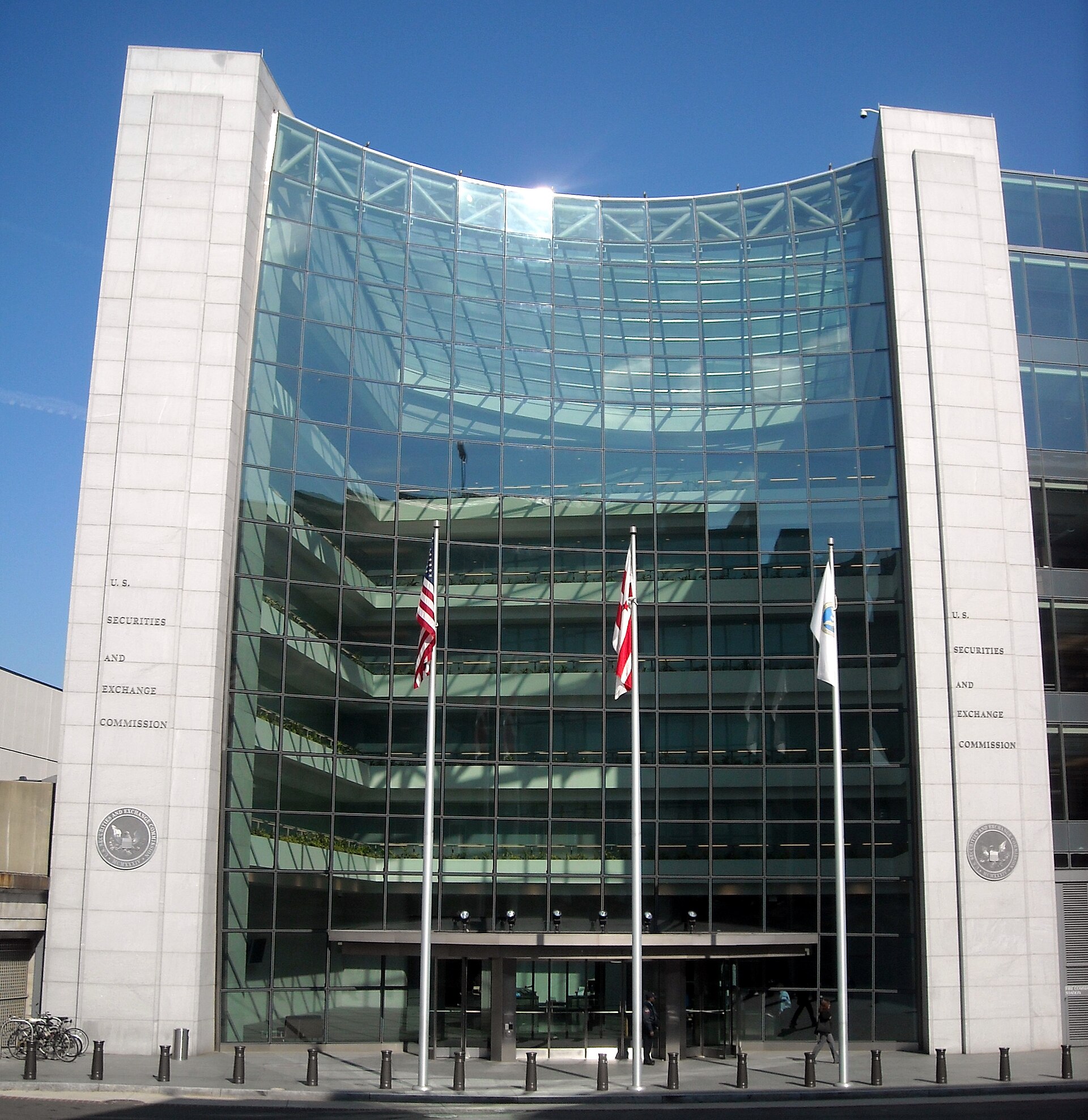
SEC Watch is The Investigative Journal’s daily read of the securities record — the enforcement actions, corporate disclosures, and rulemaking that move markets and merit a second look. Coverage is drawn from public filings on SEC EDGAR and official Commission releases. Charges described below are allegations unless a court or the Commission has entered findings.
The dominant story on the securities beat this month is not a single blockbuster fraud case but a steady, deliberate reordering of priorities at the U.S. Securities and Exchange Commission under Chairman Paul S. Atkins. In the space of two weeks, the Commission proposed a sweeping overhaul of how investors receive corporate information, stood up a new enforcement unit aimed squarely at retail fraud, and continued to advance a deregulatory disclosure agenda that had been telegraphed since the spring. Records published on SEC.gov and EDGAR show an agency simultaneously loosening some disclosure mandates while sharpening its enforcement focus on the frauds it says harm ordinary investors most directly. Below are the filings and actions from the current cycle that TIJ is watching.
Corporate Disclosure Watch
1. SEC proposes to make electronic delivery the default for investor documents
On July 16, 2026, the Commission announced a proposal it framed as making corporate information “more readily accessible and useful for investors” through a modernized approach to electronic delivery (Release 2026-67). The proposal, which the Commission published for public comment, would revisit decades-old conventions under which many disclosures still default to paper unless an investor affirmatively opts into electronic access.
For issuers, a shift toward e-delivery carries real cost and workflow implications, and the change would touch the delivery of prospectuses, shareholder reports, and proxy materials that companies are obligated to furnish. For investors, the central question is one of engagement: filings indicate the Commission believes digital-first delivery improves accessibility, while investor advocates have historically cautioned that default-electronic regimes can reduce the share of shareholders who actually read what they are sent. Because the measure is a proposal rather than a final rule, its practical effect will depend on the comment period and any revisions before adoption. TIJ will track the docket.
2. The disclosure rollback continues: climate rules teed up for rescission
The e-delivery proposal lands amid a broader loosening of disclosure requirements. On May 29, 2026, the Commission proposed rescinding the climate-related disclosure rules it had adopted in 2024 (Release 2026-49), and on May 19 it proposed what it called “transformative reforms” to simplify registered offerings and reporting requirements for public companies (Release 2026-46).
Taken together, the filings show a Commission moving methodically to pare back mandates adopted under the prior leadership. Supporters of the approach argue that streamlined reporting lowers compliance costs and encourages more companies to access public markets — a thesis the Commission bolstered on July 1 when it published market statistics highlighting an increase in initial public offerings and proceeds raised (Release 2026-61). Critics counter that rescinding climate and other line-item disclosures reduces the comparable, standardized information available to investors who had begun to price it in. Both positions turn on questions of investor benefit that the comment files will test; for now, the direction of travel is clear from the record.
3. Clover Health discloses a cyber intrusion — and its materiality judgment
A concrete example of disclosure judgment arrived on July 17, 2026, when Clover Health Investments, Corp. (NASDAQ: CLOV; CIK 0001801170) filed a Form 8-K describing a cybersecurity incident (EDGAR filing). According to the filing, the company identified anomalous login activity on certain information systems on July 4, 2026, activated its incident-response procedures, engaged third-party experts, and notified law enforcement. The investigation determined that a threat actor accessed three non-managerial health-plan employee accounts through social engineering.
The filing states that the affected accounts — used for member visit-scheduling and broker-facing sales functions — had access to certain personally identifiable information and protected health information, but no access to corporate financial or claims systems. Clover Health said that, based on information currently available, it does not believe the incident has had, or is reasonably likely to have, a material impact on its business, financial condition, or results of operations, and that it will provide required notifications to impacted members once its assessment is complete.
The disclosure is notable less for its severity than for its form: the company filed under Item 8.01 (“Other Events”), the voluntary catch-all, rather than Item 1.05, the line item reserved for cybersecurity incidents a registrant has determined to be material. That choice reflects a materiality determination that regulators, plaintiffs’ lawyers, and members may scrutinize as the scope of accessed data is finalized. TIJ notes the distinction without drawing a conclusion; the filing itself is the record.
SEC Enforcement
4. A new Retail Fraud Working Group signals where cases will come from
On July 7, 2026, the Commission announced the creation of a Retail Fraud Working Group within the Division of Enforcement (Release 2026-63). Per the announcement, the group is designed to identify and combat fraud targeting everyday investors — offering frauds, pump-and-dump schemes, market manipulation, and breaches of duty by investment advisers and broker-dealers — and to serve as a dedicated resource for proactive case generation and coordination with regulatory counterparts.
Chairman Atkins said the working group “reflects our commitment to protect investors from fraud and is a return to the core values and principles of the enforcement program.” Enforcement Director David Woodcock said the effort would bring “focused energy and resources” to generating cases and using “data and technology to find and stop those who seek to take advantage of retail investors.” The record identifies the group’s leaders as Kate Zoladz, Deputy Director, West, and Kim Frederick, Assistant Director of the Asset Management Unit.
The move dovetails with the Commission’s stated enforcement philosophy for the year. In announcing fiscal-year 2025 results on April 7 (Release 2026-34), the Commission reported 456 enforcement actions and $17.9 billion in ordered monetary relief, while emphasizing a pivot away from what it characterized as “regulation by enforcement” toward fraud cases and individual accountability; roughly two-thirds of standalone actions charged one or more individuals, and the Commission obtained bars against 119 individuals from serving as officers or directors. Whether the new working group converts that posture into filed cases is the metric to watch.
5. ADM settlement resolves — but the litigated case against its former CFO continues
One accounting-fraud matter from earlier this year remains live and worth revisiting because a contested piece of it is still before a federal court. On January 27, 2026, the Commission announced settled charges against Archer-Daniels-Midland Company and former executives Vince Macciocchi and Ray Young, and a litigated action against former CFO Vikram Luthar, over allegedly inflating the performance of ADM’s Nutrition segment (Release 2026-15). Records indicate the alleged conduct involved intersegment “adjustments” — retroactive rebates and price changes not available to third-party customers — targeted to hit operating-profit growth goals of 15% to 20% per year that executives had projected to investors.
Under the settlement, ADM agreed to pay a $40 million civil penalty without admitting or denying the findings; Macciocchi agreed to disgorgement and penalties totaling roughly $529,000 and a three-year officer-and-director bar; and Young agreed to disgorgement and penalties totaling roughly $651,000, according to the Commission’s order. The Commission credited ADM’s cooperation, internal investigation, and remediation, and established a Fair Fund to distribute relief to harmed investors. The complaint against Luthar, filed in the U.S. District Court for the Northern District of Illinois, seeks permanent injunctions, an officer-and-director bar, disgorgement, penalties, and reimbursement of certain compensation under the Sarbanes-Oxley Act.
Because the Luthar matter is a litigated action rather than a settlement, the allegations against him have not been proven and he is entitled to contest them. The case is a rare recent example of the Commission taking an individual accounting-fraud defendant to court rather than resolving on consent, and its progress will test how the current enforcement leadership handles contested trials.
6. A 21-defendant insider-trading sweep still working through the courts
The spring also produced the Commission’s largest individual-defendant action of the cycle. On May 6, 2026, the SEC charged 21 individuals in what it described as a wide-reaching insider-trading scheme (Release 2026-44). The charges are allegations, and each defendant is presumed to have the opportunity to respond in court; TIJ will follow the docket as answers and any settlements are filed.
The action fits the Commission’s emphasis on charging people rather than only firms — a theme the agency underscored in its fiscal-year 2025 review, where it noted a 27% year-over-year increase in the share of standalone actions naming individuals. For readers tracking accountability, the pattern is the point: enforcement resources are being concentrated on named actors and on frauds that reach retail investors, even as the Commission relaxes certain disclosure mandates on the rulemaking side.
What may warrant deeper TIJ investigation
Three threads stand out for follow-up reporting. First, the litigated SEC v. Luthar matter deserves docket-level tracking: a contested accounting-fraud trial would surface internal ADM communications and test the durability of the Commission’s intersegment-pricing theory. Second, the pairing of the e-delivery proposal and the climate-disclosure rescission invites a data-driven look at investor outcomes — whether default-electronic delivery measurably changes shareholder engagement, and what standardized information investors lose if line-item climate disclosures are withdrawn. Third, the Retail Fraud Working Group is, for now, an organizational announcement; its credibility will be measured in filed cases, and TIJ will benchmark its output against the Commission’s own retail-protection rhetoric.
A calendar note for readers: mid-July sits between reporting seasons. Second-quarter Form 10-Q filings are only beginning to arrive, institutional-ownership Form 13-F reports for the June quarter are not due until mid-August, and annual proxy (DEF 14A) season has largely concluded. This edition therefore weights enforcement and rulemaking over quarterly financial disclosures; the next cycles will bring a heavier flow of 10-Q results and 13-F position changes, which we will screen for notable disclosures.
Sources: All items are drawn from primary records on SEC.gov and EDGAR, linked inline above, including Commission press releases 2026-67, 2026-63, 2026-61, 2026-49, 2026-46, 2026-44, 2026-34, and 2026-15; the SEC’s order and complaint in the ADM matter; and Clover Health Investments’ Form 8-K filed July 17, 2026 (EDGAR CIK 0001801170). Featured image: U.S. Securities and Exchange Commission headquarters, photo by AgnosticPreachersKid via Wikimedia Commons, licensed CC BY-SA 3.0.