

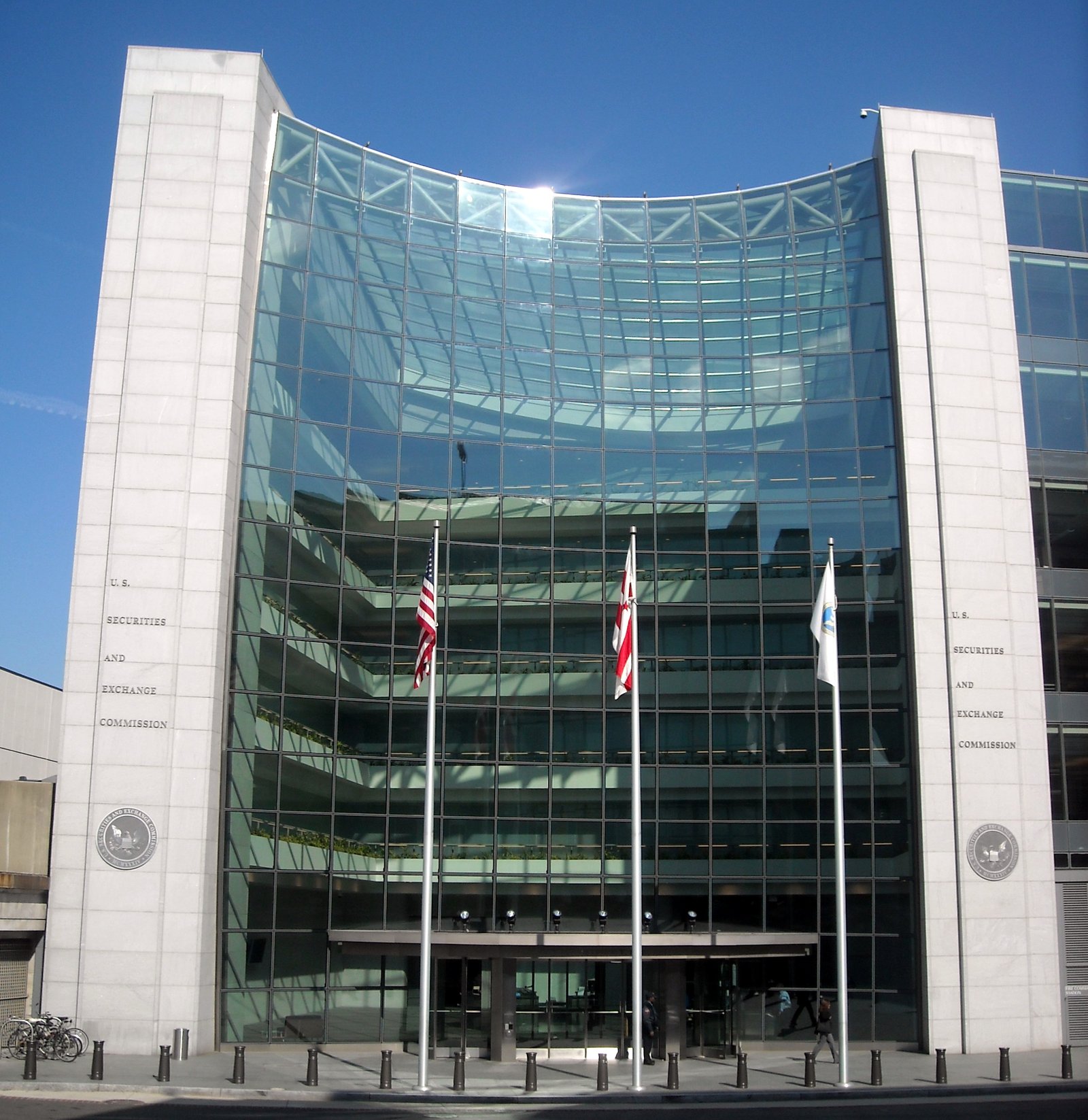
SEC Watch is The Investigative Journal’s daily read of notable filings and enforcement activity on the U.S. Securities and Exchange Commission’s EDGAR system and public dockets. Every claim below is sourced to a public record; allegations are distinguished from findings, and settled matters are identified as such.
The last full trading week of July 2026 produced an unusually broad slate of market-moving disclosures. A Houston auto retailer disclosed a $1.3 billion acquisition and the bridge loan to pay for it; an exchange-traded fund sponsor with roughly $9.6 billion under management agreed to a penalty over affiliate transactions and leverage-limit breaches; a clinical-stage biotech told investors its lead cancer drug faces a make-or-break FDA date on August 2; and the Commission moved to return more than $18.6 million to investors harmed by a decade of accounting misstatements. Below are the filings and orders we judged most consequential, with direct links to the underlying records.
1. Group 1 Automotive discloses a $1.3 billion dealership acquisition (Form 8-K)
Group 1 Automotive Inc. (NYSE: GPI) filed a Form 8-K on July 30 disclosing that it had entered a Purchase and Sale Agreement to acquire substantially all of the assets of the Hennessy Automobile Companies group and affiliated real-estate entities. According to the filing, the business being acquired operates ten automobile dealerships and one collision center in the greater Atlanta, Georgia market. The filing states that Group 1 expects to pay an aggregate purchase price of approximately $1.3 billion, plus an additional amount for remaining inventory to be determined at closing.
The 8-K indicates the company will fund the purchase through roughly $1.25 billion of new debt, backstopped by a 364-day senior unsecured bridge facility committed by JPMorgan Chase Bank, N.A. under a commitment letter dated the same day. The disclosure describes an $80 million post-closing indemnity escrow released in tranches over 18 months and conditions closing on required manufacturer consents and clearance under the Hart-Scott-Rodino Antitrust Improvements Act. The transaction is expected to close no later than the 160th day after signing, extendable to the 190th day under certain circumstances tied to manufacturer approvals.
The same current report (Item 2.02) furnished Group 1’s financial results for the quarter ended June 30, 2026, and its forward-looking-statement section flags risks the company itself identified, including tariffs on imported vehicles, recent federal tax legislation affecting the auto industry, and battery-electric-vehicle mandates in the United Kingdom. The scale of the leverage relative to the deal size, and the antitrust review to come, make this filing worth continued monitoring.
2. Replimune warns of a binary FDA outcome for its melanoma drug (Form 10-K)
Replimune Group Inc. (NASDAQ: REPL) laid out a stark regulatory picture in its annual report on Form 10-K for the fiscal year ended March 31, 2026. The filing discloses that the company’s lead product, RP1 (vusolimogene oderparepvec) in combination with Bristol Myers Squibb’s nivolumab for advanced melanoma, has twice received a Complete Response Letter from the U.S. Food and Drug Administration — the first on July 21, 2025, and a second on April 10, 2026. In both, according to the filing, the FDA questioned whether the company’s IGNYTE trial constituted an adequate and well-controlled study providing substantial evidence of effectiveness.
The 10-K states that, following what the company describes as collaborative communications with the agency, the FDA accepted a resubmitted application on June 26, 2026 as a Class 1 resubmission with an action date of August 2, 2026, and that an advisory committee meeting was to be convened in late July 2026. That timeline places a potentially company-defining decision just days after this filing’s publication.
Notably for investors, Replimune disclosed that without accelerated approval of the resubmitted application, it “may be required to implement a restructuring plan and review our priorities across the RPx portfolio and the company as a whole.” Records like this — where a single regulatory decision is expressly tied to a company’s continued strategy — are exactly the disclosures that reward close reading of the risk-factor section rather than the press release.
3. Simplify Asset Management settles ETF disclosure and leverage findings ($400,000 penalty)
The Commission’s Asset Management Unit brought a settled enforcement action against Simplify Asset Management, Inc., a registered investment adviser the order says had approximately $9.63 billion in regulatory assets under management as of mid-2025. In an order issued July 27 (Investment Company Act Release No. 36269), the SEC found that Simplify caused a series of violations across the exchange-traded funds it advises. Simplify consented to the order without admitting or denying the findings and agreed to a $400,000 civil penalty.
According to the order, Simplify caused a related trust that held roughly a 25 percent stake in the adviser — and at one point about 90 percent of one ETF — to engage in two prohibited affiliate in-kind transactions with the Simplify Propel Opportunities ETF in 2023 without obtaining exemptive relief. The order further finds that Simplify caused the Simplify Macro Strategy ETF to breach leverage limits under the derivatives rule (Rule 18f-4), with a value-at-risk measure reaching as high as 291 percent of its benchmark, and that the adviser did not notify the fund board or make required filings on Form N-RN until months later. Separately, the order finds that seven Simplify ETFs failed to give shareholders contemporaneous notices that portions of their distributions were a return of capital rather than income — in one fund, the order states, 84 percent of distributions in a period were a return of capital.
The Commission said it considered Simplify’s remedial efforts and cooperation. For fund investors, the case is a reminder that return-of-capital disclosure and derivatives-leverage governance remain active enforcement priorities in the ETF sector.
4. SEC files proposed judgments in the La Mancha advisory-fraud case
In Litigation Release No. 26579, dated July 1, the SEC announced it had filed proposed partial judgments against David Kushner of Boca Raton, Florida, and his firm, La Mancha Funding Corp., in a case pending in the Southern District of New York (filed November 21, 2024). The Commission alleges that Kushner and La Mancha defrauded nearly two dozen investors of approximately $2.1 million within a broader set of private offerings that raised about $10.49 million to fund short-term loans to, among others, sports agents and professional athletes.
The complaint alleges that the defendants made material misrepresentations about the use of investor funds, took undisclosed “origination” and “broker” fees, and misappropriated at least $2.14 million for personal expenses including credit-card bills, tuition, country-club dues, a Mercedes-Benz, and a Hamptons rental. Those remain allegations. As a matter of record, however, the litigation release states that Kushner and La Mancha consented to judgments — subject to court approval — that would impose permanent injunctions and, for Kushner, an officer-and-director bar, with monetary relief reserved for later determination. The release also notes that Kushner previously pleaded guilty to a seven-count indictment in a parallel criminal action brought by the New York County District Attorney.
5. Commission moves to return $18.6 million to Baxter investors (Fair Fund distribution)
On July 28 the Commission issued an order directing disbursement of $18,619,219.66 from the Baxter International Fair Fund to harmed investors, under a distribution plan approved in September 2023. The order itself is an administrative housekeeping step, but the payout is the tangible endpoint of an accountability matter.
The underlying case was a settled 2022 action in which Baxter agreed to an $18 million penalty over improper intra-company foreign-exchange transactions that, from at least 2009 through July 2019, the SEC said materially misstated the company’s reported net income. Two former Treasury-function employees settled related charges. All respondents resolved the matter by consent. This week’s order is what turns that settlement into cash returned to shareholders — a data point worth logging as the Commission emphasizes investor recovery.
6. ToughBuilt Industries loses its SEC registration for delinquent filings
In an order dated July 20 (Exchange Act Release No. 105951), the Commission revoked the registration of ToughBuilt Industries, Inc. under Section 12(j) of the Exchange Act. The order finds that the Irvine, California-based tool company failed to file any periodic reports since the period ended December 31, 2023, in violation of the reporting requirements. ToughBuilt submitted an offer of settlement and consented to the revocation, effective July 21, 2026, without admitting the findings except as to jurisdiction. Registration revocations for delinquent filers are routine in volume but consequential for the affected issuer and its holders, and the gap in public reporting is itself a red flag worth tracking.
The enforcement backdrop: a leadership exit and a new fraud unit
Two personnel and structural developments frame the current enforcement posture. On July 22 the SEC announced that Sam Waldon, Principal Deputy Director of the Division of Enforcement and a 14-year veteran who twice served as Acting Director, would leave the agency on July 31, 2026. He is being succeeded by Osman Nawaz, who rejoined the SEC last month. Earlier in the month, the Commission formed a Retail Fraud Working Group, led by Deputy Director Kate Zoladz and Assistant Director Kim Frederick, to focus on offering frauds, pump-and-dump schemes, and breaches of duty to retail customers.
Both fit the Commission’s stated direction. In its fiscal-year 2025 enforcement results, the SEC reported 456 enforcement actions and $17.9 billion in ordered monetary relief, while itself noting that, after excluding amounts “deemed satisfied” by parallel proceedings and the long-running Stanford Ponzi judgments, the figures fell to roughly $1.4 billion in disgorgement and $1.3 billion in penalties. The agency returned about $262 million to harmed investors, paid roughly $60 million to 48 whistleblowers, and received a record 53,753 tips. The Commission characterized the year as a refocusing on fraud and investor protection; readers should weigh that framing as the agency’s own.
Filings that may warrant deeper TIJ investigation
Four threads stand out for follow-up. First, Replimune’s August 2 FDA action date: the company’s own filing ties the outcome to a possible restructuring, so any subsequent Form 8-K will be material. Second, the Simplify affiliate-transaction findings: a governance structure in which a single trust held both a large stake in the adviser and the dominant position in an ETF it seeded raises questions about board oversight across the fund complex. Third, ToughBuilt’s reporting blackout since the end of 2023 invites scrutiny of what happened operationally in the interim. Fourth, the Group 1–Hennessy transaction will move through Hart-Scott-Rodino antitrust review and manufacturer consents while carrying a $1.25 billion bridge — a financing and concentration story worth watching to close.
Editor’s note on method and right of reply: This digest summarizes public filings and orders. Settled respondents resolved matters by consent, in several cases without admitting or denying the SEC’s findings; pending allegations have not been proven. Companies and individuals named here may respond to The Investigative Journal, and we will update the record accordingly. Figures and characterizations are drawn from the linked primary sources.