

The Investigative Journal’s daily review of notable filings, enforcement actions, and disclosures from the U.S. Securities and Exchange Commission. Every item below is drawn from primary SEC records, which are linked directly. Allegations described in civil complaints are unproven; named defendants are entitled to a defense and to the presumption of innocence in any parallel criminal matter.
The Securities and Exchange Commission closed the week of June 22 with a cluster of insider-trading and investment-fraud actions, headlined by charges against a nuclear engineer accused of trading on one of 2024’s most closely watched energy transactions. Filings reviewed by The Investigative Journal also show continued executive turnover at large issuers and an advancing effort by the Commission’s current leadership to roll back climate-related disclosure obligations. Below are eight developments worth watching.
1. Nuclear engineer charged over Three Mile Island restart secrets
On June 24, the SEC charged Casey Muggleston, a nuclear engineer formerly employed by Constellation Energy Corporation, with insider trading. According to the SEC’s complaint, filed in the U.S. District Court for the District of Delaware (No. 1:26-cv-00744), Muggleston was an engineering manager at Constellation in 2024 with access to material nonpublic information about a confidential project — internally code-named “Project Tetris” — to potentially restart the company’s nuclear plant at Three Mile Island.
The complaint alleges that Muggleston traded ahead of Constellation’s September 20, 2024 announcement that it had entered a 20-year power-purchase agreement with Microsoft Corporation, a deal that would help pave the way for the restart. The agency says the alleged trading generated profits of approximately $1.4 million. The SEC charged him under the antifraud provisions of Section 10(b) of the Securities Exchange Act and Rule 10b-5, and is seeking an injunction, disgorgement with prejudgment interest, and a civil penalty.
The SEC said the matter originated with its Market Abuse Unit’s Analysis and Detection Center, which uses data-analysis tools to detect suspicious trading patterns — a recurring theme in this week’s docket. The U.S. Attorney’s Office for the District of Delaware announced a parallel criminal indictment charging Muggleston with securities fraud. The allegations have not been adjudicated.
2. A relationship, a borrowed laptop, and $2.7 million in alleged profits
One day earlier, on June 23, the SEC charged Justin Jennings and Vortex Strategies LLC, a Wyoming entity the agency says Jennings owned and controlled, in a case filed in the U.S. District Court for the District of New Jersey (No. 2:26-cv-07525). The complaint alleges that, between February 2022 and October 2024, Jennings misappropriated inside information from his then-romantic partner, an account executive at a strategic-communications and investor-relations firm.
According to the SEC, Jennings used his partner’s work-issued laptop, without authorization, to access nonpublic information about mergers, earnings announcements, and other corporate events involving the firm’s public-company clients. Filings indicate he then traded the securities of eight public companies through his personal brokerage account and an account held in Vortex’s name, allegedly reaping about $2.7 million.
The SEC charged Jennings and Vortex under Section 10(b) and Rule 10b-5 and is seeking permanent injunctions, disgorgement with prejudgment interest, and civil penalties. The U.S. Attorney’s Office for the District of New Jersey announced parallel criminal charges. As with the Constellation matter, the case was supported by the Market Abuse Unit’s data-driven detection work; the claims remain allegations pending in court.
3. Settled fraud charges against a New York adviser who claimed access to pre-IPO shares
Also on June 24, the SEC announced settled charges against Giovanni Pennetta, a New York–based investment adviser, over a fund called NextGenTech Investments LLC. The complaint, filed June 22 in the Southern District of New York (No. 26-civ-05209), alleges that from February 2021 through December 2025 Pennetta — operating through an exempt reporting adviser, Sestante Capital LLC — raised more than $10.5 million from at least six investors seeking exposure to a private company’s shares.
According to the SEC, Pennetta falsely represented that he or his companies owned or had access to those shares. Records indicate that neither he nor his entities ever held the shares, that no investor money was used to purchase them, and that he instead misappropriated more than $6.2 million for personal use and to repay an investor in a separate offering. The agency charged violations of Section 17(a) of the Securities Act, Section 10(b) and Rule 10b-5, and Sections 206(1), (2), and (4) of the Investment Advisers Act.
Pennetta consented to a judgment, subject to court approval, permanently enjoining him from the charged provisions and from participating in securities transactions except for his own account, with monetary remedies to be set later. In a parallel criminal case, he pleaded guilty on March 5, 2026 to one count of wire fraud before the same court. The guilty plea distinguishes this matter from the contested cases elsewhere in this digest.
4. Chicago “exclusive investment pool” allegedly drained of $3.6 million
On June 8, the SEC published its litigation release describing charges against John Sterling Myers and two firms he controlled, Sterling Capital, LLC and Sterling Capital Management, LLC. The complaint, filed June 5 in the Northern District of Illinois (No. 1:26-cv-6696), alleges that from January 2022 through at least July 2025 the defendants misappropriated investor money and falsified account statements while serving as advisers to a pooled vehicle, Sterling Capital Investments, LLC.
The SEC says Myers marketed the vehicle as a “premier” and “exclusive investment pool,” raising roughly $4 million from about 28 investors. According to the complaint, he drained the pool through unsuccessful trading and personal spending, leaving more than $3.6 million gone, while sending investors fabricated quarterly statements depicting gains exceeding the S&P 500. The filing further alleges he misappropriated at least $1.8 million to personal accounts and concealed losses by declining to issue required tax forms.
The agency charged Securities Act Section 17(a), Exchange Act Section 10(b) and Rule 10b-5, and Advisers Act Section 206 provisions, plus control-person liability against Myers, and is seeking injunctive relief, disgorgement with prejudgment interest, and penalties. The U.S. Attorney’s Office for the Northern District of Illinois assisted. The allegations are unproven.
5. A decade-long, cross-border law-firm leak scheme
The week’s smaller adviser cases sit against the backdrop of a sprawling action the SEC announced last month. On May 6, the Commission charged 21 individuals in what it described as a decade-long insider-trading scheme built on information misappropriated from multiple global law firms. According to the complaint, filed in the District of Massachusetts, mergers-and-acquisitions attorney Nicolo Nourafchan and his partner Robert Yadgarov orchestrated the scheme between 2018 and 2024, allegedly tipping nonpublic details on more than a dozen pending transactions in exchange for kickbacks.
Joseph G. Sansone, chief of the Enforcement Division’s Market Abuse Unit, said the action reflected the SEC’s commitment to “holding individuals up and down the tipping chain accountable.” The U.S. Attorney’s Office for the District of Massachusetts announced parallel criminal charges against all defendants, and the SEC credited regulators in Denmark, the United Kingdom, Cyprus, Mauritius, and Switzerland for assistance — an indication of how far the alleged trading reached.
Taken together with this week’s filings, the pattern is consistent: the Market Abuse Unit is leaning heavily on data analytics to surface professional and relationship-based leaks. For corporate compliance teams, the through-line is that access controls over deal information — including who can touch a colleague’s devices — remain a live enforcement risk.
6. FIS reshuffles its legal leadership ahead of July 1
On the corporate-disclosure side, Fidelity National Information Services, Inc. (NYSE: FIS) filed a Form 8-K reporting that, effective July 1, 2026, Caroline Tsai will step down as Chief Legal & Corporate Affairs Officer and Corporate Secretary. The Jacksonville-based payments company said Tsai, who joined in 2022, helped steer it through the divestiture of Worldpay and the acquisition of TSYS from Global Payments.
Under the Item 5.02 disclosure, Tsai is expected to remain as a senior advisor through September 1, 2026 to assist with the transition, and will receive severance under terms previously disclosed in the company’s proxy statement filed April 28, 2026. Chip Keller, currently Chief Compliance Officer and Corporate Secretary, will assume the role of Chief Legal Officer and Corporate Secretary. Filings of this type rarely move markets on their own, but legal-leadership changes at large issuers can signal shifts in regulatory posture and are worth tracking alongside proxy-disclosed compensation arrangements.
7. Smaller-cap turnover: Longeveron’s CFO exit and ChargePoint’s quarter
Executive transitions also surfaced further down the market-cap ladder. Clinical-stage biotech Longeveron Inc. (Nasdaq: LGVN) disclosed in a Form 8-K that Chief Financial Officer Lisa Locklear will step down effective July 10, 2026. The company said it anticipates elevating its current controller, Marie Washburn, to the CFO role pending a final contract, and emphasized that Locklear’s departure “was not the result of any disagreement” over its operations, policies, or practices — the standard reassurance investors look for in such filings.
Separately, ChargePoint Holdings, Inc. (NYSE: CHPT) furnished a Form 8-K under Item 2.02 attaching a press release with results for its fiscal first quarter ended April 30, 2026. Because the information was “furnished” rather than “filed,” it carries different liability treatment under the securities laws — a technical but meaningful distinction TIJ readers should note when comparing earnings 8-Ks against formal periodic reports.
8. The Commission moves to rescind climate disclosure rules
Finally, a development with broad implications for what public companies must tell investors. On May 29, the SEC proposed rescinding the climate-related disclosure rules it adopted in March 2024, which would have required granular reporting on greenhouse-gas emissions, climate-risk management, and the financial effects of severe weather. Chairman Paul S. Atkins framed the proposal around “materiality as the North Star,” arguing the rules exceeded the agency’s statutory authority and imposed costs not justified by their benefits.
The proposal follows a winding procedural history: the rules were stayed in April 2024, the Commission voted to end its legal defense of them in March 2025, and the Eighth Circuit has held the consolidated challenges in abeyance pending the agency’s reconsideration. A 60-day public comment period will open once the proposing release is published in the Federal Register, leaving room for investors, issuers, and advocacy groups on all sides to weigh in before any final action.
For disclosure-watchers, the move is the clearest signal yet of the current Commission’s deregulatory direction, which also includes proposals to permit optional semiannual reporting and to streamline registered offerings. Whatever one’s view of the policy, the practical effect for filers would be a materially lighter climate-reporting burden — and a data gap that some institutional investors have said they intend to fill through other channels.
Filings that may warrant deeper TIJ investigation
Several threads from this week merit follow-up. First, the concentration of Market Abuse Unit cases built on data analytics — Muggleston, Jennings, and the 21-defendant law-firm scheme — suggests a sustained enforcement focus on information leaks by professionals and insiders; TIJ will track how these contested matters fare in court. Second, the SEC’s litigation docket also lists a June release captioned SEC v. Gautam Adani and Sagar Adani (Litigation Release No. 26554); TIJ has not yet reviewed the underlying filing and will report separately after examining the primary documents. Third, the adviser-fraud pattern at Sterling Capital and NextGenTech — fabricated statements, misappropriation, and claimed access to hard-to-verify private shares — is a recurring retail-investor risk that rewards scrutiny of exempt reporting advisers.
Editor’s note on sourcing and right of reply: This digest summarizes public SEC filings and press materials. Civil allegations are not findings of liability, and individuals named in pending matters are presumed innocent. The Investigative Journal will update this report to reflect any court rulings or statements from the parties named. Corrections may be directed to the newsroom.
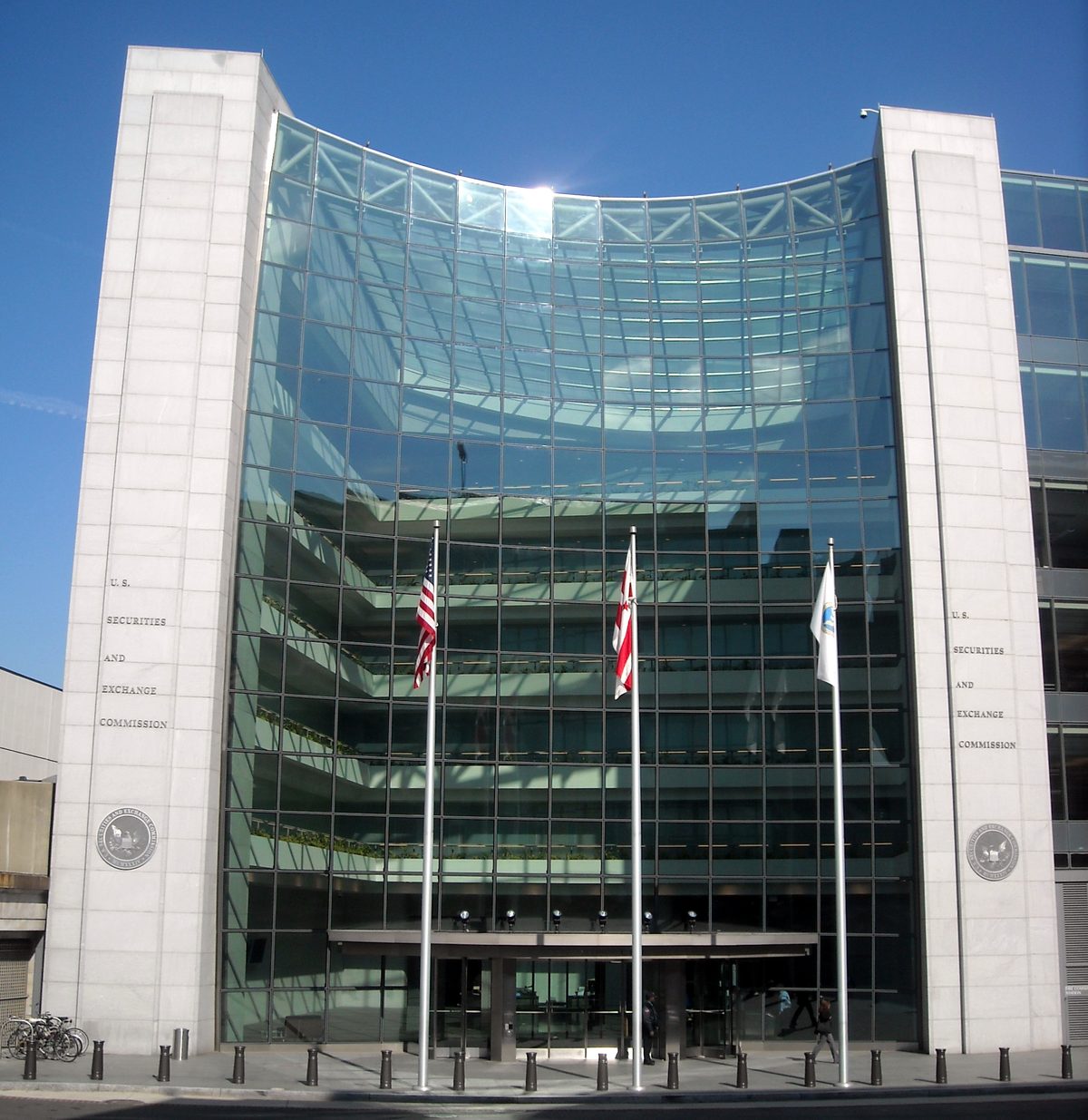
Featured image: U.S. Securities and Exchange Commission headquarters, Washington, D.C. Photo by AgnosticPreachersKid via Wikimedia Commons, licensed under CC BY-SA 3.0.