

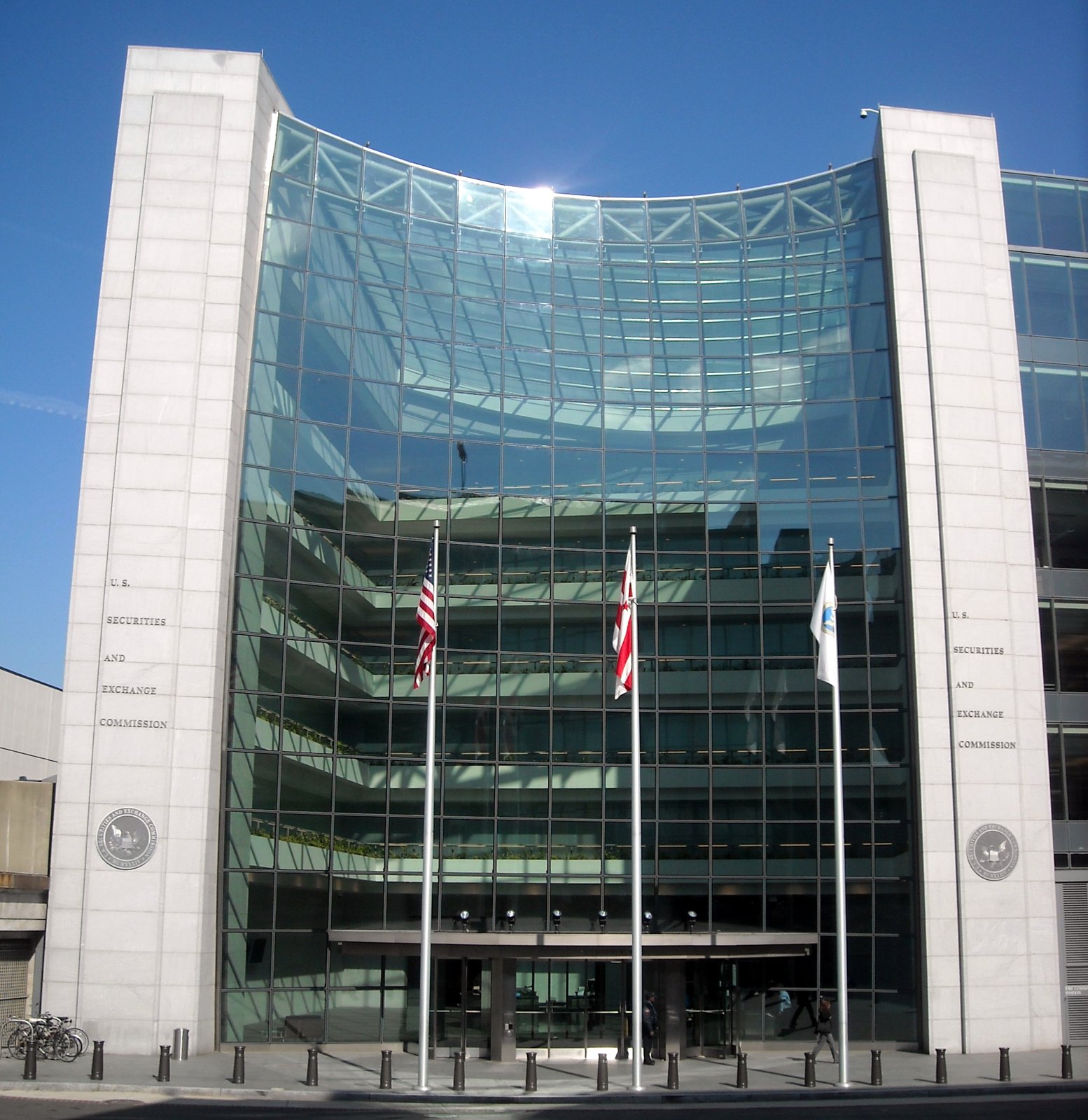
Corporate Disclosure Watch is The Investigative Journal’s weekly review of notable SEC filings — the 8-Ks, proxy statements, and insider trading reports where public companies disclose what they would rather investors not have to read closely. This week’s filings range from a quietly disclosed breach at an identity-security firm to an executive shake-up at a major theme-park operator and proxy data showing 2025 CEO pay topped half a billion dollars in two cases.
1. SailPoint discloses GitHub breach — and a third-party vulnerability blame chain
Identity-security firm SailPoint Technologies (NASDAQ: SAIL) filed a Form 8-K on May 8, 2026 disclosing that it had detected unauthorized access to a subset of its GitHub repositories on April 20, 2026. The disclosure, signed by Executive Vice President and General Counsel Chris Schmitt and filed under Regulation FD, attributes the intrusion to a vulnerability in a third-party application rather than to a direct compromise of SailPoint’s production environment. The company says its incident response team “terminated the unauthorized activity and resolved the issue” and that an investigation conducted with an outside cybersecurity firm has so far found no evidence that customer data in production or staging environments was accessed.
The filing is notable for what it does and does not say. SailPoint disclosed the incident roughly 18 days after detection — within the four-business-day window only because the company appears to have concluded the breach was not material under the SEC’s 2023 cybersecurity disclosure rules, opting instead for the more permissive Regulation FD pathway. Records suggest SailPoint directly notified customers whose information appeared in the accessed repositories. The 8-K does not quantify the number of repositories accessed, the categories of source code or credentials exposed, or whether secrets-scanning has been completed.
For an identity-security vendor whose product line is sold on the premise of zero-trust architecture, the optics of a GitHub source-code exposure — however contained — warrant continued investor attention. SailPoint’s reliance on a third-party application as the breach vector is consistent with the supply-chain attack pattern that has dominated 2025–2026 cyber-incident disclosures.
2. Six Flags announces back-to-back C-suite departures
Six Flags Entertainment Corporation (NYSE: FUN) disclosed in a Form 8-K dated May 7, 2026 that Chief Financial Officer Brian Witherow and Chief Legal and Compliance Officer Brian Nurse would depart the company effective May 8, 2026. Chief Commercial Officer Christian Dieckmann had already departed on May 2. Chief Accounting Officer David Hoffman steps in as Interim CFO; the company has named Amy Martin Ziegenfuss, previously of Carnival Cruise Line, as Chief Marketing Officer and Christopher Bennett, previously of Dentons, as Chief Legal and Compliance Officer, with both appointments effective June 3, 2026.
The departures concentrate three senior officer transitions within a single week at a company still digesting its 2024 merger with Cedar Fair. The company frames the moves as an effort to strengthen its commercial, marketing, legal, and finance capabilities. Filings indicate Six Flags is also splitting the Chief Commercial Officer role and promoting Chris Meyering internally to Senior Vice President, Commercial.
The pace of turnover, combined with the absence of a permanent CFO, is the kind of disclosure that historically attracts ratings-agency and lender attention even when each individual departure is unremarkable. The 8-K does not disclose the terms of any severance payments to Witherow or Nurse.
3. Equilar’s 2026 CEO pay survey: two CEOs above $200 million
The 2026 edition of Equilar’s analysis of the 100 highest-paid CEOs at U.S.-listed companies, drawn from definitive proxy statements filed for fiscal year 2025, places Wayfair (NYSE: W) CEO Niraj Shah at $280.8 million in total disclosed compensation. Broadcom (NASDAQ: AVGO) CEO Hock Tan follows at $205.3 million. Five CEOs in the survey crossed the $100 million threshold. According to the data set, median CEO compensation among the 100 reached $29.4 million in 2025, a 23.2 percent year-over-year increase — the sharpest jump since the 2021 pandemic-recovery cycle.
For context, the AFL-CIO’s most recent CEO-to-worker pay ratio analysis showed an average ratio of 285:1 across the S&P 500 for fiscal 2024. Recently filed proxy data shows Morgan Stanley (NYSE: MS) CEO Edward Pick received $45 million in 2025 total compensation, while APi Group (NYSE: APG) CEO Russell Becker disclosed $10.45 million in total compensation with a 151:1 CEO-to-median-worker pay ratio.
The aggregate picture matters as a disclosure story because the SEC, under Chairman Paul Atkins, has signaled that executive-compensation disclosure reform — the first comprehensive overhaul in roughly two decades — remains on the agenda for 2026, with the Commission’s June 2025 roundtable having framed the current regime as overly complex and burdensome. Investors and corporate governance specialists watching the 2026 proxy season are likely to find both ends of that argument validated by the Equilar data: the magnitude of the awards is real, but the path from grant-date fair value to realized pay continues to obscure rather than clarify pay-for-performance alignment.
4. Tariff-risk language now standard in 10-K disclosures
Analysis of fiscal 2025 annual reports shows that 41 percent of 10-K filings now include tariffs and trade war as a standalone risk factor, with the term appearing 163 percent more frequently across filings than in the prior cycle. The SEC has emphasized that companies should treat tariffs not as hypothetical possibilities but as known trends under Item 303 of Regulation S-K if the risk has already materialized for the registrant — a position consistent with longstanding staff guidance that risk-factor language must not present materialized risks as speculative.
The practical effect on disclosure is twofold. First, more registrants are quantifying tariff exposure as a percentage of cost of goods sold or as a price-pass-through assumption in MD&A. Second, the SEC has stepped up comment letters questioning generic boilerplate that fails to tie tariff regimes to the specific input categories, country exposures, or pricing arrangements at issue. For investors reviewing 10-Ks filed this spring, the comparative read across peer companies is becoming a useful diagnostic for which management teams have a granular view of trade-policy exposure and which are repeating sector-template language.
5. Form 4 patterns: routine 10b5-1 sales, but volume worth watching
Form 4 filings over the first ten business days of May 2026 show a wave of CEO open-market sales executed under Rule 10b5-1 trading plans. Micron Technology (NASDAQ: MU) CEO Sanjay Mehrotra sold 40,000 shares on May 1 at weighted-average prices including $511.91 and $545.39 per share. QUALCOMM (NASDAQ: QCOM) President and CEO Cristiano Amon sold 10,000 shares at $180.00 per share on May 4, a transaction valued at approximately $1.8 million. Zoom Communications (NASDAQ: ZM) CEO Eric S. Yuan reported indirect open-market sales of 24,200 shares on May 4–5. JFrog (NASDAQ: FROG) CEO Shlomi Ben Haim sold 25,000 ordinary shares on May 6 at weighted-average prices of $52.83 and $52.19. Duke Energy (NYSE: DUK) CEO Harry K. Sideris disposed of 20,000 shares at $124.37 on May 8. Fortinet (NASDAQ: FTNT) CEO Ken Xie sold 5,355 shares at an average of $88.90 on May 4 to cover tax withholding obligations.
Each sale was disclosed as pre-arranged under a Rule 10b5-1 plan, the safe harbor designed to insulate insiders from accusations of trading on material non-public information. The SEC’s December 2022 amendments to Rule 10b5-1 — including mandatory cooling-off periods of 90 to 120 days and quarterly disclosure of plan adoptions and terminations — remain a focus of enforcement. The Division of Enforcement’s FY 2025 results, published April 7, 2026, explicitly identify “improper use of Rule 10b5-1 plans” as a priority. None of the May filings reviewed by TIJ show indicators of plan-adoption irregularities, but the cumulative dollar volume of CEO sales in this period — concentrated in technology and utilities — is the kind of data point institutional investors are watching alongside earnings guidance.
6. SEC insider trading sweep: 21 charged in M&A-attorney scheme
In an enforcement action announced on April 24, 2026, the SEC charged 21 individuals in connection with an alleged decade-long insider trading scheme. According to the SEC’s complaint, between 2018 and 2024, Nicolo Nourafchan, a Los Angeles-based mergers-and-acquisitions attorney, allegedly misappropriated material non-public information from his law firm’s clients pertaining to more than 12 pending corporate transactions, sharing the information with co-defendant Robert Yadgarov of Long Beach, New York. The complaint, which constitutes an allegation and not a finding, alleges the scheme generated millions of dollars in illicit profits across a global network of tippees.
The case is significant against the backdrop of a sharply reduced enforcement docket: the SEC reported 456 total enforcement actions in fiscal 2025, the lowest number in at least 20 years. That contraction has prompted debate about whether the Commission is reordering its priorities or under-resourced. The Nourafchan complaint suggests that, whatever the topline numbers, insider-trading enforcement against legal-services intermediaries remains active.
7. Tesla’s $1 trillion Musk pay package — and what comes next
While not a new filing this week, the November 2025 shareholder approval of Tesla (NASDAQ: TSLA) CEO Elon Musk’s performance-based award — valued at up to $1 trillion over 10 years if the company reaches an $8.5 trillion market capitalization and meets operational milestones including the sale of one million humanoid robots — continues to shape the 2026 proxy disclosure landscape. Over 75 percent of voted shares supported the package despite “against” recommendations from both Institutional Shareholder Services and Glass Lewis, and a public expression of concern from Norway’s sovereign wealth fund regarding dilution and key-person risk.
The vote outcome may complicate the SEC’s current rethink of compensation-disclosure rules: the dominant shareholder-democracy critique of the package emphasized the structure of the award, the conditions for vesting, and the dilution math — all areas where current disclosure rules already provide substantial information that shareholders evidently chose to weight differently than the proxy advisers recommended. Whether that pattern persists in the 2026 cycle as activist campaigns rise — Barclay’s reported activist campaigns in 2025 ran roughly 20 percent above the long-term average, with a 52 percent director-election success rate in the first half of the year — will be a defining question for the season.
Disclosures TIJ is tracking for deeper investigation
Three filings reviewed this week warrant follow-up reporting. First, the gap between SailPoint’s April 20 detection date and May 8 disclosure date — and the company’s election to file under Regulation FD rather than Item 1.05 cybersecurity — invites scrutiny of how identity-security vendors are calibrating materiality assessments after the SEC’s 2023 rule. Second, the concentration of three senior officer departures at Six Flags within a single week, absent disclosed severance terms, is the kind of pattern that has historically preceded restatement or going-concern disclosures elsewhere; the next 10-Q will be telling. Third, the Equilar data showing two CEOs above $200 million in 2025 reported compensation — a category that did not exist a decade ago — sits awkwardly alongside the SEC’s pending compensation-disclosure overhaul; we will continue to track which compensation committees engaged in meaningful shareholder outreach after lower say-on-pay support levels in 2025.
Every figure in this column is drawn from a public filing. Where filings characterize disputed allegations, we use language consistent with the procedural posture of the matter. Companies named in this column have a standing right of reply, which they may exercise by contacting TIJ’s editorial desk.
Sources
- SailPoint Form 8-K, May 8, 2026 (SEC EDGAR)
- Six Flags Leadership Transitions release, May 7, 2026 (BusinessWire)
- Six Flags Form 8-K (EDGAR/StockTitan)
- Equilar 100: Highest-Paid CEOs (2026)
- Morgan Stanley DEF 14A, 2026
- APi Group DEF 14A, 2026
- AFL-CIO Executive Paywatch (CEO-to-Worker Pay Ratio)
- BCLP: Updating Risk Factors During a Global Trade War
- Tariff-Risk Disclosure in 10-Ks (Economics Letters, 2026)
- Micron Technology Form 4, May 1, 2026
- QUALCOMM Form 4, May 4, 2026
- Zoom Communications Form 4, May 4–5, 2026
- JFrog Form 4, May 6, 2026
- Duke Energy Form 4, May 8, 2026
- Fortinet Form 4, May 4, 2026
- SEC Charges 21 in Insider Trading Scheme, April 24, 2026
- SEC FY 2025 Enforcement Results Overview
- Tesla $1T Musk Pay Package Approval, November 2025