

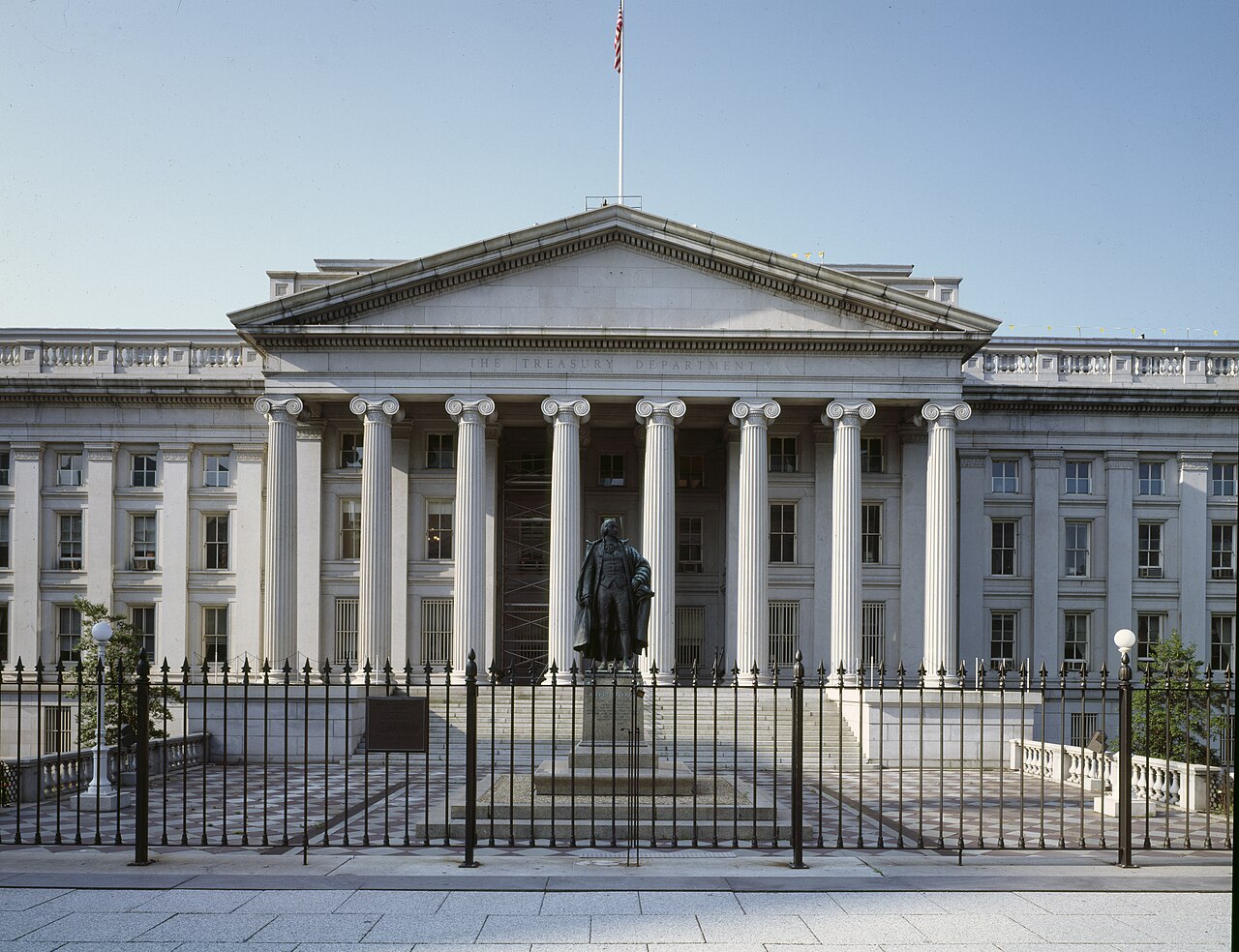
U.S. economic-statecraft agencies kept a brisk operational tempo over the past two weeks, with the Treasury Department’s Office of Foreign Assets Control (OFAC) rolling out counterterrorism, counter-proliferation, and country-specific designations targeting Hizballah’s commercial infrastructure, Iran’s overseas weapons-procurement networks, and Cuba’s state oil monopoly. In parallel, the White House and the Commerce Department advanced an aggressive trade-enforcement agenda — recalibrating Section 232 metals tariffs, opening new Section 301 fronts, and ordering a crackdown on customs fraud. The throughline, public records suggest, is a posture that is simultaneously more targeted (with selective sanctions removals and new general licenses) and more expansive (with whole-of-sector designations and stacked tariff exposure).
Below, The Investigative Journal breaks down the week’s most consequential sanctions and trade-enforcement actions, each sourced to a public government record, with notes on the industries and entities most exposed — and the threads that warrant deeper investigation.
1. Treasury targets Hizballah’s financial and technology network
On June 18, OFAC added three individuals and five entities to its Specially Designated Nationals (SDN) List under the counterterrorism authority of Executive Order 13224, identifying them as part of the financial and commercial support structure for Hizballah, which the United States designates as a terrorist organization. The listings span Lebanon, Syria, Iraq, and Oman, and include a Beirut-area information-technology firm, Globe Technology Providers SARL, alongside trading companies such as Tyke SAL and Al ‘Ahd Company for Trade and Investment in Damascus. OFAC’s notice ties several of the entities to individuals named Alaa Hassan Hamieh and Bahaa Addin Hashem.
The action is notable for reaching beyond traditional finance into technology and wholesale-trade vehicles — the kind of dual-use commercial fronts that records indicate sanctioned networks increasingly use to move value and evade scrutiny. Each designated party is flagged as subject to secondary sanctions under the Hizballah Financial Sanctions Regulations, meaning foreign banks that knowingly facilitate significant transactions for them risk losing access to the U.S. financial system. Companies in Lebanon’s IT, logistics, and import-export sectors that maintained correspondent or vendor relationships with the named firms now face immediate compliance exposure.
Among the individuals named in the June 18 listing is Sleiman Antoine Frangieh, whom OFAC’s record places in Lebanon with a birthplace of Zgharta and describes as “Linked To: Hizballah.” The name, birthplace, and birth year correspond to the prominent leader of Lebanon’s Marada Movement and a former presidential candidate; TIJ relied on the OFAC record for the identification and could not independently confirm further details as of publication. A designation reflects OFAC’s own determination rather than a criminal conviction, and designated parties may petition OFAC for removal. TIJ found no public response from the named parties by press time.
2. “Economic Fury” hits China- and Hong Kong-based Iran procurement networks
On June 10, OFAC sanctioned nine individuals and entities for supporting weapons procurement on behalf of Iran’s Islamic Revolutionary Guard Corps (IRGC) and Ministry of Defense and Armed Forces Logistics (MODAFL), as part of a campaign Treasury has branded “Economic Fury.” “Through Economic Fury, the Treasury Department is disrupting the foreign procurement networks that support the Iranian military’s efforts to acquire weapons,” Treasury Secretary Scott Bessent said in the announcement. The corresponding OFAC listing details the designated parties.
The center of gravity is in China and Hong Kong. Among those designated are Chinese nationals OFAC links to the IRGC and MODAFL, and Hong Kong- and Shanghai-registered companies including Mustad Shanghai International Trade Co. Ltd. and Domus Trading HK Limited — the latter described as operating within Iran’s clandestine banking network. The entities were designated under counter-proliferation (NPWMD) and Iran-related (IFSR) authorities, several with secondary-sanctions exposure. For multinational manufacturers and freight forwarders, the action is another signal that Hong Kong shell structures and mainland intermediaries remain a primary diversion route for controlled components — and that touchpoints with such firms carry escalating risk.
Treasury framed the move as building on May 8, 2026 designations targeting networks that sourced weapons for the IRGC and Iran’s Center for Innovation and Technology Cooperation (CITC). The June 10 package also amended the CITC entry and related listings to add the Iran-conventional-arms designation tag, tightening the legal net around that procurement hub.
3. Cuba’s state oil company CUPET designated under E.O. 14404
Also on June 11, OFAC designated Unión Cuba-Petróleo (CUPET), Cuba’s state-owned oil and gas company, pursuant to Executive Order 14404. According to the State Department’s accompanying release, CUPET was targeted for operating in the energy sector of the Cuban economy, with the department asserting that key CUPET assets “were unlawfully expropriated from American owners years ago.”
The designation blocks all CUPET property and interests within U.S. jurisdiction and, under OFAC’s 50 percent rule, automatically extends to entities CUPET owns in majority. The State Department warned that foreign persons transacting with CUPET — or operating in Cuba’s energy, defense, metals and mining, financial-services, or security sectors as identified in E.O. 14404 — could themselves face exposure. Records indicate the practical effect falls hardest on shippers, traders, and refiners that handle Cuban-origin crude and fuel, and on any third-country firm financing CUPET operations. The move marks an escalation from targeting individual officials to sanctioning the central commercial artery of Cuba’s energy economy.
4. Section 232 metals tariffs overhauled for steel, aluminum, and copper
On the trade side, a June 1, 2026 presidential proclamation (Proclamation 11032) modified the Section 232 tariff regime for aluminum, steel, copper, and their derivative products, with changes taking effect June 8 and running through December 31, 2027. U.S. Customs and Border Protection issued implementation guidance on June 5 (CSMS #68855869); CBP’s trade-remedies page tracks the action. The standard 25 percent metals duty remains, but the proclamation carves out targeted relief and expands coverage.
Under the revised framework, certain agricultural equipment, residential HVAC systems, and industrial machinery move to a reduced 15 percent rate, while a new 10 percent rate applies to foreign-made capital equipment containing at least 85 percent U.S.-origin steel or aluminum by weight. The threshold for goods counted as “entirely” U.S.-metal was relaxed from 95 percent to 85 percent. At the same time, new derivative products — including steel racks and aluminum lithographic plates — became dutiable for the first time. Trade advisories indicate the net effect is a more granular tariff map that rewards importers who audit their Harmonized Tariff Schedule classifications and penalizes those who assume their entries are unaffected, since Section 232 duties stack atop regular and trade-remedy tariffs.
5. New Section 301 fronts and a customs-fraud crackdown
The Office of the U.S. Trade Representative opened additional Section 301 fronts in early June. On June 1, USTR determined that a range of Brazilian policies — spanning digital trade, electronic payments, intellectual property, ethanol market access, and deforestation — were actionable, and proposed a 25 percent tariff on Brazilian goods subject to product exclusions and public comment. A day later, on June 2, USTR proposed forced-labor-related tariffs under a separate Section 301 investigation: an additional 10 percent on goods from countries that already maintain forced-labor import prohibitions, and 12.5 percent on goods from dozens of others under review.
On June 3, the administration issued an executive order directing an overhaul of U.S. customs enforcement aimed at curbing tariff evasion through transshipment, undervaluation, and forced-labor imports. The order tasks the Department of Homeland Security and CBP with tightening importer-of-record eligibility — including minimum U.S.-asset and higher bond requirements — and expanding beneficial-ownership and supply-chain disclosure obligations within 180 days. For importers, the combined effect raises both the cost of non-compliance and the documentation burden, particularly for foreign importers of record and complex multi-country supply chains.
6. Enforcement digest: FTI Consulting settles Russia sanctions case for $1.05 million
On June 1, OFAC announced a settlement with FTI Consulting, Inc., which agreed to remit $1,050,000 to resolve its potential civil liability for apparent violations of sanctions targeting Russia’s financial sector. According to OFAC, between April 2019 and May 2021 FTI indirectly dealt in prohibited debt of VTB Bank OAO — a Russian state-owned bank then on OFAC’s Sectoral Sanctions Identification List — on six occasions. OFAC characterized the conduct as non-egregious and noted it was not voluntarily self-disclosed.
The case is a reminder that sectoral sanctions — which restrict specified categories of debt and equity rather than blocking a party outright — remain a live compliance trap, particularly for professional-services and advisory firms that may handle client assets or financing instruments indirectly. The relatively modest penalty reflects OFAC’s findings on egregiousness, but the underlying conduct illustrates how indirect dealings in restricted Russian debt can accumulate liability over time. Firms in consulting, asset management, and corporate finance are the natural population for similar exposure.
7. Russia program recalibrated: new general licenses, selective delistings
The same June 11 action that designated CUPET also recalibrated the Russia program. OFAC issued Russia-related General License 55F authorizing certain services related to the Sakhalin-2 energy project, and General License 115D authorizing certain transactions tied to existing civil nuclear energy projects, while amending eight Russia-related Frequently Asked Questions. OFAC also removed several parties from the SDN List, including individuals Sergey Maltsev and Olga Raykes, and adjusted a linked Austrian entity’s listing.
The delistings dovetail with a broader “sanctions modernization” effort: filings indicate OFAC removed 76 individuals, entities, and vessels from the SDN List in late May, citing deceased persons, decommissioned vessels, and stale entries lacking sufficient identifiers for screening. For compliance teams, the combination of fresh carve-outs (energy and civil-nuclear licensing) and housekeeping removals underscores that the Russia program is being actively pruned even as enforcement continues — making continuous list monitoring, rather than point-in-time checks, essential.
8. Export-control enforcement keeps escalating at Commerce
The week’s actions sit against a backdrop of intensifying export-control enforcement at the Commerce Department’s Bureau of Industry and Security (BIS). BIS’s enforcement docket for 2026 includes a record $252.5 million civil settlement announced in February with Applied Materials and its Korean subsidiary over unauthorized reexports of semiconductor manufacturing equipment to a restricted Chinese entity — the largest penalty in BIS history — followed by settlements with Solventum, Teledyne FLIR, Coastal PVA Technology, and others. Commerce Secretary Howard Lutnick has publicly pledged a “dramatic increase” in enforcement activity.
The common thread across these cases, public records suggest, is BIS’s hardening posture on subsidiary structures, third-country “substantial transformation” claims, and routed-export transactions — especially in the semiconductor supply chain and with respect to China. For exporters, the cases reinforce that compliance gaps in alias screening, license-suspension protocols, and end-user diligence now carry nine-figure downside risk.
What warrants deeper TIJ investigation
Several of this fortnight’s actions open investigative threads worth pulling. First, the Hizballah technology-and-trade cluster named on June 18 — particularly Globe Technology Providers and the affiliated firms tied to Alaa Hassan Hamieh across Lebanon, Oman, Iraq, and Syria — suggests a procurement architecture that merits mapping of corporate registrations, shared addresses, and downstream vendors. Second, the Mustad and Shanghai–Hong Kong network feeding the IRGC and MODAFL points to Chinese component supply chains whose Western suppliers and freight intermediaries deserve scrutiny. Third, the CUPET designation raises the question of who continues to lift, ship, and finance Cuban crude despite the blocking action — a trail that runs through third-country traders and tanker operators.
Finally, the FTI Consulting settlement invites a broader look at professional-services exposure to sectoral sanctions, and the Section 232 derivative reclassifications create fresh incentives for transshipment and undervaluation that the June 3 customs-enforcement order explicitly targets. TIJ will continue tracking these designations and the entities they touch. Designated and penalized parties are entitled to contest or seek removal through established processes; this digest reflects the public record as of publication and will be updated as those records develop.
Primary sources: U.S. Department of the Treasury / OFAC Recent Actions and press releases; U.S. Department of State; U.S. Customs and Border Protection; and the U.S. Department of Commerce, Bureau of Industry and Security. All designations and penalties described are drawn from public government records linked above.