

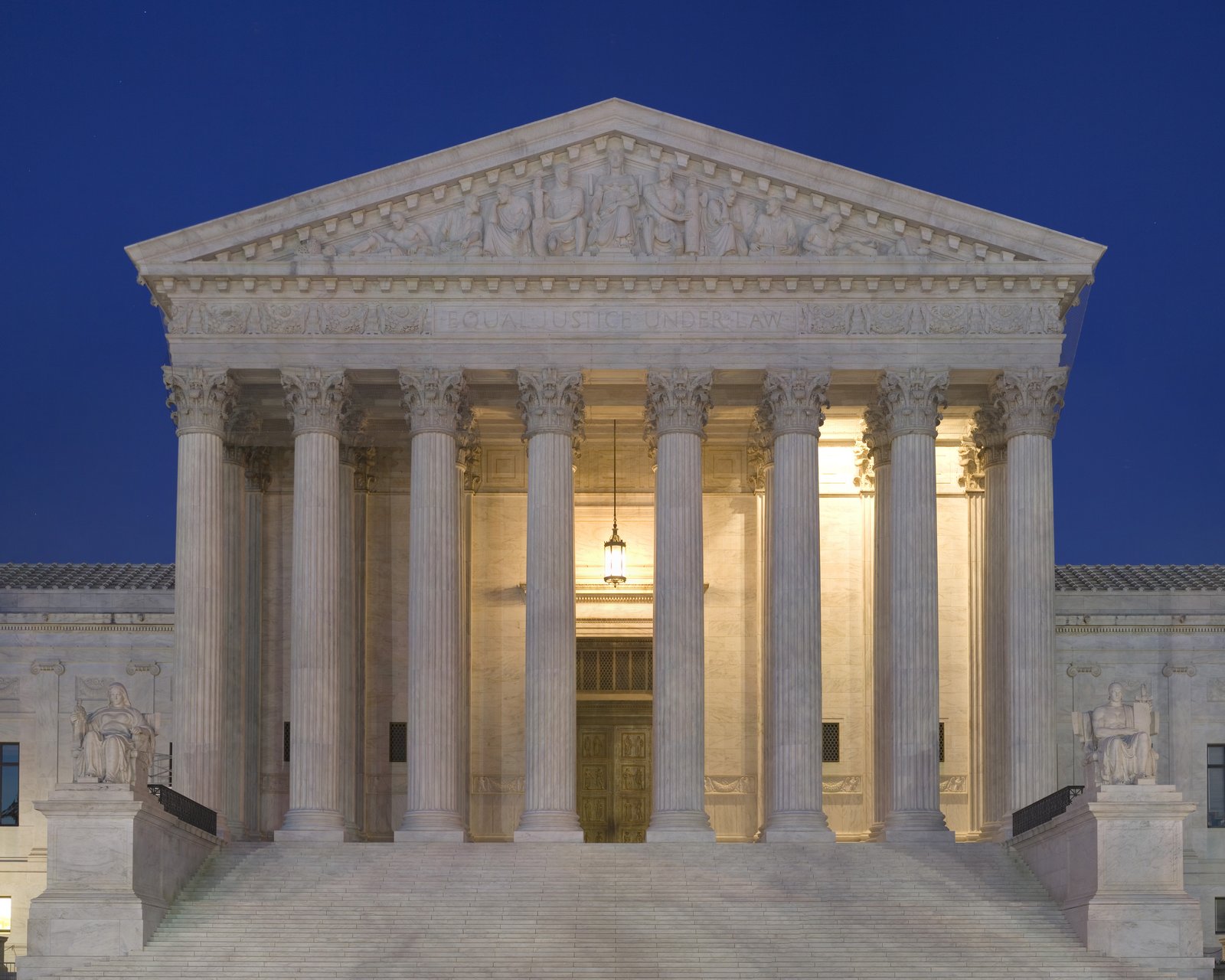
WASHINGTON — The administration’s emergency application asking the Supreme Court to let White House ballroom construction proceed tops a consequential weekend that also saw South Korea’s president propose talks to formally end the Korean War and fresh data showing inflation holding at 3.4 percent. Here is your Afternoon Wire for Saturday, August 16, 2026 — the day’s developments across government, the courts, and the world, and what to watch as the new week opens.
Government
July inflation holds at 3.4 percent as attention turns to the Fed
The Consumer Price Index rose 0.1 percent in July on a seasonally adjusted basis, leaving the 12-month rate at 3.4 percent, according to the Bureau of Labor Statistics release published August 12. Core inflation — all items less food and energy — rose 0.2 percent for the month and 2.5 percent over the year, a slight cooling from June’s 2.6 percent annual pace.
The report’s internals show shelter accounting for roughly two-thirds of the monthly increase, while the energy index fell 1.5 percent in July. The 12-month picture is less benign: BLS data show energy up 14.7 percent over the year, with gasoline up 24.6 percent and airline fares up 25.5 percent. Food prices rose 3.0 percent over the same period.
The data land in a pivotal stretch for monetary policy. Minutes of the Federal Reserve’s July meeting are due Wednesday, per the Fed’s calendar, and market analysts report the July decision drew an unusually divided vote, making the minutes a closely watched read on the committee’s internal debate ahead of the Kansas City Fed’s Jackson Hole symposium August 27–29.
Long-term borrowing costs hit a quarter-century high
A $25 billion auction of 30-year Treasury bonds this week cleared at a yield of 5.216 percent — the highest since 2001, according to the Committee for a Responsible Federal Budget, which called the result the latest sign of investor demand for higher compensation to hold long-dated federal debt.
The auction result sharpens the fiscal backdrop for September’s funding negotiations: higher long-term yields raise the government’s interest costs on new borrowing, a pressure point budget analysts on both sides of the aisle have flagged as deficits persist.
Shutdown clock ticks as House and Senate stopgaps diverge
Federal funding for fiscal year 2027 expires September 30, and the two chambers left for the August recess with competing stopgap measures. The House passed a continuing resolution running through December 4, while the Senate advanced an alternative, according to the Committee for a Responsible Federal Budget’s appropriations tracker. Senate Appropriations Chair Susan Collins (R-Maine) and Vice Chair Patty Murray (D-Wash.) announced a bipartisan agreement to keep funds flowing at existing levels until December 11, NBC News reported — a date that would push the next funding fight past the midterm elections.
The differences must be reconciled when lawmakers return in September, and the stakes are familiar: last fall’s lapse produced a 43-day shutdown — the longest in modern history — before a January 30 stopgap and a February package closed out fiscal 2026, records compiled by CRFB show. A short February lapse over Homeland Security funding followed before full-year bills were completed in the spring.
State and HHS take up Geneva Consensus secretariat; president marks law enforcement week
The United States will serve as secretariat of the Geneva Consensus Declaration, the multi-nation statement on women’s health and national sovereignty, according to a joint statement from Secretary of State Marco Rubio and Health and Human Services Secretary Robert F. Kennedy Jr. posted by the State Department this month — a move that formalizes Washington’s coordinating role in the coalition.
Separately, President Trump delivered roughly 44 minutes of remarks Friday at a law enforcement training facility in Garden City, New York, video posted by the White House shows, capping a week of public events focused on policing and public safety.
Courts
Administration asks Supreme Court to let ballroom construction continue
Solicitor General D. John Sauer filed an emergency application Friday asking the Supreme Court to suspend a divided D.C. Circuit ruling that ordered a halt to construction of the new White House ballroom, CBS News and The Hill reported. The appeals court’s 2-1 decision, issued August 7, held that the president lacks authority to undertake the East Wing expansion without congressional approval; the administration counters that the roughly $400 million project is funded by private donations rather than appropriated money, according to NBC News, and has cited national security needs associated with the broader project.
The appeals court’s order does not take effect until August 21, so construction may continue while the justices weigh the request, and Chief Justice John Roberts directed the plaintiffs to respond by noon Tuesday, the same reports indicate. The National Trust for Historic Preservation, which brought the suit, said in a statement that “each court reviewing this case has ruled that construction of the Ballroom is unlawful” while noting the courts have allowed the project’s underground bunker work to proceed. The group says the government’s own filing describes plans to install another one million pounds of rebar and pour 3,000 cubic yards of concrete in the coming week.
The dispute now presents the justices with a compact separation-of-powers question — whether privately financed alterations to a publicly owned executive mansion require congressional sign-off — on an emergency timeline. However the Court rules on the interim application, filings indicate the underlying appeal will continue into the fall term. The White House had no additional comment beyond its filing as of publication time.
NFA registration ruling takes effect unchallenged as appeal window passes
A federal district court ruling that struck down National Firearms Act registration requirements for suppressors, short-barreled rifles, and short-barreled shotguns became operative for the covered parties after the government let the court’s seven-day stay lapse on August 12 without seeking appellate relief, case analyses indicate. Judge Hendrix of the Northern District of Texas ruled August 5 in Silencer Shop Foundation v. BATFE that the registration scheme lost its constitutional footing when Congress zeroed out the associated transfer and making taxes in last year’s One Big Beautiful Bill Act, effective January 1, 2026 — the taxing power having been the basis on which the Supreme Court historically sustained the NFA, according to reporting on the decision.
Gun-rights organizations involved in the litigation, including the NRA’s lobbying arm, say the administration has indicated it does not intend to appeal. The Justice Department has not published a formal statement of its appellate plans, and ATF guidance on implementation had not appeared on the agency’s site as of this writing — leaving dealers and owners to parse the ruling’s practical scope, which filings suggest is limited to the parties and members of the plaintiff organizations rather than nationwide.
The episode is among the most consequential Second Amendment developments of the year, and its next phase is administrative rather than judicial: how the government operationalizes registration, transfer processing, and enforcement for covered items in light of a judgment it has, so far, chosen not to contest.
Court enters $2.25 million order against Amazon over identity-theft records
A federal court entered a stipulated order requiring Amazon to pay a $2.25 million civil penalty to resolve allegations that it violated the Fair Credit Reporting Act, the Justice Department announced Friday. The government alleged the company repeatedly failed to provide identity-theft victims with records of fraudulent transactions within 30 days as required by Section 609(e) of the statute; the Federal Trade Commission, which referred the case, described the penalty as a record for that provision.
Beyond the penalty, the order requires Amazon to furnish the records free of charge within 30 days of a verified request and to post website notices telling victims how to obtain them. The order resolves allegations rather than adjudicated findings; the settlement does not constitute an admission of liability.
International
Putin’s first Kuril Islands visit draws sharp protest from Tokyo
Russian President Vladimir Putin on Thursday made his first visit to Iturup, one of the disputed Kuril Islands that Japan claims as its Northern Territories, prompting Tokyo to summon Russia’s ambassador and lodge what Foreign Minister Toshimitsu Motegi called a strong protest, the Associated Press reported. “The Northern Territories, including Etorofu (Iturup) Island, are Japan’s inherent territory both historically and from the perspective of international law,” Motegi said.
Prime Minister Sanae Takaichi called the visit “absolutely unacceptable” and warned it “has further hardened Japanese public sentiment toward Russia and has made it more difficult to restore bilateral relations in the medium to long term,” per the AP account. Former Russian president Dmitry Medvedev dismissed the protest, writing that the islands “were, are, and will remain Russian land.”
The Soviet Union seized the four southernmost islands in the closing days of World War II, and the dispute has prevented Moscow and Tokyo from concluding a formal peace treaty for eight decades. Putin, speaking aboard a warship during Pacific Fleet drills before the visit, said the islands’ status “is enshrined in international documents as a reality that arose following the outcome of World War II” — a formulation that suggests little room for the negotiated settlement Japan has long sought.
Seoul proposes talks with Pyongyang to formally end the Korean War
South Korean President Lee Jae Myung used his Liberation Day address Saturday to propose direct talks with North Korea aimed at formally ending the 1950–53 war, which concluded with an armistice rather than a peace treaty. “Let us put down our intentions to threaten each other and begin discussions to end the long-running war as the directly involved parties,” Lee said, adding that such talks could address “effective measures to halt the advancement of North Korea’s nuclear capabilities,” Agence France-Presse reported.
Pyongyang, which has declared its nuclear status “irreversible” and deepened military ties with Moscow, had not responded as of publication, according to the AFP account. Analysts quoted in the report say the North is receiving financial support, food, energy, and military technology from Russia in exchange for troops and munitions for the war in Ukraine, and leader Kim Jong Un is expected to visit Russia later this year.
The proposal lands on the eve of 11-day joint U.S.–South Korean military exercises beginning Monday. Col. Ryan Donald, spokesman for the Combined Forces Command, told reporters that North Korea’s battlefield experience in Europe has changed the threat picture on the peninsula: “They’ve taken those lessons they learned there and brought them back to North Korea. Our training accounts for that threat.” Washington stations about 28,500 troops in the South.
Ukraine: Russian push near Dobropillia stalls as diplomacy marks a quiet anniversary
Russia’s late-July mechanized assault toward Dobropillia in eastern Ukraine failed, and Russian forces will likely continue efforts to restore maneuver on that axis, according to the Institute for the Study of War’s recent campaign assessments. The think tank’s August analyses describe grinding positional fighting across the front, with neither side achieving operationally significant breakthroughs this summer.
The battlefield stalemate coincided with a symbolic date: Saturday marked one year since the Anchorage summit between President Trump and Putin opened the current round of high-level diplomacy over the war. A comprehensive settlement has not materialized in the intervening year, and this weekend brought no publicly announced negotiating breakthroughs from either capital.
Tomorrow’s Watch
What to watch as the new week opens:
- Monday: Joint U.S.–South Korean military exercises begin on the peninsula, an 11-day iteration Pyongyang has already denounced, per AFP.
- Tuesday: The National Trust’s response to the government’s ballroom application is due at the Supreme Court by noon under Chief Justice Roberts’ order. The Census Bureau also releases July housing starts at 8:30 a.m.
- Wednesday: The Federal Reserve publishes minutes of the July FOMC meeting — the clearest window yet into a reportedly divided committee.
- Friday: The D.C. Circuit’s ballroom injunction takes effect August 21 absent Supreme Court intervention, per the parties’ filings.
- Looking ahead: The Kansas City Fed’s Jackson Hole symposium runs August 27–29, and the federal funding deadline arrives September 30 with House and Senate stopgaps still unreconciled.
Editorial note: This briefing is compiled from public records, court filings, official statements, and wire reporting linked throughout. Settled matters and pending allegations are identified as such; no party referenced was contacted for comment prior to publication, and parties are invited to submit responses or corrections to the editor. Featured image: the Supreme Court of the United States at dusk; public domain via Wikimedia Commons.
