

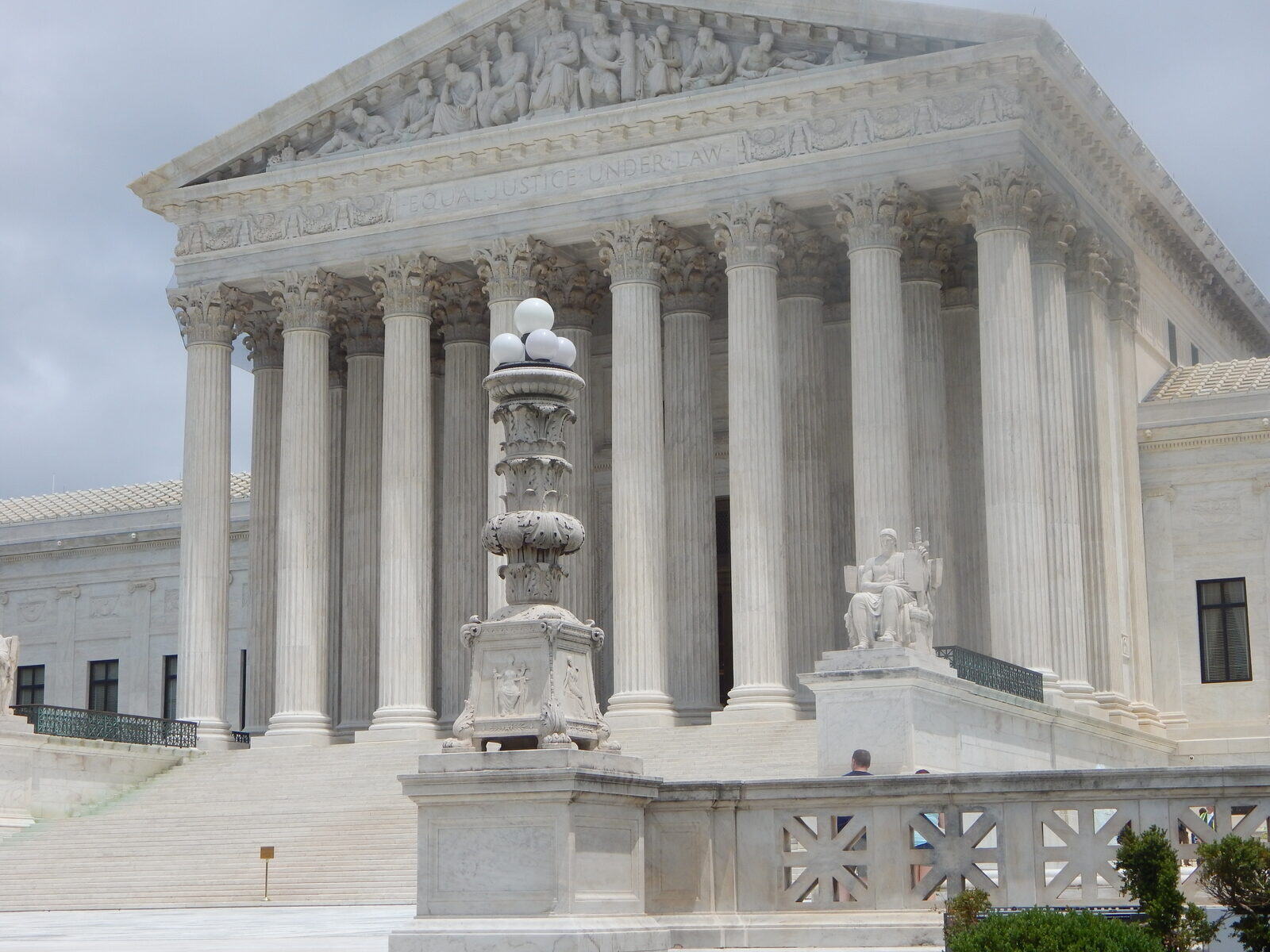
Court Watch is The Investigative Journal’s weekly digest of notable rulings, orders, and filings across the American judiciary. Every item below is drawn from public court records and primary-source reporting. Pending matters are flagged as such; allegations are distinguished from findings.
The Supreme Court’s summer recess did little to quiet the courts during the week of July 6, 2026. The justices used their interim docket to leave a contested Texas app-store law in force, the president moved to reopen a landmark citizenship case the Court had already decided against him, and federal appeals and district judges handed down consequential rulings on immigration detention, firearms regulation, media-merger review, and a high-profile civil judgment. Below, grouped by court level, are the developments that mattered most, with direct links to the underlying opinions, orders, and dockets.
Supreme Court
Justices let Texas app age-verification law stand
On Monday, July 6, the Supreme Court declined to reinstate a pair of district-court orders that had blocked a Texas law requiring app stores to verify users’ ages and obtain parental consent before minors download apps or buy content within them. In two brief, unsigned orders issued that afternoon, the justices turned down applications filed by a youth-advocacy organization and by a technology trade group, leaving the law enforceable while litigation continues. There were no noted public dissents, according to the orders posted to the Court’s website.
The disputes, Students Engaged in Advancing Texas v. Paxton and Computer & Communications Industry Association v. Paxton, arose after a federal judge in Austin barred the state from implementing the measure. As SCOTUSblog reported, the justices’ action on the interim docket does not resolve the underlying First Amendment and preemption questions; it addresses only whether the law may be enforced while the challenges proceed in the lower courts.
The order is the latest signal that a majority of the Court is prepared to let states experiment with online age-gating for minors, a policy area that has drawn litigation in several states. Records indicate the case will return to the U.S. Court of Appeals for the 5th Circuit for further proceedings on the merits.
President seeks rare rehearing in birthright-citizenship case
Days after the term ended, President Donald Trump announced that he would ask the Supreme Court to rehear Trump v. Barbara, the case in which the Court ruled against his executive order narrowing birthright citizenship. “I will be asking for a Rehearing by the United States Supreme Court, IMMEDIATELY,” the president wrote on Truth Social on July 8, according to CNBC.
Rehearing petitions of already-argued cases are exceedingly rare. CNBC noted that the Court has not agreed to rehear such a ruling since 1965, and the Court’s own rules require that a petition for rehearing be supported by a justice who concurred in the judgment. The decision reaffirmed the longstanding reading of the Fourteenth Amendment’s Citizenship Clause; House Speaker Mike Johnson has separately said his conference is “looking at all angles” for a legislative response.
As of this writing, a formal rehearing petition had been announced but its disposition remains pending. The practical significance is limited by precedent and procedure, but the filing keeps a marquee constitutional question in the public eye heading into the next term.
Federal Courts of Appeals
Fifth Circuit: bond hearings required within 90 days of mandatory detention
On July 2, a divided panel of the 5th Circuit held that the Due Process Clause bars the government from detaining certain noncitizens for more than 90 days under 8 U.S.C. § 1225(b)(2)(A) without an individualized custody hearing. In the 2-1 decision, the New Orleans-based panel ruled that the government must justify continued detention by showing an “identified and articulable threat” to the community or a flight risk, according to the court’s published opinion and reporting by The Texas Tribune.
The case involves three men — described in filings as longtime Texas residents with U.S.-citizen children and no criminal history — who were arrested following routine traffic stops between November 2025 and February 2026. The ruling builds on the circuit’s framework in Buenrostro-Mendez v. Bondi and represents a check on the administration’s expanded detention practices. The government may seek rehearing en banc or review by the Supreme Court; the matter remains subject to further appeal.
D.C. Circuit dismisses challenge to FCC approval of Nexstar-TEGNA deal
On Wednesday, July 9, a three-judge D.C. Circuit panel — Judges Neomi Rao, Robert L. Wilkins, and Gregory G. Katsas — denied a stay of the Federal Communications Commission Media Bureau’s March 19 approval of Nexstar Media Group’s roughly $6.2 billion acquisition of TEGNA and dismissed related appeals for lack of jurisdiction, according to TVNewsCheck and Broadband Breakfast.
The panel reasoned that Congress requires parties challenging an FCC bureau-level decision to first obtain a ruling from the full Commission before seeking judicial review. On the petitioners’ request for a writ of mandamus, the court cited the FCC’s representation that it expects to issue a decision before the end of the year and concluded that the roughly three-month delay did not warrant that extraordinary remedy. The dismissal does not end the fight over the transaction: a separate lawsuit brought by several state attorneys general and DirecTV continues to proceed in the Northern District of California.
Federal Circuit convenes busy July argument week
The U.S. Court of Appeals for the Federal Circuit held its July sitting during the week, convening nine panels to consider 54 cases and hearing oral argument in 37 of them, according to the Fed Circuit Blog. The court issued a run of opinions and orders on July 9 and 10 spanning patent and veterans-benefits matters, including decisions posted to its opinions and orders page such as Davis v. United States and Charters v. Collins.
While individually technical, the Federal Circuit’s output shapes national patent and government-benefits law. Practitioners tracking the docket should watch for precedential designations, which determine whether a ruling binds future panels.
Federal District Courts
California ‘Glock ban’ survives Justice Department’s bid for a quick block
On July 9, U.S. District Judge Monica Ramirez Almadani denied the Justice Department’s request for a temporary restraining order against a California law that restricts pistols equipped with cruciform, or cross-shaped, triggers — a measure aimed at so-called machine-gun-convertible handguns. As The Center Square reported, the department had announced the suit on July 1, challenging the statute on Second Amendment grounds.
The ruling did not reach the merits of that constitutional argument. Instead, the judge focused on whether the federal “pattern or practice” statute the department invoked authorizes it to sue a state over a firearms law, noting that neither side identified a prior instance in which the government had brought such a claim on Second Amendment grounds. The judge also observed that the law “includes carveouts for the transfer of machine-gun convertible pistols under various circumstances,” so it was “not clear that California citizens are prohibited outright from acquiring Glock and Glock-style pistols.” The denial of a TRO is preliminary; the underlying case continues, and the department may pursue an amended complaint or a motion for a preliminary injunction.
Manhattan judge orders release of escrowed funds in Carroll civil case
U.S. District Judge Lewis Kaplan on July 8 rejected President Trump’s request to further delay payment of nearly $5.8 million to writer E. Jean Carroll while the president seeks Supreme Court review of the underlying civil jury verdict, ordering that the escrowed funds be released, according to The Hill. The president’s lawyers appealed the ruling less than an hour after it was issued.
The dispute stems from a civil case in which a jury found the president liable and awarded damages; the president has denied the allegations and is pursuing appellate and Supreme Court review. Because those challenges remain pending, the judgment is not final for all purposes, and the U.S. Court of Appeals for the 2nd Circuit is expected to weigh the president’s latest appeal of the escrow-release order.
State Supreme Courts
Ohio Supreme Court narrows municipal liability under immunity statute
The Supreme Court of Ohio ruled on July 8 that the city of Berea cannot be sued over the death of a woman who tripped on the legs of a newly installed bench in a recreation-center locker room. In Steigerwald v. Berea, Slip Opinion No. 2026-Ohio-2554, the court held that a political subdivision’s decision to place a particular model of bench does not amount to a “physical defect” within the meaning of R.C. 2744.02(B)(4), the exception to statutory immunity at issue.
The court reasoned that a “physical defect” refers to a tangible imperfection that impairs an object’s function, and that no evidence showed the bench was broken or malfunctioning. It reversed the appellate court and remanded for entry of summary judgment in the city’s favor, as summarized by Court News Ohio. Justice Jennifer Brunner dissented, contending that the majority read “physical defect” more narrowly than the immunity statute contemplates. The decision sharpens the line between a defective object and the government’s use of a non-defective one — a distinction with broad implications for tort claims against Ohio municipalities.
Class Actions and Mass Torts
Bayer moves to unwind federal Roundup litigation after Supreme Court win
Following the Supreme Court’s June 25 decision in Monsanto Co. v. Durnell — which held that plaintiffs cannot sue on the theory that Roundup’s federally approved label failed to warn of cancer risks — Bayer moved to persuade a federal judge to dismantle the consolidated federal litigation encompassing nearly 4,000 lawsuits, Reuters reported on July 8. The company argues the ruling requires dismissal of the multidistrict proceeding.
Plaintiffs’ attorneys countered that the decision is limited to the product’s label and does not foreclose other theories commonly asserted in Roundup injury suits, such as design-defect and negligence claims. The judge’s forthcoming ruling on the scope of the Supreme Court’s holding is being closely watched, as it could determine whether thousands of pending claims survive.
Mid-year data show record class-action settlement pace
A newly published Duane Morris analysis released July 1 found that the aggregate value of class-action and government-enforcement settlements reached roughly $53.8 billion in the first half of 2026, well above the $21.77 billion recorded at the midpoint of 2025. The firm’s data indicate three settlements exceeding $1 billion have been reached so far in 2026, part of a wave of 45 billion-dollar-plus settlements since 2022. The figures point to continued elevated litigation exposure for corporate defendants across antitrust, privacy, and consumer-protection dockets.
Cases to Watch in the Coming Week
Several threads will bear monitoring. At the Supreme Court, attention turns to whether any justice will support the president’s announced rehearing petition in Trump v. Barbara and to the pace of the summer interim docket, which in recent years has stayed unusually active. Justices Elena Kagan and Amy Coney Barrett are also scheduled to testify before Congress, a rare appearance likely to draw questions about ethics and the emergency docket.
In the lower courts, watch the 2nd Circuit’s handling of the president’s appeal in the Carroll matter; the federal judge’s decision on Bayer’s bid to dismiss the Roundup multidistrict litigation; the Justice Department’s next move in its challenge to California’s firearms law after the TRO denial; and continued proceedings in the state attorneys general and DirecTV suit over the Nexstar-TEGNA transaction in the Northern District of California. The Investigative Journal will track each development in next week’s Court Watch.
Methodology and sourcing: This digest relies on primary court records — published opinions, docket entries, and official orders — supplemented by established legal-news outlets including SCOTUSblog, Reuters, The Hill, The Texas Tribune, and Court News Ohio. Vote counts and procedural postures reflect the record as of publication; pending matters may change as appeals proceed. Corrections and right-of-reply requests may be directed to the editor.